REVIEW · OSAKA
Immerse in Judo Martial Arts Class from Japan
Book on Viator →Operated by Daishin Judo Club · Bookable on Viator
Tatami mats, throws, and real Japanese manners. In Osaka, you train with the Daishin Judo Club at a traditional dojo space where discipline and respect are part of the lesson, not a side note.
What I love most is how the class is structured for different levels, from first-timer posture and ukemi (break falls) to more advanced nage-waza and ne-waza work. I also like that you get plenty of interaction with the instructor, who is Akihiro Matsuura, an eighth dan sensei with nearly 50 years of teaching behind him.
One possible drawback: judo is physical, and even the basics can feel intense if you’re not used to grappling on the floor. Come ready to move, listen, and follow cues fast.
In This Review
- Key highlights worth showing up for
- Where You Train: Daishin Judo Club in Osaka’s Tennoji Ward
- Price and Value: $97.55 for 90 Minutes with an 8th Dan
- Getting Started on the Mat: Etiquette, Posture, and Instructor Q&A
- The Class Flow That Makes Sense: Ukemi to Throws to Groundwork
- For First-Timers: Learning Ukemi and Basic Throwing Forms Safely
- For Experienced Judoka: Nage-waza, Ne-waza, and Real Questions
- Randori With Control: What Makes It Intense and Still Worth It
- Language and Interaction: Asking Questions Without Getting Lost
- Logistics That Matter: Meeting Point, Duration, and Getting There
- What to Expect Physically (And How to Prepare)
- Who This Is Best For (And Who Might Skip It)
- Should You Book Daishin Judo Club?
- FAQ
- What is the duration of the judo class?
- Where do I meet for the experience in Osaka?
- Who is the instructor?
- Do I need prior judo experience to participate?
- What skills can experienced students work on?
- What languages does the instructor speak?
- Can I cancel and get a full refund?
Key highlights worth showing up for
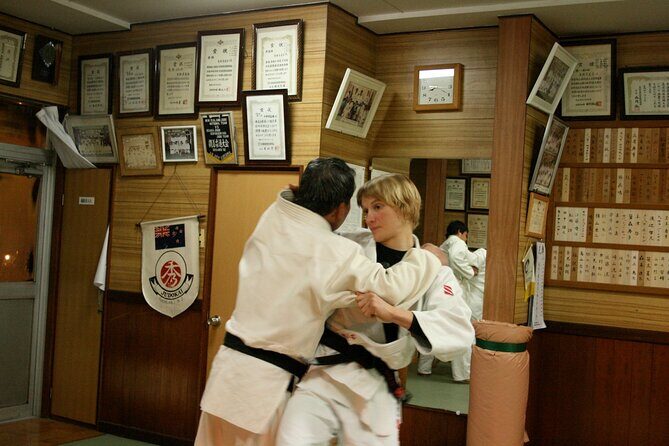
- Small-group format (max 6) for more attention and quicker corrections
- Akihiro Matsuura (8th dan) brings decades of dojo culture to the mat
- Beginner-friendly basics: posture, movement, ukemi, and basic throwing forms
- Experienced-judoka options: nage-waza throws and ne-waza groundwork
- Randori practice that feels challenging in a good way
- Instructor speaks Japanese, English, and Korean so you can ask questions
Where You Train: Daishin Judo Club in Osaka’s Tennoji Ward
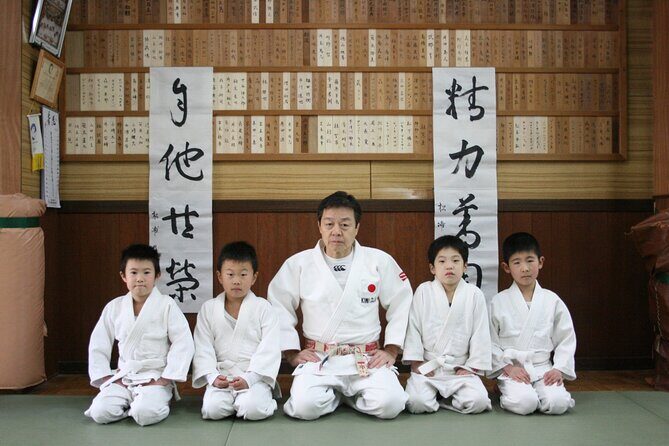
This experience is all about getting onto the tatami and learning judo in a real dojo environment, not a performance. You meet at Daishinjudo Orthopedic Clinic in Tennoji Ward, Osaka, then training happens at the Daishin Judo Club dojo.
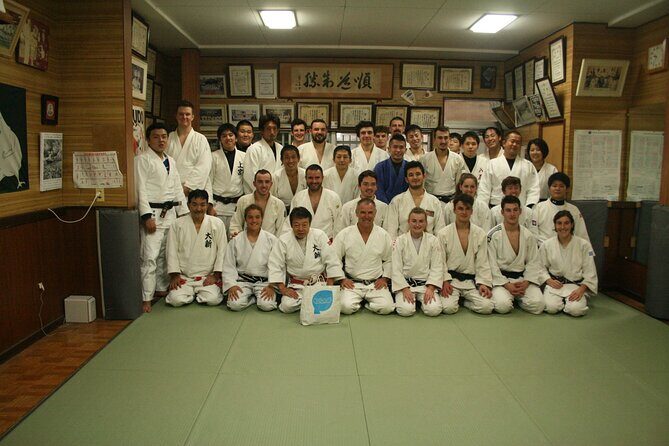
The dojo matters. Daishin Judo Club was founded in 1976, and the sensei is Akihiro Matsuura, an eighth dan black belt who has been teaching for almost 50 years. That long track record shows up in how lessons are paced: you’re guided through fundamentals, but you still get the sense that this is serious practice, not a tourist “try it once” demo.
You’re also training in a setting meant for focus. The dojo is described as a space for learning and meditation, and that tone helps you settle in. Judo is often explained as self-defense plus fitness, but the cultural layer is the big part: respect, discipline, and controlled interaction.
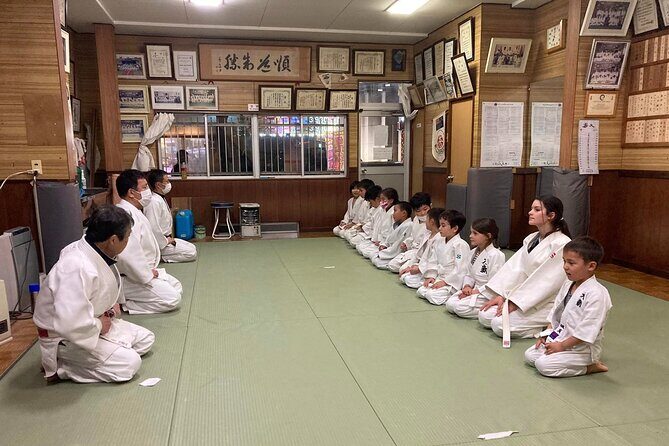
One more practical point: the class is capped at 6 travelers, so you don’t feel like you’re lost in a crowd. You’re easier to correct, and it’s easier to ask the instructor for clarification without waiting your turn.
A few more Osaka tours and experiences worth a look

Price and Value: $97.55 for 90 Minutes with an 8th Dan
At $97.55 per person for about 1 hour 30 minutes, this isn’t a budget “walk-in” activity. The value comes from what’s included in that time:
- Expert coaching from an eighth dan instructor with decades of teaching experience
- Structured training for both beginners and experienced students
- Practice elements that go beyond theory, including breakfalls and grappling drills
- A small group, which generally means more real feedback
Also, this is typically booked around a month in advance. That tells me demand is steady for a class format like this—people want authentic martial arts training in Osaka, with an English-friendly instructor.
Is it worth it if you’re just curious? If you like hands-on learning and don’t mind physical effort, yes. If you’re hoping for a short, gentle cultural chat with no movement, you might feel the price more sharply. This is a real workout on the mat, with technique and practice as the main event.
Getting Started on the Mat: Etiquette, Posture, and Instructor Q&A
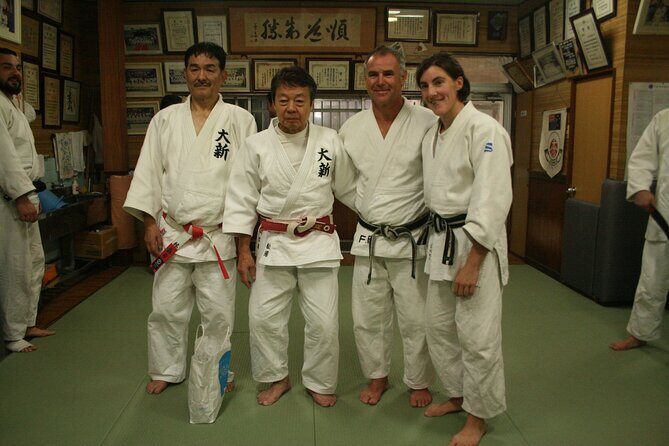
The class begins with the basics, especially if it’s your first time. You’ll practice fundamental posture and movements. Think of this as learning how to stand, balance, and move in a way that makes throwing and grappling possible—and safe.
Judo etiquette isn’t just formality here. It’s part of what the instructor teaches you as you start training. That matters because judo depends on control: your partner has to trust that you’re not going to crank things too hard or ignore safety cues. When etiquette is part of the process, everyone’s more comfortable learning.
You’ll also be able to ask questions and learn about the history of judo. The instructor can speak Japanese, English, and Korean, which is helpful if you want answers in a language you’re comfortable with rather than trying to piece things together through hand gestures.
And that’s where this class feels different from many tourist-style activities: you’re not just repeating motions. You’re getting context and the why behind the movement.
The Class Flow That Makes Sense: Ukemi to Throws to Groundwork
Judo teaching is often a ladder: balance and movement at the bottom, then breakfalls and throws, then groundwork. The structure here follows that logic.
If you’re a beginner, expect a progression that typically goes like this:
- posture and movement basics
- how to do ukemi (break falling technique) so you can protect yourself while practicing throws
- basic throwing forms so you learn the motion patterns without jumping straight into chaos
If you already have judo experience, you can focus more on:
- nage-waza (throwing techniques)
- ne-waza (ground techniques)
Either way, you’ll be encouraged to interact with the instructor. In judo, small timing changes can be the difference between a drill that works and one that feels awkward. Having an instructor who can explain and correct you quickly is a big deal—especially when you’re learning in a foreign country.
The session also includes practice that brings intensity. One of the strongest signals from the experience is that randori—sparring practice—can be intense and enjoyable. That’s not a surprise in judo culture. What matters is that your dojo environment keeps it respectful and teachable, not reckless.
For First-Timers: Learning Ukemi and Basic Throwing Forms Safely
If you’re brand new, the best part is that you’re not thrown into the deep end. The class is built to start with how to be stable and how to fall safely.
Ukemi is the cornerstone skill for beginners. It changes how you feel on the mat. Once you understand breakfalls, you stop treating every throw attempt like a risk and start treating it like training. You learn how to roll and position your body so impact is controlled.
After that, you get basic throwing forms. That’s a smart order. Throwing is dramatic-looking, but the real skill is in positioning, balance, and timing. Learning forms teaches you those mechanics without forcing you to learn everything at once.
You’ll likely feel sore afterward. That’s normal. Judo uses your legs, core, and grip—and it also forces you to engage muscles you don’t always use in regular walking-around sightseeing. Plan the rest of your day with that in mind, especially if you’re doing other active things in Osaka.
The vibe is friendly here. The instruction style is described as welcoming and supportive, even when it gets tough. For a first-time judo class, that friendliness is everything. It’s the difference between being intimidated and being willing to try.





For Experienced Judoka: Nage-waza, Ne-waza, and Real Questions
If you’ve done judo before, you won’t want the session to feel repetitive. The good news is that you can focus on technique work instead of only revisiting the absolute basics.
The class gives you an option to work on:
- nage-waza throwing techniques
- ne-waza groundwork techniques
That flexibility is valuable. In a short 90-minute session, it’s easy for experienced students to feel stuck doing beginner drills. Here, you can ask questions and learn about the history of judo too, which is a nice bonus because it keeps you mentally engaged, not just physically busy.
One more benefit: with a small group, it’s easier to spot what you’re doing wrong. In judo, errors compound quickly. If your partner is moving with uncertainty, you can end up chasing adjustments instead of refining technique. A dojo setting with experienced athletes tends to tighten that feedback loop, and you get more useful reps.
And yes, you may still do sparring practice depending on how the instructor structures the class. The key is that it stays fun and enjoyable, not a grind with no coaching.
Randori With Control: What Makes It Intense and Still Worth It
Randori is where judo becomes real. It’s the training version of sparring—fast, moving, unpredictable. That can feel scary the first time, especially if you’re outside your home club.
In this dojo setting, randori is described as intense and enjoyable. That’s the ideal combination. Intense means you actually learn something. Enjoyable means the atmosphere stays respectful and you’re not afraid to participate.
Here’s why that balance matters for you as a visitor: it keeps the experience from being purely mechanical. You’re not just repeating forms while watching others. You’re applying skills under pressure.
If you want to make the most of randori, focus on basics you can control:
- your stance and balance
- your grip and posture
- staying calm enough to follow the instructor’s cues
Don’t try to “win” randori. Judo teaches you through controlled effort. When you treat it as learning, you’ll enjoy it more.
Language and Interaction: Asking Questions Without Getting Lost
One of the most practical reasons to choose this class in Osaka is that you can communicate clearly. The instructor can speak Japanese, English, and Korean.
That means you can ask how a movement should feel, what a throw is trying to accomplish, or how to interpret etiquette and training culture. You don’t have to guess. And if you’re the type who likes to understand the logic behind technique, you’ll appreciate being able to ask.
Even if your language skills aren’t perfect, the dojo community tends to be friendly and willing to help. The shared training environment also helps you learn by watching. You’ll pick up a lot just by seeing how others correct their posture or timing.
Logistics That Matter: Meeting Point, Duration, and Getting There
You’ll start at Daishinjudo Orthopedic Clinic (10-22 Funahashichō, Tennoji Ward, Osaka, 543-0024, Japan). The experience ends back at the meeting point.
The training runs about 1 hour 30 minutes. That’s enough time to cover fundamentals, practice techniques, and still fit in some sparring or high-energy drills. It’s also short enough that you can still enjoy the rest of Osaka after without turning your day into a write-off.
The area is described as near public transportation, which makes it easier to fit into a sightseeing schedule. And the group is small, max 6, so the class doesn’t feel like a chaotic assembly line.
You’ll use a mobile ticket. Keep it on your phone so you’re not scrambling at the start.
What to Expect Physically (And How to Prepare)
Judo is not just “standing and learning.” You’ll grapple, practice breakfalls, and do throwing drills. If you’re new, your body learns fast—sometimes painfully.
Here’s how I’d prepare:
- Eat something light before you go, not a huge meal.
- Wear clothing that won’t restrict movement until the instructor tells you what to do next.
- Bring a water plan. Even if you don’t sweat like crazy, you’ll work hard on the mat.
Since the activity says most travelers can participate, there’s likely no advanced athletic requirement. Still, don’t underestimate soreness risk—your forearms, grip muscles, and legs will likely feel it.
If you have any concerns about physical activity, it’s worth considering that this is a real training session on tatami with technique and practice. “Try it” still means training.
Service animals are allowed, and that can be helpful for some visitors who need them.
Who This Is Best For (And Who Might Skip It)
This class fits you if:
- you want hands-on Japanese martial arts training in Osaka
- you’re open to being corrected and learning etiquette as part of the practice
- you like small-group instruction
- you want to try judo even if you’ve never done it
It may not fit you as well if:
- you want a purely cultural experience with no physical activity
- you’re looking for a long, leisurely lesson where intensity is minimal
- you’re extremely sensitive to impact, since you’ll learn ukemi and practice throws
That said, the beginner focus and emphasis on safe fundamentals make it a strong first judo experience for many people. The friendly, respectful atmosphere helps you feel less intimidated from minute one.
Should You Book Daishin Judo Club?
I think you should book this class if you want an authentic, instruction-based judo session in Osaka with a real sensei and a small group. The combination of Akihiro Matsuura’s long teaching background, beginner structure (posture, ukemi, basic throwing forms), and the option for advanced work (nage-waza, ne-waza) makes it a smart use of travel time.
Choose it especially if:
- you value learning technique over just taking photos
- you want a dojo setting that feels focused and respectful
- you like the idea of randori that’s intense but still fun
Skip or reconsider if you’re not ready for physical grappling practice. This is a training session, not a passive exhibit.
If you can make the schedule work, it’s the kind of activity that gives you a story you’ll remember because you actually did the thing—on the tatami, with Japanese judo culture in full operation.
FAQ
What is the duration of the judo class?
The class lasts about 1 hour 30 minutes.
Where do I meet for the experience in Osaka?
You meet at Daishinjudo Orthopedic Clinic, 10-22 Funahashichō, Tennoji Ward, Osaka, 543-0024, Japan.
Who is the instructor?
The instructor is Akihiro Matsuura, an eighth dan black belt who has been teaching judo for almost 50 years.
Do I need prior judo experience to participate?
No. If it’s your first time, you’ll learn basic posture and movements, ukemi, and some basic throwing forms.
What skills can experienced students work on?
If you already have judo experience, you can work on nage-waza (throwing techniques) and ne-waza (ground techniques).
What languages does the instructor speak?
The instructor can speak Japanese, English, and Korean.
Can I cancel and get a full refund?
Yes. You can cancel up to 24 hours in advance for a full refund.
If you want, tell me your judo background (totally new, some experience, or regular training) and I’ll suggest how to approach the session so you get the most out of those 90 minutes.