REVIEW · KYOTO
Nara Afternoon Tour from Kyoto or Osaka
Book on Viator →Operated by JTB Global Marketing & Travel Inc. · Bookable on Viator
Nara in half a day feels like time travel. I love the scale of Todai-ji and the calm glow of Kasuga Grand Shrine’s lanterns, but you should expect a fair walk from the parking area to the Great Buddha.
This is a well-structured afternoon plan with round-trip transport and admission handled for the big-ticket sights, so you spend less time figuring things out. A potential drawback: the overall pace can feel tight if your group is late or you want extra time feeding deer.
The good news is the experience is very straightforward. You get picked up near Kyoto Station, ride to Nara, then hit the two World Heritage stops plus deer time—before returning to Kyoto. If you’re someone who hates long commuting days, this format is a sweet spot.
In This Review
- Nara Afternoon Tour Key Points (Kyoto to Nara)
- Why Nara in the Afternoon Works So Well From Kyoto
- Getting There: Pickup Near Kyoto Station and the Ride to Nara
- Todai-ji: The Great Buddha Hall and the World Heritage Impact
- The walk you should plan for
- What makes Todai-ji special beyond the photos
- Nara Park Deer Time: How to Enjoy the 1,250 Acres Without Losing Your Cool
- A key tip: know about deer food before you enter
- Build in mental space for the deer
- Kasuga Grand Shrine: Lanterns, Main Sanctuary Access, and a Quiet Shift
- If Main Sanctuary access isn’t possible
- What makes Kasuga feel different
- Guide Quality and Group Pace: What to Watch for
- Practical group tips that help you enjoy it more
- What’s Included (and What Costs Extra) So You Can Budget Like a Pro
- How I think about the extras
- Price and Value: Is $102.38 a Good Deal?
- Who This Tour Fits Best (and Who Might Prefer Another Plan)
- Should You Book This Nara Afternoon Tour?
- FAQ
- What stops are included on the Nara afternoon tour?
- How long is the tour?
- Are admission tickets included?
- What is not included?
- Where do I get picked up in Kyoto?
- What happens if the Kasuga Main Sanctuary special visit area can’t be entered?
- Is there a walking requirement?
Nara Afternoon Tour Key Points (Kyoto to Nara)
- Todai-ji + Great Buddha Hall tickets included for a big, iconic stop
- Kasuga Grand Shrine lantern spectacle, with access to the Main Sanctuary special visit area added from January 2025 (when possible)
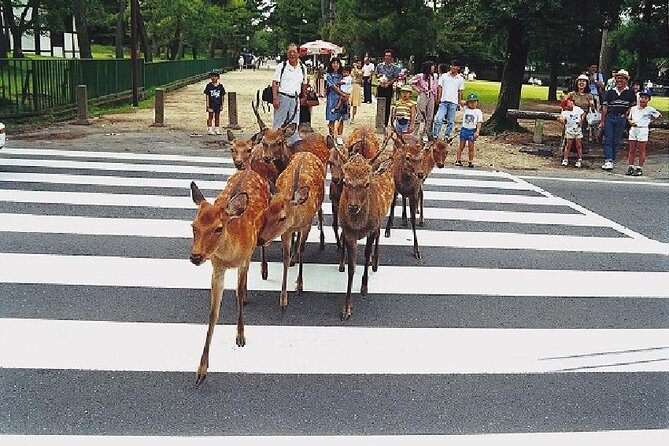
- Nara Deer Park time in a huge 1,250-acre reserve with 1,000+ deer roaming freely
- Licensed English guide interpreter plus admission and transportation costs included
- Walking note: about 25 minutes one-way from the parking lot to Todai-ji
- Group size capped at 40, but seating may not be assigned
Why Nara in the Afternoon Works So Well From Kyoto
Nara is the kind of place that can swallow a whole day fast. By late afternoon, you can still see the essentials without losing your entire day to trains, transfers, and waiting.
This tour makes Nara feel manageable because it concentrates on the three headline experiences:
- Todai-ji (the famous Great Buddha)
- Nara Deer Park (the deer encounter)
- Kasuga Grand Shrine (lanterns and shrine calm)
You’re also doing this from Kyoto with round-trip vehicle transport. That matters. In Japan, getting from A to B can be easy, but it’s rarely zero-effort. Here, your transportation is handled, and you just show up.
You can also read our reviews of more tours and experiences in Kyoto.



Getting There: Pickup Near Kyoto Station and the Ride to Nara
Your afternoon starts with pickup at the Avanti Tour Desk near Kyoto Station. After that, you travel by return vehicle to Nara and come back with a drop-off at the original departure point.
A few practical notes that affect comfort:
- The tour lasts about 5 hours 40 minutes (approx.), so it’s not a slow sightseeing stroll.
- Seats may not be designated, so if you care where you sit, go early and settle quickly.
- Road conditions and congestion can shift timing, and the activity order can change.
Group tours can feel smoother with a solid leader. From past experiences on this route, guides like Yuki, KC, Mo Mo, and Miyuki show up with strong history context and clear explanations. If you get one of those guides, you’re likely to feel like the places make more sense fast.
Todai-ji: The Great Buddha Hall and the World Heritage Impact
Todai-ji is the reason Nara shows up on almost every first-timer itinerary. This stop is the centerpiece, and it’s also the most physically demanding part.
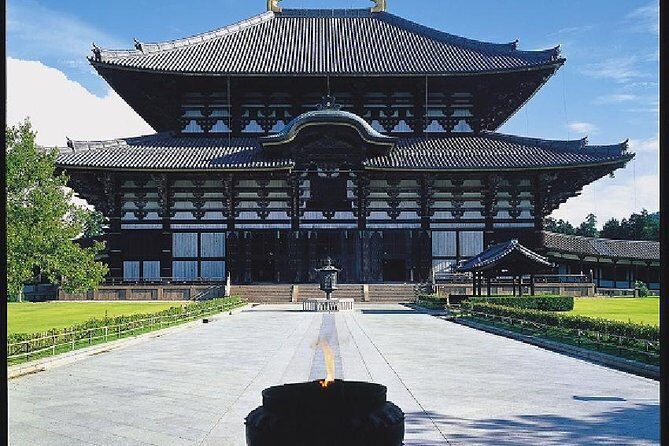
You’ll spend about 1 hour 10 minutes here, and the admission ticket is included. The standout is the Daibutsuden, the Great Buddha Hall—one of the symbol sights of the Nara period. You’ll also see the bronze Great Buddha statue.
The walk you should plan for
There’s an important logistics detail: participants walk from the parking lot to Todai-ji (about 25 minutes one-way). That’s not a quick shortcut, so:
- wear comfortable shoes
- bring a light layer if the weather flips
- don’t assume you’ll have the energy to sprint from photo spot to photo spot
Some people also find that the time at each location can feel rushed, especially if the group is larger. If you really want a slower, detailed visit of the temple grounds, keep that in mind and prioritize what you want to see first.
What makes Todai-ji special beyond the photos
Todai-ji isn’t just big. It’s old-school Japan at the scale level. The site is tied to the Nara period and the era when Nara became Japan’s first permanent capital (710). That political and religious power is part of why the temple matters.
If your brain likes connections, your guide’s explanations here are usually the difference between seeing buildings and understanding why this place was so powerful in its day.




Nara Park Deer Time: How to Enjoy the 1,250 Acres Without Losing Your Cool
After Todai-ji, you get time at Nara Park, a 1,250-acre reserve where more than 1,000 deer roam freely. This is the part people either love immediately—or find a little chaotic.
The deer are tame in the sense that they’re used to humans, and they can be surprisingly interactive. You may also notice that their behavior can range from calm to pushy depending on time of day, crowd levels, and whether snacks are around.
A key tip: know about deer food before you enter
One of the most useful practical issues that comes up is timing around deer feeding. Some people felt they weren’t told where to buy food before entering the park.
So here’s what I’d do if you want the deer experience:
- Ask your guide where deer food is sold, right before park time starts
- Plan to have small cash or whatever payment method you’re comfortable with
- Don’t chase deer. Watch your footing and stay patient
Build in mental space for the deer
If you’re hoping for long deer-staring time, the tour pace may not give you that. Some guests have described the day as rushed, especially when rejoining the bus becomes confusing.
My advice: treat deer time like a highlight sprint, not a slow picnic. Take photos, watch behaviors, then move on while you still have energy for Kasuga.
Kasuga Grand Shrine: Lanterns, Main Sanctuary Access, and a Quiet Shift
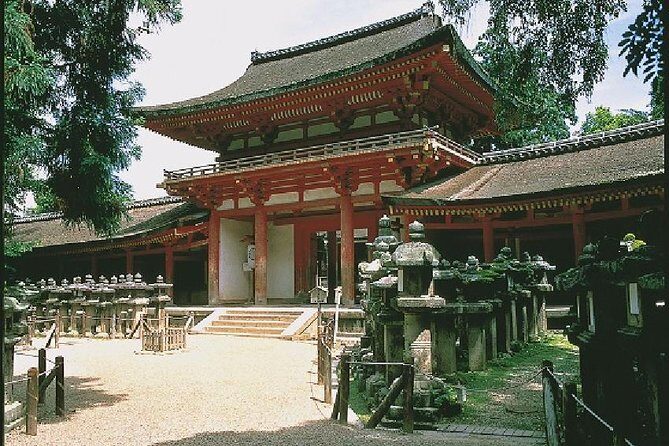
Kasuga Grand Shrine is where the vibe changes from big temple energy to shrine calm. The reason people love it is simple: it’s famous for its 3,000+ stone and bronze lanterns.
This stop runs about 1 hour, with admission ticket included. From January 2025, the itinerary adds access to the Main Sanctuary special visit area (when it can be entered). When that’s available, you get closer to the Main Sanctuary and can view hanging lanterns in the corridor.
If Main Sanctuary access isn’t possible
Operations happen. If the special visit area can’t be entered due to events or operational circumstances, the tour visits an alternative site:
- Kasuga Taisha Museum, or
- Todaiji Museum
That’s a smart backup, because you still get something shrine-related rather than simply losing time.
What makes Kasuga feel different
Todai-ji is monumental and loud in its scale. Kasuga is reverent and rhythmic. The lanterns do a lot of emotional work here, and even in daylight you can feel why this shrine is a favorite with people who love atmosphere as much as history.
This is also a good place to slow down a bit and reset before you head back to Kyoto.
Guide Quality and Group Pace: What to Watch for
The biggest variable on any tour day is the human one: the guide and the group.
On this route, strong guides like Yuki and KC come up often for making history clear and for keeping people oriented. People have also noted guides being attentive about staying together and explaining what to do next.
Still, pacing can swing. Some guests felt the day was rushed or that time got squeezed when people were late or couldn’t walk as fast as expected. There’s also a built-in challenge: the parking-to-temple walk at Todai-ji is fixed, and it can affect how much time you feel you have at each stop.
Practical group tips that help you enjoy it more
- Stay close to the group on transfer moments so you don’t get left behind during rejoining.
- If you need breaks, take them quickly and tell the guide so the plan stays fair for everyone.
- If you’re traveling solo, keep extra attention on meeting points. This is one day where being slightly separated can create stress.
If you do those things, you’ll usually feel like the day flows well rather than feeling like you’re constantly sprinting back to the bus.
What’s Included (and What Costs Extra) So You Can Budget Like a Pro

This tour includes:
- transportation costs (round-trip vehicle)
- admission fees for Todai-ji and Kasuga Grand Shrine stops
- the English guide interpreter fee (national government licensed English guide interpreter)
Not included:
- entrance to the Treasures Hall and Manyo Botanical Gardens at Kasuga Shrine
- lunch and drinks
- hotel pickup/drop-off (pickup is from the designated meeting point near Kyoto Station)
How I think about the extras
If Kasuga is your priority and you love botanical gardens and smaller collections, the exclusions matter. If you’re mainly after the Main Sanctuary area and lantern experience, the included portion likely covers what most people came for.
Lunch isn’t included, so plan for a snack or a quick meal before the afternoon. With a limited day window, waiting too long can turn into an expensive scramble.
Price and Value: Is $102.38 a Good Deal?
At $102.38 per person, this tour isn’t the cheapest way to reach Nara—but it’s not overpriced in context either.
Here’s the value equation that matters:
- You get round-trip transport from Kyoto
- You get a licensed English guide interpreter
- Major admissions are included for Todai-ji and Kasuga
- Your afternoon is organized into a clear sequence without you building an itinerary
If you tried to DIY it, the biggest cost drivers are usually time, transit friction, and figuring out tickets and timing. This tour pays those costs for you.
Where the price may feel less justified is if you personally struggle with the pace—especially the walk to Todai-ji—or if you strongly want longer deer park time. In that case, you might be happier using trains and setting your own tempo.
Who This Tour Fits Best (and Who Might Prefer Another Plan)
This tour is a strong match if you:
- want a half-day Nara hit from Kyoto
- prefer a guided explanation for Todai-ji and Kasuga
- like the idea of deer park time but don’t need hours there
- want admissions and transport handled
It may be less satisfying if you:
- want lots of quiet time in the temple areas
- have mobility limitations and don’t feel great about a ~25-minute one-way walk
- are sensitive to rushing during group travel
If you’re a first-time visitor who loves big icons and recognizable sights, this tour is a good entry point to Nara.
Should You Book This Nara Afternoon Tour?
Book it if your goal is the classic Nara trio—Todai-ji, deer park, and Kasuga lanterns—with minimal hassle from Kyoto. The combination of organized transport, included major admissions, and English guidance makes it a smart use of an afternoon.
Think twice if you know you need slow, lingering time at temples, or you’re worried about walking from parking to Todai-ji. In that case, consider building your own plan so you control pacing.
My simple decision rule: if you want to see the headlines and learn what they mean, this is a good bet.
FAQ
What stops are included on the Nara afternoon tour?
You visit Todai-ji Temple, then Nara Park for the deer area, and finish with Kasuga Grand Shrine.
How long is the tour?
The duration is about 5 hours 40 minutes (approx.).
Are admission tickets included?
Yes. Entrance fees are included for Todai-ji and the Kasuga Grand Shrine stop.
What is not included?
Lunch and drinks are not included. Also, entrance to Treasures Hall and Manyo Botanical Gardens at Kasuga Shrine is not included.
Where do I get picked up in Kyoto?
Pickup is at the Avanti Tour Desk near Kyoto Station.
What happens if the Kasuga Main Sanctuary special visit area can’t be entered?
If the special visit area is not available due to events or operational circumstances, the tour will go to the Kasuga Taisha Museum or the Todaiji Museum instead.
Is there a walking requirement?
Yes. You walk from the parking lot to Todai-ji Temple, about 25 minutes one-way.