REVIEW · TOKYO
Imperial Palace run with fun trivia by an Imperial Palace geek
Book on Viator →Operated by TOKYO ACTIVE TOURS · Bookable on Viator
Tokyo’s imperial side, on a clock. This early-morning Imperial Palace run trades big-tour crowds for a small group and guide-led trivia, so you get Tokyo views plus palace context while you move. I especially like the less-crowded timing and the fact that you can run or walk depending on how you feel.
My favorite part is the guide’s role as an Imperial Palace geek: you’ll be able to ask questions, and the talk is clearly rooted in real knowledge (one session even included the guide YUKO’s Imperial Palace love in the feedback). The other big plus is the small size, up to 8 people, which makes it easier to keep a steady pace without getting lost in the group.
One thing to consider: this is still a 2.5-hour active outing with some up-and-down sections, including an uphill stretch after you leave the Kita Hanebashi area. If you’re sensitive to early starts (it starts at 8:30 am) or you prefer totally flat sightseeing, you may want to treat the run like a walk-with-stops plan.
In This Review
- Key points that make this tour worth your morning
- Getting started at JOGLIS: where your morning run begins
- Why the route feels personal: gates, bridges, and the East Gardens
- Stop-by-stop: your Imperial Palace run, from Hanzomon to Chidorigafuchi
- JOGLIS briefing and the warm-up moment (Stop 1)
- Hanzomon Gate: the start line and the downhill view (Stop 2)
- Sakurada-mon Gate: Mt. Fuji belief and a power-spot reset (Stop 3)
- Sakurada-mon square: the secret of the clock (Stop 4)
- Nijubashi Bridge: the photo moment you actually want (Stop 5)
- Gyoko-dori Avenue: Tokyo Marathon energy, finish-line style (Stop 6)
- Kokyo Otemon Gate: entering the East Gardens (Stop 7)
- Fujimi-yagura: turret views and Edo Castle echoes (Stop 8)
- Tenshudai (main tower remains): stone walls and a model (Stop 9)
- Kita Hanebashi-mon Gate: exit, then the uphill part (Stop 10)
- Daikancho-dori: daimyo residences and a cherry blossom vibe (Stop 11)
- Chidorigafuchi Park: cherry tree secrets (Stop 12)
- Back to JOGLIS: wrap-up and shower option (Stop 13)
- The trivia angle: why an Imperial Palace geek guide changes the experience
- Pace, fitness, and how to make it work for you
- Price and value: what $90 really buys (and what costs extra)
- When this tour is a great fit (and when to skip it)
- Should you book the Imperial Palace run with trivia?
- FAQ
- How long is the Imperial Palace run tour?
- What time does the tour start, and where do I meet?
- How big is the group?
- Do I have to run the whole time?
- What languages is the tour offered in?
- Are lockers and showers included?
- Is there an admission ticket cost for the palace stops?
- What if the tour is canceled due to weather, or I need to cancel?
Key points that make this tour worth your morning
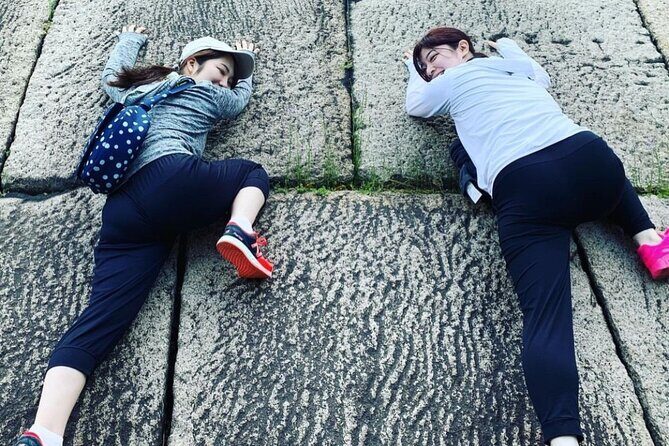
- Small group (max 8): easier questions, less waiting, and a pace that fits more people
- Built-in Imperial Palace trivia: the stories connect gates, castle remnants, and Tokyo landmarks
- Run or walk option: you can keep it casual without losing the sights
- A very efficient route: from Hanzomon through the East Gardens and back, with photo moments
- Optional shower/locker at JOGLIS: plan for the extra 1,500 yen if you want facilities
Getting started at JOGLIS: where your morning run begins
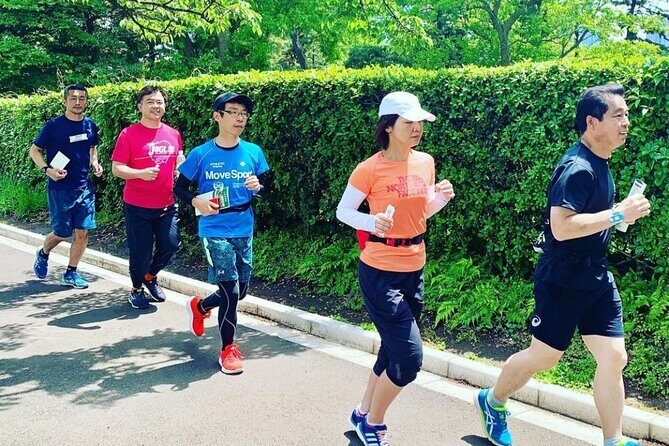
The tour meets at JOGLISJapan, in the Chiyoda/Koji-machi area of Tokyo. The address given is 102-0083 Tokyo, Chiyoda City, Kōjimachi, 1-chōme 7 FMセンター地下 1F. The start time is 8:30 am, and it ends back at the same meeting point.
JOGLIS matters because it sets the tone for the day. You begin with a briefing tied to Imperial Palace Run rules and then head out for the circuit. If you want to freshen up afterward, there are lockers and showers on-site, but they cost 1,500 yen per person and are not included in the tour price. The good news: the tour info also says running clothes, shoes, and towels are available for rent for a fee, so you can pack lighter if you need to.
Timing is the other big piece. The tour is designed for running earlier in the day when you’ll typically face fewer crowds than later on, which makes a difference around gates and viewpoints. Less crowd pressure also means you can actually hear the guide and take photos without constantly weaving.
You can also read our reviews of more tours and experiences in Tokyo.



Why the route feels personal: gates, bridges, and the East Gardens
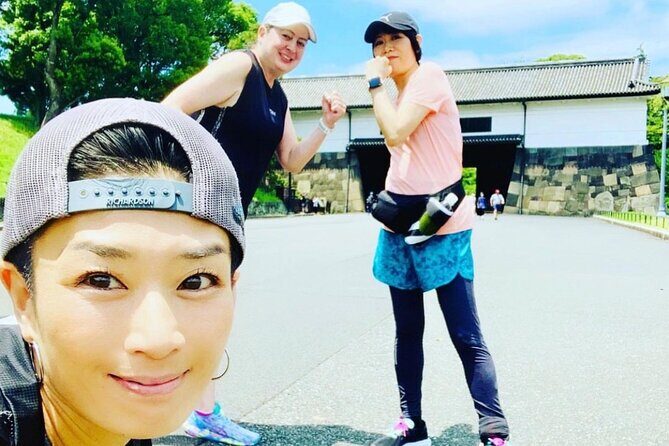
This is not a slow, sit-and-listen tour. It’s a moving tour that uses Tokyo’s Imperial Palace layout like a living map. You’ll pass multiple gates and key areas (Hanzomon, Sakurada-mon, Nijubashi Bridge, the East Gardens entry), then circle back out through drawbridge-style grounds and finish near JOGLIS.
Two details help this feel more “you” than “tour-bus.” First, you’re in a group capped at 8, so the guide can answer questions without having to repeat everything for dozens of people. Second, the tour includes short stops—think about 5 to 20 minutes—so you get variety without losing momentum.
Language is also practical. The experience is conducted in Japanese and simple English, which is useful if you want to follow the main stories and still ask questions. If you’re relying on basic Japanese, this setup usually keeps things understandable rather than overly technical.
Stop-by-stop: your Imperial Palace run, from Hanzomon to Chidorigafuchi
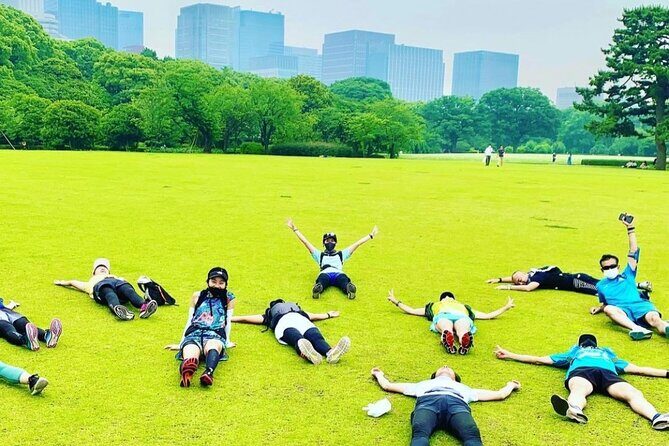
Here’s how the route unfolds, and what each part is good for.
JOGLIS briefing and the warm-up moment (Stop 1)
You start with a history-and-rules briefing tied to the Imperial Palace Run, then you’re off for the run. If you plan to use the changing lockers and showers at JOGLIS, budget the additional 1,500 yen. If you don’t need that, you can keep it simple and just show up with your running basics.
This first segment is more than “getting ready.” It’s where the guide sets expectations: where you’re going, how you’ll move, and what to watch for as you pass gates and palace remnants.
Hanzomon Gate: the start line and the downhill view (Stop 2)
The run starts from Hanzomon, one of the Imperial Palace entrances. This stop is timed to give you a strong early visual payoff: as you descend Miyake-zaka, you can see the National Theatre and the Diet Building. That’s a fun contrast—Tokyo’s modern political and cultural icons framed by the palace approach.
If you like skyline-style sightlines, this is one of your first chances to catch the “Tokyo layered over history” feeling.






Sakurada-mon Gate: Mt. Fuji belief and a power-spot reset (Stop 3)
Next is Sakurada-mon, described as the largest gate in the Imperial Palace. You’ll hear about the belief in Mt. Fuji, something many Japanese cherish, and you’ll get a quick recharge moment at the palace as a “power spot.”
Even if you’re not into spiritual framing, this kind of story is useful because it gives you a lens for how people in Japan connect landscapes and landmarks. It turns a gate photo into a cultural clue.
Sakurada-mon square: the secret of the clock (Stop 4)
Right at the Sakurada-mon square, the guide shares the secret of the clock where many runners gather. This is the kind of detail that makes repeat sightseeing feel fresh: instead of just passing another entrance, you understand why the area draws people in.
Nijubashi Bridge: the photo moment you actually want (Stop 5)
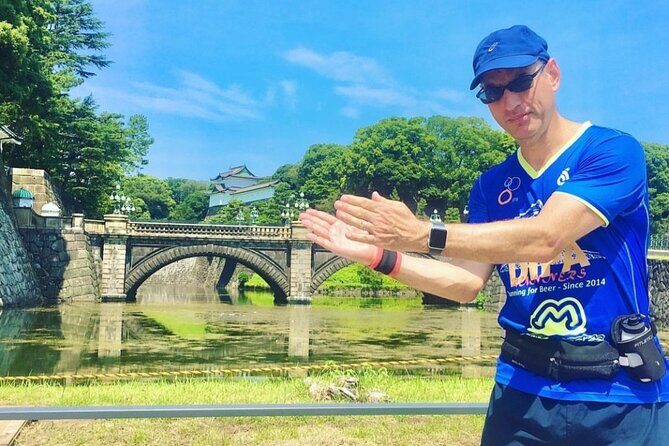
You visit Two-tiered Bridge (Ni-ju Bashi / Nijubashi Bridge), one of the Imperial Palace’s most beautiful bridges, and you’ll take a commemorative photo. This stop is short but high-value because Nijubashi is one of the classic “you’re really here” visuals.
If you’re traveling for photos, aim to treat this as your anchor shot. Everything around it is atmospheric, but this bridge gives you a clean, recognizable Imperial Palace image.
Gyoko-dori Avenue: Tokyo Marathon energy, finish-line style (Stop 6)
At Gyoko-dori Avenue, you reach the finish area of the Tokyo Marathon. The guide will talk about the secrets of Tokyo Station and the Emperor and the Tokyo Marathon, then you’ll take pictures like a marathon finish line scene.
This is a smart stop if you enjoy sports culture. It helps you connect the route you’re running to Tokyo’s public events and training rhythms—not just the palace.
Kokyo Otemon Gate: entering the East Gardens (Stop 7)
From the Kokyo Otemon Gate, you enter the East Gardens of the Imperial Palace. Before entering, there is a baggage inspection, so don’t plan to ignore your bag. This is also the moment where the pace feels most “sightseeing” because you’re transitioning into the garden grounds.
You’ll also be greeted by a Shachihoko, which is a decorative figure described as part of the Edo Castle vibe.
Fujimi-yagura: turret views and Edo Castle echoes (Stop 8)
At Fujimi-yagura, you can see turrets that served as a substitute for the Edo Castle keep. The tour even calls this our little castle, which is exactly the right way to frame it—small scale, strong story.
If you like architectural hints, this is where you’ll notice details more than wide views.
Tenshudai (main tower remains): stone walls and a model (Stop 9)
You’ll see the stone walls of the Edo Castle keep. The original castle keep was destroyed by fire, so you can’t see the full structure, but you can view a reconstructed model. This is one of those stops where the limitations of the site become part of the lesson: history didn’t just happen, it changed, and some pieces are gone.
It’s also a good break stop: about 20 minutes gives you time to look around without feeling rushed.
Kita Hanebashi-mon Gate: exit, then the uphill part (Stop 10)
You return to the outside of the Imperial Palace through the Kitahanebashi Gate, described as a drawbridge of the Edo Castle. From here, you’ll feel the run shift: an uphill climb begins, and the instruction is clear—run at your own pace and enjoy it.
This is where your self-control matters most. If you started fast, take the uphill as your check-in moment rather than a challenge you need to win.
Daikancho-dori: daimyo residences and a cherry blossom vibe (Stop 11)
Daikancho Street was once where daimyo residences stood during the Edo period. It’s also known as a cherry blossom viewing spot. Even if you’re not in peak blossom season, knowing that this street used to be elite residences helps you “read” the space differently than a typical neighborhood street.
Chidorigafuchi Park: cherry tree secrets (Stop 12)
At Chidorigafuchi Park, a famous cherry blossom viewing spot, the guide teaches the secrets of the cherry trees that Japanese people cherish. The focus here is less about facts you could read later and more about how to look at trees with intention: what to notice, why it matters, and how locals talk about them.
Back to JOGLIS: wrap-up and shower option (Stop 13)
When you return to JOGLIS, the tour dismisses you. If you paid for facilities at JOGLIS, you can take a shower. This final stop is all about practicality: cool down, change, and then decide how you want to continue your day.
The trivia angle: why an Imperial Palace geek guide changes the experience
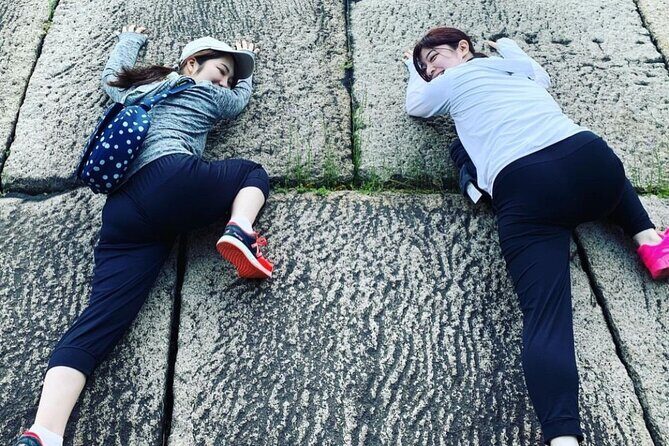
The tour’s core twist is that it’s guided by someone who genuinely loves the Imperial Palace. One of the standout points from the feedback is that you can feel the guide’s Imperial Palace love, and that it makes the tour more fun to do. That’s not a “nice to have.” It directly affects your attention span.
Because the guide keeps connecting stories to what you can see—gates, bridge structure, garden layout, castle remnants—your brain starts building a mental map. The route stops becoming random photo points.
A few specific story hooks you’ll hear include:
- why Mt. Fuji belief matters around the Sakurada-mon area
- the secret of the clock in Sakuradamon square
- how the Tokyo Marathon finish area ties into Gyoko-dori Avenue
- what to look for around Edo Castle stone walls and the reconstructed model
This is also a Q&A friendly setup. The tour info says you can ask questions anytime about the Imperial Palace. In a small group, those questions don’t get swallowed by noise.
Pace, fitness, and how to make it work for you
The tour is aimed at people with moderate physical fitness. That doesn’t mean it’s a race. It does mean you should be comfortable with sustained movement for about 2.5 hours with some running sections and some walking sections.
A smart way to approach it:
- Treat the early parts as warm-up, especially after the briefing
- Expect the most noticeable effort after Kitahanebashi, when uphill begins
- Use the stop points to recover—short breaks are part of the design
If you’re coming from another part of Tokyo that morning, plan a light schedule. This is not ideal if you already have a demanding day lined up where you’ll need to sprint from one thing to another immediately.
And if running isn’t your thing, you can also walk. You’ll still get the story beats and the key visuals.
Price and value: what $90 really buys (and what costs extra)
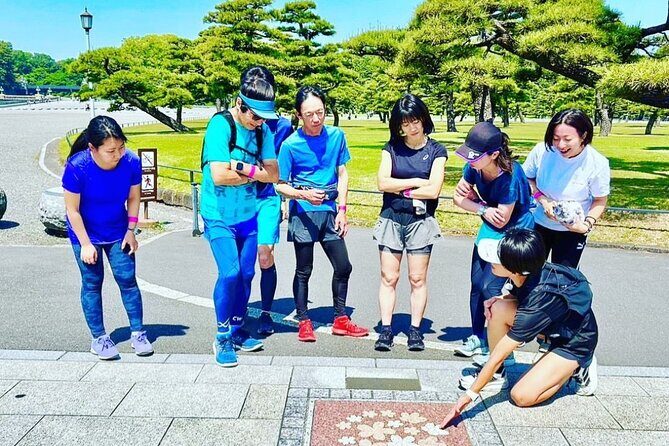
The price is $90 for a tour lasting about 2 hours 30 minutes, and it includes the guide fee. The route is guided, organized, and capped at 8 people, which is part of the value proposition.
What’s not included:
- Locker and shower at JOGLIS: 1,500 yen per person if you want that
- Running clothes, shoes, and towels rental: available for a fee
- There’s no separate admission fee mentioned at most gates (many stops list admission ticket free), but the JOGLIS facility costs are clearly flagged as extra
So the real question isn’t just the $90. It’s whether you’ll pay the optional facilities. If you do, your total goes up a bit, but you also buy comfort for the rest of your Tokyo day.
When this tour is a great fit (and when to skip it)

This is a strong match if you want:
- an active morning without committing to a full-on marathon
- a small group with real opportunities to ask questions
- an efficient way to see iconic Imperial Palace areas plus castle remnants
- a guide who explains more than the postcard basics
It may not be your best choice if:
- you’re dealing with injury or you can’t manage an uphill segment
- you want a totally relaxed, unstressed sightseeing pace with no running focus
- you prefer a longer, museum-style historical tour rather than a gate-and-garden walk-through with trivia
Should you book the Imperial Palace run with trivia?
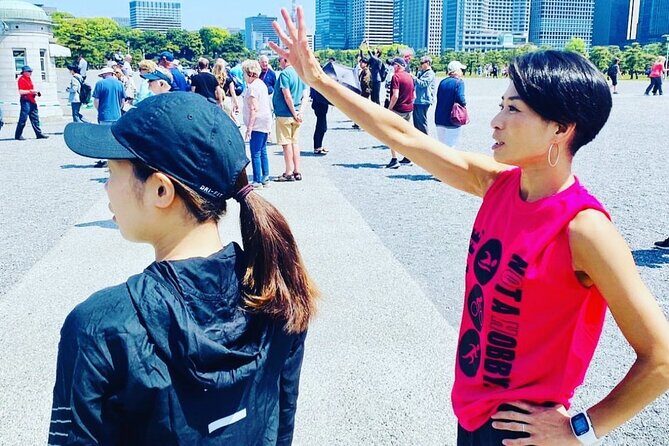
If you like your sightseeing with motion and stories, I’d book it. The route hits high-recognition spots like Nijubashi Bridge and the East Gardens, but it does so through a format that keeps you engaged: short stops, photo moments, and trivia you can connect directly to what you’re seeing. The small-group cap is the difference-maker if you care about asking questions and not feeling like a number.
Book it especially if you’re early in Tokyo and want a morning that feels productive but not punishing. If you’re unsure about the run, remember you can walk—just plan to bring comfortable shoes and expect a bit of effort after Kitahanebashi.
FAQ
How long is the Imperial Palace run tour?
It’s about 2 hours 30 minutes long, depending on pace and conditions during the morning.
What time does the tour start, and where do I meet?
The tour starts at 8:30 am at JOGLISJapan, 102-0083 Tokyo, Chiyoda City, Kōjimachi, 1-chōme7 FMセンター地下 1F. It ends back at the meeting point.
How big is the group?
This experience has a maximum of 8 travelers.
Do I have to run the whole time?
No. The tour is designed for people who may prefer casual running, but it also notes that if running isn’t your thing, you can walk.
What languages is the tour offered in?
The tour is conducted in Japanese and simple English.
Are lockers and showers included?
Locker and shower use at JOGLIS is not included. If you want to use the facilities, there’s an additional 1,500 yen per person.
Is there an admission ticket cost for the palace stops?
Most stops in the route list the admission ticket as free. The extra cost clearly mentioned is for locker/shower at JOGLIS.
What if the tour is canceled due to weather, or I need to cancel?
The tour requires good weather. If it’s canceled due to poor weather, you’ll be offered a different date or a full refund. You can also cancel up to 24 hours in advance for a full refund.