REVIEW · TOKYO
Japanese Traditional Breakfast and Tea Ceremony
Book on Viator →Operated by True Japan Tour · Bookable on Viator
Matcha teaches patience in 90 minutes. This Tokyo experience pairs a gentle breakfast with a real tea ceremony, guided by a tea master and topped with Zen-focused commentary. You’ll also learn what those classic tea-ritual details mean, including the role of a Zen hanging scroll.
What I like most is the hands-on style. You don’t just watch matcha being prepared; you get to make your own tea in a second mini ceremony, with clear instruction.
One thing to factor in: the meeting point is in a specific building, and if you’re navigating Tokyo on foot for the first time, you may need a couple extra minutes to find the exact entrance.
In This Review
- Key highlights to look forward to
- Kikai Shinkō Kaikan at 9:00 am: the calm start you came for
- Japanese breakfast basics: onigiri, rice, and just-right sweets
- The Zen meditation moment: why it’s included (and why it helps)
- Matcha tea ceremony explained in real-life detail
- You’ll make tea yourself: the second ceremony advantage
- Zen as a set of habits, not a lecture
- What’s included vs. what you’ll need to handle
- Price and value: $60.81 for teaching, not just tasting
- Logistics that matter: weather, confirmation, and the meeting point hunt
- Who should book (and who might skip this morning)
- Should you book this Japanese traditional breakfast and tea ceremony?
- FAQ
- Where is the meeting point for this experience?
- What time does the tour start?
- How long does the Japanese breakfast and tea ceremony take?
- Is breakfast included?
- Is there English support during the tea ceremony?
- Can I cancel for a full refund?
Key highlights to look forward to
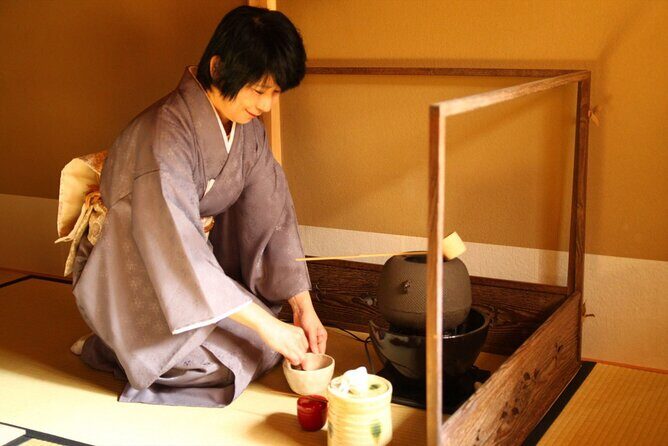
- A real matcha ritual you can repeat at home, with practical steps you’ll actually remember
- Japanese breakfast that goes beyond toast, centered on rice balls and local flavors
- Zen commentary tied to tangible objects, including the hanging scroll
- A short meditation to start the day calmly, not a performance—more like a reset
- Hands-on tea practice during a second ceremony, guided by an English-speaking tea master
- Small group size (max 28), which helps you ask questions without feeling rushed
Kikai Shinkō Kaikan at 9:00 am: the calm start you came for
This experience starts at 9:00 am at Kikai Shinkō Kaikan in Shibakōen (Minato City). It’s the kind of morning plan that skips the usual tourist scramble and trades it for something slower, quieter, and very Tokyo in its own way.
The setting is part of the value. A tea ceremony works best when you’re not fighting the noise of a hotel lobby or a crowded street. And because it ends back at the meeting point, you don’t have the stress of figuring out your next move right after.
Group size is capped at 28 travelers, so it’s not a one-person show and it’s not a cattle call either. In practice, that balance matters: you get the structure of a guided program but still have room to connect with the tea master when questions come up.
You can also read our reviews of more tours and experiences in Tokyo.



Japanese breakfast basics: onigiri, rice, and just-right sweets
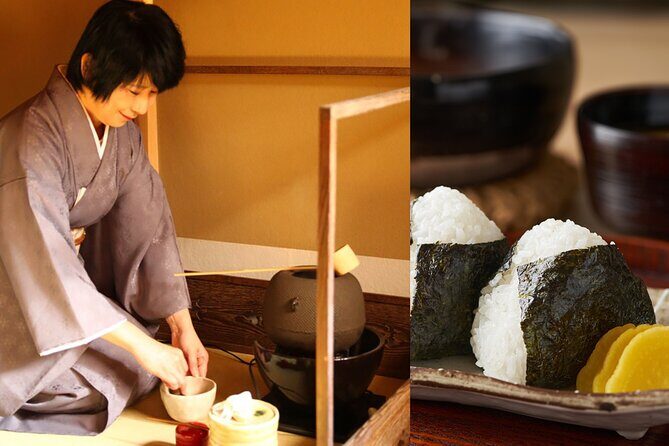
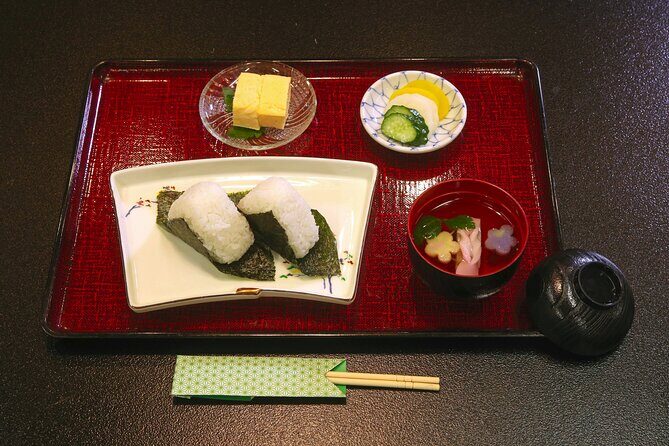
The breakfast here is described as light, but it’s not the bland kind. You can expect freshly prepared rice balls (onigiri) along with other local flavors, plus traditional Japanese sweet confections.
What’s smart about this approach is that it matches the rest of the ceremony. Tea and Zen rituals aren’t meant to happen while your stomach is either totally empty or wildly overloaded. A light meal keeps you comfortable so you can actually focus on the gestures, the timing, and the meaning.
There’s also a practical benefit: if you like Japanese food, this is a shortcut to understanding breakfast as a culture, not just a meal. You’ll see how rice sits at the center, how simple flavors let matcha taste clearer, and how sweets fit in without turning the morning into a sugar sprint.
If you’re the type who usually skips breakfast because you’re always on the move, this is a good reason to slow down. You’ll get fed and you’ll get context—two things hotel breakfasts rarely deliver.
The Zen meditation moment: why it’s included (and why it helps)
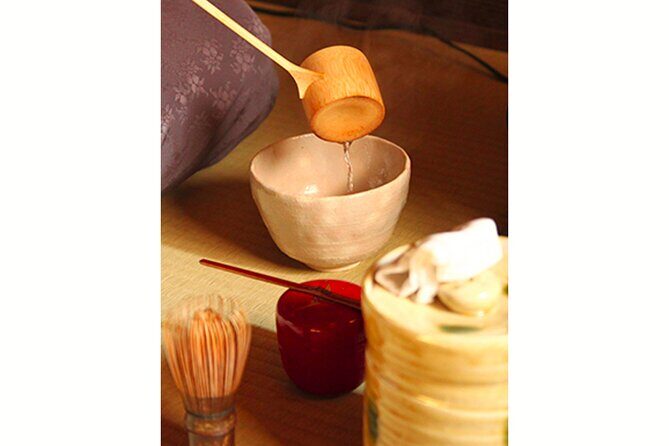
Before the tea gets fully underway, there’s a short meditation period. This isn’t labeled as a fitness class or a spiritual lecture; it’s more like a quiet pause that changes how you experience the rest of the session.
Here’s the key: tea ceremony details can feel fussy at first—whisking, holding, receiving, pausing. A short meditation helps your brain stop treating those steps like a checklist. You become more aware of timing and attention, which is basically what the ceremony is training.
Even if you don’t think you’re a meditation person, this portion tends to land well because it’s brief and woven into the flow. It’s the reset you want on a morning when you’re jet-lagged or just need your day to start gently.
Matcha tea ceremony explained in real-life detail
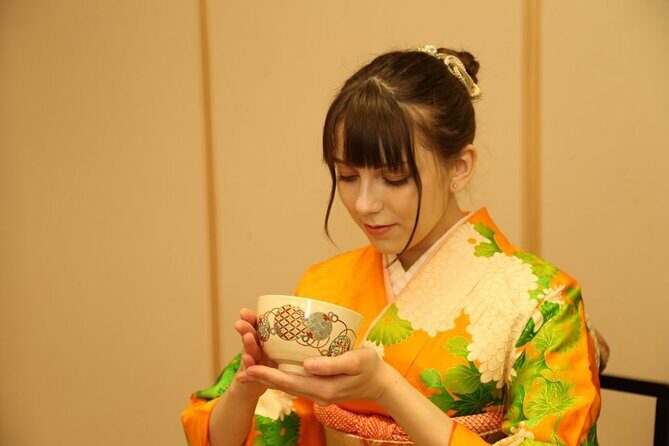
The ceremony centers on matcha, and you’re not getting a watered-down version. Matcha is made by the host using high quality matcha, and the whole session includes explanation in English.
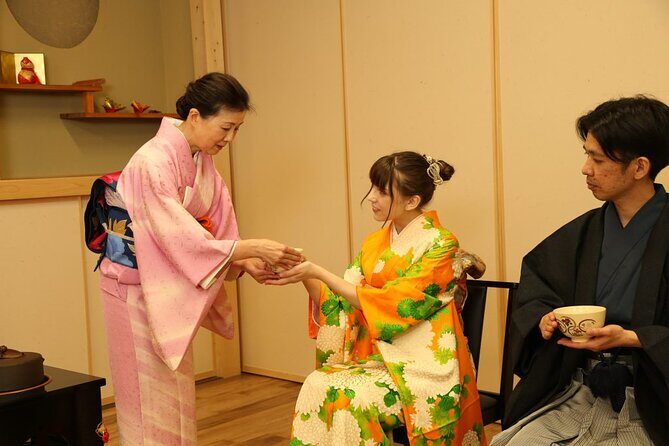
The tea master’s role is a big part of why this works. The performance is led by a tea master with 5+ years of experience, and there’s also a bilingual licensed tea master (English). That matters because you can actually connect the motions to meaning, instead of just copying movements without understanding.
One of the most distinctive elements is the hanging scroll, which expresses the spirit of Zen. You’ll hear what it represents and how it fits into the mood of the room. In other words, the ceremony isn’t only about taste—it’s also about atmosphere, symbolism, and respect for the moment.
Tea utensils are explained too, which is where many tea experiences fall short. If you’ve only ever watched videos, the first time you see the tools up close, it can feel random. Here, you’re guided through what the utensils are used for and why their use is so intentional.
You’ll make tea yourself: the second ceremony advantage
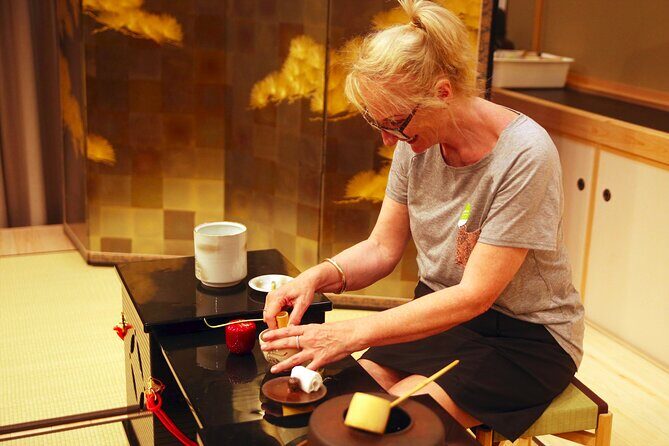
A major difference between a lot of tea tastings and this one is that you participate. After the guided performance, there’s a second tea ceremony performed by yourself (with instruction).
This part is where the value really shows. Watching is pleasant, but learning to do it once—correctly—turns the experience into something you can recreate later. You get a chance to practice in a structured way, with a tea master guiding you when needed.
Think of it as the difference between reading a cooking recipe and making the dish. You still learn the theory, but you also build muscle memory: how to handle the bowl, how to approach the sequence, how to pay attention to the final cup.
You also get sweetness as part of the flow. Traditional sweets are included, and they’re typically served in a way that balances the bitterness and earthiness of matcha. Practically speaking, it helps your palate adjust so you don’t treat matcha like a harsh wake-up call.






Zen as a set of habits, not a lecture
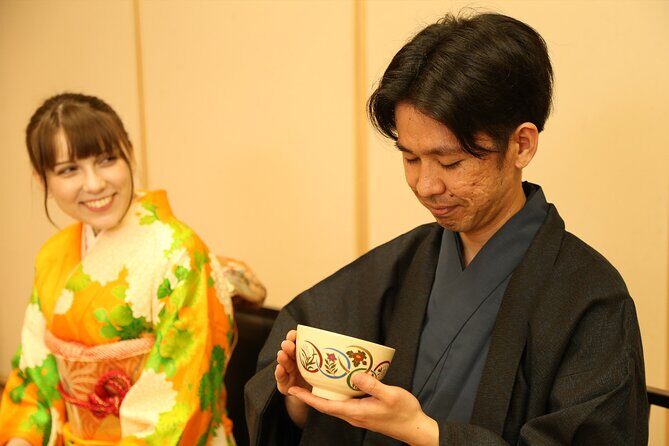
The ceremony includes commentary about Zen practices, and it’s framed around how the ritual trains attention. This matters because it keeps the experience grounded. Instead of feeling like you’re being asked to believe something huge, you’re shown how Zen shows up in everyday actions: patience, restraint, respect for tools, and calm pacing.
I like that the explanation covers both the conceptual side and the physical side. When you understand that a hanging scroll, a pause, or a particular utensil has meaning, you stop viewing the ceremony as a performance for tourists.
This is also where a smaller group helps. When you have time to ask a question, the ideas become clearer. You’re not just absorbing facts—you’re translating them into something you can remember.
What’s included vs. what you’ll need to handle
Included in the price:
- Tea ceremony performance with a tea master (5+ years’ experience)
- Explanation of tea ceremony, Zen practices, hanging scrolls, and tea utensils in English
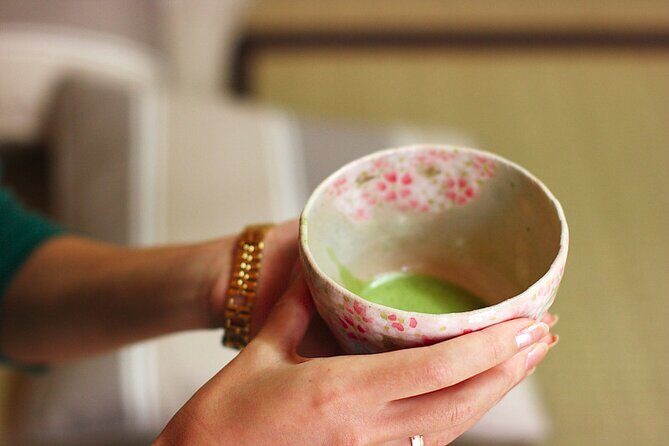
- Matcha green tea
- Traditional Japanese sweets
- Breakfast
- Second tea ceremony where you perform it yourself with instruction
Not included:
- Pick-up and drop-off services
- Any extra food or beverages
That’s a pretty clean setup. You know what you’re paying for: food, matcha, teaching, and participation. The absence of pick-up means you should plan to arrive on time using public transportation since the meeting point is described as near it.
Also, because it’s a morning event, you’ll want to treat it like your breakfast plan—not like a snack stop. You’re there for about 1 hour 30 minutes (approx.), and the included meal plus sweets are part of the rhythm.
Price and value: $60.81 for teaching, not just tasting
At $60.81 per person, this isn’t the cheapest thing on a Tokyo morning schedule. But it also isn’t just a matcha drink plus a photo. You’re paying for multiple layers:
- a guided tea ceremony with an English-capable licensed tea master
- Zen-focused interpretation (including the hanging scroll)
- breakfast plus traditional sweets
- hands-on participation in a second ceremony
- small-group attention (max 28)
If you’ve ever felt frustrated by “cultural” experiences that mostly feel like a short show, this is the opposite direction. The hands-on portion is the big reason the price feels fair. You’re leaving with practical memory—how it’s done—rather than only a nice story to tell.
In Tokyo, a similar hour-and-a-half can easily vanish into a generic museum stop or a standard meal with no teaching. Here, the meal is paired with a real craft tradition.
Logistics that matter: weather, confirmation, and the meeting point hunt
This experience needs good weather. If it’s canceled due to poor weather, you’ll be offered a different date or a full refund. That’s not a guarantee you’ll always avoid disruption, but it gives you a clear plan B.
Confirmation happens within 48 hours of booking, subject to availability. You also get a mobile ticket, which reduces the hassle of printing and sorting paper.
One practical note: the meeting place is specific. Kikai Shinkō Kaikan has a defined address and you start there at 9:00 am. If you tend to arrive right at the minute hand, give yourself extra buffer. Even experienced travelers sometimes lose a few minutes finding the exact venue when a building complex has multiple entrances.
Who should book (and who might skip this morning)
This is a great fit if you want:
- a calmer, more meaningful Tokyo morning than the typical breakfast rush
- a matcha experience that includes how to do it, not just tasting
- English explanations of the ceremony’s meaning, utensils, and Zen symbolism
- a small-group activity with enough interaction to ask questions
You might reconsider if:
- you’re short on mornings and want a quick stop rather than a structured 1h30 experience
- you’re hoping for pick-up/drop-off convenience (none is included)
- you dislike participating in hands-on activities, since you’ll do a second ceremony yourself
For families, it also looks like the kind of experience that works well because the pace is gentle and the food is included. If you’re traveling with kids, you’ll likely appreciate that the day begins with breakfast and sweets, then transitions into short, guided steps rather than a long formal event.
Should you book this Japanese traditional breakfast and tea ceremony?
Yes, if you want a Tokyo experience that’s practical, calm, and rooted in real ritual. The standout value is the combination of breakfast + sweets + guided ceremony + making tea yourself. That hands-on second ceremony is what turns it from a nice cultural stop into a skill you can bring home.
If your goal is only a quick photo moment, you’ll probably move on quickly. But if your goal is to understand matcha culture and Zen through actual practice, this one is worth your morning.
FAQ
Where is the meeting point for this experience?
It starts at Kikai Shinkō Kaikan, 3-chōme-5-8 Shibakōen, Minato City, Tokyo 105-0011, Japan. The activity ends back at the meeting point.
What time does the tour start?
The start time is 9:00 am.
How long does the Japanese breakfast and tea ceremony take?
The duration is about 1 hour 30 minutes.
Is breakfast included?
Yes. A light breakfast is included, along with traditional Japanese sweets.
Is there English support during the tea ceremony?
Yes. The explanation of the tea ceremony, Zen practices, hanging scrolls, and tea utensils is provided in English, and there is a bilingual licensed tea master (English).
Can I cancel for a full refund?
Yes. You can cancel free of charge up to 24 hours in advance of the experience start time for a full refund.