REVIEW · TOKYO
Tokyo: Chopstick-Making Workshop
Book on GetYourGuide →Operated by Traveling Tokyo · Bookable on GetYourGuide
Carve your own chopsticks in Shinjuku. This 1-hour workshop turns basic wood into a real, usable souvenir, and I especially like the wood selection (you choose the grain and tone) and the optional name engraving at the end. One possible drawback: the meeting point is on a specific floor in a building, so you may want to arrive a few minutes early just to avoid hunting the right entrance.
I like that the process is hands-on and straightforward. You’ll use a stand to hold the pieces, carve to shape with a hand plane, then finish with sandpaper and a coat of natural oil. Many instructors are patient and interactive too—people often mention names like Masa, Koji, Mimi, and Lucy, and it shows in the tone of the class: clear steps, lots of help.
If you want a quick break from Tokyo’s pace, this is a great pick. It’s beginner-friendly, and it’s also a nice activity for couples, friends, or even solo travelers who want something tactile (not just another photo stop).
In This Review
- Key things to know before you start
- Tokyo Chopstick-Making in Shinjuku: What You Actually Make in One Hour
- Picking Wood and Length: Where Your Taste Shows Up
- The Carving Step With a Hand Plane: Calm, Focused, and Very Hands-On
- Sanding, Natural Oil, and Finishing: Making It Feel Good in Real Life
- Engraving Your Name: The Moment It Turns Into a Personal Souvenir
- Instructors and Group Vibe: English Support From Masa, Lucy, Koji, and More
- Price and Value: Why $6 Feels Like a Deal in Tokyo
- Meeting Point at Shinjuku West Square Building 10F: Getting There Without Stress
- Who This Workshop Fits Best (and Who Might Not Love It)
- FAQ
- FAQ
- Where is the meeting point?
- How long is the chopstick-making workshop?
- What does it cost?
- Is it suitable for beginners?
- What language support do you get?
- What’s included in the price?
- Can you engrave names on the chopsticks?
- Is there an accessibility option?
- What are the cancellation and payment options?
- Should You Book This Tokyo Chopstick Workshop?
Key things to know before you start
- Choose the wood you like based on color and grain, then commit to that decision for your final look.
- Carve with a hand plane while the pieces are held in place, so you’re not fighting the tool.
- Sanding and oil finish your work so the chopsticks feel comfortable and look polished.
- Name engraving is the personalization moment, with options in English or Japanese (and sometimes other languages).
- English-speaking staff guide you step-by-step, with instructors like Masa, Koji, and Mimi frequently called out.
Tokyo Chopstick-Making in Shinjuku: What You Actually Make in One Hour
This workshop is built around one simple goal: you leave with a pair of chopsticks you made yourself. The duration is short—about 1 hour—but the flow isn’t rushed. It’s designed so you can do real work: shape the wood, smooth it, and finish it.
What you’re making is not a craft you set up and watch from a chair. You carve. You sand. You oil. That’s the difference between buying a souvenir and building one. For $6, you’re not paying for a factory product—you’re paying for time, tools, guidance, and a finished take-home item.
The setting is also practical: you meet at Shinjuku West Square Building 10F. That’s convenient because Shinjuku is easy to reach and it keeps the workshop from feeling like a long detour. Just give yourself a little buffer to locate the entrance, since a few people have flagged that the building entry isn’t always obvious at first glance.
A few more Tokyo tours and experiences worth a look

Picking Wood and Length: Where Your Taste Shows Up
The workshop starts with choices, and this is where I think the value really lives. You get to pick from a variety of wood types, and each one brings its own character—color, grain, and overall tone.
You’ll also choose the chopstick length. That matters more than people think. A longer chopstick can feel different in your grip, and shorter ones can be more natural depending on your hand size and how you usually eat. The nice part here is that you’re not stuck with a generic pair. You’re building a personal tool.
A useful tip: decide what you want first—light and mellow, dark and dramatic, or something in between—then let that drive your engraving too. On lighter wood, engraved text can pop more. On darker wood, the grain can be the star. Either way, you’ll end up with chopsticks that look like you chose them on purpose.
You might see that some wood options can cost extra for certain character pieces. For example, one participant mentioned there was a purple option and that some woods had additional pricing. So if you’re on a strict budget, stick to the included wood options and upgrade only if a piece genuinely pulls you in.
The Carving Step With a Hand Plane: Calm, Focused, and Very Hands-On
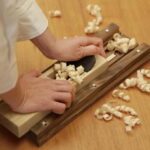
Once you’ve picked your wood, you move into shaping. The process uses a hand plane on pieces mounted in a stand, which is a big deal for beginners. You’re not trying to invent technique while also chasing the tool angle. The setup helps you focus on rhythm and control.
This stage is also surprisingly satisfying. You’re taking a blocky chunk and turning it into two recognizable chopsticks. You feel the grain under your fingers, and you notice how wood changes as you remove thin layers. A lot of people describe it as therapeutic—and I get why. Tokyo is loud. This moment is quiet, physical, and repetitive in a good way.
Instructors do a lot here. People frequently mention names like Koji, Masa, and Mimi for being patient and clear. That matters because carving mistakes are normal when you’re new. The staff guidance helps you correct course without turning it into a stress test.
Practical advice: take your time at the carving stage. This isn’t about speed. The better your initial shape, the less you’ll fight later with sanding. And when you’re done well, the final finish looks smoother and feels better in your hand.
Sanding, Natural Oil, and Finishing: Making It Feel Good in Real Life
After carving comes sanding. This is where your chopsticks start to move from handmade-looking to comfortable-to-use. You’ll smooth the surface and edges so they’re pleasant to hold, not just pretty in a photo.
Then you add natural oil. That step does two important things:
- It protects the wood.
- It enhances the finish so your chopsticks look polished rather than raw.
This is why the workshop feels like more than a one-off craft. You’re not just shaping wood—you’re finishing it into a practical object you can use at home.
If you’re thinking about gifting: the oil finish makes a difference. It’s the difference between something that looks like a school project and something that feels like a thoughtful handmade item.
Engraving Your Name: The Moment It Turns Into a Personal Souvenir
The last step adds personality. You can have your name engraved—either English or Japanese—and the goal is simple: make the chopsticks yours.
Many people choose engraving because it’s the easiest way to turn a finished object into a memory you can keep. When you see your name on the wood, it stops being generic. It becomes a conversation starter in your kitchen drawer.
Here’s a practical way to decide what to engrave: keep it short. If you want something elegant and readable, use fewer characters or a short name. That’s especially helpful on smaller chopstick sections where space is limited.
If you’re traveling with kids or a group, engraving is also the fun part. It’s a quick way to personalize each pair without adding extra steps that slow the whole class down.





Instructors and Group Vibe: English Support From Masa, Lucy, Koji, and More
What people rate highly isn’t just the craft. It’s the guidance.
You’ll have English-speaking staff available throughout, and instructors like Masa, Koji, Mimi, Lucy, and Shu come up repeatedly in feedback for being patient, interactive, and clear. In plain terms: they explain what to do, then they help you do it.
That support is a big reason this works for beginners. If you’ve never used a hand plane before, you don’t need a background in woodworking. The staff helps with the small technique points that make the difference between rough shaping and a clean result.
You might also find a mix of international and Japanese participants in the same workshop. One review noted Japanese people in the room as well, which makes sense for a local-style craft. Either way, the vibe tends to be friendly and focused on finishing your own pair.
Price and Value: Why $6 Feels Like a Deal in Tokyo
Let’s talk money. At $6 per person for a full hour of instruction, tools, wood selection, sanding, and natural oil, the value is unusually strong. You’re paying for hands-on making plus a real finished souvenir, not just a demonstration.
The included steps are key:
- selection of wood for chopsticks
- carving and shaping
- sanding and smoothing
- application of natural oil
That combo is what turns your effort into an object you’ll actually use. For a cheap activity in Tokyo, that’s a solid deal.
Now, the one thing to watch is wood choices. Some wood types may have an additional cost (you might see special colors like purple offered beyond the included set). That doesn’t make the base price worse—it just means you can control your final spend by what you select.
If you want the best value, do the included woods and optional engraving. If you want a standout pair for yourself or a gift, consider upgrading only if a particular wood grain truly catches your eye.
Meeting Point at Shinjuku West Square Building 10F: Getting There Without Stress
You meet at Shinjuku West Square Building 10F. The coordinates are 35.6959774, 139.6984349, which can help if you’re using a map app that supports pin drops.
Because it’s on a specific floor of a building, I recommend arriving a few minutes early. A couple of people have mentioned the entrance can be tricky to find, so don’t plan to sprint across Shinjuku at the last second.
If you’re the kind of traveler who hates missing the start of things, this is a good activity to schedule on a day when you have time buffer built in.
Who This Workshop Fits Best (and Who Might Not Love It)
This is a great match if you want:
- a hands-on Tokyo experience you can finish in one hour
- a take-home souvenir that feels personal (wood choice + engraving)
- an easy activity with English guidance
It’s also a good option for families, since kids can follow along with staff support. One review specifically mentioned a nine-year-old doing fine with the process.
You might want to pick something else if you’re looking for a passive sightseeing activity. This one is work. Small work, yes—but still work. You’ll be using tools and doing the finishing steps.
And if you’re very sensitive to tactile tasks, sanding and carving could feel intense at first. The upside: you get immediate help, and you’ll finish with something you can hold comfortably at home.
FAQ
FAQ
Where is the meeting point?
You meet at Shinjuku West Square Building 10F, at coordinates 35.6959774, 139.6984349.
How long is the chopstick-making workshop?
The workshop duration is 1 hour.
What does it cost?
The price is $6 per person.
Is it suitable for beginners?
Yes. The activity is suitable for beginners, and English-speaking staff are available to assist.
What language support do you get?
The live staff guide is English, and the activity language is English.
What’s included in the price?
Included are wood selection, carving and shaping, sanding and smoothing, and application of natural oil.
Can you engrave names on the chopsticks?
Yes. You can have your name engraved in English or Japanese, and the workshop offers an option for engraving as a final personalized touch.
Is there an accessibility option?
Yes. The workshop is wheelchair accessible.
What are the cancellation and payment options?
You get free cancellation up to 24 hours in advance for a full refund, and you can reserve now and pay later so you pay nothing today.
Should You Book This Tokyo Chopstick Workshop?
If you want a Tokyo activity that’s affordable, hands-on, and genuinely memorable, I’d book it. At $6 for wood choice, carving, sanding, oil, and optional engraving, you get real value in a short time.
This is also one of the rare “small activities” that feels like a skill you can use again, even if you never carve wood at home. Your chopsticks are ready-made evidence that you did something with your hands in Japan, not just around Japan.
One last decision tip: if the meeting point in Shinjuku is easy for you on your schedule, and you like the idea of choosing wood and personalizing with engraving, you’ll probably leave happy—and with something you’ll keep using.