REVIEW · KYOTO
Kimono Tea Ceremony at Kyoto Maikoya, Karasuma Shijo
Book on Viator →Operated by Maikoya · Bookable on Viator
Putting on a kimono changes how you see Kyoto. This 90-minute experience at Kimono Tea Ceremony MAIKOYA Karasuma Shijo pairs dressing up with a guided matcha ceremony led by a tea master, plus etiquette lessons you can actually use later. You’ll also get a chance to taste green tea and traditional snacks right after, in a calm setting designed for learning, not rushing.
I really like the practical rhythm: you watch the key steps, then you make your own bowl of matcha under guidance. I also love that the kimono rental and simple hairstyling are handled for you, so you’re not stuck figuring out sleeves, ties, and shoes in a hurry. Some sessions are hosted with strong English support from staff members such as Yuki, and the tea hosting may be led by someone like Miki, depending on the day.
One consideration: the ceremony happens at close range on tatami-style seating, and tripods aren’t allowed (and photo/video may be limited by the tea master’s rules). If you’re hoping for lots of “setup-to-finish” filming, plan to follow their timing and manners closely.
In This Review
- Quick hits before you go
- Entering Kyoto Tea Culture at Maikoya Karasuma Shijo
- Dressing Up Properly: Kimono Choice, Shoes, and Simple Hairstyling
- The Ceremony Room: Tatami Seating, Tea Etiquette, and Your Role
- The matcha you whisk
- What You’ll Taste After: Green Tea, Snacks, and the Full Loop
- Price and Value: Why $65.39 Can Actually Make Sense
- Scheduling Reality: What the 90 Minutes Feels Like
- Photo and Video Rules: How to Get Great Shots Without Getting in Trouble
- Who Should Book This Kimono Tea Ceremony (and Who Might Skip It)
- Should You Book Kyoto Maikoya’s Kimono Tea Ceremony?
- FAQ
- How long is the Kimono Tea Ceremony at Kyoto Maikoya?
- What does the price include?
- Is transportation or hotel pickup included?
- Where do I meet for the ceremony?
- How big is the group?
- Do I need to bring anything?
- Is there an age limit?
- Are tripods allowed during the ceremony?
- Is mobile ticketing used?
- What are the photo and video rules?
- What’s the cancellation policy?
Quick hits before you go
- Kimono + hair are included, so you start the tradition in the right mood
- Hands-on matcha: you whisk and learn why each step matters
- Small group cap (maximum 4 travelers) keeps it relaxed
- Tea tasting and snacks come after the ceremony, so you get the full experience
- Photo rules are real: no tripods, and recording may be restricted
- You’ll learn etiquette, not just a performance
Entering Kyoto Tea Culture at Maikoya Karasuma Shijo
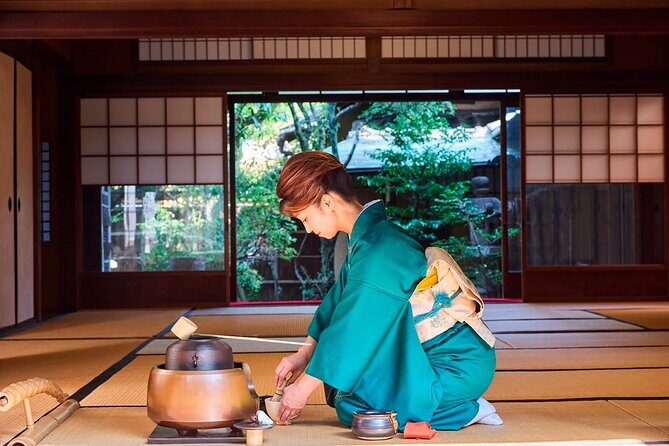
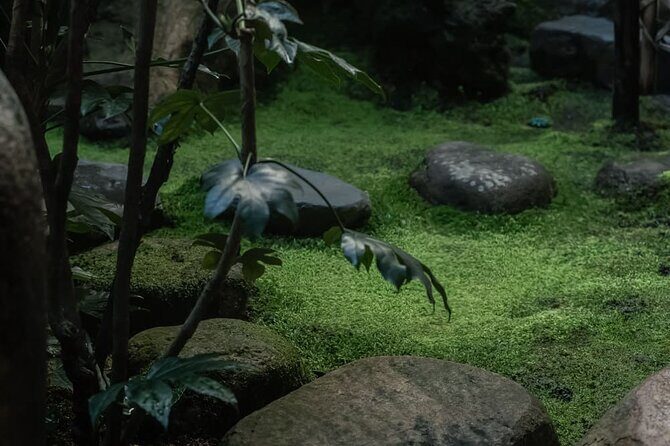
Kyoto has a way of making simple routines feel ceremonial. This experience leans into that idea hard. You’re starting near Karasuma Shijo, meeting at 220 Itoyachō, Shimogyo Ward. From the first minute, the place is set up for you to shift gears from sightseeing mode to tea-culture mode.
The best part is that it doesn’t treat tea as a museum display. You’re guided through the tools and movements, then you make your own matcha. That hands-on part is where the ceremony stops being a story someone tells and becomes a skill you understand.
It’s also built for comfort. The group size is small—up to 4 travelers—and that matters in a ceremony where attention and timing really count. With fewer people, you can see what the tea master is doing and you don’t feel like you’re standing in a line.
And yes, the kimono makes a difference. Even if you only wear it for 90 minutes, dressing the part changes your posture, your pace, and how you move around the room.
You can also read our reviews of more tours and experiences in Kyoto.


Dressing Up Properly: Kimono Choice, Shoes, and Simple Hairstyling
In Kyoto, “kimono experience” can sometimes mean a quick costume moment. Here, the process is treated like part of the tradition. You’ll have access to an array of kimonos, and staff assist you with dressing to ensure you look polished.
What I like about this stage is the logic: you’re not just put into clothing. You’re guided step by step—getting dressed, choosing a kimono, then doing a simple hairstyle to match. Several people describe the dressing team as talented and professional, with hair styling done neatly and carefully.
You’ll also get help with practical details like footwear and finishing touches. That’s important because kimono basics are not intuitive if you don’t live in them. A well-dressed kimono isn’t just for pictures. It helps you sit and move without fighting your outfit.
One small note for your expectations: some sessions are described as having a bit of a kimono assembly-line feel, simply because it’s efficient and the schedule moves. Still, the overall tone stays friendly and respectful, not factory-like in the worst way.
Also, children under 6 aren’t permitted. So if you’re traveling with young kids, this one won’t work—plan something else for that age group.
The Ceremony Room: Tatami Seating, Tea Etiquette, and Your Role
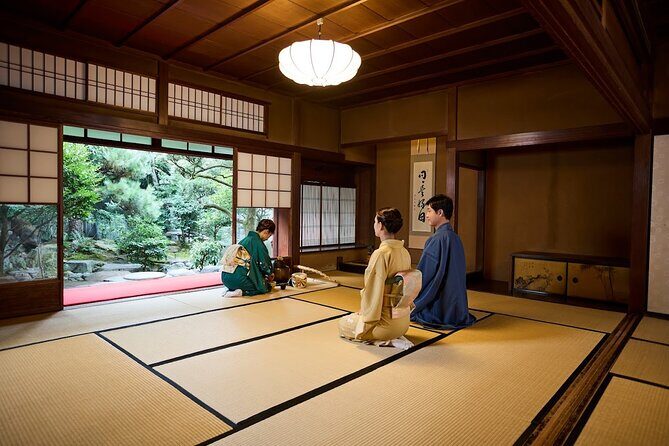
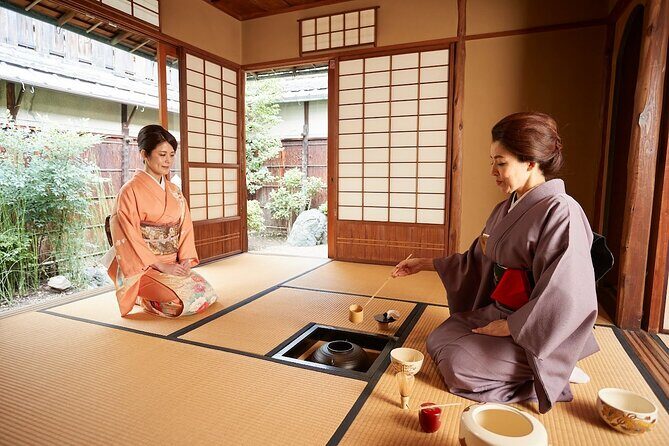
Once the dressing stage ends, you move into the tea portion—where the experience gets serious in a gentle way. You’ll observe each step first, then learn the significance behind the movements, tools, and traditions. This is the etiquette piece that many tea experiences gloss over. Here, it’s explained so you understand what you’re doing and why you’re doing it.
The tea master’s role is the center of the room. You’ll follow their lead for proper manners and the pacing of the ritual. Expect a lot of “watch, learn, then try” rather than a lecture.
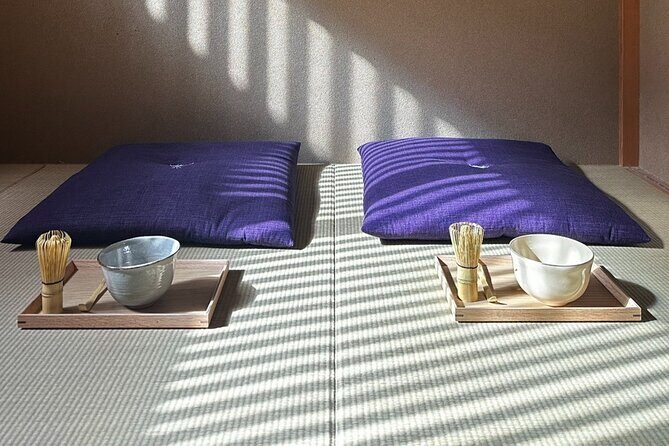
Seating is on tatami-style surfaces. Some people note it can be challenging at first, but chairs may be available, depending on the situation. If you have mobility concerns, this is worth keeping in mind. You don’t want your comfort to steal attention from the ceremony itself.
The matcha you whisk
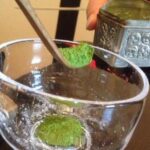
Then comes the part you’ll remember. You prepare your own bowl of matcha using high-quality green tea and a whisk, guided by the tea master. This is where calm focus takes over. You’re not just tasting—you’re learning texture and technique, and you get instant feedback from the process.
Even if you’re not a matcha drinker, this hands-on making step often changes how people feel about it. Several accounts mention learning about matcha and proper drinking etiquette, which makes the beverage feel less mysterious and more intentional.
What You’ll Taste After: Green Tea, Snacks, and the Full Loop
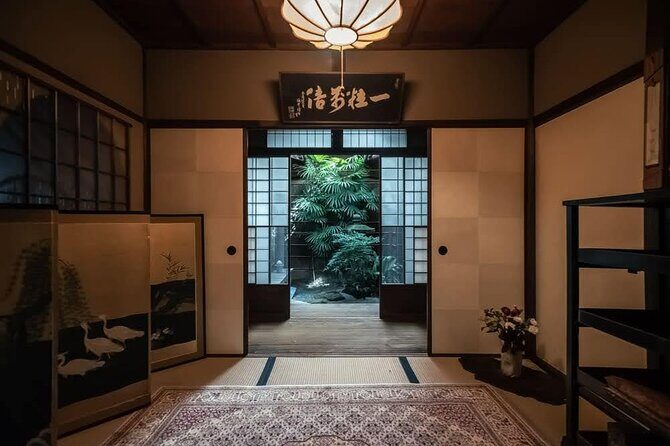
A lot of “tea experiences” stop at ceremony. This one continues. After you finish, you’ll enjoy tasting green tea and traditional snacks.
That post-ceremony snack stage is valuable because it gives you a natural landing. You’re not leaving right when your brain is still in ritual mode. Instead, you can relax, taste again, and compare your experience—how it felt making it versus how it tastes afterward.
It also helps the overall flow of the 90 minutes. The ceremony has structure, then the snacks provide a softer social finish. That matters on travel days when you’re tired and your schedule is tight.




Price and Value: Why $65.39 Can Actually Make Sense
Let’s talk money with clear eyes. At $65.39 per person for about 1 hour 30 minutes, you’re paying for more than a lesson. You’re getting:
- Kimono rental
- Simple hairstyling
- Matcha-making tools
- Green tea and traditional snacks
- Guidance from a tea master
If you were piecing this together yourself, you’d likely pay separately for kimono rental and a structured tea lesson, plus time wasted on figuring out logistics. Here, the structure is already assembled for you. That’s the real value: less friction, more time learning and doing.
Also, the small group size helps the value. In a bigger crowd, you might get “look and watch” instead of actually preparing matcha. Here, the pacing is built for hands-on participation.
One more practical point: transportation and hotel pickup aren’t included. So your overall budget depends on how you get there. The good news is that it’s near public transportation, so you can usually avoid expensive taxi hops.
Scheduling Reality: What the 90 Minutes Feels Like
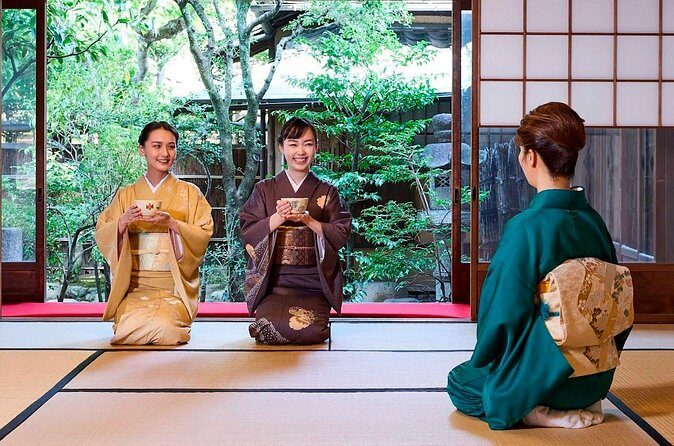
The experience runs about 1 hour 30 minutes. On paper, that sounds short. In practice, it’s long enough to include dressing, seating, explanation, matcha making, and then tasting snacks.
The timeline can feel quick because the ceremony environment depends on timing. You may move from one stage to the next in a clear, efficient sequence. That’s not a bad thing—tea traditions rely on order—but it means you should treat it as an activity with focus, not free roaming time.
Mobile ticketing is used, and confirmation comes at the time of booking. That makes last-minute planning easier.
If you’re the type who hates being rushed, the good news is the small group size keeps things calm. You still move at ceremony speed, but you’re not competing for attention.
Photo and Video Rules: How to Get Great Shots Without Getting in Trouble
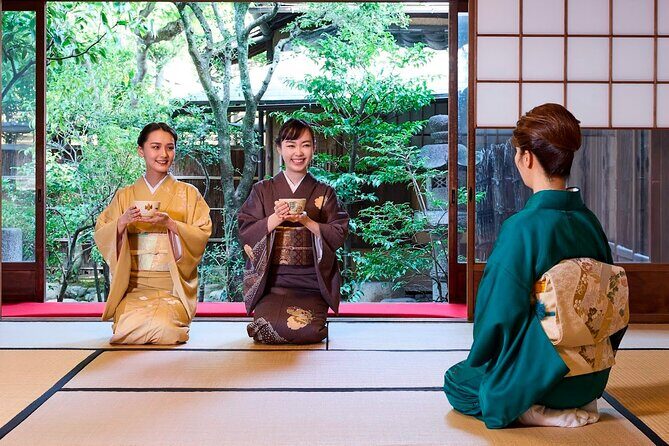
If you care about photos, this part matters. Tripods aren’t allowed during the ceremony. Also, photo and video recording may be limited, and you should follow the tea master’s instructions about timing and manners.
So aim for smart, respectful moments:
- Get your kimono photos during the dressing stage.
- During the ceremony, keep your phone use low and watch for cues from the tea master.
- Don’t plan to set up for long clips, because the rules aren’t that flexible.
The upside? With fewer people and a small room setup, your photos can still look great even without constant filming. You’ll also get the atmosphere without distraction—exactly what you came for.
Who Should Book This Kimono Tea Ceremony (and Who Might Skip It)
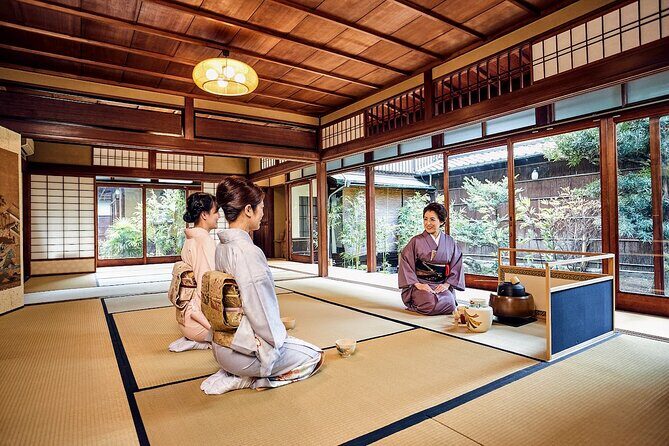
This is a great fit if you want an experience that mixes culture with action. You’ll enjoy it most if you like:
- Hands-on activities
- Traditional etiquette lessons
- Wearing a kimono in a guided, supported way
- Matcha-making and tasting
It can also work well for solo travelers. Several people mention feeling comfortable even when they came alone, and the instructors guide each step.
It’s less ideal if:
- You’re expecting a lot of free time for sightseeing while wearing a kimono
- You need unrestricted filming
- You have strong issues with sitting on tatami-style seating (chairs may help, but it isn’t guaranteed in all situations)
If you’re traveling as a family, double-check the age rule: children under 6 aren’t permitted.
Should You Book Kyoto Maikoya’s Kimono Tea Ceremony?
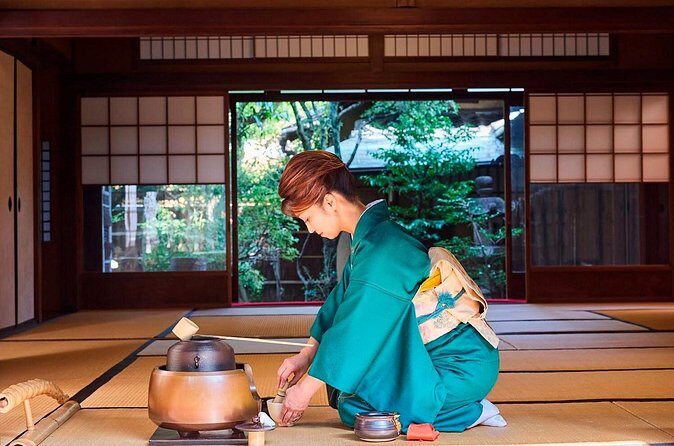
Yes, I’d book it if you want a Kyoto activity that feels both structured and personal. The combination of kimono dressing + hands-on matcha + snacks is a smart way to spend 90 minutes in a city where good traditions can be easy to miss.
Choose it especially if you value small-group attention. A cap of maximum 4 travelers means you’re more likely to actually participate, not just observe. And because the kimono and hairstyling are included, you get the full atmosphere without extra spending or extra planning.
Skip it if you mainly want photos and don’t care about learning, because the ceremony has rules and you’ll be following the tea master’s pace. Also, if you need hotel pickup, factor in getting yourself to Karasuma Shijo by public transit.
If you want one “Kyoto classic” that isn’t just watching—you’re making the tea—this is a strong pick.
FAQ
How long is the Kimono Tea Ceremony at Kyoto Maikoya?
It’s approximately 1 hour 30 minutes.
What does the price include?
Your booking includes a kimono costume, green tea, utensils, simple hairstyling, and snacks.
Is transportation or hotel pickup included?
No. Transportation and hotel pickup/drop-off are not included.
Where do I meet for the ceremony?
You meet at Kimono Tea Ceremony MAIKOYA Karasuma Shijo, 220 Itoyachō, Shimogyo Ward, Kyoto 600-8432.
How big is the group?
The activity has a maximum of 4 travelers.
Do I need to bring anything?
The experience provides the kimono, utensils, tea, and snacks. You just need to show up at the meeting point.
Is there an age limit?
Yes. Children under 6 are not permitted.
Are tripods allowed during the ceremony?
No. Tripods are not allowed during the ceremony.
Is mobile ticketing used?
Yes. The experience uses a mobile ticket.
What are the photo and video rules?
Photo and video recording may be limited, and you should follow the tea master’s instructions about timing and manners.
What’s the cancellation policy?
You can cancel for a full refund up to 24 hours in advance. After that, refunds aren’t available for cancellations made less than 24 hours before the start time.