REVIEW · KYOTO
Kyoto: Samurai Sword & Kimono Action Filming Experience
Book on GetYourGuide →Operated by GOATtrip株式会社 · Bookable on GetYourGuide
Samurai swordplay inside a real temple sounds odd. It also makes sense once you see how the training, the kimono, and the chambara filming all fit together at Myokaku-ji. I like the hands-on feel of learning sword tricks (not just watching), and I like that the instructors are professional period-drama performers. One drawback to plan for: you’ll be moving in a short session, so it’s not a good fit if you have back issues or other medical limits.
This is a 70-minute experience in a small group (max 6), so you actually get individual help. The meeting point is easy to miss if you rush: go to Myokaku-ji Temple, enter through the main gate, then find the Myokaku-ji Dojo to the left.
In This Review
- Key things I’d circle on your plan
- Why Myokaku-ji Temple Changes the Feel of Chambara
- Meeting at the Myokaku-ji Dojo: Getting There Without Stress
- Kimono Dressing: One Part Tradition, One Part Costume Upgrade
- Sword Training in a Temple Dojo: Makkogiri and Kesagiri
- The Chambara Performance: Watching the Pros Work
- Your Swordplay and Filming Scene: Choreography for Real Footage
- Cameras, Downloaded Footage, and What You Actually Take Home
- Value for $127: What You Get for the Time
- Who This Fits Best (and Who Should Skip It)
- Practical Tips to Make Your Session Smoother
- Should You Book This Samurai Sword & Kimono Action Filming Experience?
- FAQ
- Where is the meeting point for the Myokaku-ji Samurai Sword & Kimono experience?
- How long is the experience, and is it a small group?
- Is the kimono included in the price?
- What sword techniques will I learn?
- Can I take photos and record video with my own camera?
- What languages do the instructors speak?
- What should I bring, and what rules apply?
- Who isn’t this experience suitable for, and can I cancel?
Key things I’d circle on your plan
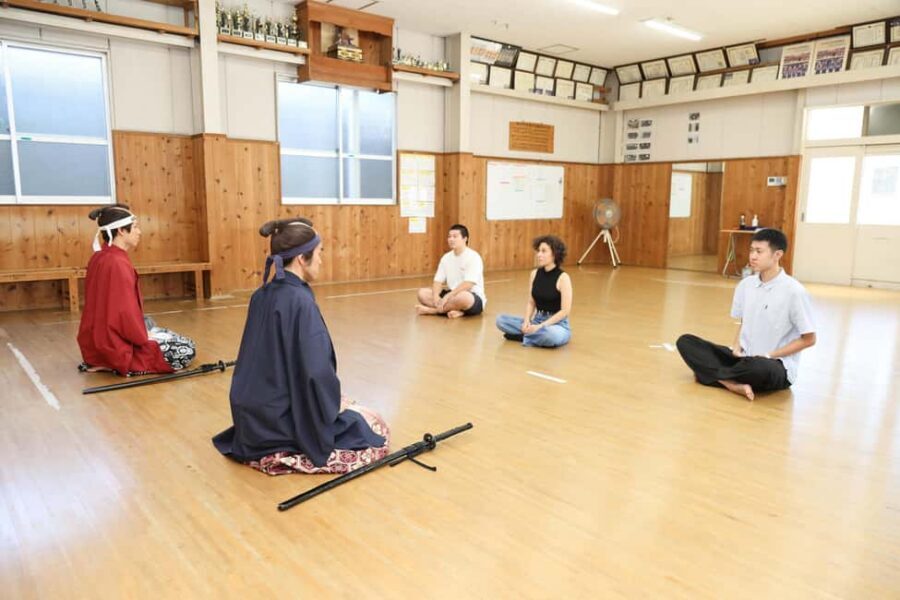
- Myokaku-ji Temple dojo training in a spot linked to Sengoku-era figures
- Kimono rental included so you don’t need to figure anything out yourself
- Sword instruction with real techniques like makkogiri and kesagiri
- Chambara performance by professional actors with period-drama experience
- You film your own choreographed action scene and take home a download
Why Myokaku-ji Temple Changes the Feel of Chambara
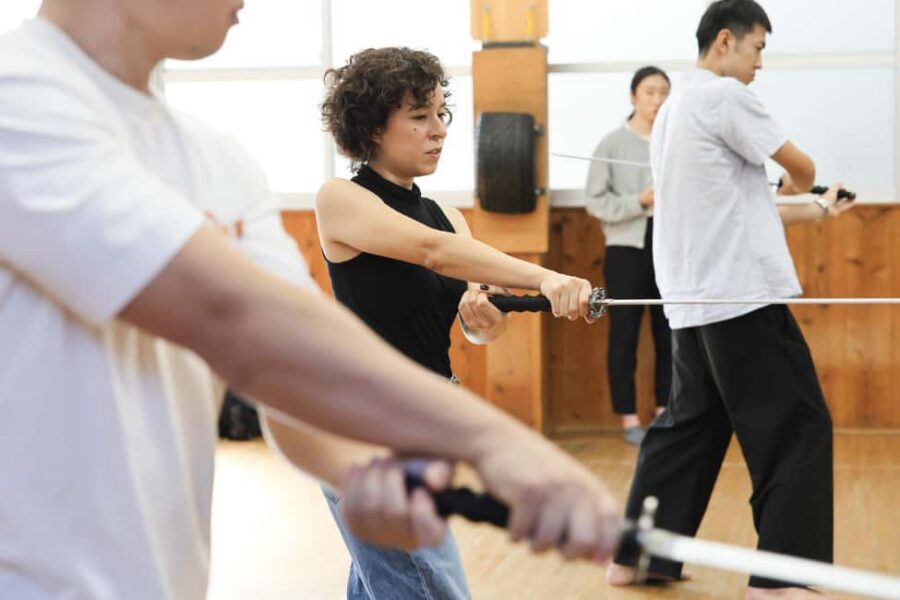
Most samurai shows are built for spectators. This one is built for doing. You start with training at Myokaku-ji, then you practice the sword moves, then you step into a staged action moment that’s filmed like a movie sequence.
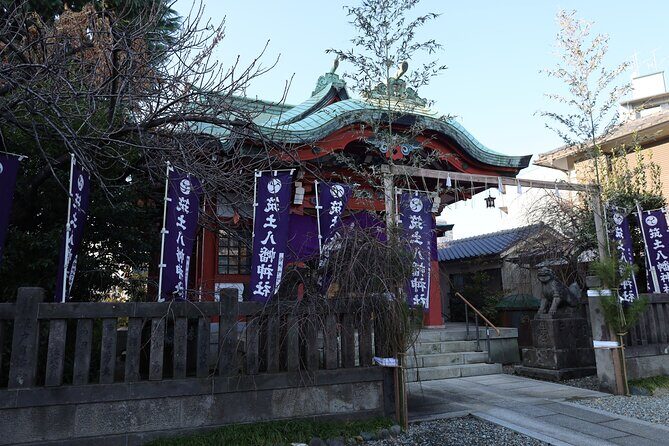
Myokaku-ji adds atmosphere fast. It’s described as the only place in Japan where you can do sword-fighting experience on-site, and it’s tied to Sengoku-era presence—many warlords stayed there, including Oda Nobunaga. That matters because the setting isn’t just decoration. It makes the whole session feel more like a ritual and less like a theme-park stunt.
And because the group is limited to 6, the pace stays human. You’re not stuck waiting while others get instruction. You’ll likely feel the difference between learning a move and simply copying a pose for a camera.
You can also read our reviews of more tours and experiences in Kyoto.



Meeting at the Myokaku-ji Dojo: Getting There Without Stress
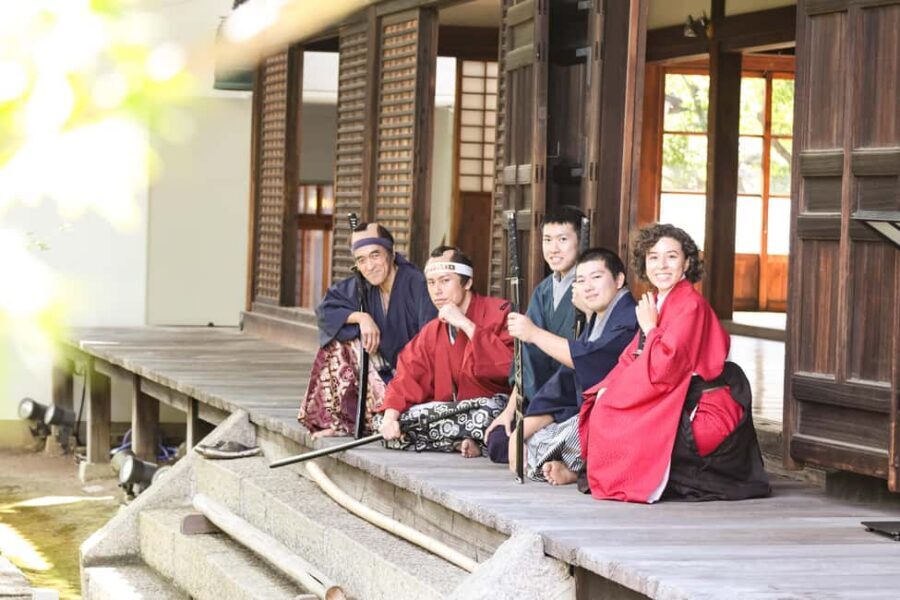
You’ll meet at Myokaku-ji Dojo, which is to the left after you enter the main gate of Myokaku-ji Temple. The experience also notes skip-the-line access via a separate entrance, which can save you time in a busy area.
Here’s the practical angle: wear clothes you can move in. Even if you’re not trying to be athletic, you’ll be doing controlled sword techniques and choreography. If you show up in stiff or restrictive outfits, you’ll feel it right away when you’re asked to hold positions and repeat moves.
Also, bring your camera. You’re allowed to shoot this scene with your camera, and the activity includes a photo download service. So the day you go, you’re not just collecting photos—you’re setting yourself up to actually keep them.
Kimono Dressing: One Part Tradition, One Part Costume Upgrade
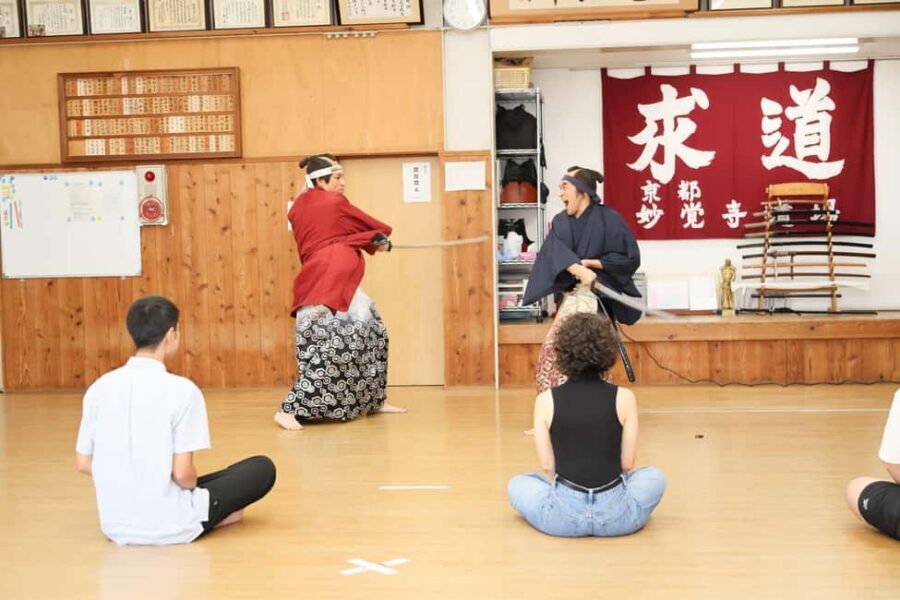
The kimono dressing is part of the core experience, not an add-on. The rental is included, and you get to learn the traditional process of putting on a kimono rather than just slipping into one.
What I like about this is the practical payoff. A kimono isn’t comfortable like sneakers, so the sooner you get dressed, the more time you have to get used to moving carefully. You’ll also be photo-ready for the training and the performance without worrying about finding a rental shop, sizing, or timing.
A quick note for your expectations: this is still a 70-minute overall experience. Dressing happens at a training-studio pace, so don’t expect a long, private wardrobe session. Still, it’s enough time to feel transformed and to look like you stepped into period drama, not into a souvenir store.
Sword Training in a Temple Dojo: Makkogiri and Kesagiri
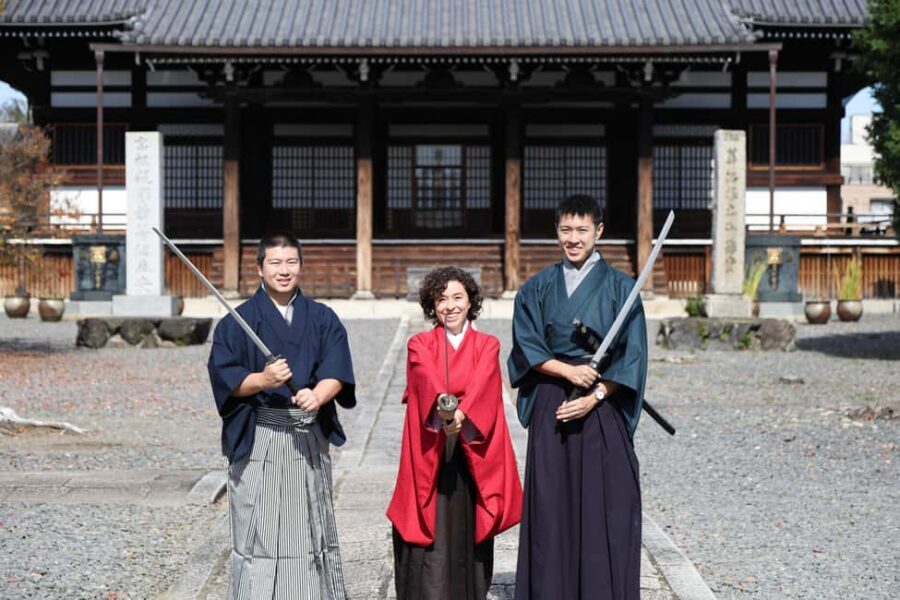
This is where the experience earns its name. You receive instruction on holding and wielding the sword, then you practice techniques such as makkogiri and kesagiri. The focus is on learning the moves you’ll later perform on camera.
Even if you’ve never touched a sword before, you can usually follow along because the coaching is designed to get beginners ready for choreography. The goal isn’t to turn you into a duelist—it’s to help you perform safely, convincingly, and with correct form.
Safety is a big deal here. The session is described as clear guidance with a controlled setup, and the environment is structured for practice. You’re doing fake sword fighting (the sword is part of the action filming setup), but your body mechanics still matter: how you hold your stance, when you raise your blade, and how you move with spacing.
The Chambara Performance: Watching the Pros Work
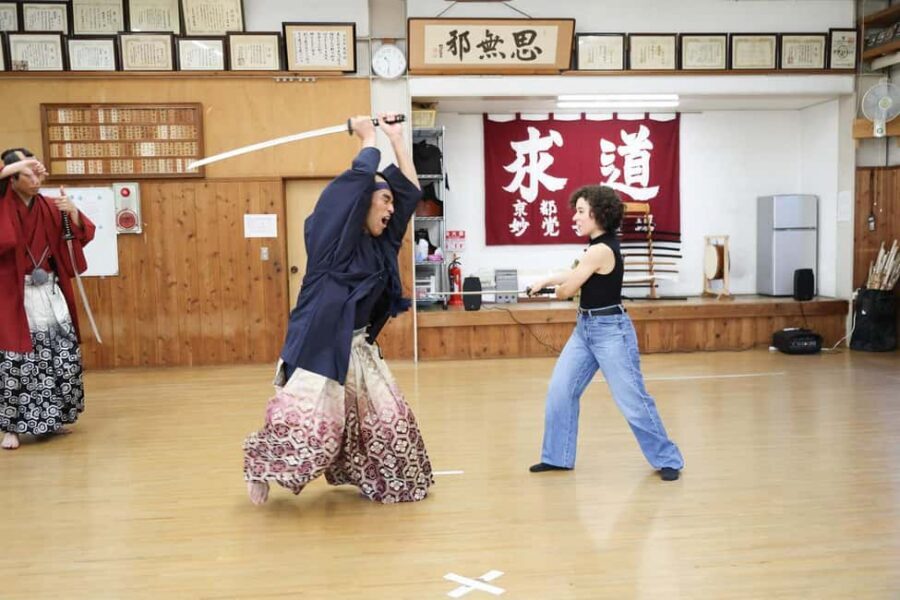
Before your turn on camera, you watch a chambara performance by samurai actors. The instructors are professional actors in period dramas, trained to show authentic samurai skills reflecting bushido.
This is one of the most valuable steps because you learn by watching the end result. You see the rhythm of the moves, the timing, and how the actors sell intensity without actually doing anything dangerous. It’s the difference between memorizing a position and understanding how it looks in motion.
If you’re lucky enough to have specific instructors, you might hear names like Kesuke Irie San and Kazuya Naito San. In sessions where they teach, they’re noted as encouraging and well-versed with the sword moves. That coaching style can make a beginner’s performance feel far less awkward.




Your Swordplay and Filming Scene: Choreography for Real Footage
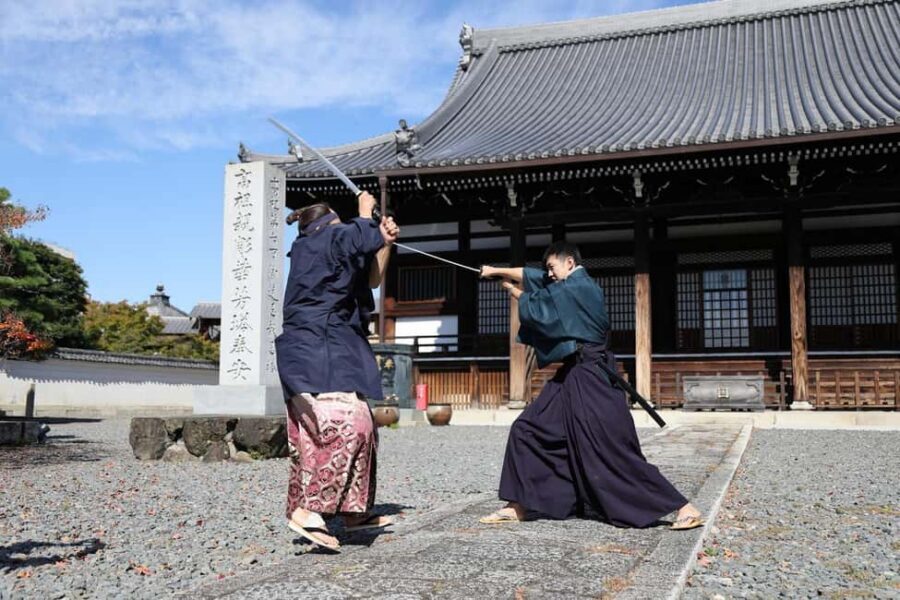
After training and watching the performance, it’s your turn. You’ll perform the sword techniques you learned, and then the session shifts into a filming moment designed to look like action.
The best way to enjoy this part is to treat it like acting. If you only focus on getting the blade exactly right, you may miss the bigger point: the camera wants clean silhouettes and clear timing. Choreographed moves help you hit those beats, even if your technique is new.
You’re also welcome to film during the experience with your camera. That’s handy because the official video download service gives you a baseline record, but your own footage can capture different angles and your personal reaction shots.
Cameras, Downloaded Footage, and What You Actually Take Home
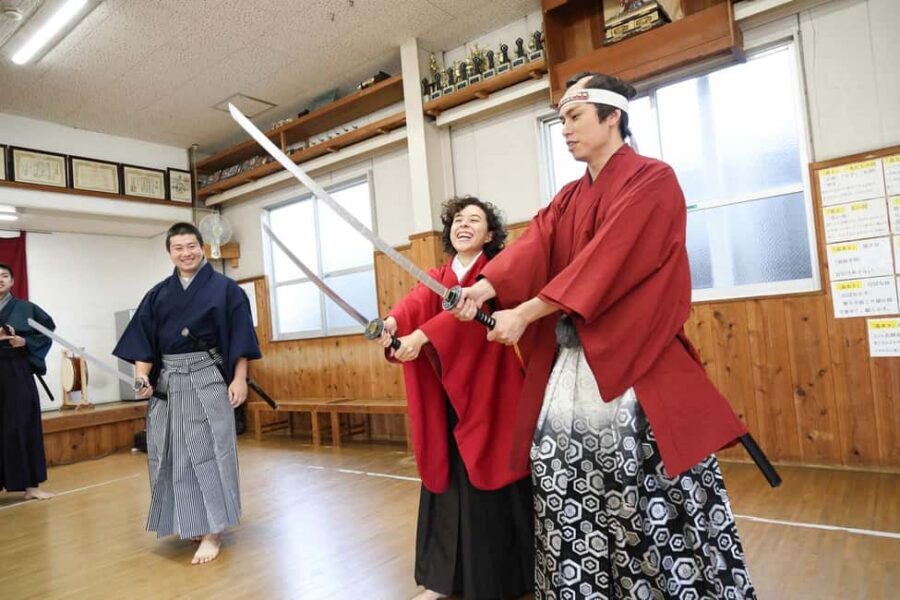
This activity includes a photo download service plus photography and video recording using your camera. In plain terms: you’ll be able to take away performance footage, and the setup is designed so you don’t leave empty-handed.
That matters for two reasons. First, your kimono and sword practice look good in video, not just photos. Second, the whole point is memory-making. A downloadable record turns a 70-minute performance into something you can show friends, or keep as proof that you did something a little different in Kyoto.
If you’re the type who hates sorting files later, plan a little time after the experience to organize. The download service helps, but the usual phone and camera folder chaos still exists. Bring a charged battery, and check storage before you go.
Value for $127: What You Get for the Time
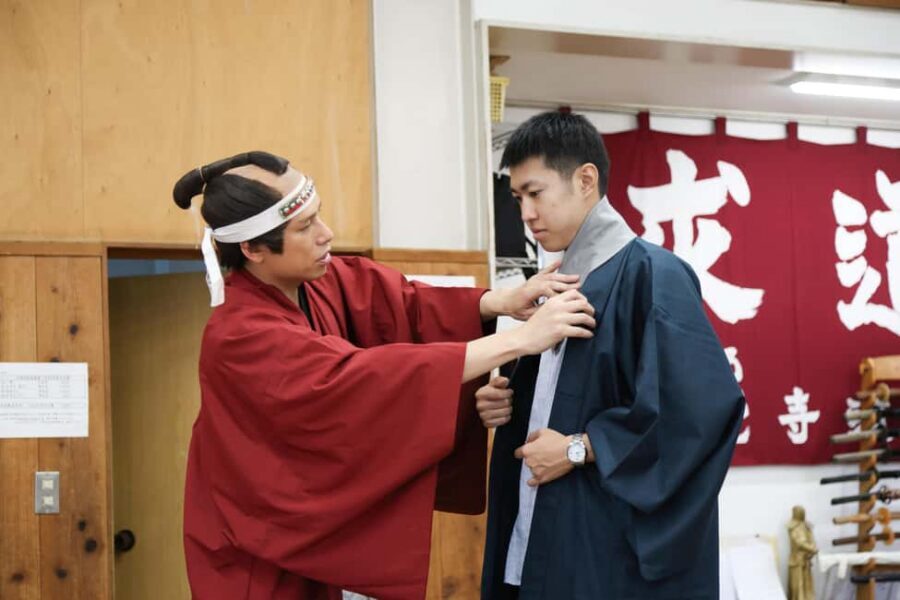
At $127 per person for about 70 minutes, this isn’t the cheapest thing on a Kyoto day. But the value is in the bundled package.
You’re paying for:
- hands-on sword instruction (including specific techniques like makkogiri and kesagiri)
- kimono rental
- a professional chambara performance
- your own filmed action sequence
- a photo download service
A standard temple visit doesn’t include training, wardrobe, and filmed choreography. A basic kimono rental often doesn’t include sword instruction or a performance setup. Here, you’re combining multiple paid components into one timed block, and the small group keeps the attention from feeling rushed.
It’s also a good choice when you want something memorable that doesn’t depend on language fluency. The instruction is available in Japanese and English, and the actions are repeatable even if your vocabulary is limited.
Who This Fits Best (and Who Should Skip It)
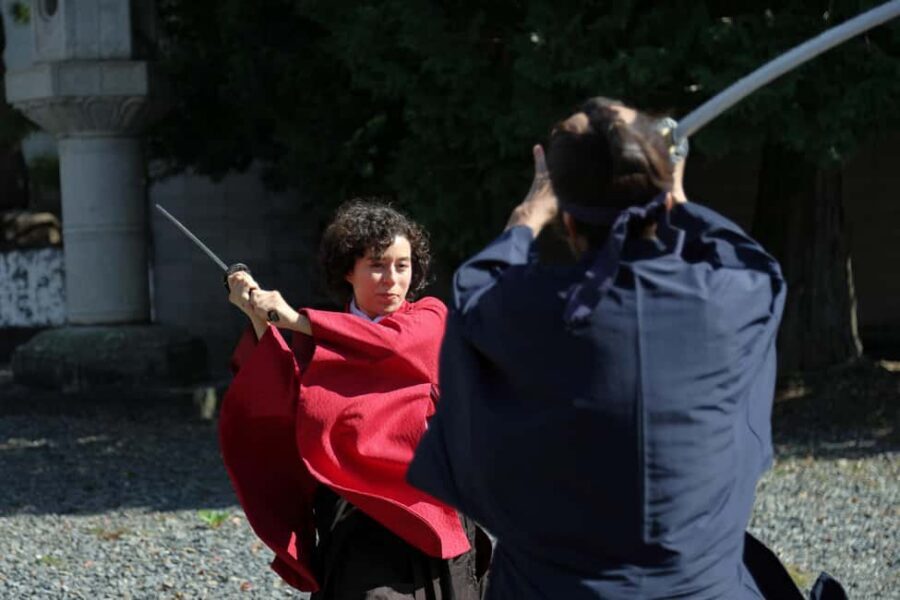
This works best if you:
- want an active, hands-on Kyoto experience
- enjoy staged performances or filming a moment you’ll keep
- are comfortable following instruction and repeating moves safely
- want kimono photos that feel connected to an activity, not just a rental
It’s not suitable for children under 5, pregnant women, people with back problems, people with pre-existing medical conditions, and people over 95. If any of those apply, skip this one. Even with controlled guidance, it’s still physical movement in a short window.
Also note the behavior rules: no smoking, and no alcohol or drugs. Wear comfortable clothes suitable for physical activity.
If you’re deciding between this and a more relaxed sightseeing day, choose this when you want to do something you can talk about for years. Choose sightseeing when you want quiet and wandering.
Practical Tips to Make Your Session Smoother
A few small choices can make your experience feel way better.
First, dress for movement. You don’t want to be tugging at clothing or worrying about slipping when you’re practicing sword positions. Comfortable clothes matter more than style here.
Second, bring your camera and treat it like your job. Keep it ready during the filming portion, and don’t wait until the last second. If you want good results, arrive with charged power and enough storage.
Third, go in with a playful mindset. The action is choreographed, and the instructors are known for being fun, patient, and encouraging. If you’re stiff at first, that’s normal. The format is built to bring you into the rhythm.
Finally, take photos of the temple itself after you’re done training if you have time. The experience centers on the dojo and performance, but Myokaku-ji’s setting is part of the magic.
Should You Book This Samurai Sword & Kimono Action Filming Experience?
Book it if you want a Kyoto activity that’s genuinely interactive: kimono rental, sword training, a chambara performance by pros, and your own filmed scene all in one 70-minute block. It’s also a smart value when you compare it to paying for wardrobe + instruction + a performance separately.
Skip it if you’re looking for a quiet cultural walk only, or if you fall into the listed non-suitable categories like back problems or pre-existing medical conditions. This isn’t a sit-and-watch experience.
If you can handle mild physical activity and you like the idea of walking away with footage you can actually show, this is one of the most fun ways to spend a slice of Kyoto time.
FAQ
Where is the meeting point for the Myokaku-ji Samurai Sword & Kimono experience?
You’ll meet at the Myokaku-ji Dojo, which is to the left after entering the main gate of Myokaku-ji Temple.
How long is the experience, and is it a small group?
The duration is 70 minutes, and it’s a small group limited to 6 participants.
Is the kimono included in the price?
Yes. Rental kimono is included in the experience.
What sword techniques will I learn?
You’ll receive instruction on holding and wielding the sword and you’ll master techniques such as makkogiri and kesagiri.
Can I take photos and record video with my own camera?
Yes. Photography and video recording with the customer’s camera is included, and you’re welcome to shoot this scene with your camera during the experience.
What languages do the instructors speak?
The instructor team is listed as Japanese and English.
What should I bring, and what rules apply?
Bring a camera and wear comfortable clothes suitable for physical activity. Smoking is not allowed, and alcohol and drugs are not allowed.
Who isn’t this experience suitable for, and can I cancel?
It isn’t suitable for children under 5, pregnant women, people with back problems, people with pre-existing medical conditions, and people over 95. Cancellation is free up to 24 hours in advance for a full refund, and you can reserve now and pay later.