REVIEW · OSAKA
Learn Zen in a class of making Matcha tea near Osaka Castle
Book on GetYourGuide →Operated by 株式会社武士の誉れ · Bookable on GetYourGuide
Step through the door and your role changes fast: kimono, etiquette, then matcha. I like how the ceremony treats everyone as equals once you enter the tea room through the nijiriguchi. And I also like that you practice real manners, not just watch from the sidelines.
The other big win is the wagashi part. You’re taught what you’re seeing and tasting—wabi-sabi, the sense of the seasons, and why those delicate sweets matter in Japanese culture.
The one consideration: it’s only 1 hour, so you’ll need to show up early (30 minutes) to change and get instructions. Also, there’s no hotel or station pick-up, so getting there on time is on you.
In This Review
- Key things that make this class worth your time
- Finding Samurai Honor and your first instructions
- Dressing the part: hakama, dogi, and kimono that change how you move
- Nijiriguchi: the moment the room levels the playing field
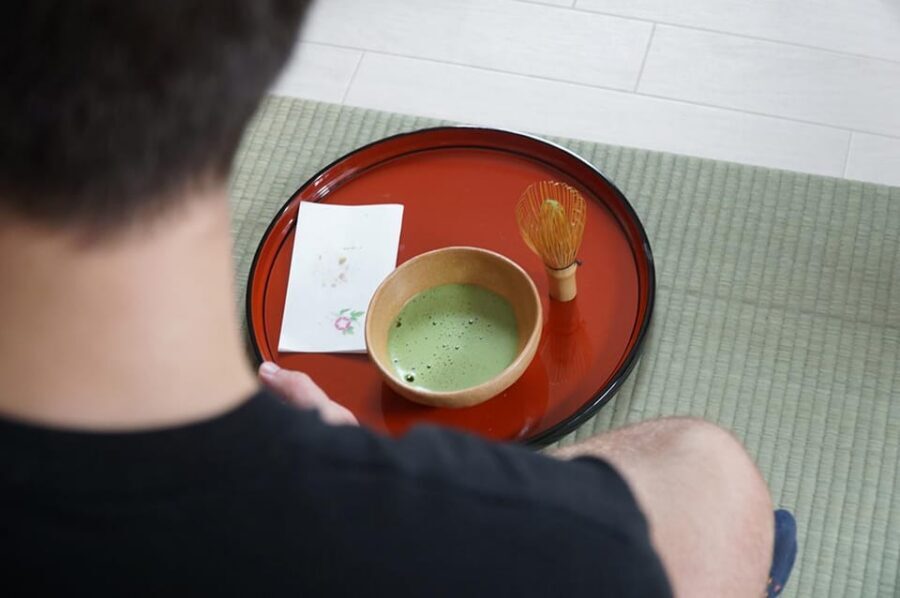
- Matcha in 1 hour: what you’re actually learning
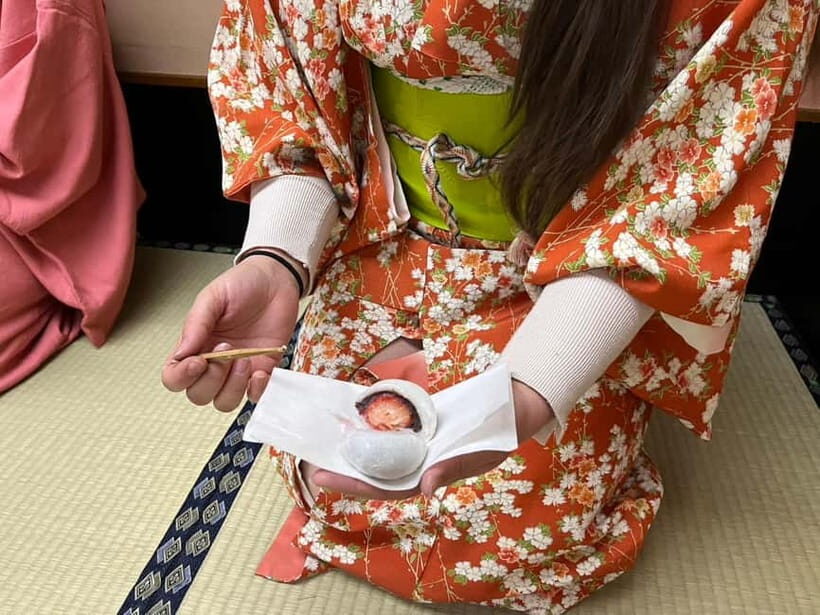
- Wagashi and wabi-sabi: tasting the seasons on purpose
- The “Zen attitude” lesson: hospitality goes both ways
- Photo shooting that fits the ceremony (not separate from it)
- Cost and value: is $40 reasonable for this package?
- Who this matcha class suits best in Osaka
- Practical tips so you don’t feel rushed
- Should you book this Samurai Honor matcha class?
- FAQ
- How long is the matcha and tea etiquette experience?
- What does the class cost, and what is included in that price?
- Do I need to know Japanese?
- What should I bring with me?
- Where do I meet the group?
- Is transportation or pick-up from my hotel included?
- Is it okay for children?
- Is there free cancellation?
Key things that make this class worth your time
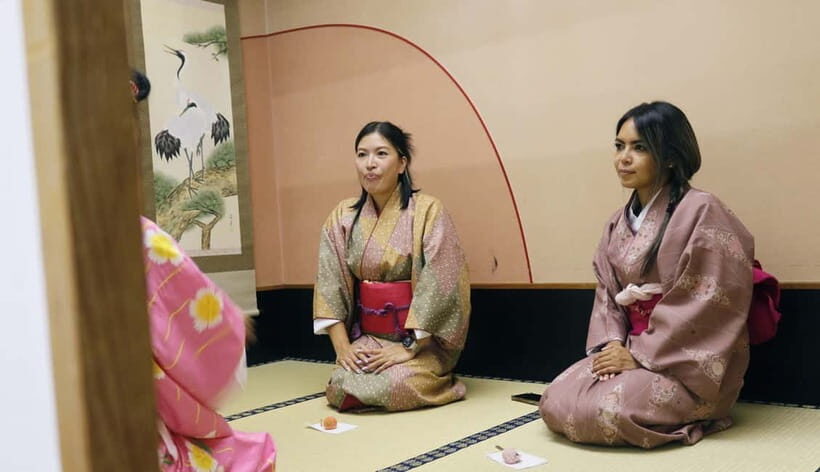
- Nijiriguchi equality: once inside the tea room, nationality, age, gender, or status don’t matter.
- Wagashi with meaning: you learn wabi-sabi and the four seasons through the sweets’ designs and seasonal cues.
- Kimono with a full look: you get dressed as a samurai guest (men) or Yamato Nadeshiko (women), with matching hairstyles.
- Matcha etiquette practice: you learn how to sit, serve, bow, and offer tea—then apply it.
- Photos included: a photo session runs through the ceremony, and the data is sent to your email.
- Small group size: limited to 6 participants, so the instructor can guide you.
Finding Samurai Honor and your first instructions
This class happens at Bushi no Homare (Samurai Honor), run by 株式会社武士の誉れ. The meeting point is easy to miss if you’re rushing: look for a wooden rack sign that reads Honor of the Samurai. There are activity pamphlets there, and you may even spot kimonos and hakama hanging to dry.
Plan your timing like you’re traveling for a wedding photo shoot. The session itself is 1 hour, but you should arrive 30 minutes before. That buffer isn’t just busywork. It’s for instructions and changing, which is where the experience starts to feel real.
Also note the practical setup: there’s no included pick-up or drop-off from a train station or your hotel. If you rely on public transit, give yourself extra cushion so you’re not sprinting in your shoes. The activity address is in Osaka (Honshu), and the guidance says the Apple Maps address can be wrong—use Google Maps.
A few more Osaka tours and experiences worth a look

Dressing the part: hakama, dogi, and kimono that change how you move
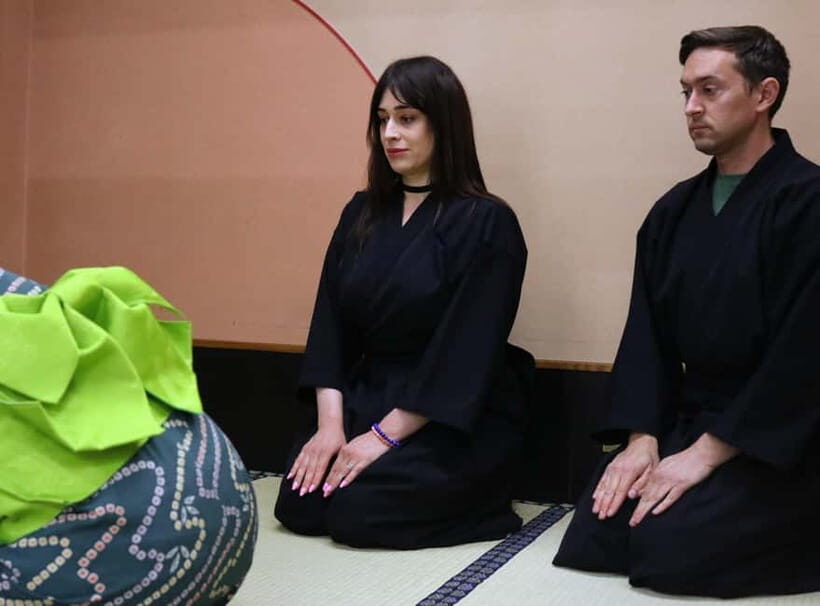
Before matcha, you change into traditional clothing. This isn’t a quick costume. The goal is behavioral: the way you hold yourself under a kimono or hakama makes etiquette feel less like rules and more like muscle memory.
Here’s how the roles are set:
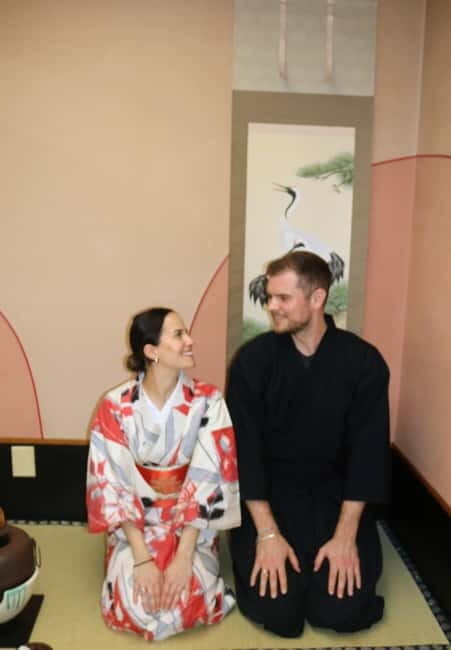
- Men wear hakama and dogi and take on a samurai look.
- Women wear a kimono and are treated as Yamato Nadeshiko (a classic ideal of feminine grace and poise).
The experience includes kimono clothing, and you’ll also get help styling your hair. One review mentioned choosing kimono colors and having hair styled high, even decorated with flowers, without extra charge. At the same time, wagami (collected hair + kanzashi) is listed as not included and may be a paid option depending on what you want. So if you’re chasing a very specific hairstyle accessory, check during booking what’s included for your session.
What I like about this part: you stop being a visitor with a camera and start being a participant with a posture. That matters, because the tea ceremony is as much about gestures as it is about tea.
Nijiriguchi: the moment the room levels the playing field
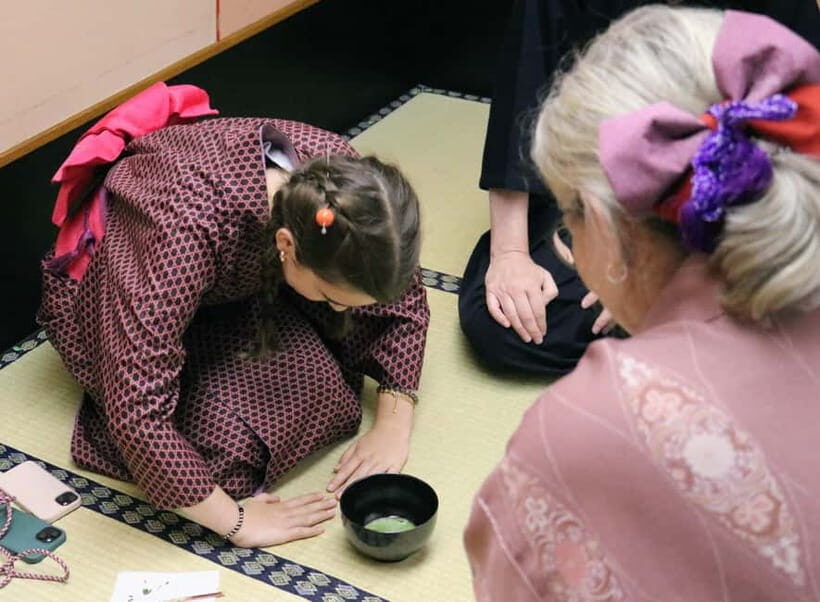
The best cultural detail here is the nijiriguchi. It’s the low entrance into the tea room. When you pass through it, the experience teaches a key idea: inside the ceremony space, everyone is treated equally—regardless of nationality, age, gender, or social status.
This isn’t just symbolic. The tea room is small and controlled. The entry forces you to slow down. Your body adapts to the space, and suddenly “etiquette” becomes practical: you’re mindful because you literally can’t move like you would outside.
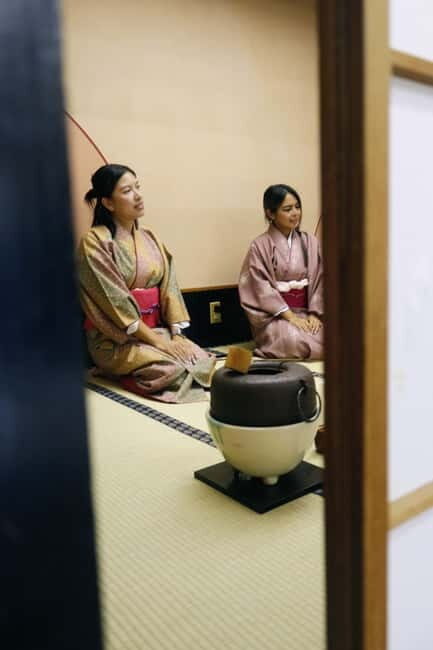
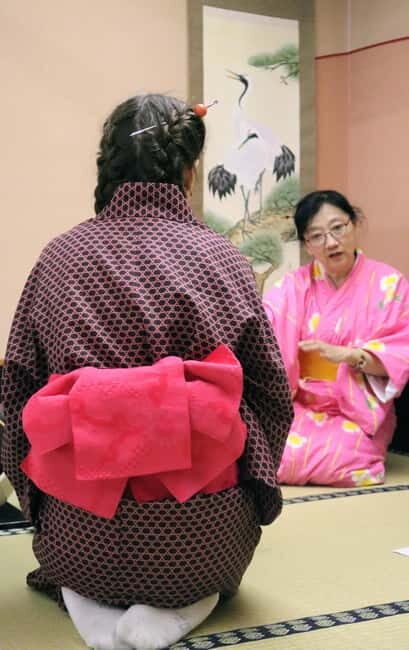
You’ll also follow the hostess’s lead on traditional manners: when to sit, how to bow, and what to do with your hands and gaze. It’s not about being perfect. It’s about learning the rhythm. That’s what turns this from a simple drink-making class into a real cultural practice.
Matcha in 1 hour: what you’re actually learning
You get matcha through the master and also learn the steps yourself. The structure is classic: the master presents the tea, then you learn the etiquette required to prepare and handle it properly.
Even though the time is short, you’ll cover the essentials:
- Learning the etiquette of making and serving matcha (how to sit and move)
- Practicing the gestures that make the ritual feel calm instead of awkward
- Getting a chance to prepare tea—so you’re not only an observer
One nice detail from recent experiences: instructors took time to make sure each person got hands-on time. In at least one session, people even took turns preparing tea for each other, which makes the experience feel shared rather than instructional.
Language support is built in. The class includes an English interpreter guide staff. The default is English, and the provider notes that other languages depend on staff availability—so if you need Italian, Spanish, French, Chinese, Thai, Indonesian, or something else, ask before reserving.
Wagashi and wabi-sabi: tasting the seasons on purpose
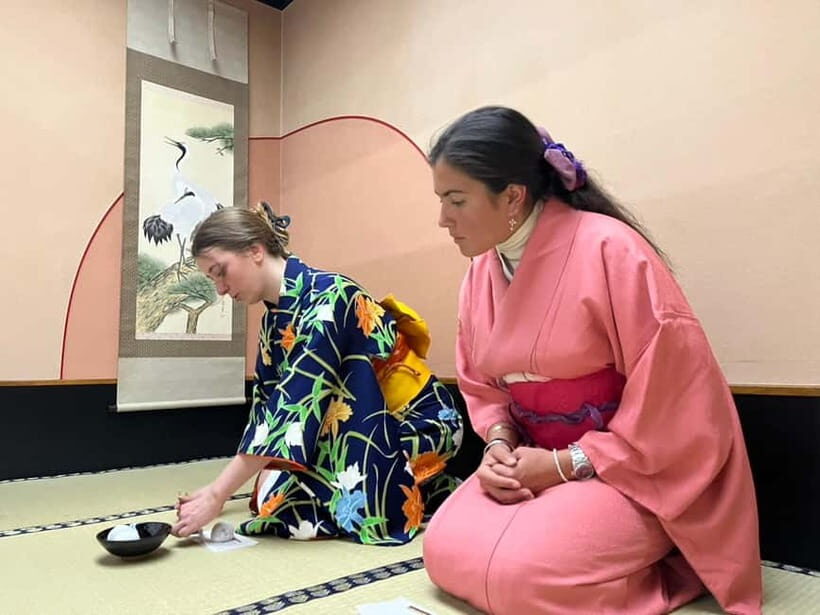
Matcha is only half the story. The other half is wagashi—traditional Japanese sweets served alongside tea.
You’ll learn through wagashi how to see the aesthetic ideas behind the ceremony, including:
- wabi and sabi (the beauty in simplicity and imperfection)
- the four seasons
- how designs and workmanship connect to seasonal mood
Wagashi developed alongside the tea ceremony in the Kamakura period, and the idea is tied to Japanese seasonal awareness. The sweets are described as handmade, with colorful designs that reflect seasonal character. One of the most memorable parts of wagashi is how beautiful it looks before you eat it—some people hesitate, not because it tastes strange, but because it looks too delicate to destroy.
Practically, wagashi gives you something to focus on during the ceremony. You’re not only timing your whisking or counting breaths. You’re also reading texture, shape, and seasonal meaning.
And if you’re traveling with kids (10+), wagashi is often the hook. It’s edible art, and it gives your family something concrete to discuss while everyone sits together.




The “Zen attitude” lesson: hospitality goes both ways
The ceremony isn’t framed as strict rules only. It’s rooted in attitude. The master isn’t just entertaining the guests. The guests also respond, helping create a shared atmosphere where master and guests feel like they belong to the same moment.
This is where you’ll notice the difference between a lecture and a ceremony class. You’ll be asked to practice etiquette as a form of respect. But you’re also learning that respect isn’t one-directional. Your posture, your timing, and your attention become part of the hospitality.
In past sessions, hosts and instructors were described as warm and even funny while explaining history and etiquette. One highlight: Kaori was specifically mentioned for stepping through the preparation process and offering cultural context so the ritual made sense, not just looked pretty.
Photo shooting that fits the ceremony (not separate from it)
Included in the experience is photo shooting, with the data sent to a designated email address. So you’ll get dressed, join the ceremony, and then capture it as you go—no awkward scramble afterward.
What I like about the way this is set up: the photos reinforce the experience instead of interrupting it. Recent feedback mentioned that photos were taken throughout the ceremony, letting people focus on what they were doing while someone else handled the camera angles.
One review also said the photos arrived by email the same day. That’s not guaranteed from the info alone, but it’s a good sign that the team takes delivery seriously.
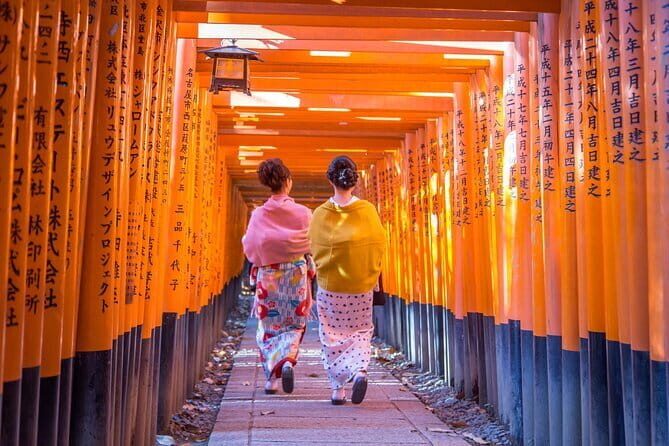
Important detail if you care about the full costume: there are paid options for additional outdoor photo shooting. That’s not included, so if you’re imagining stepping outside in kimono for Osaka-area photos, treat it as an upgrade rather than part of the base class.
Cost and value: is $40 reasonable for this package?
At $40 per person for a 1-hour class, the price looks simple. The real question is value—what you actually get for that money.
Included:
- kimono clothing
- matcha and wagashi
- certified professional instructor
- English interpreter guide staff
- tax and tips
- photo shooting (data sent by email)
Not included:
- transportation to/from the train station or hotel
- wagami (collected hair + kanzashi), with that being a paid option
- paid upgrades like movie shooting and certain outdoor photo shoots
- other personal expenses
So yes, it’s not just “green tea with a lesson.” You’re paying for the full setup: clothing, ingredients, guided instruction, language support, and the photo deliverable. In a city like Osaka, that combination is what turns a basic activity into something you can bring home—memories plus cultural context.
If you’re cost-sensitive, focus on this: the included photo package is part of the value. If you’re skipping it, you’re still paying for the ceremony plus outfit, which is still the core attraction.
Who this matcha class suits best in Osaka
This is a small-group experience (limited to 6 participants). That size matters. It helps you get individual guidance for etiquette and gives the instructor time to check that everyone is following along.
It’s a great match if you:
- like learning cultural “why,” not only cultural “what”
- want a hands-on matcha lesson rather than just watching
- care about a kimono moment that looks authentic and is guided by etiquette
- travel with family, as long as kids are 10 or older
It’s not suitable if:
- your child is under 10
- you have altitude sickness (listed as not suitable)
- you’re over 95
And if you hate dressing up, this probably won’t convert you. The clothing process is part of the ritual.
Practical tips so you don’t feel rushed
A few small moves make a big difference:
- Bring a T-shirt. You’ll be changing, and this helps you get back to normal clothing smoothly.
- Arrive early (30 minutes before). This is when you avoid stress.
- Wear comfortable slip-on shoes for the waiting period. You’ll switch into traditional footwear details tied to the kimono setup, and you don’t want to wrestle with complicated socks.
- If you want a specific hair decoration, ask about wagami and whether it’s a paid option in your session.
Also, you already have the rules of the room: no pets, no alcohol and drugs, and no nudity.
Should you book this Samurai Honor matcha class?
Book it if you want a short, structured way to understand how tea ceremony etiquette connects to Japanese aesthetics. I’d especially recommend it for people who enjoy hands-on cultural practice and who want the kimono-and-photos package without turning the experience into a chaotic tourist photo stop.
Skip it if you’re expecting a long, museum-style explanation or a full-day itinerary. This is 1 hour. The goal is correct posture, meaningful sweets, matcha making basics, and a calm shared moment—not a deep multi-course history seminar.
If you want a simple decision: if you’ll use the photos, appreciate wagashi meaning, and can arrive early without stress, this is a solid use of your Osaka time. If you only care about drinking matcha quickly, you might feel the ceremony is more than you need.
FAQ
How long is the matcha and tea etiquette experience?
It lasts 1 hour.
What does the class cost, and what is included in that price?
The price is $40 per person. Included are kimono clothing, matcha, wagashi, a certified professional instructor, English interpreter guide staff, photo shooting with data sent by email, and tax and tips.
Do I need to know Japanese?
No. The experience includes an interpreter guide staff with English as the default language.
What should I bring with me?
Bring a T-shirt.
Where do I meet the group?
Meet at the wooden sign landmark that reads Honor of the Samurai. It’s a rack with activity pamphlets in front of the store.
Is transportation or pick-up from my hotel included?
No. Pick up and drop off at the train station or hotel is not included.
Is it okay for children?
Children under 10 years old are not suitable for this experience.
Is there free cancellation?
Yes. You can cancel up to 24 hours in advance for a full refund.