REVIEW · KYOTO
Kyoto: Nijo, Kinkaku-ji, Arashiyama, Kiyomizu & Fushimi Inari
Book on Viator →Operated by Amigo Tours Japan · Bookable on Viator
Kyoto hits different when you can see it all before evening. This all-day bus tour strings together the big names—Arashiyama Bamboo Grove in the morning and Fushimi Inari later—so you spend less time navigating and more time looking. I love having commentary from a bilingual guide and the fact that the itinerary moves in efficient blocks between neighborhoods. One thing to plan for: it’s a long day, and hot weather can make the walking feel harder than you expect.
Two parts I especially liked are the early access feel at Arashiyama and the option to tailor paid entrances. Depending on your ticket choice, you can include spots like the Golden Pavilion (Kinkaku-ji) and Nijo Castle, while other highlights like Bamboo Grove and Fushimi Inari are free. The main drawback is that the tour’s language delivery is bilingual (English/Spanish), so if you’re sensitive to hearing mostly one language—or a bit of switching—you’ll want to know that upfront.
If you want a smart one-day plan for Kyoto’s best-known landmarks, this tour is built for that. It’s not for you if you want a slow, pick-your-own-route day with tons of museum time. You’ll be on and off the bus all day, with guided context plus time to explore on your own at each stop.
In This Review
- Key highlights worth knowing before you go
- The 7:00am start: fast access to Kyoto’s highlights
- Arashiyama Bamboo Grove: the photo stop that’s actually worth it
- Kinkaku-ji Golden Pavilion: stunning, but watch your ticket option
- Nijo Castle: architecture and gardens without the planning headache
- Kiyomizu-dera: hillside views and a temple you can feel
- Fushimi Inari Taisha: torii gates, walking time, and big photo energy
- How the bus route saves your day (and your feet)
- Price and value: what $51.80 really buys you
- Language, pace, and heat: the two things to plan for
- Who this Kyoto highlights tour is best for
- Should you book this Kyoto highlights bus tour?
- FAQ
- What sites does the tour cover?
- Are tickets included for Kinkaku-ji, Nijo Castle, and Kiyomizu-dera?
- Is Arashiyama Bamboo Grove admission free?
- Is Fushimi Inari Taisha admission free?
- Is lunch included?
- How long is the tour?
- What time does the tour start?
- Is this tour guided?
- Where is the meeting point?
- Is it a small group tour?
- Can I cancel for a full refund?
Key highlights worth knowing before you go
- Early Arashiyama timing gives you a chance to see the Bamboo Grove before peak crowd energy
- Bilingual English/Spanish guide means you get context, not just transportation
- Ticket options (pay or skip) help you control costs for sites like Kinkaku-ji and Nijo Castle
- Free admission stops at Bamboo Grove and Fushimi Inari keep your day lighter on extra fees
- Small group size (max 30) keeps the day from feeling like a cattle chute
- A full-day route tackles major Kyoto neighborhoods in one go, without you doing route planning
The 7:00am start: fast access to Kyoto’s highlights
This tour begins early, at 7:00am at Hotel Keihan Kyoto Grande (Kyoto Grande Hotel) in Minami Ward. Starting that early matters more than it sounds. Kyoto can get crowded quickly, and an early departure helps you reach famous sites before lines and photo mobs fully lock in.
You’ll be on a bus route that links several major areas of Kyoto. The pacing is designed to keep your day moving: short to medium bus rides between stops, then structured time on foot where you can actually see what you came for. Expect it to run about 10 hours 45 minutes total and to end back at the meeting point.
The group is capped at 30 travelers, which is a real comfort factor. In a city like Kyoto, bus tours can still feel manageable if the group stays small enough for the guide to keep track of everyone and explain details without feeling rushed.
You can also read our reviews of more tours and experiences in Kyoto.



Arashiyama Bamboo Grove: the photo stop that’s actually worth it
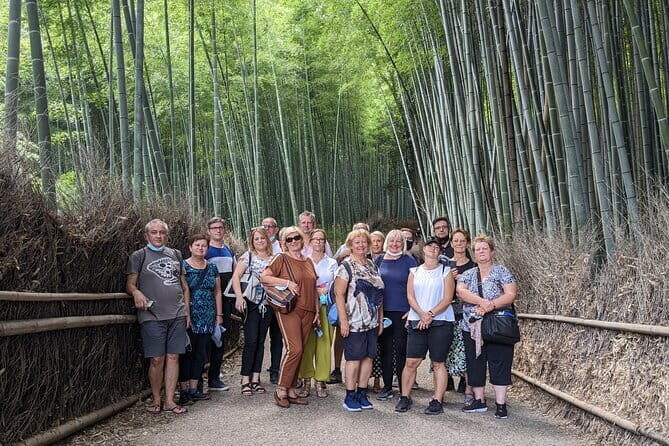
Your day’s sightseeing star is the Arashiyama Bamboo Grove. The bus ride to get there is about 40 minutes, and then you get around 1 hour 20 minutes at the grove area. Bamboo Grove admission is free, and you also get early access, which is the difference between a quick walk-by and a calmer stroll where you can focus on photos and atmosphere.
The grove is visually dramatic: tall bamboo stalks, long sight lines, and that soft tunnel-like feeling when you’re walking in the rows. The main value here is time. An hour and change gives you room to pause for pictures, wander a bit, and still get back to the group without stress.
A practical note: this stop is visually famous, so it can still be busy even with early timing. Wear shoes you’re comfortable walking in, bring water, and don’t plan on needing huge “rest breaks” between every photo. This is a walking-and-looking stop, not a long sit-down one.
Kinkaku-ji Golden Pavilion: stunning, but watch your ticket option
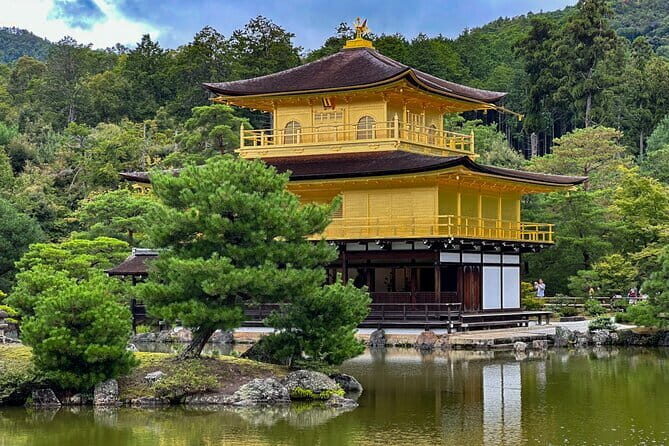
After Arashiyama, the route heads toward Kinkaku-ji (Golden Pavilion). The bus ride is about 30 minutes, and you’ll have about 45 minutes there.
Here’s the key: Golden Pavilion admission is only included if you selected the ticket option. If you didn’t choose that package, you’ll still visit the area, but entry is not included. In other words, this is one of the stops where your pre-trip choices directly change what you can do on-site.
Why this stop is worth prioritizing: Kinkaku-ji is one of Kyoto’s most recognizable temples, and you’re going to want the time to see the pavilion itself and take in the surrounding grounds. With a shorter visit window, paying for entry (if it fits your interests and budget) is the simplest way to avoid wasting precious minutes waiting or realizing you can’t go in.
From reviews, the guides can help you get more out of this kind of iconic site by explaining what you’re looking at and how it fits into Kyoto’s temple culture. If you care about context, this is a good place where that guidance pays off.
Nijo Castle: architecture and gardens without the planning headache

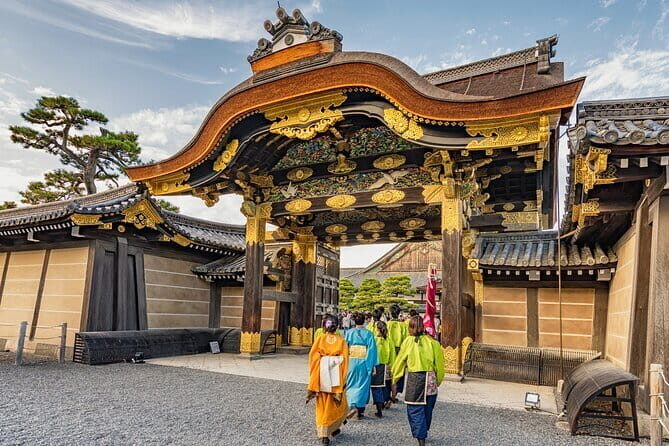
Next up is Nijo Castle, a UNESCO World Heritage site. The bus ride is about 20 to 30 minutes, and you’ll get roughly 1 hour 30 minutes on-site.
Like Kinkaku-ji, Nijo Castle admission is not included unless you selected the ticket option. If you want to go inside the castle and experience the historic space properly, make sure you’ve got the right option.
What makes Nijo Castle more than just another temple stop is its mix of palace-style architecture and gardens. The visit time is long enough to do a real walk-through at an unhurried pace, which is helpful because inside-historical sites often reward slower observation.
Also, this is one of the stops where a good guide really changes the experience. In past feedback, guides like Cesar and Paula were praised for keeping the day organized and for balancing facts with room to explore on your own. Even if you only half-listen (you won’t), having someone connect the dots can make the place feel less like a checklist and more like a story.
Kiyomizu-dera: hillside views and a temple you can feel
After Nijo Castle, you head to Kiyomizu-dera. The bus ride is about 30 minutes, and the tour schedule gives you a longer window—about 2 hours 30 minutes.
Admission to Kiyomizu-dera is only included if you selected that ticket option. If you didn’t, you’ll need to handle entry on your own, which can affect how much time you end up spending inside versus around the main areas.
What you can expect here, based on how the site is described in the tour details: Kiyomizu-dera sits on a hillside and offers breathtaking city views. That matters because the viewpoints are part of the “why.” If you’re someone who likes stopping for a few photos and taking in the city layers, you’ll probably appreciate the longer time block.
One more reality check: Kiyomizu-dera is a popular, active site. The schedule includes plenty of time, but you’ll still want to be ready for walking on uneven ground and getting around crowds.




Fushimi Inari Taisha: torii gates, walking time, and big photo energy

The final major cultural hit is Fushimi Inari Taisha Shrine. You’ll travel about 30 minutes by bus from the prior stop, then get about 1 hour 30 minutes there.
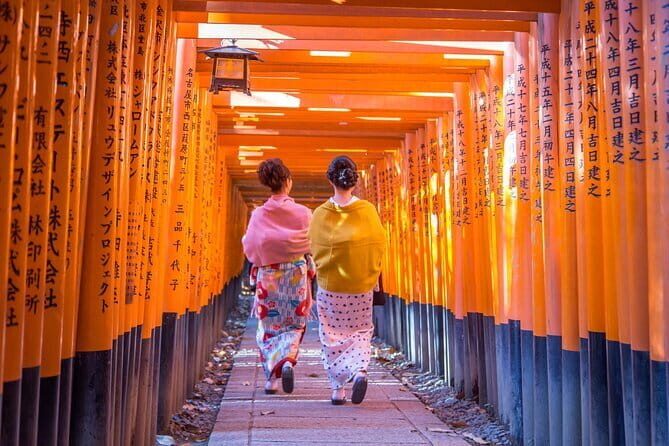
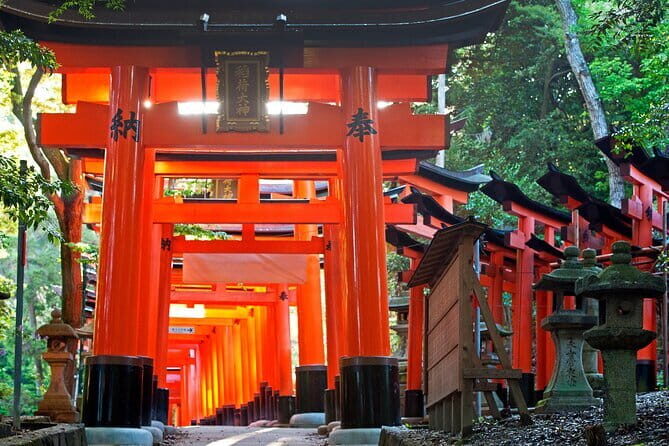
This is the easiest stop in terms of fees because Fushimi Inari Taisha admission is free. The “headline” here is the thousands of vermillion torii gates forming a mountain pathway. That phrasing is doing a lot of work. This isn’t a quick temple drive-by. You’ll be walking through gate rows, which means comfortable shoes and sensible energy planning matter.
You’ll also have free time on-site, so you can decide how far up the torii pathway you want to go. If you want the full effect of the gate tunnel views, start early in your free time window. If you want a calmer photo circuit, choose a point that feels like enough and spend more time there.
Based on the tour structure, this stop works as a payoff. You’ve seen bamboo, golden architecture, and palace gardens. Then you finish with movement—walking through gates that visually change as you move.
How the bus route saves your day (and your feet)
Kyoto is not a city where you casually hop between neighborhoods without thinking. This tour’s biggest practical value is that it handles the transportation and gives you built-in timing between major zones.
You also get a bilingual English/Spanish guide for commentary along the way. In reviews, guides like Angeles and Pastor were specifically praised for knowledge and enthusiasm. That matters because Kyoto’s landmarks can feel similar if you only see the exterior. The guide helps you notice details and understand what you’re looking at, even during bus rides when you’d otherwise be staring out the window.
Another practical win: the tour is capped at 30 travelers, and the schedule is designed to avoid endless waiting between stops. That doesn’t mean the day is “short.” It means you’re not wasting hours on logistics you could have done yourself—but faster, with a plan.
Price and value: what $51.80 really buys you
The listed price is $51.80 per person. For a day that includes guided bus transportation plus multiple famous stops, that price can be good value—especially if you want a shortcut from “planning Kyoto from scratch” to “show up and go.”
But you should compare your personal priorities to what costs extra:
- Golden Pavilion (Kinkaku-ji): admission included only if you picked the option
- Nijo Castle: same deal—admission included only with the ticket option
- Kiyomizu-dera: admission included only if selected
- Lunch: not universally included; it depends on the package choice (lunch is included in the premium option)
The smart way to think about value is this: if you’re the type who wants to enter every ticketed site (and not just admire from the outside), you’ll likely feel better about selecting the package that includes those admissions. If you’re okay skipping one or two paid entries to save money, the “option” structure can help you keep the day affordable.
Either way, you’re paying for three things:
1) transportation that strings Kyoto highlights together,
2) guide commentary that adds meaning to what you see,
3) time efficiency so you don’t spend half your day figuring out routes and ticket lines.
Language, pace, and heat: the two things to plan for
This tour is offered with a bilingual English/Spanish guide. That’s helpful if you speak either language, and it’s still a good sign that the tour is organized for international visitors. One review note did mention feeling like language delivery was repetitive or that English wasn’t always clear. So if language clarity is a big deal for you, keep expectations realistic for a bilingual setup and bring patience.
Pace is another factor. The day is long, and at least one feedback note called out extreme heat and the need for better hydration planning, breaks, and less strenuous walking. Even if your day isn’t that hot, Kyoto summers and shoulder seasons can surprise you.
My practical advice: assume you’ll want water and shade breaks. Choose breathable clothes. Take your time at each stop, and don’t treat the torii gates or temple areas like a race.
Also, if you’re traveling with kids, note one comment about age limits not feeling strict enough. If you have young children, consider whether a long, structured day with frequent moving is going to work for your group.
Who this Kyoto highlights tour is best for
This is a strong choice if you:
- have limited time in Kyoto and want major landmarks in one day
- prefer guided context instead of reading your way through guidebooks
- like structured itineraries with some flexibility for exploring on your own
It’s less ideal if you:
- want a slow, deep, no-bus day
- strongly prefer one language and feel frustrated by bilingual delivery
- need a very low-walking day
If you’re a first-time Kyoto visitor and you want the classic hits—bamboo, golden temple, palace castle, hillside views, and torii gates—this tour is built for that exact mission.
Should you book this Kyoto highlights bus tour?
I’d book it if your goal is simple: see Kyoto’s headline sights efficiently, with a guide explaining what you’re looking at, and with free-time to explore each stop instead of being rushed nonstop.
I’d think twice if you know you’ll struggle with long days in heat, if ticketed entries are a must and you might forget which option you picked, or if language switching would make you unhappy. The tour structure is excellent for many people, but it’s still a day on a tight schedule.
If you do book, the best move is to decide ahead of time which ticketed sites you truly care about—Kinkaku-ji, Nijo Castle, and Kiyomizu-dera—so you don’t lose time on-site. Bring comfortable shoes, plan for sun and water, and keep your expectations aligned with an efficient highlights run.
FAQ
What sites does the tour cover?
You’ll visit Arashiyama Bamboo Grove, Kinkaku-ji (Golden Pavilion), Nijo Castle, Kiyomizu-dera, and Fushimi Inari Taisha Shrine.
Are tickets included for Kinkaku-ji, Nijo Castle, and Kiyomizu-dera?
Admission to Kinkaku-ji, Nijo Castle, and Kiyomizu-dera is only included if you selected the ticket option. Otherwise, admission is not included.
Is Arashiyama Bamboo Grove admission free?
Yes. The schedule lists admission ticket free for the Bamboo Grove stop.
Is Fushimi Inari Taisha admission free?
Yes. The tour lists admission ticket free for Fushimi Inari Taisha.
Is lunch included?
Lunch is included only if you choose the premium option. The standard option may not include lunch.
How long is the tour?
The duration is approximately 10 hours 45 minutes.
What time does the tour start?
The tour starts at 7:00am.
Is this tour guided?
Yes. You’ll have a bilingual English/Spanish guide who provides commentary.
Where is the meeting point?
The start point is Hotel Keihan Kyoto Grande (Hotel 京阪 京都 グランデ ホーム2) in Kyoto, Minami Ward.
Is it a small group tour?
Yes. The maximum group size is 30 travelers.
Can I cancel for a full refund?
Free cancellation is available up to 24 hours before the start time for a full refund.