REVIEW · OSAKA
Osaka: A Private Guided Walking Tour of 5 Must-See Sights
Book on GetYourGuide →Operated by DeepExperience, Inc. · Bookable on GetYourGuide
Osaka in one day, with a guide who actually helps. This private walking route is built around the big emotional contrasts of the city: the museum-like scale of Osaka Castle, then the neon-and-grub buzz of Dotonbori. I like that you’re not just looking at sights—you’re guided through what matters, with room for small detours that make the day feel personal.
You’ll also get the kind of pacing that’s hard to pull off solo: a guided castle stop (with admission included), a temple visit where you’re not just passing through, and a market segment that’s useful even if you only want to snack. One thing to consider: it’s a long day—450 minutes—and it involves walking, plus transit between areas.
A key benefit shows up in the names of guides people mention: Yoshi, Emi, and Kaoru. In short, this tour leans heavily on human help—clear meet-up guidance at Toki no Hiroba, photo-friendly support, and adapting to what you want to see and eat. If you’re hoping for a totally low-walking day or step-free access, this one may not fit.
In This Review
- Key points to know before you go
- From Toki no Hiroba to Osaka Castle: getting your bearings fast
- Osaka Castle: what the ticket buys you and how to time it
- Dotonbori: neon streets, street food time, and smart photo stops
- Kuromon Ichiba Market: eat-with-purpose instead of wandering
- Shitenno-ji Temple: old Osaka with a guided context
- Tsutenkaku in Shinsekai: the nostalgic send-off at street level
- Price and logistics: what you’re really paying for
- What to bring (and how to avoid a day-ender)
- Who this private tour is best for
- Should you book this Osaka private guided walking tour?
- FAQ
- Where is the meeting point?
- How long is the tour, and is it private?
- What language is the guide available in?
- What is included in the tour price?
- What should I bring?
- Are meals included?
Key points to know before you go
- Private guide with English and Japanese, so you can ask questions and adjust on the fly
- Osaka Castle admission included, saving you time and effort on the day
- Two food moments: a lunch block in Dotonbori and a market visit at Kuromon Ichiba
- Shitenno-ji with guidance, useful for understanding an older side of Osaka
- Photo help is part of the experience, especially for couples and small groups
- Finish at Tsutenkaku, so the day ends with easy-to-capture city character
From Toki no Hiroba to Osaka Castle: getting your bearings fast
The meeting point is 時空(とき)の広場 (Toki no Hiroba / Time and Space Plaza). If you’re arriving around JR Osaka Station, here’s the handy clue that helps people find the guide: look for the Golden Clock on the 5th floor outside the ticket counter, then match it to the guide holding a bright yellow DeepExperience signboard.
Right away, you’ll see how this tour is designed for comfort. You start with a transfer segment (about 40 minutes), which matters because Osaka’s sights aren’t clustered into one tiny walking loop. That transit time is your buffer: you’re not sprinting between landmarks like a checklist. The goal is for you to arrive at each place with enough energy to actually enjoy it.
This is also the stage where a private guide earns their keep. If you have preferences—photos first, more explanations, fewer shops—the guide can shape the day. People mention guides handling requests smoothly and even acting as the person who takes group shots so you can be in the photos too.
You can also read our reviews of more walking tours in Osaka

Osaka Castle: what the ticket buys you and how to time it
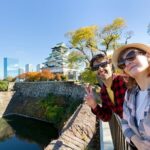
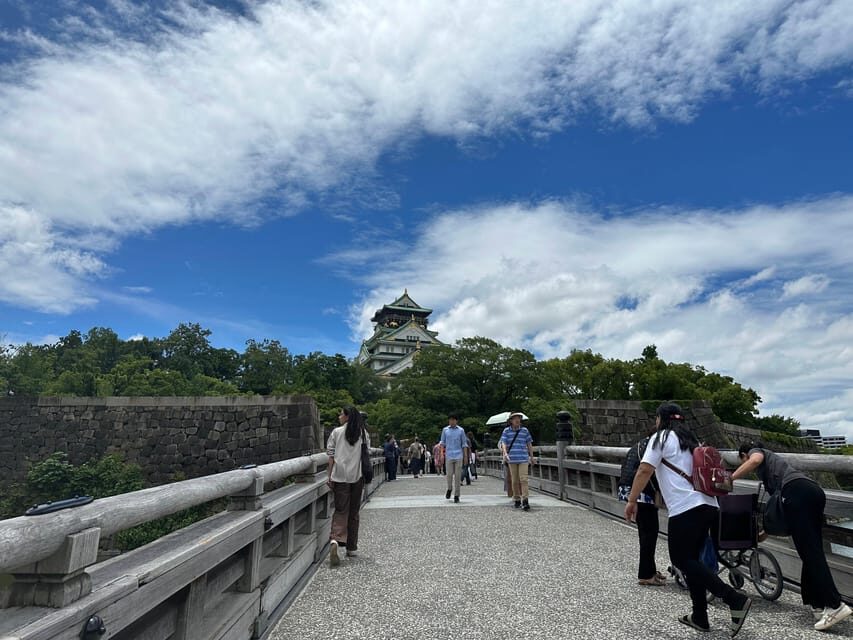
Your first major stop is Osaka Castle, with a guided visit for about 75 minutes and admission included. This is the “anchor” experience of the day. Castle grounds in Osaka aren’t just scenery; they’re a physical reminder of how power, defense, and symbolism show up in everyday city life.
What I like about a guided castle segment is simple: you get orientation. Without guidance, you might wander and see plenty—but miss the why. With a guide, you’re more likely to notice the story behind the architecture and layout, and you’ll move with purpose instead of guessing.
A small practical note: you’ll want comfortable shoes. Even if you don’t do every path at maximum pace, you’ll still cover ground. And since this is a full-day tour, the castle timing helps set the tone early, when crowds may feel more manageable than later in the afternoon.
Potential drawback? This part is popular. If you’re the type who hates crowds at any cost, you might find your rhythm challenged during peak times. A good guide helps anyway—by keeping you moving and pointing out what to prioritize.
Dotonbori: neon streets, street food time, and smart photo stops
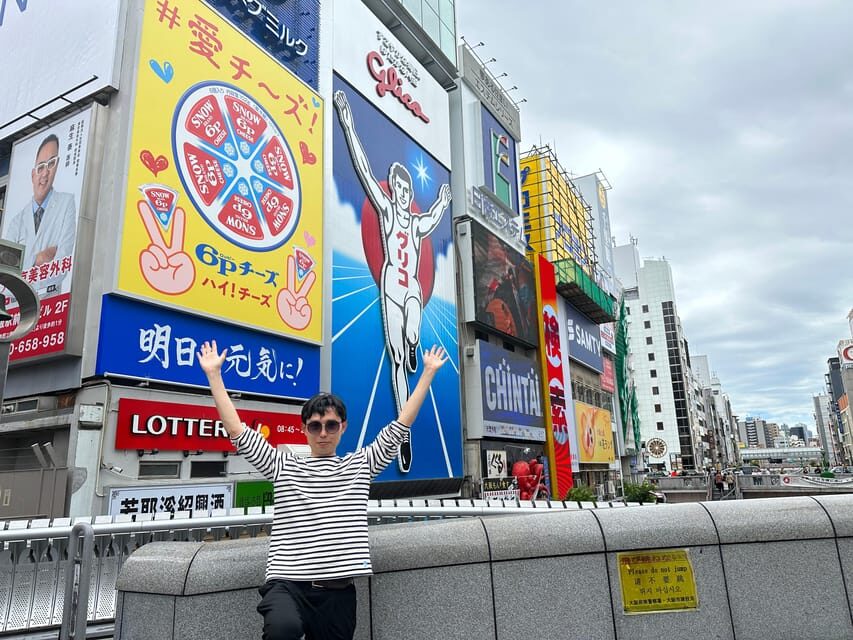
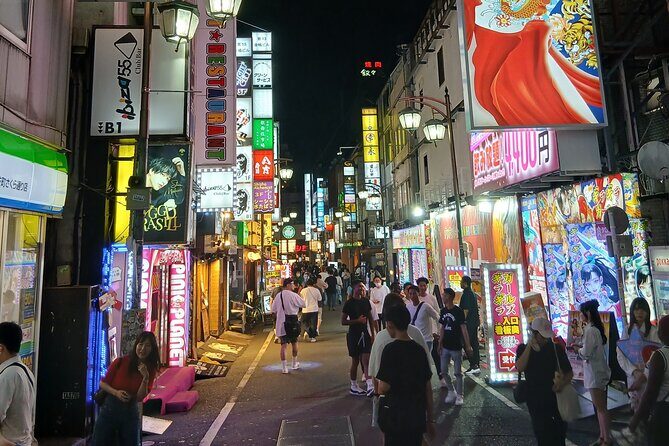
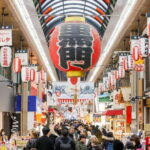
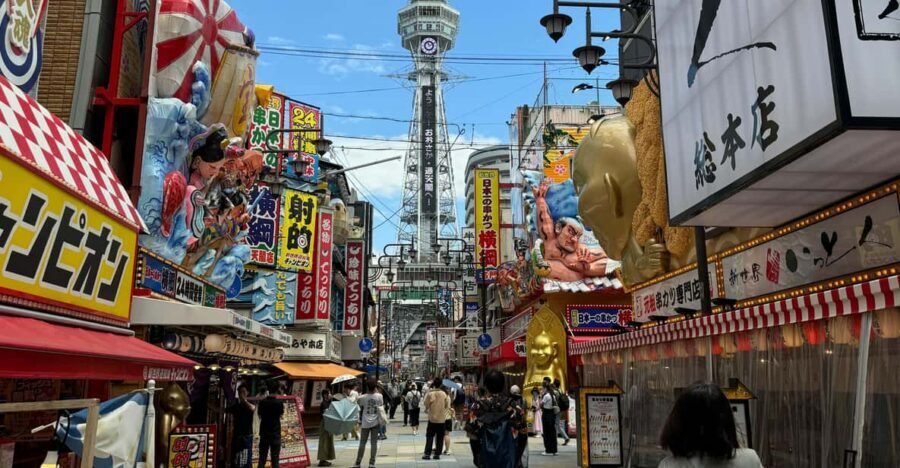
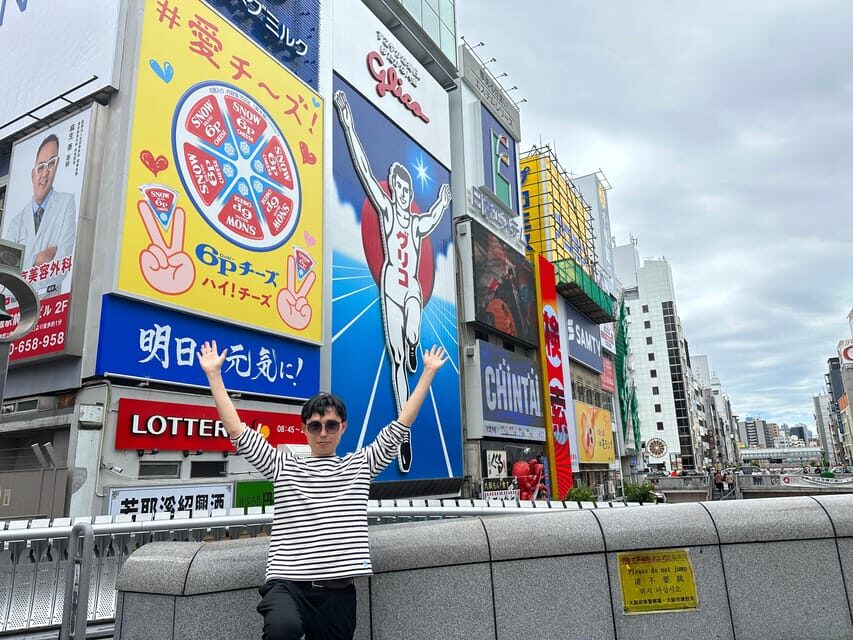
Next comes the energy of Dotonbori—first a 30-minute sightseeing block, then a 1-hour lunch window. This is where Osaka changes gear. You go from historical weight to the kind of street atmosphere you can feel through your walking pace.
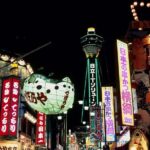
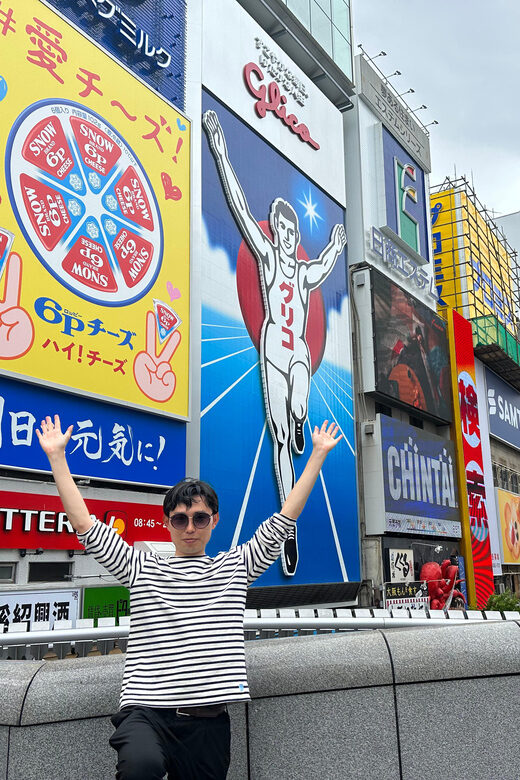
Dotonbori is known for neon signage, and you’ll get an easy entry point to the area’s visual identity, including the iconic Glico running man sign. If you’ve ever tried to “figure out where to eat” on your own here, you know it can turn into decision fatigue fast. The lunch time built into the day gives you structure, and the guide can help you pick something that fits what you actually feel like eating—not just what looks best on a sign.
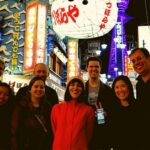
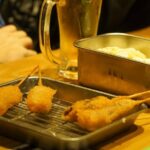
One of the best bits from the guide stories is the hands-on approach to food and photos. People mention guided recommendations like sushi during the Dotonbori portion, and they also mention guides stepping in as photographers so you can get real couple/group shots (not just you photographing the back of your own head).
Two practical considerations:
- Lunch isn’t listed as included meals. So treat the hour as time to buy and eat—your guide helps steer, but your wallet still comes into play.
- Dotonbori is a walking-and-standing zone. If you’re prone to getting tired in crowded streets, plan to slow down for a few minutes between snacks.
Kuromon Ichiba Market: eat-with-purpose instead of wandering
After Dotonbori, you’ll transfer again (about 15–20 minutes, depending on the day’s flow) and reach Kuromon Ichiba Market for a 45-minute food-market visit. This is a strong choice for value, because markets reward the presence of a local guide—especially when you’re trying to figure out what to try quickly.
Kuromon Ichiba Market is especially famous for fresh seafood and local delicacies. In real terms, the guide helps you avoid the common solo mistake: standing at stalls wondering what’s worth ordering, how big the portions are, and how to match your curiosity to something you can actually handle in one bite or two.
This market stop is ideal if you want:
- snack-style eating without committing to a full meal,
- ideas for what to try that you might not pick blindly,
- a smoother experience through a high-traffic environment.
Want to get the most out of the 45 minutes? Bring a flexible mindset. You’ll get farther if you choose “one or two targets” instead of trying to sample everything.
Shitenno-ji Temple: old Osaka with a guided context
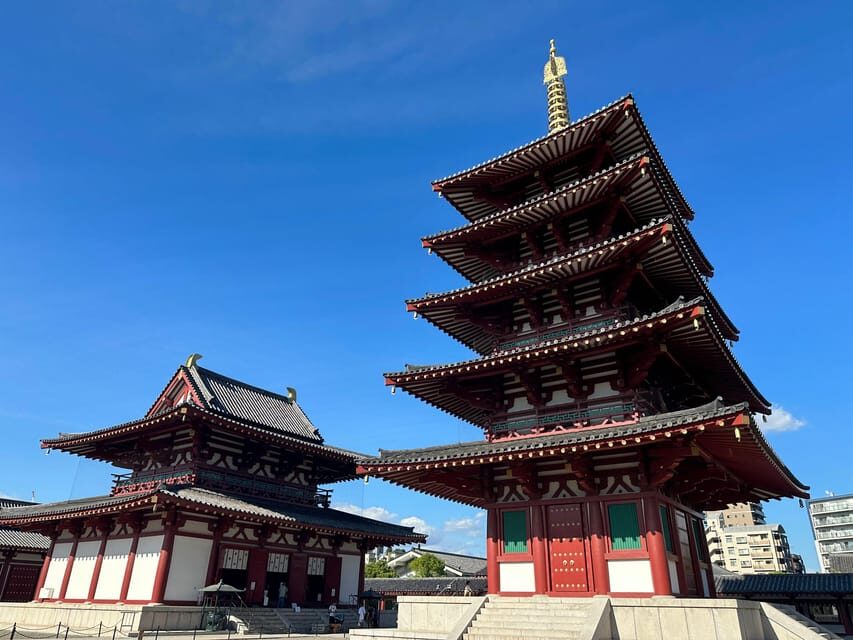
Then the tour shifts again with Shitenno-ji, visited with a guide for about 45 minutes. This is one of Japan’s oldest temple sites, and the guided time matters because temple visits can feel like quiet observation unless someone explains the symbolism, layout, and etiquette.
I like this stop for balance. After eating and neon streets, you get a calmer mood and a chance to slow down mentally. Even if you don’t know much about temple history before you arrive, a guide can help you understand what you’re looking at—so it turns from photo backdrop into a meaningful moment.
Practical note: temple areas usually involve walking on uneven ground and moving through crowds at times. If it’s hot, it’s another reason to keep water close. If it’s raining, bring a plan for slipping and keep your camera protected.
You can also read our reviews of more guided tours in Osaka



Tsutenkaku in Shinsekai: the nostalgic send-off at street level
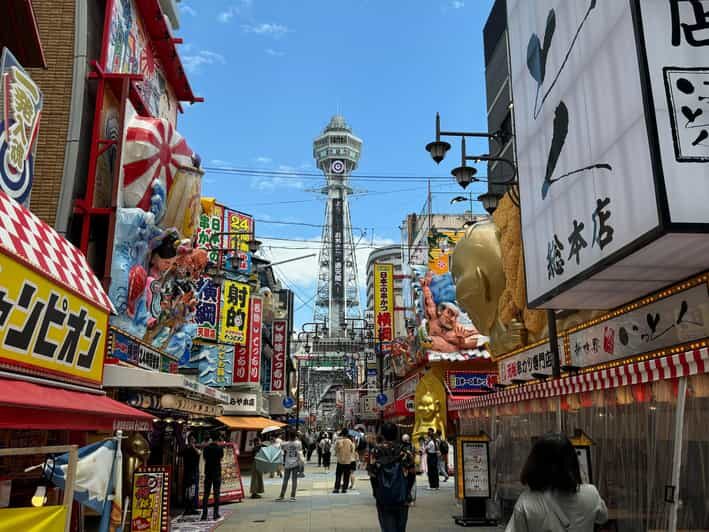
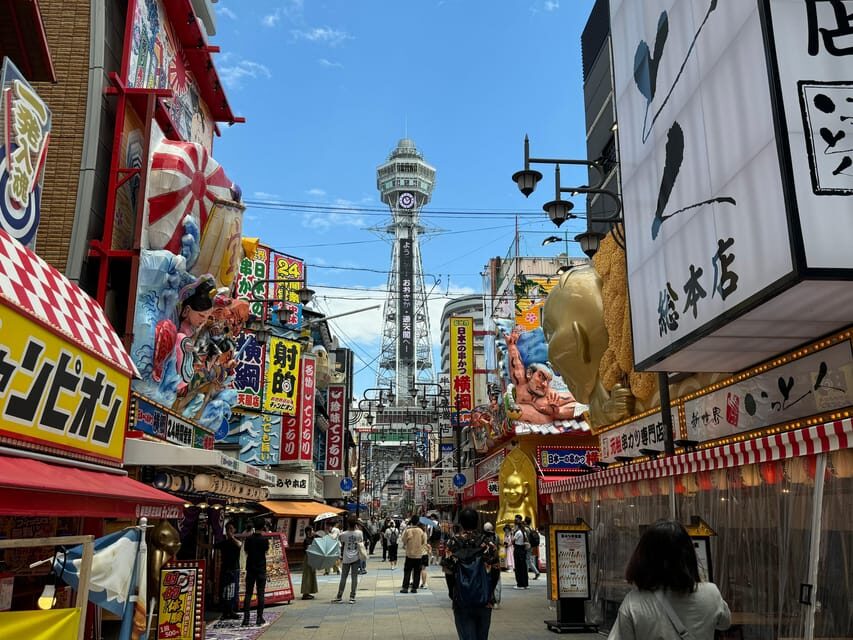
The final sight is Tsutenkaku Tower in Shinsekai, with about 45 minutes of sightseeing, and the tour finishes at 通天閣 (Tsutenkaku). This is a strong ending choice because Tsutenkaku has that classic “old Osaka character” feel—more nostalgic, more everyday, less museum-like than the castle, and less tourist-glitzy than Dotonbori.
By finishing here, the day gives you an easy “last-frame” Osaka image. You can look up at the tower, snap photos, and then keep exploring at your own pace if you still have energy. A private guide experience also means you can ask what nearby streets are worth a quick wander after the tour ends.
One note: Tsutenkaku is part of a neighborhood vibe, so if you want a quiet, contemplative finale, this may feel more lively than you expect. Still, that’s also why it works as an ending.
Price and logistics: what you’re really paying for
The price is $154 per person for a private full-day tour lasting 450 minutes. That sounds like a lot until you look at the structure: you’re not paying for one attraction. You’re paying for guided time across five key stops, including Osaka Castle admission, plus transfers between areas.
This is where private guiding can feel like good value. If you tried to do this on your own, you’d spend time solving logistics: how to route efficiently, what to prioritize at the castle, what to order at Kuromon, and how to connect everything without losing half the day. The guide turns chaos into a workable plan.
Is there a drawback? Yes: the tour is long, and you’ll walk. Also, meals and beverages aren’t included, so you should budget for lunch and market snacks. If your travel style is “I want to choose everything myself,” you may feel like you’re paying for structure you don’t fully use. If your style is “I want someone to help me make good calls,” this tour’s pricing starts to look fair.
Another practical aspect: this is offered in a private group format. That usually means you won’t feel squeezed into a rigid crowd routine, which is especially helpful at places where you want photos.
What to bring (and how to avoid a day-ender)
Bring comfortable shoes. This tour is built around walking between notable areas, and even short sight blocks add up when the day is 450 minutes long.
Also pack:
- a camera (you’ll want it for castle views and Dotonbori signs),
- sunscreen (sunny days happen),
- water bottle (hydration matters, especially if you’re stopping and starting).
Photography is allowed, though restrictions may apply in certain locations. If you’re the type who gets caught by rules mid-shot, ask your guide early so you don’t lose momentum later.
And if you’re sensitive to crowds or heat, plan for breaks. A good guide can help you time rest moments, especially when you’re transitioning from neon streets back to temple calm.
Who this private tour is best for
This tour fits well if you want:
- a guided day that mixes major landmarks and local food moments,
- someone to help you choose what to eat without overthinking,
- a manageable plan that doesn’t require you to read a map every 10 minutes.
It’s especially good for couples or small groups who care about photos. One repeated theme in guide experiences is that guides help take pictures so you can be in them together, not just look at them later as missed opportunities.
It’s not suitable for people with mobility impairments or wheelchair users, since the tour involves walking and typical sightseeing terrain.
Should you book this Osaka private guided walking tour?
I’d book it if you want a structured, high-impact day and you value a guide who:
- adapts to your preferences,
- helps with photo moments,
- gives you food direction (especially for Dotonbori and Kuromon),
- adds context so you understand what you’re seeing at the castle and temple.
I would hesitate if you dislike long walking days, want every meal fully included and pre-planned, or need step-free accessibility. Also consider it’s not a short “hit and run” tour—this is a full-day commitment.
If your goal is to see the best-known Osaka sights while still feeling like the day has a personal touch, this private approach is a strong way to do it.
FAQ
Where is the meeting point?
You meet your guide at 時空(とき)の広場 (Toki no Hiroba). If you’re near JR Osaka Station, there’s a Golden Clock on the 5th floor outside the ticket counter, and the guide will be holding a bright yellow DeepExperience signboard.
How long is the tour, and is it private?
The tour lasts 450 minutes and runs as a private group experience with a live guide.
What language is the guide available in?
The live tour guide is available in English and Japanese.
What is included in the tour price?
Included items are the expert guide, admission to Osaka Castle, visits to Dotonbori, Kuromon Ichiba Market, Shitenno-ji Temple, and Tsutenkaku Tower.
What should I bring?
Wear comfortable walking shoes. Bring a camera, sunscreen, and a water bottle.
Are meals included?
Meals and beverages are not included. The itinerary includes lunch time in Dotonbori and a market visit for food, but you’ll be purchasing what you eat.