REVIEW · KYOTO
Hanakoushi cotton Scarf Class
Book on Viator →Operated by Kyoto Shibori Museum · Bookable on Viator
Kyoto cloth dyeing is more fun than it sounds. In this private scarf class, you learn sekka shibori-style folding and dyeing, then walk out with a real souvenir made by your own hands. I like that it’s hands-on, and I like that it comes with a museum visit built in. The main drawback: it’s relatively short, so if you’re hoping for hours of craft time, plan for a quick session.
The Kyoto Shibori Museum setting helps a lot. While your scarf dries, you get to look at shibori tools, samples, and finished pieces, which turns your scarf-making into a bigger appreciation of the craft. Another plus: the instruction feels practical and patient, with staff able to explain clearly in English in at least some sessions.
One thing to keep in mind: the class may feel like a focused sampler rather than an in-depth training course. And if you’re extra sensitive to having something to do every minute, that drying/watching time can feel a bit slower.
In This Review
- Key things to know before you go
- Where this Kyoto shibori class fits in your day
- The scarf-making part: hanakoushi shibori and the sekka method
- What you’re likely to notice during the process
- While it dries: museum time that actually adds value
- About the finished scarf souvenir
- Private class feel: calm instruction and personal pacing
- Best moments and the possible drawbacks (so you’re not surprised)
- What’s strongly praised
- One drawback to respect
- Who this class is for (and who should skip it)
- Price and value: what you’re really paying for
- Practical tips for a smoother visit
- Should you book this Kyoto shibori scarf class?
- FAQ
- How long does the Hanakoushi cotton scarf class take?
- Is this a private class?
- What scarf size do you make?
- What method do you learn?
- Can I choose my scarf color?
- How does the session work after dyeing?
- Is there time to shop at the museum?
- Where do I meet for the class?
- Do I need to print anything?
- What is the cancellation policy?
Key things to know before you go
- Private by default: your group goes in together, so you’re not squeezing into a crowded schedule.
- Choose your color, fold with intent: you pick a favorite color first, then learn the folding method that shapes the pattern.
- Make a big scarf souvenir: you work on a 175cm x 50cm (about 70 x 17 inches) scarf.
- Waiting becomes learning: while the scarf dries (around 30 minutes), you’ll check out shibori art, tools, and samples.
- Museum shop time: you’ll have a chance to browse shibori items and fabrics in the shop afterward.
Where this Kyoto shibori class fits in your day
This experience is centered on the Kyoto Shibori Museum in Nakagyo Ward. The meeting point is at 135-5 Shikiamichō, Nakagyo Ward, Kyoto (604-8261), and it’s near public transportation, which matters in Kyoto where walking time can add up fast.
The class itself runs about 30 minutes on the schedule, though it’s described as usually 30 to 60 minutes per session. That range is your clue to treat this like a compact activity. It’s perfect as a mid-day break if the rest of your Kyoto plans involve lots of sightseeing on foot.
At $43.35 per person, the value comes from the fact that you’re not paying for a lecture. You’re paying for a take-home scarf, plus museum time. A souvenir scarf you didn’t buy, but made, also tends to feel like a stronger memory than another item you’ll store in a closet.
One practical note: it’s commonly booked about 23 days in advance on average, so if you’re traveling in peak season or have tight plans, it’s smart to lock it in early.
A few more Kyoto tours and experiences worth a look


The scarf-making part: hanakoushi shibori and the sekka method
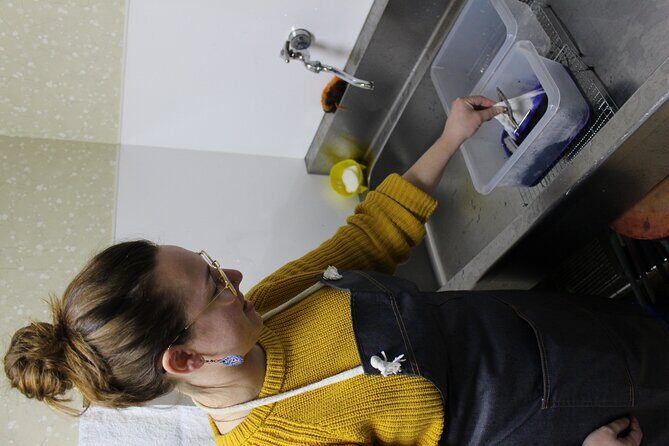
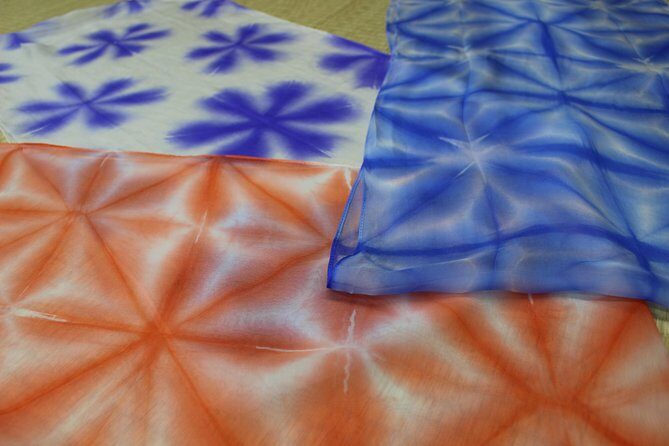
Your main hands-on work happens at the Kyoto Shibori Museum. The session focuses on dyeing a cotton scarf (listed as 175cm x 50cm / 70 x 17 inches) using the hanakoushi shibori approach, with instruction tied to the traditional sekka shibori style.
Here’s what that means in practical terms: you start by picking your color. Then you fold your fabric in a specific way—this folding step is what controls the final pattern. After the folding, you move to dyeing.
You don’t need textile experience to do this. The class is set up for visitors, and the craft process is explained step-by-step. In the feedback I’m highlighting, people keep saying the workshop feels friendly, with staff who guide you through it without making you feel behind.
What you’re likely to notice during the process
- The folding is the real “art” moment. Once you understand what shape the folds need to be, the rest becomes more procedural.
- You get a tangible result fast. You’re not just learning theory—you’re creating a visible artifact you’ll take home.
- There’s a rhythm to the session. It goes from choosing → folding → dyeing → waiting for drying → finishing and seeing results.
While it dries: museum time that actually adds value
After you dye the scarf, you’ll need time for it to dry—about 30 minutes is typical. This is where the experience becomes more than a single craft step.
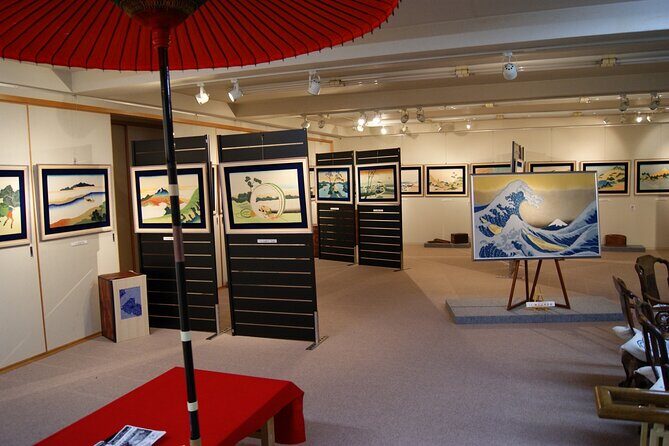
During the drying period, you learn more about shibori by looking around the museum. You can browse art pieces, tools, and samples displayed there. This is a smart design choice because it answers the big question most people have: why do these patterns look the way they do, and why is this craft treated with such care in Japan?
It’s also a chance to slow down. Kyoto can be fast—lots of temples, lines, and late lunches. Here, you can sit with the craft for a bit and connect what you made with what the museum shows.
About the finished scarf souvenir
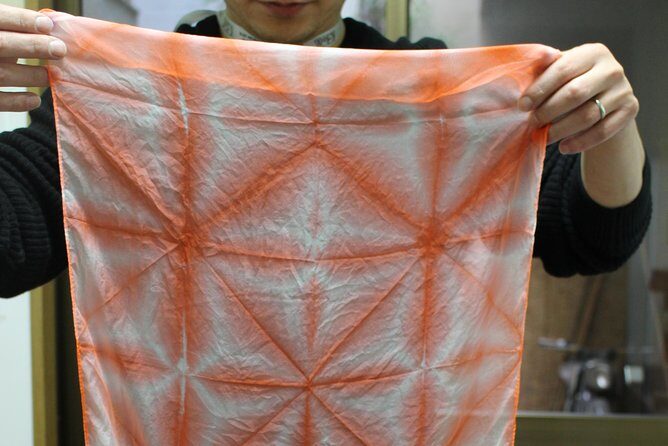
The end goal is clear: you leave with a beautiful scarf as a Kyoto souvenir. The “make it yourself” element is a big part of the value. You’re not just buying a product. You’re taking home proof that you learned a traditional technique well enough to create something wearable.
Also, the scarf size is substantial—175cm long and 50cm wide—so it isn’t a token. You can wear it, gift it, or use it as a table/neck accessory depending on your style.
One small caution: while the class description says cotton, some write-ups refer to silk scarves. Don’t stress—just confirm what material you’ll work with when you book, so your expectations match what you’ll receive.





Private class feel: calm instruction and personal pacing
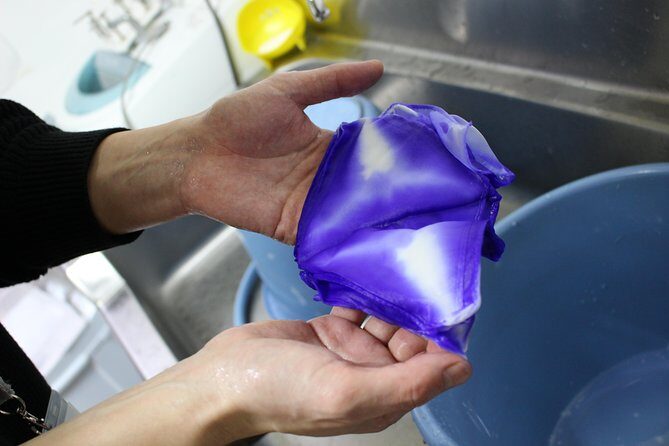
This is a private class exclusively for your party. That changes the tone. You’re not competing for attention, and you can ask questions without feeling rushed.
Several positive comments point to staff being kind, helpful, and patient, and in at least one case, an instructor named Nina was singled out for guiding someone through the process in an informative and fun way. Another instructor is referenced as Yokahama-san, and the workshop tone is described as welcoming with solid English support in some sessions.
Even if you don’t speak Japanese, you’re usually fine. The craft steps are visual, and the staff can explain what to do without turning it into a complicated lesson.
Best moments and the possible drawbacks (so you’re not surprised)
What’s strongly praised
The most repeated wins are pretty consistent:
- It’s fun and educational, not dry or overly technical.
- The process feels easy and tourist-friendly—people appreciate that it’s simplified for visitors instead of requiring you to spend hours tying tiny fabric bits.
- The results look impressive. Multiple people mention being proud of the finished scarf.
- The museum itself is interesting, not just a waiting room.
One drawback to respect
A shorter class can be a drawback if you’re expecting constant, active work the entire time. Since dyeing requires drying, there’s a waiting interval where you’re learning more through the museum displays rather than tying more fabric nonstop.
Also, the museum is described as small by some. If you want lots of galleries and big-city museum energy, temper your expectations. Think “focused craft museum,” not “day-long museum complex.”
Who this class is for (and who should skip it)
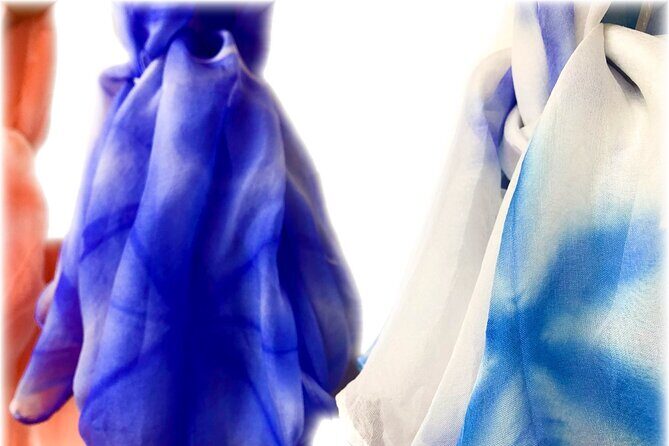
This works especially well if:
- You want a true take-home Kyoto craft souvenir that’s personal.
- You like hands-on activities more than long guided tours.
- You enjoy traditional techniques and want a practical introduction to shibori patterns and tools.
- You want a break in the middle of Kyoto sightseeing that doesn’t require a big time commitment.
It might not be ideal if:
- You’re chasing a long multi-hour workshop where you repeatedly dye and experiment with lots of variables.
- You want something with minimal waiting. The drying time is part of the flow.
Price and value: what you’re really paying for
At $43.35 per person, the pricing is best understood as paying for three things at once:
- Instruction in a traditional dyeing method.
- Materials and dye process needed to create a scarf.
- A finished souvenir you leave holding.
If you’ve ever shopped for Kyoto textiles, you know how quickly prices can jump for items that look good and feel special. This class gives you a scarf that carries story value: you made it, you learned the folding logic, and you saw examples of the technique in a real museum setting.
Practical tips for a smoother visit
- Plan for the 30-minute dry window. Use it to look closely at shibori examples and tools, not just to kill time.
- Wear comfortable clothes. Dye-related activities can be messy even when they’re well-managed.
- Bring patience. The craft is precise, and good results come from following the folding steps carefully.
- If you care about the exact material, confirm cotton vs. any mention of silk you might see in descriptions. The class description says cotton.
Should you book this Kyoto shibori scarf class?
I’d book it if you want a Kyoto souvenir that feels earned, not purchased, and you’re happy with a short, hands-on session plus museum learning time. The private format, the clear step-by-step instruction, and the strong satisfaction with the finished scarf make it a solid choice for couples and solo travelers alike.
Skip it if you’re the type who needs long, uninterrupted crafting time or you want a big museum day. In that case, you might prefer a longer workshop or a museum-only visit.
If you fit the first group, this is one of those activities that turns your Kyoto trip into something you can wear.
FAQ
How long does the Hanakoushi cotton scarf class take?
The scheduled duration is about 30 minutes, and classes are usually individual and take 30 minutes to 60 minutes per class.
Is this a private class?
Yes. It’s a private tour/activity, and only your group participates.
What scarf size do you make?
You dye a scarf that is listed as 70 inches x 17 inches (175cm x 50cm).
What method do you learn?
You learn dyeing using the sekka shibori method, and the class describes the scarf as using the hanakoushi shibori approach.
Can I choose my scarf color?
Yes. You start by choosing your favorite color before learning how to fold and dye the fabric.
How does the session work after dyeing?
After dyeing, your scarf needs time to dry (about 30 minutes). During that time, you learn more about shibori and can browse museum displays.
Is there time to shop at the museum?
Yes. The museum shop sells shibori items and souvenirs, and you’ll have time to browse during your visit.
Where do I meet for the class?
You meet at Kyoto Shibori Museum, 135-5 Shikiamichō, Nakagyo Ward, Kyoto, 604-8261, Japan. The activity ends back at the meeting point.
Do I need to print anything?
You receive a mobile ticket, and confirmation is received at booking.
What is the cancellation policy?
Cancellation is free. You can cancel up to 24 hours in advance for a full refund; within 24 hours, the amount paid is not refunded.