REVIEW · TOKYO
Tokyo: 3-Hour E-Bike Tour of the City’s Riverside Areas
Book on GetYourGuide →Operated by Tokyo Rental Bicycle · Bookable on GetYourGuide
Tokyo looks different at bike speed. This 3-hour e-bike loop blends riverside Tokyo with major landmarks and quieter neighborhoods, guided by locals who explain what you’re seeing. I especially like the electric assistance, which keeps the pace comfortable without turning the trip into a sightseeing bus ride.
You’ll also get a lot of value from the guide’s stop-by-stop storytelling, plus enough flexibility for both first-timers and regular cyclists. One thing to keep in mind: parts of Ginza can mean short stretches with heavier traffic, so you’ll want to stay alert and comfortable riding around cars.
In This Review
- Key things to know before you go
- E-Bikes That Make Tokyo’s Riverside Feel Easy
- From Hibiya Park to Ginza: Where the Tour Finds Its Rhythm
- Ginza and Kabuki-za: Quick Photo Stops With a Real-World Twist
- Tsukiji Hongan-ji and the Outer Market: Tokyo’s Old-Market Energy
- Tsukishima Monja Street and Sumiyoshi Jinja: Local Tokyo by Bike
- Kiyosumi Gardens: The Included Entry Stop That Makes the Price Make Sense
- Naritasan Fukagawa Fudōdō: The Finish Point (and the Optional Fee)
- Price and Logistics: Is $78 Worth It?
- Who This Tour Fits Best (and Who Should Skip It)
- A Note on Guides: The Tour’s Biggest Difference Maker
- Should You Book This Tokyo E-Bike Riverside Tour?
- FAQ
- What is the duration of the Tokyo e-bike tour?
- Where do we meet for the tour?
- Are electric bikes provided?
- Is there a group limit?
- What is included in the price?
- Is the entrance fee at the final temple included?
- What languages are the guides?
- What should I bring?
- Who is this tour not suitable for?
- What are the cancellation terms?
Key things to know before you go
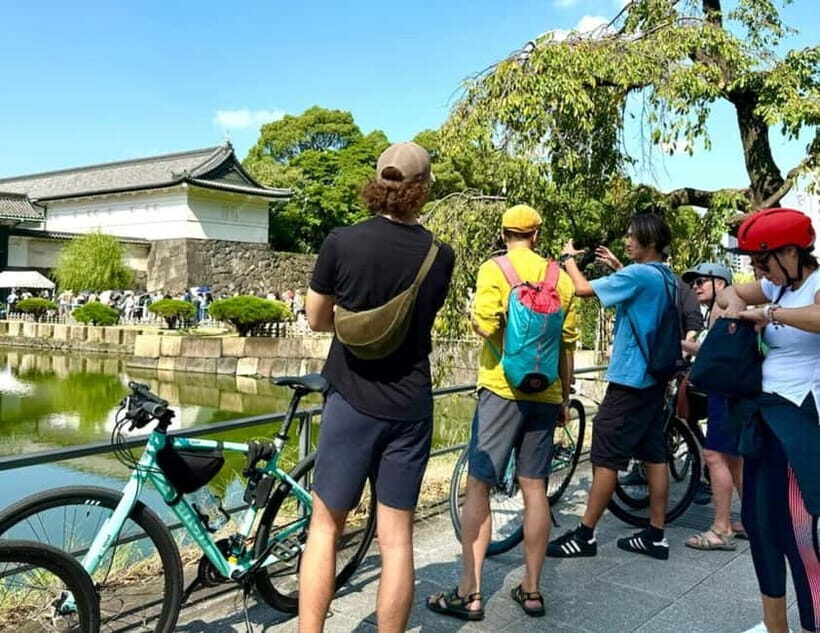
- Small group size (up to 8) makes it easier to keep together and ask questions.
- E-bikes with baskets help you travel light and reduce fatigue over city distances.
- Time at Tsukiji and the riverside corridor gives you more “Tokyo texture” than most quick photo stops.
- Kiyosumi Gardens entrance is included, so you’re paying for a real experience, not just a pass-by.
- Bike insurance is included, which adds peace of mind when you’re in a busy city.
E-Bikes That Make Tokyo’s Riverside Feel Easy
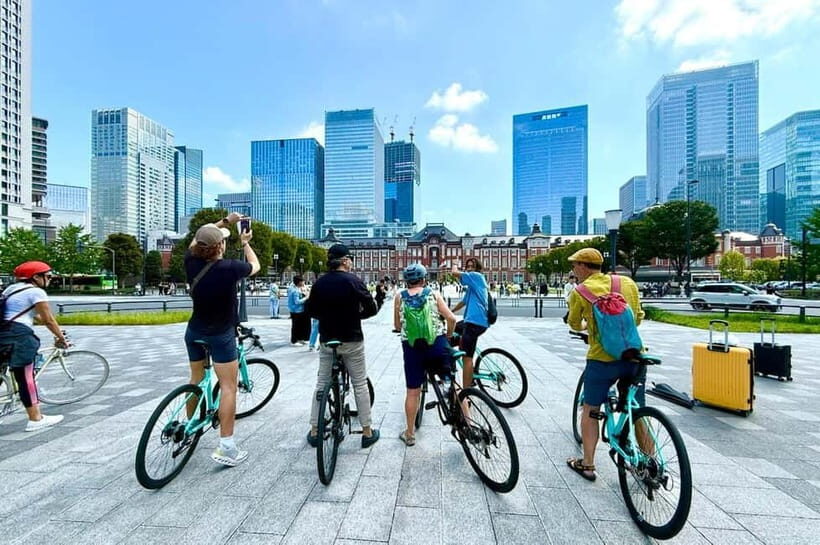
Tokyo’s best views and interesting streets don’t always line up with the easiest train route. This tour solves that by mixing e-bike comfort with a route that moves through the river-adjacent areas of the city. If you’ve done a few days of temples and neighborhoods on foot, the change in pace is a relief.
The bikes are described as high-quality road bikes with electric support, and you also get a basket for your bag. That sounds small, but it matters: you’re not juggling a backpack while trying to take photos or keep your hands free for balance.
I also like the safety angle here. The format is set up so you’re protected at all times, and that usually means the group stays organized and the ride feels controlled instead of chaotic. One extra win: bike insurance is included, which is a smart add-on for a city cycling day.
You can also read our reviews of more cycling tours in Tokyo
From Hibiya Park to Ginza: Where the Tour Finds Its Rhythm
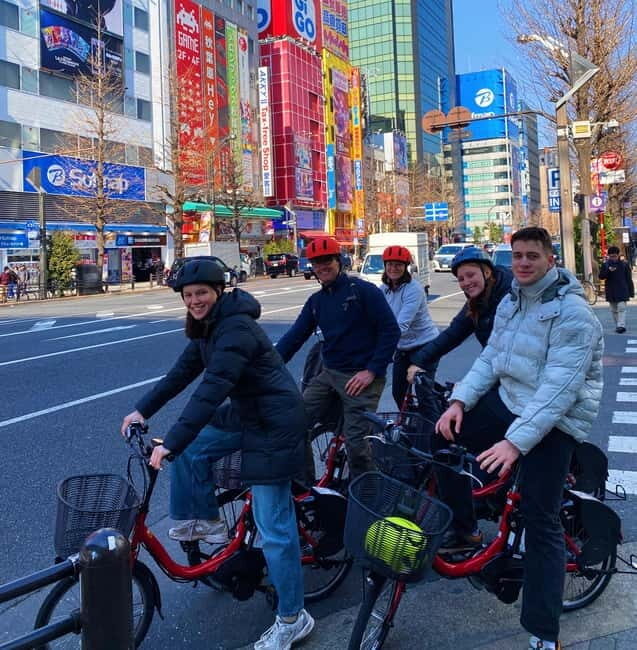
The meet-up point is simple: right of the kiosk in Hibiya Park, near 1-3 Hibiyakōen. Arrive about 10 minutes early so you can get fitted, ask questions, and settle in before rolling out.
The first stretch sets the tone. You start with a photo and guided introduction to the central Tokyo feel, then gradually move from iconic sights into areas that feel more local. Since the tour is only 3 hours, timing matters, and the route is built around short stops that don’t chew up the day.
If you like structure—photo, quick guided context, then riding—this tour works well. It’s not a slow “stand and stare” walk. It’s more like: ride, stop, learn, and move.
Ginza and Kabuki-za: Quick Photo Stops With a Real-World Twist
You’ll stop in Ginza for a short photo moment and a guided segment (about 10 minutes). Then there’s another 10-minute guided/photo stop at Kabuki-za.
This is where you’ll notice that Tokyo isn’t always quiet on a bike. One review-style takeaway I’d pass along as advice: Ginza can include a short, trickier stretch with traffic. The good news is it’s not the whole tour—after that, the ride shifts into streets that feel calmer and more manageable.
So if you’re booking this with friends or family, I’d frame it like this: expect an easy ride most of the time, with one or two moments where you need to be a little more focused.
Tsukiji Hongan-ji and the Outer Market: Tokyo’s Old-Market Energy
From central Tokyo, the route heads toward the old market area, including Tsukiji Hongan-ji (photo stop plus guided time of about 15 minutes). Then comes Tsukiji Outer Market with a longer guided segment (around 20 minutes).
Even if you’re not shopping, Tsukiji’s atmosphere is about movement—people, snack runs, kitchen smells, and quick conversations. The guided time helps you avoid the common tourist mistake of only looking for the obvious storefronts. You get enough context to understand how these areas work as everyday places, not just a set for photos.
One important practical note: food and drinks are not included. That said, the Outer Market stop gives you time to grab something on your own if you want a snack. If you do, bring cash or a card that you’re comfortable using right away—when you’re hungry, you don’t want to hunt for payment options mid-ride.
Tsukishima Monja Street and Sumiyoshi Jinja: Local Tokyo by Bike
After Tsukiji, the ride continues into spots that feel more like neighborhood Tokyo than headline landmarks. You’ll have a Tsukishima Monja Street stop (about 10 minutes) and then Sumiyoshi Jinja (another 10 minutes).
These stops are shorter by design, but that’s actually a plus for a 3-hour tour. You get a taste of different Tokyo “moods” without burning time. The guided comments help you notice things you’d likely miss if you were rushing through on your own.
If your goal is to see Tokyo beyond the most crowded photo corridors, this section delivers. The route is built to help you reach places that would be slower or more awkward by buses—especially when you want to keep momentum.
You can also read our reviews of more city tours in Tokyo



Kiyosumi Gardens: The Included Entry Stop That Makes the Price Make Sense
Next is Kiyosumi Gardens, with a photo stop and a guided visit of about 25 minutes. The entrance fee is included, which is one of the best value pieces of the entire tour.
Here’s why I think that matters: when a tour includes an actual paid site, the math is easier. You’re not paying $78 and wondering how much of the time is just riding past things. This is a real pause in the schedule—time to slow down, look around, and let the guide’s stories give you context as you wander.
Also, because the tour is capped at 8 participants, the garden portion doesn’t feel like a conveyor belt. You’re more likely to move at a human pace and take photos without constantly stopping and starting.
If you’re the type who likes a mix of outdoors calm plus city energy, this stop is the perfect balance point.
Naritasan Fukagawa Fudōdō: The Finish Point (and the Optional Fee)
The tour ends at Fukagawa Fudōdō (Naritasan Tokyo branch temple). You’ll have a guided stop of about 20 minutes at Naritasan Fukagawa Fudōdō.
Here’s the practical part: there’s an optional entrance fee of ¥1000 each by cash. The tour ends there, so if you don’t want to enter, you can skip paying and still be done with the tour.
I like that choice. It works for different energy levels. If you want the full temple experience, plan for the cash. If you’d rather preserve time for your next plan, you can simply use the guided portion and wrap up at the endpoint.
Price and Logistics: Is $78 Worth It?
At $78 per person for a 3-hour guided ride, this tour earns its place if your priorities are comfort plus access. You’re not just paying for a bike. You’re paying for:
- an English-speaking live guide (with Japanese also offered),
- electric bikes with a basket,
- bike insurance,
- and entrance to Kiyosumi Gardens.
For Tokyo, that’s a solid bundle. The ride also does something you can’t easily replicate with random transit alone: it strings together downtown icons, market-area stops, and riverside neighborhoods in one tight loop.
If you’re traveling with someone who doesn’t want to walk all day, e-biking is a great compromise. If you’re the one who loves local detail, the guided stops make the time count. And if you’re on limited sightseeing days, this is a way to see more variety without adding another long transit day.
Who This Tour Fits Best (and Who Should Skip It)
This tour is built for a wide range of cycling comfort because the route uses e-bikes. That said, it’s still a bike tour, so you need basic comfort on two wheels.
It’s not suitable for:
- children under 12,
- pregnant women,
- people with back problems,
- and anyone who can’t ride a bike.
If you’re deciding between this and a walking tour, choose this when you want to cover ground and get a different perspective—especially along the river corridor. Choose walking when you want maximum time in one place. This tour is a “many Tokyo flavors, one afternoon” style.
A Note on Guides: The Tour’s Biggest Difference Maker
The names showing up in feedback—like Nooki, Casey, Naoki, and Show—tell you something important: the guides are actively involved, not just there for logistics. People specifically highlight care, enthusiasm, and making the ride feel fun while still being informative.
That matters because bike tours can get tricky if the guide just reads information like a brochure. Here, the format is stop-based, with guided segments at each location, so the guide’s personality is part of the experience.
If you’re traveling with friends or family, look forward to a guide who keeps the group together and helps you understand what you’re seeing between stops.
Should You Book This Tokyo E-Bike Riverside Tour?
Book it if you want a practical way to see Tokyo in a short window—especially if you want more real neighborhood energy than only the busiest corridors. The route’s mix of Ginza, Tsukiji-area stops, riverside sections, and Kiyosumi Gardens makes it feel like a full slice of the city, not just a line of landmarks.
Skip it if:
- you’re uncomfortable riding a bike,
- you have back issues or you fall into one of the “not suitable” categories,
- or you strongly prefer zero traffic exposure, since Ginza can include short busier stretches.
For most people who can cycle, this is a high-value afternoon: guided, varied, and paced so you can actually enjoy Tokyo instead of grinding through it.
FAQ
What is the duration of the Tokyo e-bike tour?
The tour lasts 3 hours.
Where do we meet for the tour?
Meet at the right of the kiosk in Hibiya Park (near 1-3 Hibiyakōen).
Are electric bikes provided?
Yes. You’ll ride electric bikes, and the bikes come with a basket for your bag.
Is there a group limit?
Yes. The tour is a small group limited to 8 participants.
What is included in the price?
Included items are the English-speaking guide, electric bikes, bike insurance, local insights and stories, and the entrance fee to Kiyosumi Gardens.
Is the entrance fee at the final temple included?
No. The entrance fee to Fukagawa Fudōdō is not included. It’s optional and costs ¥1000 each in cash. Since the tour ends there, you don’t need to enter if you don’t want to.
What languages are the guides?
The live guide speaks English and Japanese.
What should I bring?
Bring comfortable shoes, water, and comfortable clothes. Sunglasses are recommended.
Who is this tour not suitable for?
It’s not suitable for children under 12, pregnant women, people with back problems, or anyone who can’t ride a bike.
What are the cancellation terms?
You get free cancellation up to 24 hours in advance for a full refund. You can also use reserve now & pay later for flexibility.