REVIEW · TOKYO
Calligraphy Culture SHODO Experience in Tokyo
Book on Viator →Operated by Tokyo Iriya Shodo Club (Japanese Calligraphy Culture Experience in Tokyo) · Bookable on Viator
Japanese calligraphy is easier than you think. In this Shodo experience in Tokyo, you’ll learn the basics fast, then put brush to paper to write your name in Japanese or a favorite word in kanji. It’s a hands-on class designed for foreign visitors, and it ends with a take-home autograph board so you have something real from your trip.
What I like most is the small-group feel (max 5), which keeps the pace friendly and the feedback personal. Second, the instruction tends to be patient and English-friendly, and in the reviews you’ll see teachers like Zuisen and Sachie praised for guiding beginners step by step.
One thing to consider: the classroom can be in a shared hostel or boarding-house space. That means you might hear daily life happening in the background during your lesson, which can be distracting if you’re expecting a perfectly quiet studio.
In This Review
- Key Highlights You’ll Want to Know
- Your Shodo Class Starts in a Real Tokyo Neighborhood
- What Happens During the 90-Minute Lesson
- Getting set up: posture and brush control
- Learning the stroke logic (not just copying)
- Writing your name or a favorite kanji word
- Finishing touch: the autograph board you take home
- The Small-Group Advantage (Why It Feels Like a Lesson, Not a Show)
- Teachers Who Actually Teach Beginners
- Location Reality Check: Close to Sights, Inside a Shared Space
- Price and Value: $33 for Supplies and a Take-Home Piece
- Best Time to Do This in Your Tokyo Day
- What to Bring (and What to Decide Before You Go)
- Who This Shodo Experience Is For
- Should You Book This Calligraphy Culture Class?
- FAQ
- What does the calligraphy experience include?
- How long is the Shodo experience in Tokyo?
- Where is the meeting point?
- How many people are in the group?
- What can I write during the lesson?
- Is it easy to reach by public transportation?
- What is the cancellation rule?
Key Highlights You’ll Want to Know
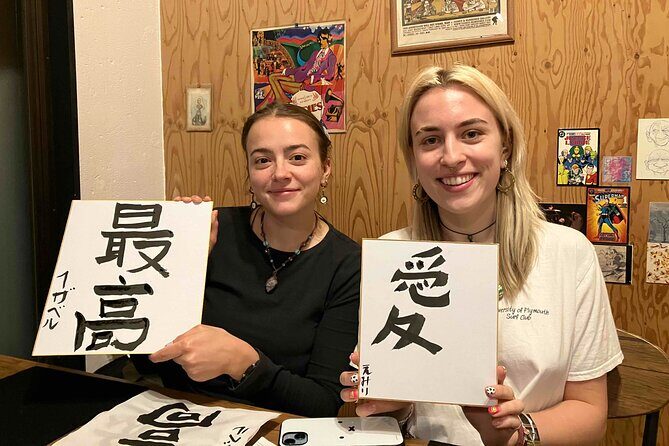
- Write your own Japanese: your name in Japanese script or a chosen word in kanji
- Get taught the fundamentals: brush grip, posture, and how to draw clean lines
- Small class size: up to 5 people, which makes it easier to get corrections
- Take-home souvenir: an autograph board with your finished writing
- Near Asakusa and Ueno: easy to pair with a sightseeing day
- Friendly teachers: Zuisen and Sachie are specifically mentioned for patient guidance
Your Shodo Class Starts in a Real Tokyo Neighborhood
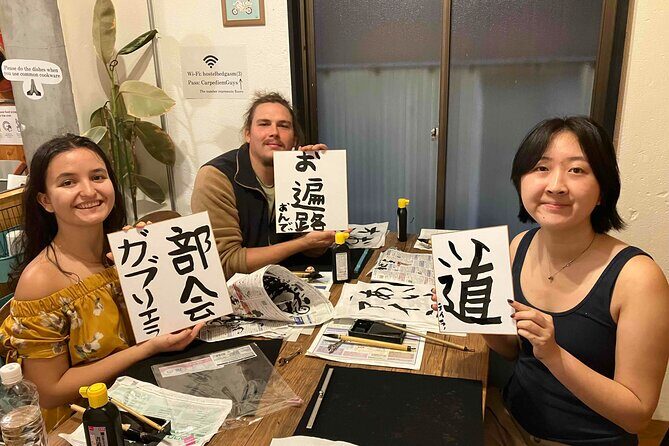
This isn’t a distant performance. It’s a practical, classroom-style lesson where you learn by doing. The meeting point is Tokyo Iriya Shodo Club, in Taito City’s Iriya area, and it’s close to major sights like Asakusa and Ueno. The location is also just about a 5-minute walk from Iriya Station, which is a big deal in Tokyo. It keeps your evening from turning into a scavenger hunt.
The class runs about 1 hour 30 minutes, and you’ll use calligraphy supplies provided for you. That matters because you don’t need to solve the brush-and-ink problem before you even get started. You show up, you get guided, and you leave with something you can display at home.
You can also read our reviews of more tours and experiences in Tokyo.



What Happens During the 90-Minute Lesson
Expect a lesson that moves from basics to your own final piece. The overall flow is clear: learn the right way to hold the brush and draw basic strokes, practice those strokes, then write your name or a favorite word.
Getting set up: posture and brush control
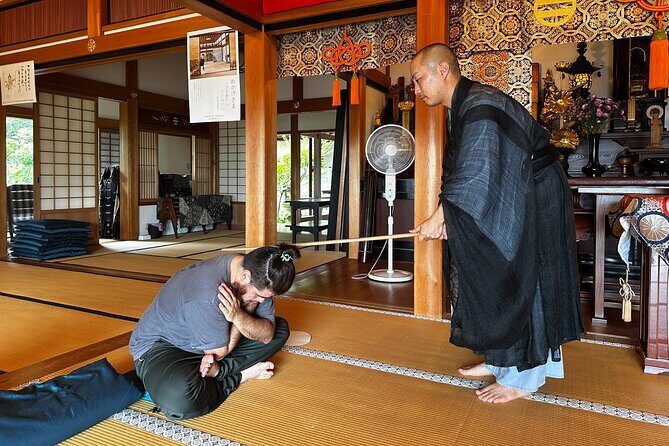
The first part focuses on the basics of Shodo: how to hold the brush, how to sit or stand so your movements are controlled, and how to draw lines with the right pressure and direction. Even if you’re a complete beginner, this is the right order. If you skip posture and grip, your strokes will look messy no matter how good your design is.
Learning the stroke logic (not just copying)
Next you’ll practice shapes and fundamental lines. Calligraphy looks simple, but it has rules. If you learn those rules in a beginner-friendly way, you’ll start seeing your progress immediately. Reviews often point to practicing basic shapes before writing full words, and that’s exactly how you should expect it to work here.
Writing your name or a favorite kanji word
Then comes the fun part: your own writing. You can write your name in Japanese or choose a favorite word to write in kanji. In one review, the student wrote their name in katakana calligraphy, and the result was legible enough that a translation tool recognized it. That’s a good reminder: even if your goal is art, calligraphy has enough structure that the result often looks meaningful beyond decoration.
If you want a smoother experience, decide ahead of time what you’d like to write. A name is straightforward because the teacher can help you pick the right script and format. A kanji choice is more personal, but it’s also the part where you’ll benefit most from the teacher’s guidance.






Finishing touch: the autograph board you take home
At the end, you get to take home a board with your finished writing. That’s a big part of the value. A lot of activities in Tokyo are “look and take photos.” This one gives you a tangible souvenir created by your own hands—something you can frame or keep in a folder and remember long after your ink smell fades.
The Small-Group Advantage (Why It Feels Like a Lesson, Not a Show)
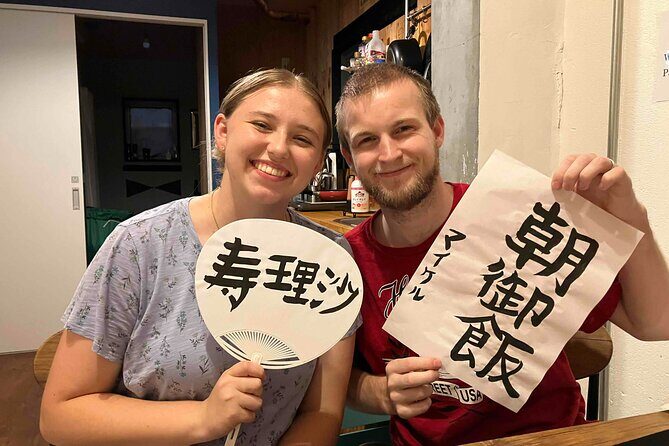
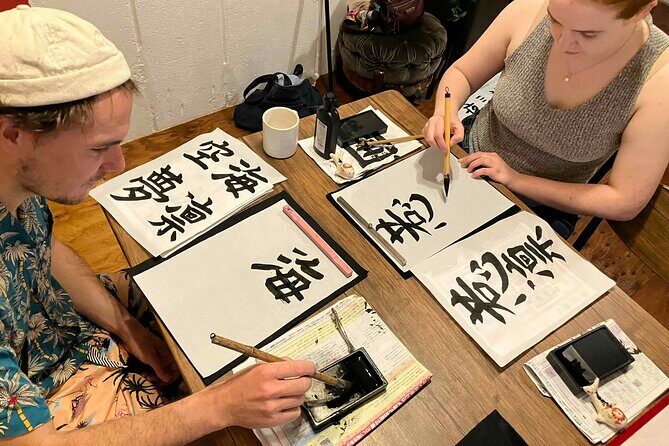
With a maximum of 5 travelers, you’re not competing for attention. That matters more than it sounds. In calligraphy, tiny changes make a difference: angle of the brush, speed of the stroke, and how you finish the line without wobbling.
The class also has a calm pace. Several reviews describe relaxed settings and personal instruction—one person even noted they were the only student at the time, turning it into a near private lesson. You shouldn’t bank on that happening, but the small size makes that kind of attention more likely than in larger workshops.
Teachers Who Actually Teach Beginners
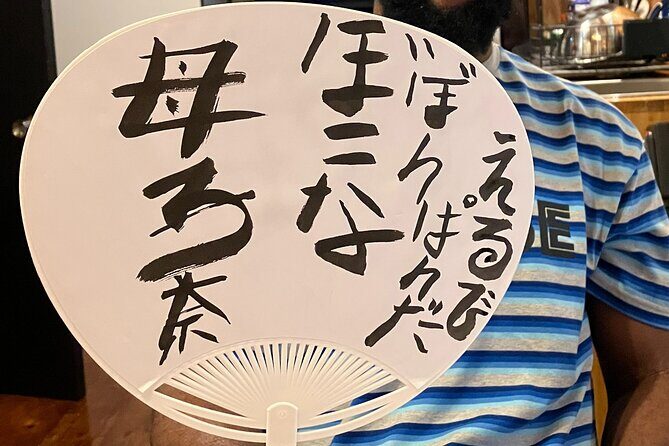
The instructor quality is one of the strongest parts of this experience. Reviews highlight English communication, patience, and the ability to correct technique without making you feel rushed.
Two names come up repeatedly: Zuisen and Sachie. Both are praised for being friendly, patient, and genuinely invested in teaching calligraphy basics in a way beginners can grasp. You can expect guidance on how to fix common issues—like shaky strokes or inconsistent pressure—without turning the class into a technical exam.
If you get stuck, don’t worry. The whole structure is built for you to practice multiple strokes and then apply what you learn to your final piece. You’ll likely make mistakes. That’s not a problem here—that’s how you improve.
Location Reality Check: Close to Sights, Inside a Shared Space
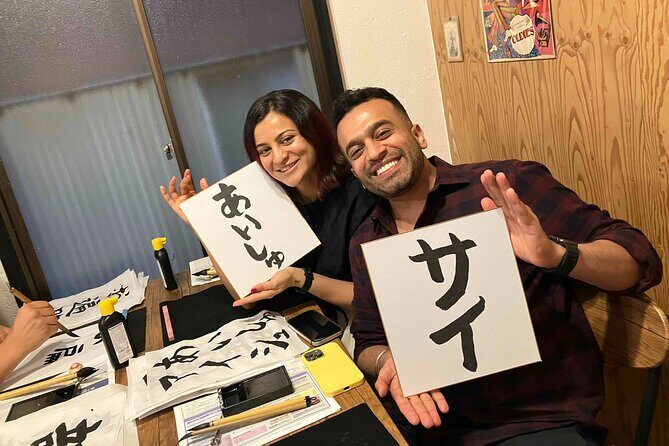
The address puts you in a convenient part of Tokyo, and you can easily pair this with sightseeing. You’re near Asakusa and Ueno, and you’ll be walking distance to public transit.
But one review includes a drawback worth taking seriously: the classroom may be inside a hostel or boarding-house environment where daily life continues around you. That can mean interruptions, like people cooking or washing during class time. If you’re sensitive to noise or distractions, arrive with the mindset that this is a lived-in neighborhood studio, not a silent museum room.
Even with that note, the overall teaching experience seems to outweigh the setting concerns for most people. If you’re flexible and just want to focus on learning, you’ll probably find it totally workable.
Price and Value: $33 for Supplies and a Take-Home Piece
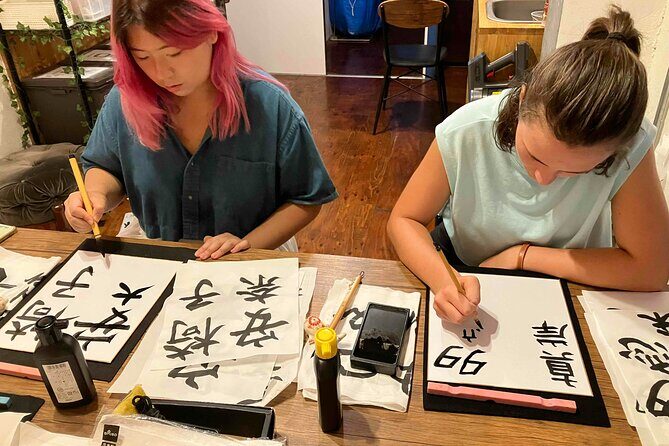
At $33.03 per person for about 1 hour 30 minutes, the pricing is reasonable for a hands-on cultural workshop in Tokyo—especially since calligraphy supplies are included and you take home your finished work.
Here’s the value logic I’d use: you’re paying for (1) instruction, (2) materials, and (3) a final product you can keep. In other words, it’s not just participation time. You’re leaving with a souvenir that required real effort and guidance.
Also note the class is booked fairly in advance on average (around 27 days). That suggests it’s popular, likely because it’s beginner-friendly and easy to fit into a day. If you have specific dates in mind, don’t wait too long.
Best Time to Do This in Your Tokyo Day
Because it’s near public transit and near major sights, you can slot it in almost anywhere. I’d plan it for a time when you’re not rushing to fit in too many stops back-to-back. You’ll be concentrating on brush movements, and the small class format works best when your schedule is calm.
If you’re visiting Asakusa or Ueno anyway, pairing this with those areas makes sense. You get culture that isn’t only visual. And you walk out with something to show for it.
What to Bring (and What to Decide Before You Go)
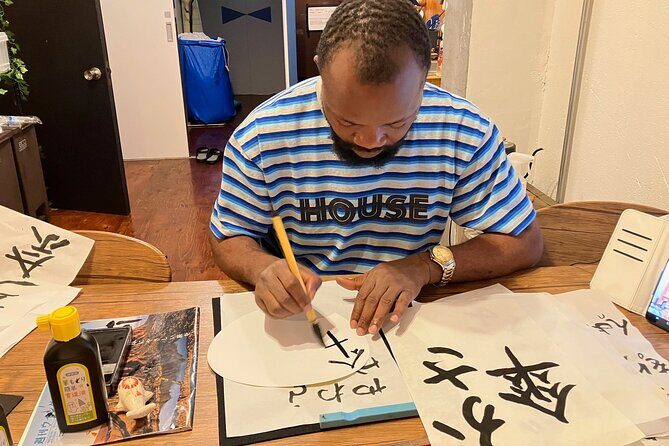
You don’t need to bring calligraphy supplies since they’re included. But you should come prepared with at least one decision:
- Your name in Japanese, or
- A favorite word you want in kanji
If you’re choosing kanji, think about meaning and personal significance. Calligraphy is often more enjoyable when the character choice connects to your trip story, like a word tied to your hobby, your family, or how you felt on your travels.
Also, wear clothing that lets you move comfortably. You’ll be focusing on posture and brush control, and comfort helps your strokes.
Who This Shodo Experience Is For
This workshop is ideal if you want something interactive that still feels authentically Japanese. It’s especially good for:
- Beginner learners who want step-by-step help
- People who want a real souvenir, not just photos
- Visitors who like small-group activities and direct instruction
- Anyone curious about hiragana, katakana, and kanji, and how they differ in form
If you’re a hard-core calligraphy enthusiast looking for advanced technique, you might find it more foundational than technical. But as a first taste of Shodo with supportive teaching, it’s a very strong match.
Should You Book This Calligraphy Culture Class?
If your goal is a meaningful, hands-on cultural experience in Tokyo, I think you should book it. The biggest reasons are practical: small-group learning, friendly teaching from instructors like Zuisen or Sachie, and the take-home autograph board that you make yourself.
The main caution is the possibility of a shared hostel/boarding-house setting where daily life can create background interruptions. If that would bother you a lot, adjust your expectations and focus on your lesson.
For most people, the trade-off is worth it. You’ll leave with clearer basics of stroke control and a souvenir you can actually hold.
FAQ
What does the calligraphy experience include?
You get calligraphy supplies included, and you’ll learn the basics of Shodo such as holding the brush, posture, and drawing lines. You also take home an autograph board with your work.
How long is the Shodo experience in Tokyo?
The class is about 1 hour 30 minutes.
Where is the meeting point?
You meet at Tokyo Iriya Shodo Club at Japan, 110-0013 Tokyo, Taito City, Iriya, 2-chōme292 2階. It ends back at the meeting point.
How many people are in the group?
The maximum group size is 5 travelers.
What can I write during the lesson?
You can write your name in Japanese or your favorite word in kanji.
Is it easy to reach by public transportation?
Yes. The location is near public transportation, and it is described as a 5-minute walk from Iriya Station.
What is the cancellation rule?
Free cancellation is available. You can cancel up to 24 hours in advance for a full refund, with cut-off times based on the local experience time.