REVIEW · OSAKA
Osaka: Temple Tour and Traditional Calligraphy Lesson
Book on GetYourGuide →Operated by R株式会社 · Bookable on GetYourGuide
A quiet temple lesson beats another snack stop. At Saishoji Temple in Horie, you get a calm Zazen-style breathing reset and hands-on kanji calligraphy in just one hour. I like that you’re not left to guess what to do, and the staff guide you step-by-step with friendly, English-speaking instruction. One thing to consider: this is short and focused, so it’s more about learning the fundamentals and making a keepsake than doing hours of calligraphy practice.
Right next to the big shopping pulse of Yotsubashi and Shinsaibashi, this experience feels intentionally slow. You’ll also get a mini history-and-language introduction tied to Osaka’s neighborhoods and the difference between temples and shrines, then finish with matcha in a setting designed for concentration. If you’re the type who wants your Japan day to include both culture and a bit of quiet control, this fits well.
In This Review
- Key Highlights Worth Showing Up For
- Saishoji Temple: A Calm Pocket Inside Osaka’s Shortcut Route
- Your One-Hour Flow: History Lesson, Zazen, Calligraphy, Matcha
- Step 1: Osaka context and language in the temple’s quiet
- Step 2: Zazen meditation for breathing and focus
- Step 3: Calligraphy copying, then writing your own kanji
- Step 4: Traditional matcha tea moment
- The Calligraphy Keepsakes You Take Home (and Why They Matter)
- The “Monk-Led” Feeling: What Resident Staff Add to the Experience
- Price and Value: Why $20 Feels Fair for What You Get
- Getting There: Saishoji Temple from Yotsubashi, Shinsaibashi, and Namba
- Who Should Book This Temple Calligraphy Session
- Quick Practical Notes for a Smooth Visit
- Should You Book the Osaka Temple Calligraphy Experience?
- FAQ
- How long is the Osaka Temple Tour and Calligraphy Lesson?
- How much does it cost?
- Where is the meeting point?
- How close is it to train stations?
- What activities are included?
- Is the instruction available in English?
- What do I take home?
- Is there a refund if plans change?
Key Highlights Worth Showing Up For
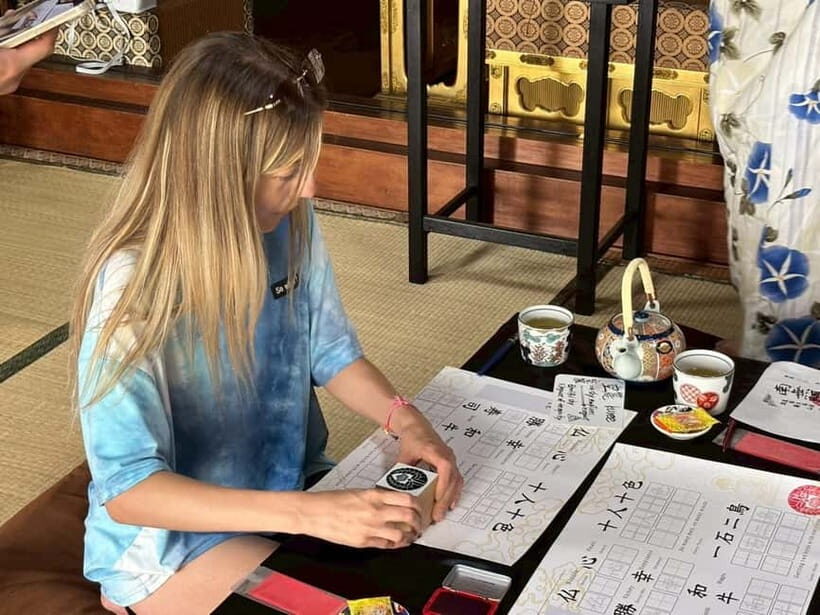
- Zazen breathing meditation that turns your brain down to one simple rhythm
- Basic calligraphy practice followed by writing a favorite kanji on a mini shikishi
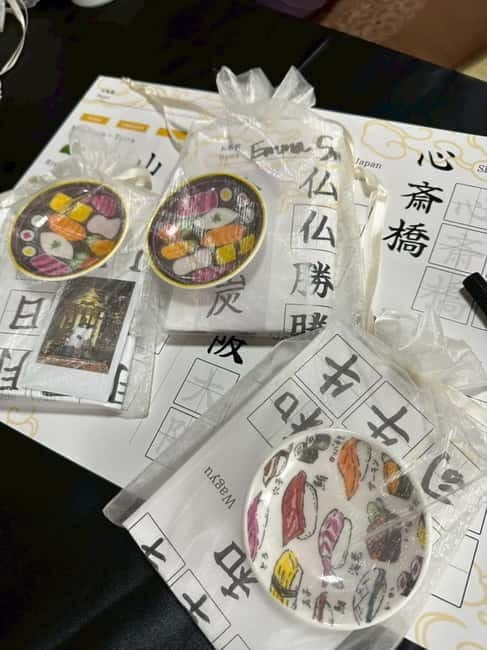
- A kanji name card with the character and its meaning, plus a small ceramic plate gift
- Guided Osaka neighborhood history (Shinsaibashi, Yotsubashi, and Osaka Castle connections)
- Interaction with resident monks in an atmosphere that stays respectful and calm
- Small group format, so you’re not talking to your phone while everyone else goes first
Saishoji Temple: A Calm Pocket Inside Osaka’s Shortcut Route
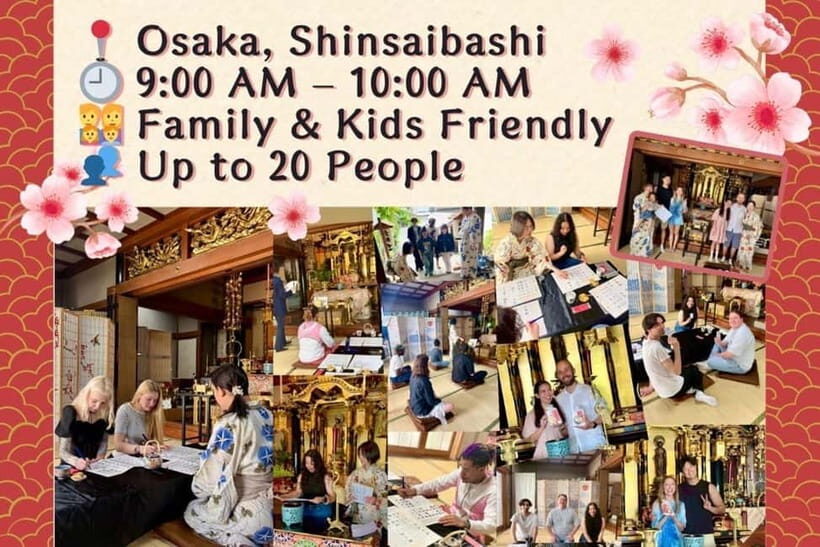
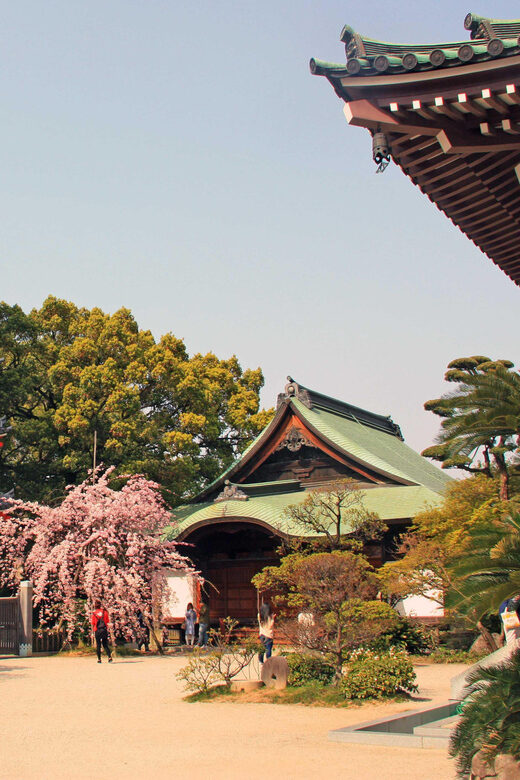
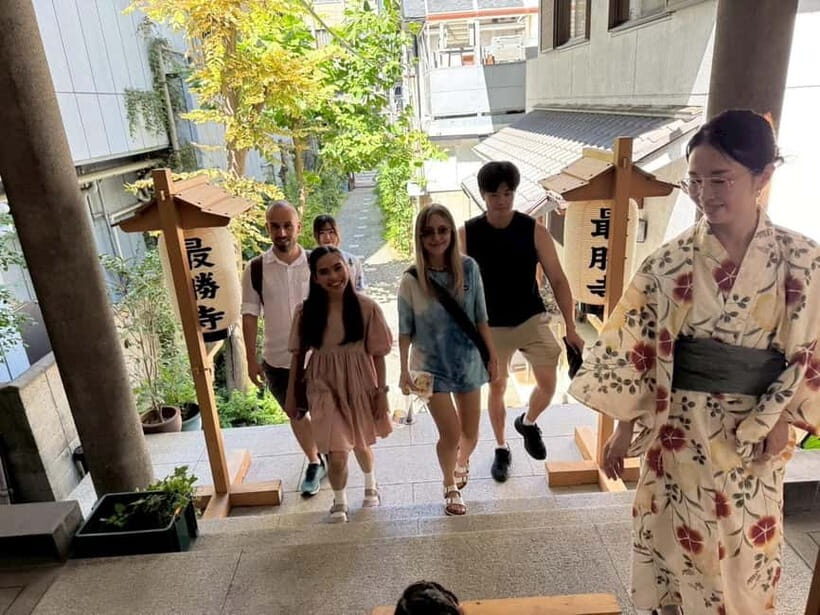
The meeting point is Saishoji Temple (1-6-18 Kitahorie, Nishi-ku, Osaka, 550-0014). The location is a big part of why this works. You’re close to transit—about a 3-minute walk from Yotsubashi Station (Osaka Metro Yotsubashi Line, Exit 4)—but the temple setting acts like a volume knob for the city.
I like that the experience doesn’t pretend you’re in a remote monastery with no phones and no schedules. You’re in Osaka. There’s subway convenience nearby. Yet once you’re in the temple space, the teaching style shifts toward quiet focus: slower movements, a steadier pace, and time to pay attention to your own breathing.
That calm tone shows up in the feedback too. Many people specifically mention feeling able to clear their mind, concentrate, and enjoy the sense of nothingness in a way that’s hard to find in everyday life. It’s not just “take a photo and leave.” The activities are structured to keep your attention inside the room.
A few more Osaka tours and experiences worth a look

Your One-Hour Flow: History Lesson, Zazen, Calligraphy, Matcha
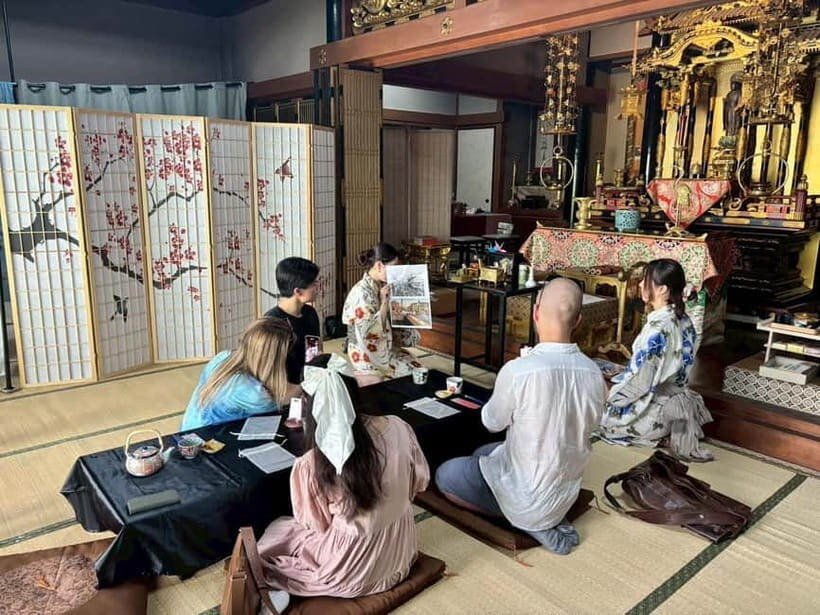
This is built as a tight sequence. In about 60 minutes, you move from context (language and culture) into practice (meditation and calligraphy), and then end with a small cultural ritual (matcha). If you like experiences that have a clear start and finish, this timing is friendly.
Step 1: Osaka context and language in the temple’s quiet
You start with a brief guided Japanese history and language lesson. It covers the history connected to Shinsaibashi, Yotsubashi, and Osaka Castle, plus an explanation of the difference between temples and shrines in Japan.
You also get conversational phrases and idiomatic cultural expressions—useful if your goal isn’t just to collect facts, but to actually understand how people communicate in everyday situations. The teaching focuses on mindful communication, so you’re not memorizing random phrases. You’re learning how to say things in a way that matches cultural expectations.
One practical benefit: the instruction is in English. That matters here, because the tone of the lesson is calm and the goal is clarity. You’ll spend time practicing phrases rather than translating in your head.
Step 2: Zazen meditation for breathing and focus
Next comes Zazen meditation. The emphasis is on clearing your mind and focusing on your breathing. This isn’t presented as spiritual theater; it’s a practical method to settle your attention—especially helpful if you’ve been bouncing between loud streets, shopping crowds, and tight itineraries.
In the feedback, people often mention the luxury of moving the brush slowly later. I think that happens because the meditation gives you practice with patience first. You learn how to stay with one simple action (breathing), and that same steadiness carries into calligraphy.
Step 3: Calligraphy copying, then writing your own kanji
Then you shift into calligraphy copying and basic instruction. You learn the fundamentals of using the brush and ink so you can reproduce characters correctly enough to feel satisfied.
After that, the main creative moment arrives: you write one favorite kanji on a mini shikishi (a small writing board). You’ll leave with a keepsake that’s personal, not generic. Many people like that the process is beginner-friendly. Even first-timers report that the guidance makes it feel doable.
A detail I appreciate: you also receive a name card featuring your chosen kanji and its meaning. That turns the finished character into something you can actually understand. It’s not just decorative.



Step 4: Traditional matcha tea moment
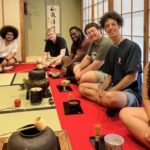
You finish with a traditional matcha tea ceremony. The matcha part is small, but it helps close the loop between concentration and culture. You’re not rushing out of the experience right after you create something. You pause, slow down, and reset with something sensory and simple.
The Calligraphy Keepsakes You Take Home (and Why They Matter)
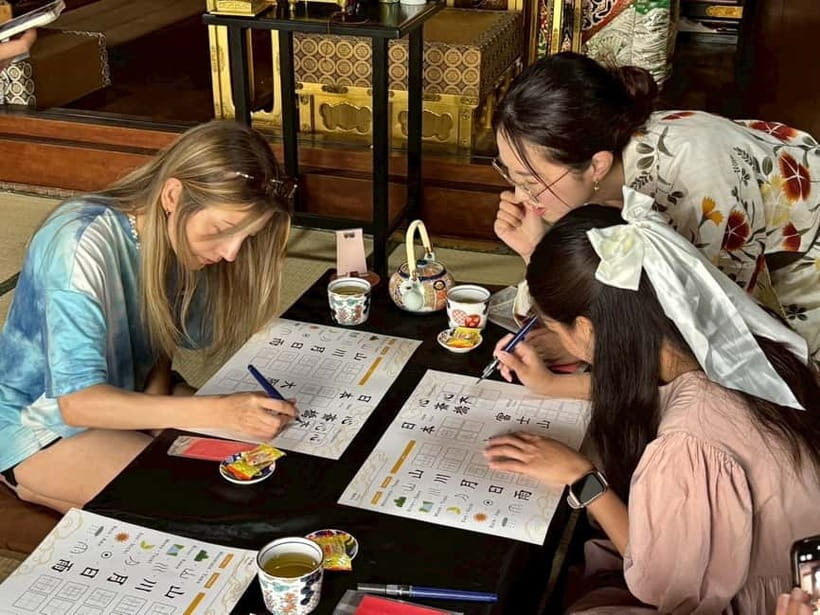
This experience is not only about a short class. It’s designed to produce objects you can keep and reflect on later.
Here’s what you receive:
- A name card with Japanese kanji and its meaning
- A small ceramic plate gift, about 8 cm in diameter
- Your mini shikishi with the calligraphy you wrote
The practical value is that these items help your brain store the experience. When you hang the character or see the plate on a shelf, you remember the exact feeling of that slow brushwork and the quiet setting.
In feedback, people repeatedly talk about how the texture and focus matter: ink scent, brush feel, and the satisfaction of actually shaping the strokes. That sensory focus is one of the reasons this kind of class lands for people even if they don’t plan to study Japanese deeply.
The “Monk-Led” Feeling: What Resident Staff Add to the Experience
A lot of cultural activities can feel like a script you stand inside. This one aims for something more personal.
You’ll have interaction with resident monks, and the overall instruction is handled by English-speaking experts. The tone is gentle and attentive, and it shows in the comments from people who joined alone. Solo participants often mention feeling comfortable and cared for, without feeling rushed or singled out.
That’s an underrated benefit. If you’ve ever done a class where the teacher moves on fast and you get stuck catching up, you’ll appreciate how step-by-step this is. You’re meant to relax enough to focus, not perform.
Price and Value: Why $20 Feels Fair for What You Get
At $20 per person for one hour, the value is strong—mostly because the cost covers more than instruction.
You’re paying for:
- Guided history and language lesson
- Multiple cultural activities: Zazen, calligraphy instruction, and matcha
- Materials, including what you need for the writing activity
- Interaction with resident monks
- Keepsakes: name card and a ceramic plate gift, plus your own calligraphy work
If you’ve ever priced a museum workshop plus a cultural tasting separately, you’ll recognize why this feels like a deal. Here, the teaching and the artifacts are tied together. You don’t just watch; you make something and take it.
One consideration: because it’s only an hour, you won’t leave with advanced technique. You’ll leave with confidence to recognize strokes better and a character you chose yourself. For many people, that’s the sweet spot.
Getting There: Saishoji Temple from Yotsubashi, Shinsaibashi, and Namba
Logistics are simple.
Your best station is Yotsubashi Station:
- 3-minute walk from Yotsubashi Station (Osaka Metro Yotsubashi Line, Exit 4)
Also doable:
- 10-minute walk from Shinsaibashi Station (Osaka Metro Midosuji Line)
- 15-minute walk from Namba Station
The address is set, and there’s a Google Maps link plus coordinates if you like navigation by map pins. Either way, the location makes this easy to slot into an Osaka day without using a taxi.
Tip: because the experience is calm and scheduled, I’d arrive with enough buffer to settle your mind before instruction starts.
Who Should Book This Temple Calligraphy Session
This experience is a great fit if:
- You want a cultural activity that teaches you something, not only takes photos
- You like calligraphy as a process, even if you’re a first-timer
- You want a break from noisy sightseeing and prefer a controlled, quiet pace
- You want a personalized result: writing your chosen kanji and receiving a matching meaning card
It’s also a good option for solo travelers. Instruction is in English, staff are described as kind and accommodating, and the flow works even when you’re not pairing up with someone.
If you want a full-day temple adventure with lots of walking, this isn’t that. Think of it as a focused reset plus a craft you can carry home.
Quick Practical Notes for a Smooth Visit
A few things you’ll thank yourself for:
- Bring a mindset for slow focus. This is a “hands, breathing, attention” kind of hour.
- Plan for a quiet environment. If your ideal Japan day is nonstop motion, you might find the pacing slower than you expect.
- Expect a beginner-friendly structure. You’ll copy basic forms first, then write your own character on the mini shikishi.
And if you’re curious about the temple/shrine distinction, this is exactly the kind of class where it clicks because you hear it while you’re inside the space.
Should You Book the Osaka Temple Calligraphy Experience?
Yes—if you want a short, meaningful cultural class near major Osaka stations, this is an excellent use of time. The biggest strengths are the pairing of calm Zazen-style focus with real calligraphy practice, plus the concrete keepsakes: your name card with kanji meaning and the ceramic plate gift.
I’d only hesitate if you’re looking for a long sightseeing itinerary or advanced calligraphy training. This is about fundamentals, clarity, and a peaceful hour you’ll remember when you see the character again later.
If that sounds like your kind of travel day, book it and let the temple slow you down for one focused hour in Osaka.
FAQ
How long is the Osaka Temple Tour and Calligraphy Lesson?
The experience lasts 1 hour.
How much does it cost?
It’s $20 per person.
Where is the meeting point?
You meet at Saishoji Temple, 1-6-18 Kitahorie, Nishi-ku, Osaka, 550-0014, Japan.
How close is it to train stations?
It’s about a 3-minute walk from Yotsubashi Station (Exit 4), 10 minutes from Shinsaibashi Station, and 15 minutes from Namba Station.
What activities are included?
Included are a guided Japanese history and language lesson, Zazen meditation, calligraphy copying and writing one kanji on a mini shikishi, and a traditional matcha tea ceremony.
Is the instruction available in English?
Yes. The instructor is English-speaking.
What do I take home?
You receive a name card with kanji and meaning and a small ceramic plate gift (about 8 cm in diameter). You also write your own calligraphy on a mini shikishi.
Is there a refund if plans change?
Yes. There is free cancellation up to 24 hours in advance for a full refund.