REVIEW · SAPPORO
Sapporo Sumo Show Experience with Japanese Food and Photo
Book on Viator →Operated by 札幌相撲部屋娯楽 · Bookable on Viator
If you’ve ever wanted to understand sumo, this is a direct route. You’ll learn how sumo works, watch retired wrestlers demonstrate key moves, and then step closer to the action in a small-room setup with a real photo keepsake.
I especially like the hands-on participation (there’s a chance to challenge the wrestlers in the ring), and I like that the food ties into the culture with a set meal that’s described as chanko-nabe (and, on some meal plans, wagyu sukiyaki plus tempura).
One thing to consider: challengers are limited and can be chosen by lottery, so if ring time is your top goal, manage expectations and arrive ready to participate when your name gets picked.
In This Review
- Key Takeaways Before You Go
- What This Sapporo Sumo Show Really Is (and Why It Works)
- Timing and the “How the Night Flows” Order
- The Star Acts: Asa Geiko, Kimarite, and Tachiai
- Asa geiko: morning exercise (the ritual side)
- Kimarite: the techniques you’ll recognize later
- Tachiai: the best-of-3 contest
- Your Chance to Step Into the Ring (Lottery Included)
- The Food: What You’ll Eat (and What Might Differ by Plan)
- Vegetarian option
- Why the meal inclusion is good value
- Photo Souvenirs and the “Memorable Keepsake” Part
- Seating and the View of the Dohyo
- Small Group Size: A Big Difference at $79
- Who Should Book This Sapporo Sumo Show
- Things to Know So You Don’t Waste Energy
- Where It Starts (Meeting Point)
- Should You Book This Sapporo Sumo Experience?
- FAQ
- Is a meal included?
- What if I want a vegetarian meal?
- Do I get to participate in sumo?
- Is there a competition-style match during the show?
- Are the seats good for viewing the dohyo?
- Is the photo included?
- How long does the experience take?
- Can I cancel and get a full refund?
Key Takeaways Before You Go
- Retired rikishi demonstrations: you’ll see morning exercises (asa geiko) and technique basics (kimarite) explained in plain language.
- Best-of-3 tachiai showdown: real sumo competition format between wrestlers, not just a staged imitation.
- Interactive ring challenge: you may compete in the ring, but the number of challengers is capped (lottery if too many).
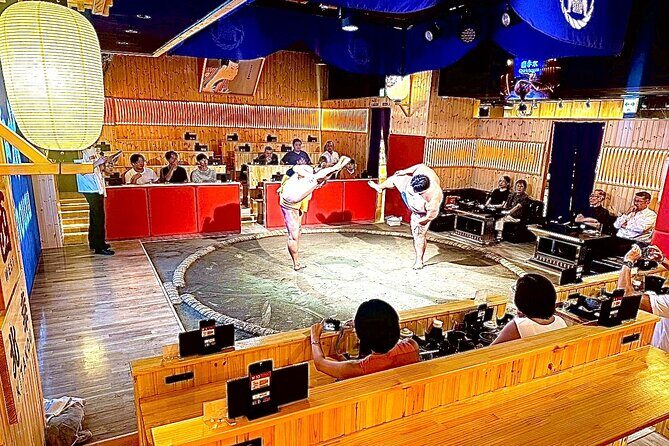
- Intimate dohyo views: the ring setup lets you feel close from basically every seat, with an upgrade option for front-row.
- Meal + a drink: the experience includes a set Japanese meal when you select a meal plan, plus a commemorative photo.
- Souvenir photo package: you’ll leave with a framed group photo with the wrestlers and a gift bag.
What This Sapporo Sumo Show Really Is (and Why It Works)
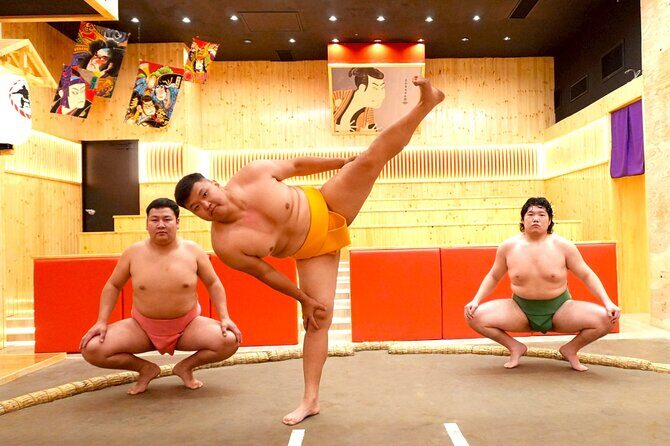
Sumo can feel mysterious from the outside: thick ropes, heavy rituals, and all those names. This show is built to make it understandable fast. In about two hours, you get the core ideas (how wrestlers set up, what techniques mean, and what the early routines are for), then you see it in the format sumo fans recognize: a best-of-3 tachiai contest.
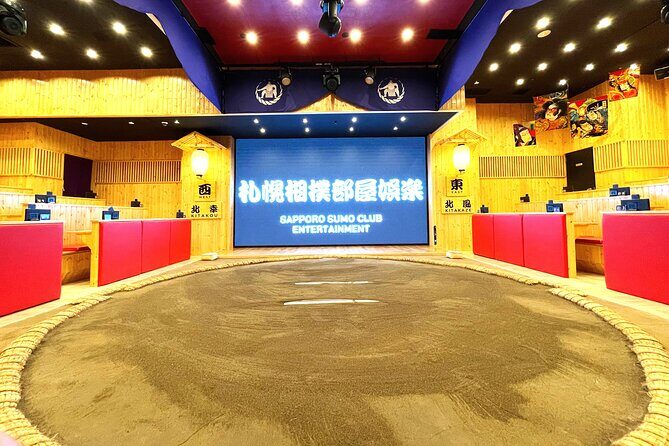
The other thing I like is the setting. This isn’t a giant arena spectacle where you’re stuck far away. The dohyo view is intimate, and the pace is geared toward people who want to learn while they watch, eat, and take part.
And yes, it’s entertainment. It’s a show by retired wrestlers, so you’re not watching a tournament in the strict sense. But you are seeing genuine sumo structure: exercises, technique talk, and a competition-style matchup.
You can also read our reviews of more food & drink experiences in Sapporo

Timing and the “How the Night Flows” Order
The experience runs about 2 hours. The event ends back at the meeting point, so you won’t have to plan a separate transfer afterward unless you want to keep exploring Sapporo.
The flow typically feels like this:
- You start with a structured introduction to sumo rules and basics.
- You watch demonstrations tied to how sumo happens every day (asa geiko) and the mechanics people care about (kimarite).
- You eat a set Japanese meal (only if your plan includes it).
- Then the show moves into the competitive part (tachiai), and finally the audience participation moment.
Why this order matters: by the time you get to the matches and ring challenge, you’re not guessing what you’re seeing. You’ve already been given a mental framework for why techniques matter and how quick the turning points can be.
The Star Acts: Asa Geiko, Kimarite, and Tachiai
This is not just “watch a fight.” The show gives you names and structure, then connects them to what you see.
Asa geiko: morning exercise (the ritual side)
You’ll watch demonstrations of morning exercises, called asa geiko. Even if you’ve never followed a stable’s routine before, you’ll get the idea that sumo training is ritual + repetition, not chaos.
Kimarite: the techniques you’ll recognize later
Kimarite are sumo techniques. You’ll see technique-focused demonstrations and learn the do’s and don’ts of sumo wrestling. In practical terms, it means when the action gets faster, you’ll have something to hold onto besides just wrestling bodies.


Tachiai: the best-of-3 contest
Then comes the best-of-3 competition (tachiai) between retired wrestlers. This is the moment most people will remember because it has that bracket-like tension. It also makes the show feel more like sumo than a stage performance, even though it’s entertainment.
Your Chance to Step Into the Ring (Lottery Included)
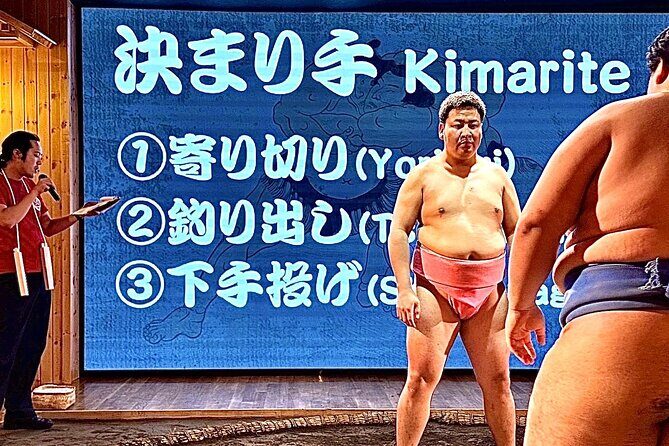
One of the biggest reasons to book is the invitation to experience sumo firsthand. You challenge the wrestlers to a match in the ring. That part is the fun “I can’t believe I did that” memory.
But here’s the practical reality: the number of challengers per show is limited. If too many people want in, challengers are decided by lottery. So you should treat ring time as a bonus if you get selected, not as a guaranteed slot.
If ring time is the main reason you booked, do this:
- Show up on time (arriving early gives you a smoother check-in).
- Be ready to move when your name is called.
- Don’t let the lottery idea kill your enjoyment of the demonstrations and tachiai portion, because those parts are still the core show.
Also, the show uses former competition wrestlers specifically for entertainment. That means the experience is designed to be safe and engaging while still feeling authentic.
The Food: What You’ll Eat (and What Might Differ by Plan)
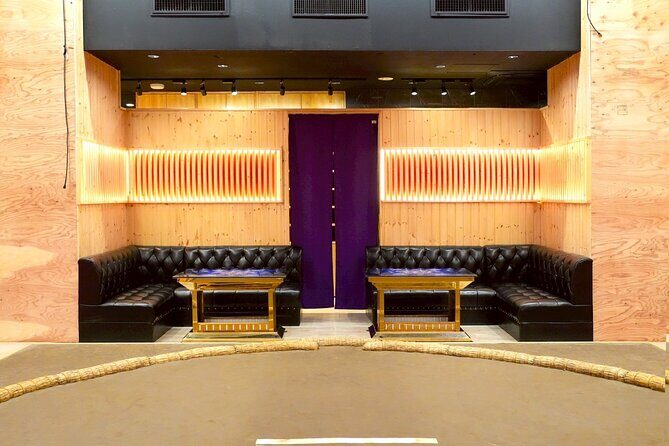
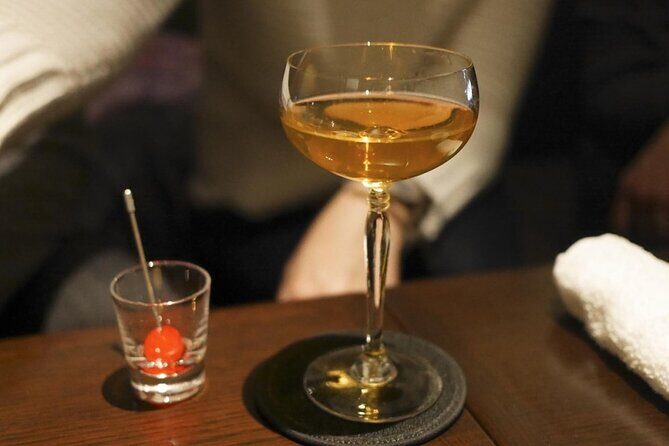
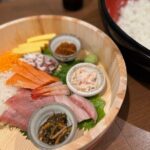
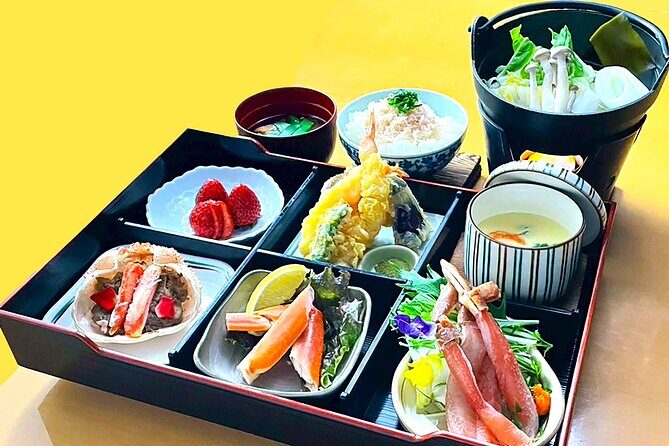
If you pick a meal-inclusive plan, you’ll get a set Japanese cuisine meal plus one drink.
Here’s the detail that matters: the food description varies depending on the meal option in your booking details. The experience is described as including:
- Chanko-nabe (a traditional sumo-style hot pot), and
- On meal-inclusive plans, a set described as wagyu beef sukiyaki and tempura.
So I recommend you double-check what your specific ticket lists before you go. Either way, the meal is part of the experience theme: it’s meant to connect sumo culture to what you eat.
Vegetarian option
If you need vegetarian food, message in advance. The show notes that a vegetarian meal is possible if you let them know beforehand.
Why the meal inclusion is good value
In Japan, meals can run quickly once you add drinks and convenience. Here, you’re getting a cooked sit-down element inside a curated activity, which usually makes the total package feel more reasonable than paying for food separately the same day.
Photo Souvenirs and the “Memorable Keepsake” Part
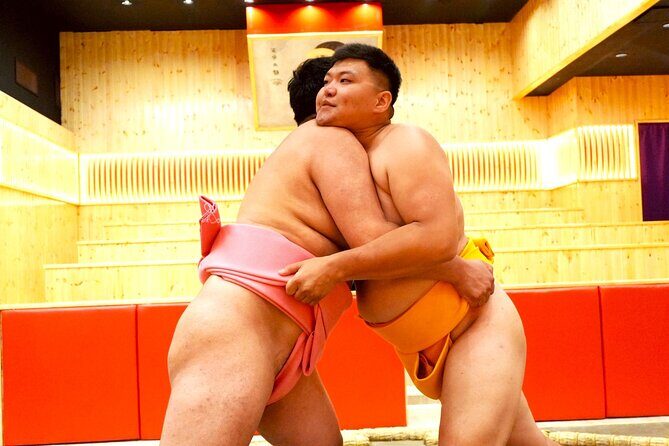
You’ll leave with a souvenir photo alongside the wrestlers. The experience also includes a framed photo of you and your group with the wrestlers, plus a gift bag.
This is one of those “worth it” inclusions. People tend to forget how chaotic travel photos can be, especially when everyone is trying to take pictures at the same time. A framed group photo solves that. You get something you can actually display without hunting for camera angles later.
Seating and the View of the Dohyo
All seats are described as giving an intimate view of the dohyo. That matters because sumo action is all about leverage and positioning. If you’re too far away, you miss the setup and the shoving that makes techniques work.
There’s also an upgrade option for front row seating, which you’d choose if you want the closest connection to the action. If you’re traveling with kids or someone who really wants to see faces and the ring movement clearly, front row is the kind of upgrade that tends to justify itself.
Small Group Size: A Big Difference at $79
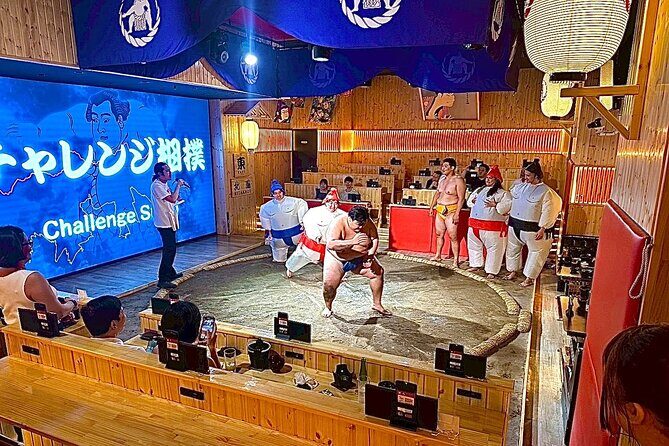
The show caps at 6 travelers. That small size is part of why this feels personal. You’re not competing with a crowd for attention, and the interactive parts can actually happen.
At $79.07 per person, the value depends on your priorities. Here’s how I’d weigh it:
- If you want a cultural performance plus a meal plus a guaranteed photo keepsake, the package makes sense.
- If you only care about watching from afar and would rather save money for other Sapporo food and sights, you may find it pricier than a typical show.
For many people, though, the combination of intimate seating, interactive elements, and the meal inclusion is the core reason it’s recommended.
Who Should Book This Sapporo Sumo Show
This experience is a good fit if:
- you like hands-on cultural activities,
- you want a quick, organized intro to sumo terms and rules,
- you’re traveling with family (it’s described as family friendly in the vibe of the show),
- you want an easy Sapporo activity without complex planning.
It also works well if you’re a sumo fan, because the format includes the kind of structure you’d expect: asa geiko, kimarite, and tachiai—not just generic “sumo show” tricks.
Things to Know So You Don’t Waste Energy
A few practical points before you go:
- Mobile ticket: keep it ready on your phone.
- Near public transportation: so you can plan without needing private transport.
- Max 6 travelers: expect a more personal, less chaotic experience than big attractions.
- English support: the show indicates it can accommodate most travelers, and it’s run in a way that works for international visitors.
- Entertainment purpose: remember this is a show by retired wrestlers. The goal is understanding + fun, not a professional tournament.
Where It Starts (Meeting Point)
The meeting point is at 2-chōme-10-1 Minami 4 Jōnishi, Chuo Ward, Sapporo, Hokkaido 064-0804, Japan. The activity ends back at the meeting point.
Because it’s near public transit, you can treat this as a planned block in your Sapporo day and then continue exploring afterward.
Should You Book This Sapporo Sumo Experience?
If you want a short Sapporo experience that mixes food, learning, and real interaction, I’d book it. The best reason is simple: you’re not just watching sumo, you’re being taught how to read it while you’re in the room—and you may even get a shot at stepping into the ring.
I would skip or rethink if:
- you mainly want a long “spectator-only” event and don’t care about participation,
- you’re very sensitive to disappointment if lottery selection limits ring time,
- you’re not selecting a meal plan and you want only the cheapest entertainment.
If you fall into the first group, this is one of those activities that gives you a story you can tell later, plus a real keepsake in hand.
FAQ
Is a meal included?
If you select a meal-inclusive plan, a set Japanese meal is included along with one drink. The food is described as chanko-nabe, and meal-inclusive options also mention wagyu beef sukiyaki and tempura, so check what your ticket lists.
What if I want a vegetarian meal?
Vegetarian meals are available if you message in advance. Don’t wait until the day of—send the request when you book or as soon as you can.
Do I get to participate in sumo?
Yes, you can challenge the wrestlers in the ring. The number of challengers is limited per show, and if there are too many applicants, challengers are decided by lottery.
Is there a competition-style match during the show?
The show includes a best-of-3 competition (tachiai) between retired wrestlers, plus demonstrations before that.
Are the seats good for viewing the dohyo?
The show says the view of the dohyo is intimate from all seats. There is also an option to upgrade to front row seating if you want the closest possible view.
Is the photo included?
Yes. You’ll get a commemorative photo with the former rikishi, and you also receive a framed photo of you and your group with the wrestlers.
How long does the experience take?
It runs about 2 hours (approximately).
Can I cancel and get a full refund?
Yes, you can cancel for a full refund up to 24 hours in advance. If you cancel less than 24 hours before the start time, the amount paid is not refunded.