REVIEW · TOKYO
Sumo Wrestlers Morning Practice Tour – Tokyo Sumida District
Book on Viator →Operated by Japan Wonder Travel · Bookable on Viator
Sumo training hits different at 7:30am. This tour brings you into a real Tokyo stable for morning practice, where you watch discipline up close and learn the sport’s Shinto-rooted culture instead of just seeing a match on TV. The whole schedule is designed so you get the special part early, then you’re free to explore Tokyo afterward.
What I like most is that you’re not left figuring everything out alone. The guide helps with rules, history, and regulations, and you also get extra context through conversation time with the stable side (like the manager or owner). The other big win is the chance to end with a photo with the wrestlers after training. One possible drawback: there are no chairs, and you’ll sit cross-legged on the floor for about 1.5 hours, so this is not comfy if that position is a problem for you.
In This Review
- Key things you should know before you go
- Morning practice vs a tournament: what you’re really seeing
- Price and value: is $83.23 worth it?
- Meeting near Oshiage (by Tokyo Skytree) and getting to the stable
- Entering the stable: etiquette you must follow
- Stop 1 Oshiage: 15 minutes that set the context
- Stop 2 Sumida: 1.5 hours of quiet, up-close training
- Stop 3: the photo moment and why the tour may be shorter
- The guide, translation, and Q&A: where the learning happens
- No chairs, no shifting: packing for comfort and focus
- How the timing sets you up for the rest of your Tokyo day
- Who should book this morning stable practice tour?
- The real decision: book for culture and access, not spectacle
- FAQ
- What time do I need to meet?
- How long is the tour?
- Where is the meeting point?
- Is there assigned seating or chairs in the stable?
- Do I need to take my shoes off?
- Can I bring food or snacks?
- Are photos and videos allowed?
- What are the rules for phones during the tour?
- Is there a cancellation window for a refund?
- Can kids join?
Key things you should know before you go
- Small-group feel (max 25) helps you stay focused and follow instructions without chaos
- No chairs in the stable means you’ll need leg comfort for the full practice window
- Silent, respectful viewing is part of the experience, not an optional extra
- Photos allowed, flash not allowed (and phones must be on silent) keeps it authentic
- End time can shift because practice may finish earlier than planned
- You get more than watching through guide explanation and Q&A-style conversation
Morning practice vs a tournament: what you’re really seeing
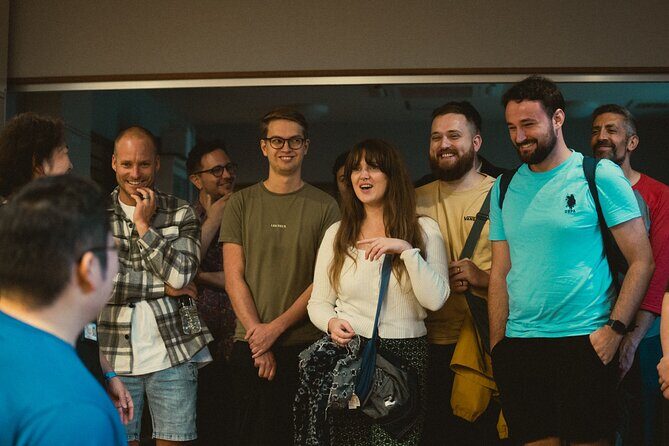
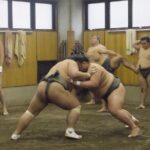
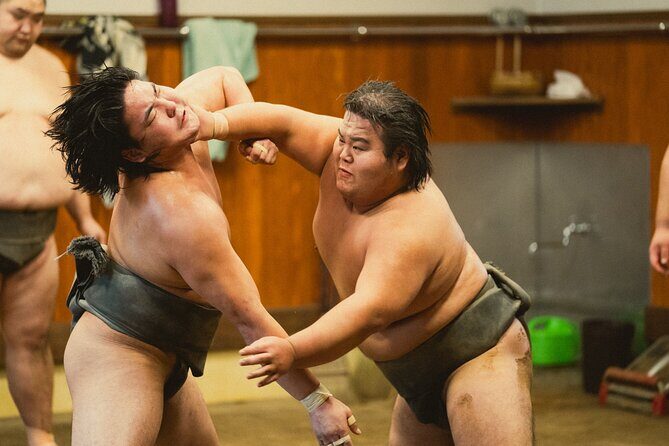
If you came to Japan expecting the dramatic, full-contact fireworks of tournament bouts, you might feel slightly let down at first. This is a stable training session. That means drills, practice routines, and learning moments—serious work meant for athletes, not a staged performance for visitors.
What I like about that trade-off is how much you learn. Watching sumo during training shows you how they move with purpose long before a bout story even exists. You’ll see the discipline side clearly: the repeated basics, the focus, the way everything is done with respect for the ring as a sacred space.
Think of it like this: a tournament is the climax. This tour is the backstage lesson—without the backstage chaos.
A few more Tokyo tours and experiences worth a look


Price and value: is $83.23 worth it?
At about $83.23 per person for roughly 2 hours, the value comes from three things you don’t get from most quick photo stops: timing, guidance, and access.
First, you start early (meeting at 7:30am departure). Sumo practice isn’t a midday spectacle, so early access is the whole point. Second, the tour is built to remove the language barrier. You’re guided so you don’t accidentally break etiquette in a place where etiquette matters. Third, the session is structured: quiet watching, then time for explanation and usually time for questions and a photo.
There’s no mention of paying for separate entry fees at the stops—those are listed as admission ticket free—so your money is mainly paying for the guide, the stable-side experience, and keeping everything running smoothly for a small group.
Meeting near Oshiage (by Tokyo Skytree) and getting to the stable
This tour starts in the Sumida area. Your meeting point is at 1-chōme-8-21 Oshiage, Sumida City and the start time is 7:30am. The big practical rule: show up at 7:10am. They leave 7:30am sharp, and arriving late can complicate entry.
You’ll also walk about 15 minutes from the meeting point to the stable. That matters because the stable has shoe rules and a raised wooden floor. If it’s rainy, bring something to wipe your feet—there’s even a suggestion to bring a towel for wet conditions. Small detail, big comfort.
Once you reach the stable, you’ll take your shoes off right away. The experience is hands-on in the sense that you’ll feel the floor rules in your body: no shoes inside, quiet behavior, and careful movement.
Entering the stable: etiquette you must follow
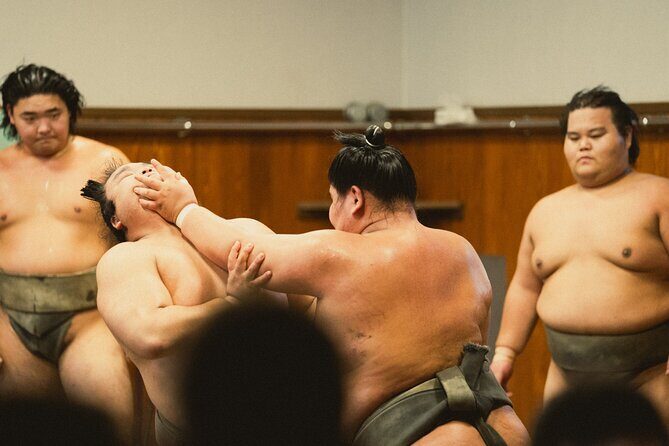
This isn’t a casual look-around. The stable is a training home, and you’re a visitor.
Plan for all of this:
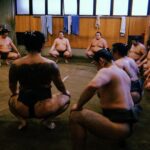
- No chairs and you must sit cross-legged for about 1.5 hours
- No stretching your legs toward the ring (and don’t show the soles of your feet)
- No standing up or moving around during practice
- No food, no gum/candy, no smoking
- Water is okay
- Sunglasses and hats are not allowed inside the stable
- Phones on silent; photos are okay without flash and without loud shutter sounds
- Videos may be taken, but you can’t upload photos/videos to social media platforms
- Don’t step down onto the ring or the sandy ground—the ring is treated as sacred
I’ll be honest: the rules can feel strict at first. But once you’re seated, they actually help. You stop thinking about what to do and focus on what you came to see.
If you’re the type who hates sitting still, you’ll want to reconsider. That cross-legged time is the main physical constraint of the day.
Stop 1 Oshiage: 15 minutes that set the context
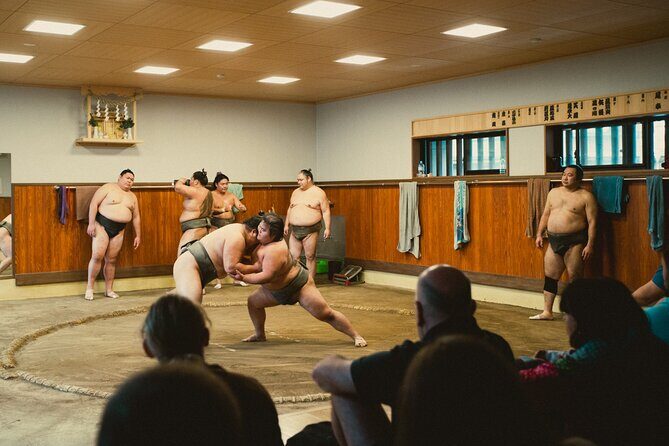
The first stop is at Oshiage, near where the tour starts. It’s a short segment—about 15 minutes—and it’s meant to get you oriented before you enter the stable space.
Even in that brief time, the experience frames sumo as more than a sport. The sport originated from a Shinto context, and the tour uses that background to explain why certain actions matter. In other words, you’re learning how to interpret what you’ll observe later: the respect, the formality, and why the ring isn’t just a “mat.”
This kind of setup helps you enjoy the main viewing without turning it into a guessing game.






Stop 2 Sumida: 1.5 hours of quiet, up-close training
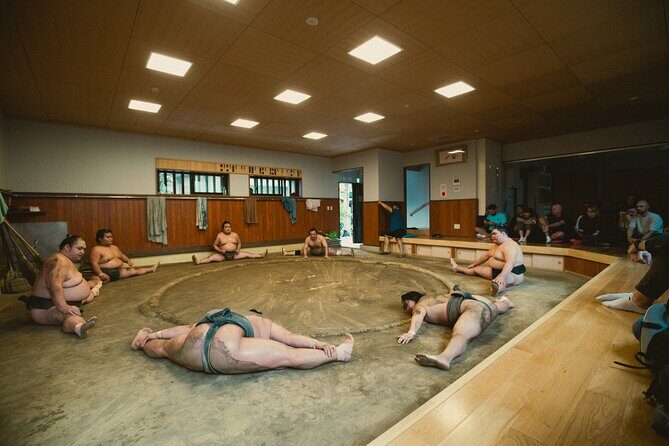
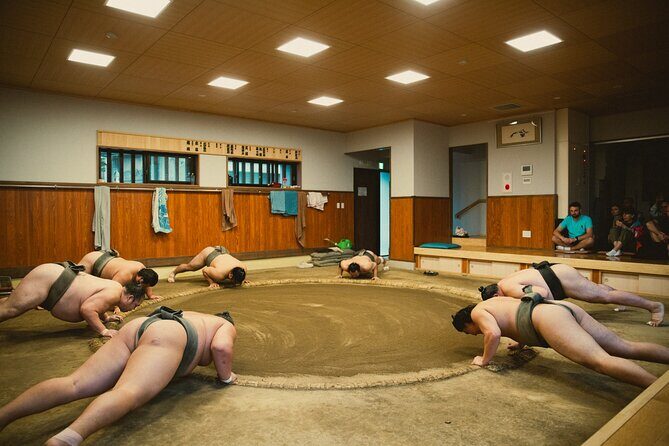
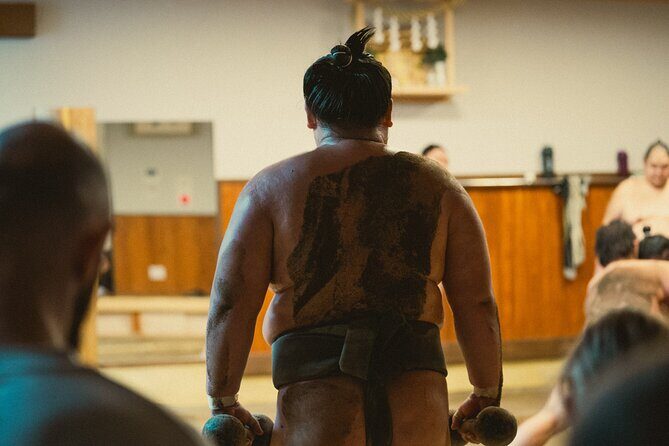
This is the heart of the tour: about 1 hour 30 minutes of watching training respectfully. The format is simple. You sit. You watch quietly. You follow the guide’s instructions.
Because the group size is capped at 25 travelers, you’ll likely be close enough to really see what’s happening—at least enough to notice technique, footwork, and how they reset between drills. And because there are no chairs, you aren’t elevated into a detached “spectator zone.” You’re part of the seated perimeter like a real observer.
Here’s what to expect in the stable atmosphere:
- It feels orderly and serious, not a performance
- You’ll notice how controlled the practice is
- You’ll see athleticism that surprised people in the reviews (agility alongside size)
You’ll also hear explanations from the guide, which is where the tour’s value really kicks in. Without that context, you might only recognize dramatic moments. With it, you understand the purpose behind repetitive movements and ritual actions.
One more point that helps your experience: sunglasses and hats are not allowed, and cellphones must be silent. This keeps the stable from turning into a photo studio. You’ll blend in if you follow that.
Stop 3: the photo moment and why the tour may be shorter
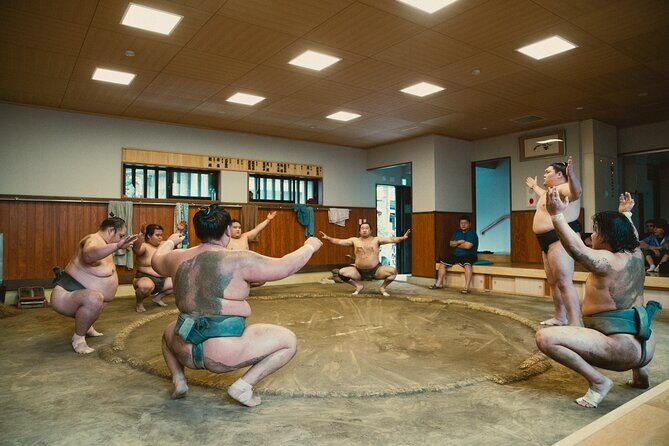
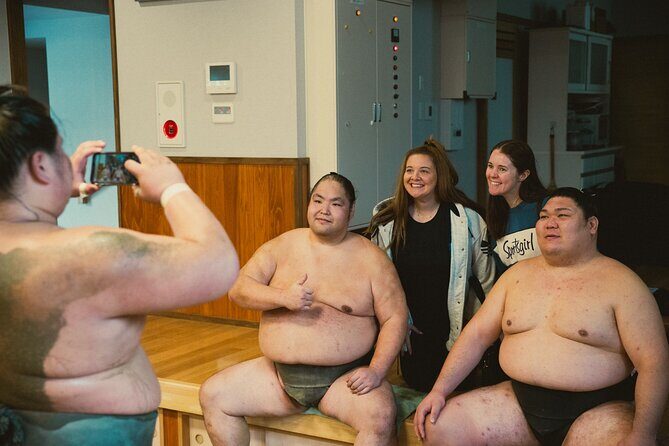
After practice, the tour finishes with a short segment—about 15 minutes—including a photo opportunity with the wrestlers.
That photo is often the fun payoff. It’s also a reminder that you’re there to interact at the right moment, not interrupt the training. If practice runs shorter one day, the tour can end earlier. The schedule notes that the practice may finish earlier than usual, meaning your total time could be less than the approximate duration.
So if you have a tight afternoon plan, don’t schedule something that requires a strict arrival time right after the tour. Leave some buffer. Early morning surprises happen, and sumo practice can be one of them.
The guide, translation, and Q&A: where the learning happens
This tour stands or falls on communication. The promise here is that your guide helps you avoid language barriers and cultural faux pas, and that matters because stable etiquette is not forgiving.
Multiple people highlight how well the guide translates from Japanese to English, and that’s a big deal. When the guide can explain rules clearly, you’ll understand what you’re watching—rather than just counting seconds until the next drill.
You may also get additional conversation time with stable leadership, like the manager or owner. That’s where you can hear more personal detail about training life. One helpful theme from people who did the tour: they came away with insights tied to diet and lifestyle, plus a clearer sense of how wrestlers train as athletes and as people.
Even if you’re not the type to ask questions, the guide-led explanation tends to connect the dots. It turns the whole morning into a story you can repeat later.
No chairs, no shifting: packing for comfort and focus
The stable rules shape what you should pack and wear.
Wear:
- Modest clothing only (this is stated)
- Something you can sit in cross-legged without fighting your outfit
- Clothes you can move with quietly
Bring:
- A towel if rain might make your feet wet on the walk
- Water (food is not allowed)
Leave at home:
- Hats and sunglasses (not allowed in the stable)
- Anything that makes noise when you handle it (phones must be silent)
If sitting cross-legged for about 1.5 hours sounds unpleasant, this is where you should be realistic. The tour explicitly says to skip it if that position isn’t doable for you. That’s not just a warning—it’s the difference between enjoying sumo and counting minutes until the floor wins.
How the timing sets you up for the rest of your Tokyo day
One of the smartest parts of this experience is that it gives you sumo without swallowing your whole vacation day. It’s about 2 hours, plus a short walk to and from the stable area.
Because you start in the morning and finish back at the starting area, you end near Tokyo Skytree. That’s convenient. You don’t have to rebuild your day from scratch. You can head out immediately afterward and use the rest of the day to explore the city around the Sumida river area.
Even if you only have one or two stops planned after, this tour is a strong use of limited time. You get a deep cultural experience early, then you still keep freedom.
Who should book this morning stable practice tour?
This is a good fit if:
- You want more than a match and you care about rules, history, and regulations
- You’ll follow etiquette: silence, no moving around, and respectful observation
- You can sit cross-legged for around 1.5 hours
- You want a guided experience that helps you avoid cultural mistakes
- You’re okay with a training setting rather than full-contact bouts on display
It’s also family-friendly in a specific way. The minimum age is 6 years old, but children must stay quiet. If kids are noisy or can’t watch respectfully, you can be asked to leave the stable during the tour. So bring a child who actually enjoys watching quietly—or plan for an adult-focused trip.
The real decision: book for culture and access, not spectacle
Here’s how I’d decide.
Book this tour if you want a morning at a real stable, with a guide who helps you understand sumo’s structure and respect. You’ll likely come away with a new sense of discipline and athleticism, and you’ll enjoy the guided explanations plus the photo moment.
Skip it if:
- You cannot sit cross-legged for the full training time
- You need a tournament-style show with dramatic match moments
- You struggle with strict etiquette rules (quiet, no movement, no phones sounding off, no flash photos)
If you’re in the first group, this feels like one of the most efficient ways to see authentic sumo culture in Tokyo—early, close, and respectful.
FAQ
What time do I need to meet?
You must be at the meeting point by 7:10am. The group leaves at 7:30am sharp.
How long is the tour?
It’s listed as about 2 hours. The practice may end earlier than usual on some days, so it could be shorter.
Where is the meeting point?
The meeting point is 1-chōme-8-21 Oshiage, Sumida City, Tokyo 131-0045, Japan.
Is there assigned seating or chairs in the stable?
No. There are no chairs in the sumo stable. You’ll sit on the floor cross-legged for about 1.5 hours.
Do I need to take my shoes off?
Yes. You cannot wear shoes on the raised wooden floor in the stable, so take them off as soon as you enter.
Can I bring food or snacks?
No. No food is allowed in the stable. You can bring and drink water.
Are photos and videos allowed?
Photos are allowed, but no flash and no shutter sounds. Videos can be taken, but you cannot upload photos and videos to social media platforms.
What are the rules for phones during the tour?
Cellphones must be on silent during the practice. Follow the guide’s instructions.
Is there a cancellation window for a refund?
Yes. Cancellation is free up to 24 hours in advance for a full refund.
Can kids join?
The minimum age is 6 years old. If children are noisy, move around, or cannot watch quietly, you may be asked to leave the stable during the tour.