REVIEW · SAPPORO
Sapporo: The Indigenous Ainu People & Jozankei walking tour
Book on GetYourGuide →Operated by Machinovate Japan Ltd. · Bookable on GetYourGuide
A day with Ainu craft and hot spring steam. This tour pairs a focused visit to the Ainu Cultural Center with a walking-style day in Jozankei, then finishes in an onsen that locals actually respect. It’s the kind of day where you learn, walk, snack later (since lunch isn’t included), and soak your feet and legs like you mean it.
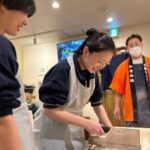
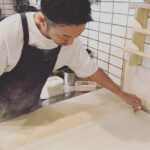
What I like most is how hands-on the Ainu stop is. You’re not stuck only staring at objects behind glass—you’re encouraged to experience traditional Ainu craftworks in a facility built for the original inhabitants of Hokkaido.
My other favorite part is the Jozankei-to-onsen flow: you get a guided walk through the highlights, then you end with a Hotel Shika no Yu day-bath that includes clear onsen rules so you don’t feel lost. The main drawback to weigh is that it’s a long, cold-weather walking day with some uneven ground, and the tour notes it isn’t suitable for people with back problems or wheelchair users.
In This Review
- Key highlights you’ll actually feel
- Ainu Cultural Center in Sapporo: meaning before the steam
- The guided trip to Jozankei: why this village works as a day tour
- Jozankei on foot: shrine, temple, parks, and what to look for
- Crossing Futami Tsuribashi Suspension Bridge: the walking thrill
- Gesen Park footbath: your legs’ warm-up act
- Hotel Shika no Yu onsen: the best finish to a long day
- Price and value: is $170 a fair deal?
- How the pace works from Myomu: timing, transit, and walking tips
- Who should book this Ainu and Jozankei day tour
- Should you book this tour?
- FAQ
- How long is the Sapporo Ainu and Jozankei walking tour?
- Where do I meet the guide, and what time?
- What’s included in the tour price?
- Is lunch included?
- What onsen experience do you get at the end of the day?
- Which stops are included in Jozankei?
- What should I bring for the day?
- Can I cancel, and is pay later available?
Key highlights you’ll actually feel
- Hands-on Ainu Cultural Center visit where you can feel and experience traditional craftworks
- English-speaking guide who keeps the day moving and answers questions as you go (Scott is frequently mentioned by name)
- Jozankei walking highlights including Jozankei Shrine and Temple, Gesen Park, and Futami Park
- Futami Tsuribashi Suspension Bridge crossing plus a footbath stop
- 2-hour onsen day-bath at Hotel Shika no Yu with bathing etiquette explained before you soak
- A structured day in winter with guided sightseeing plus time to breathe in Jozankei
Ainu Cultural Center in Sapporo: meaning before the steam
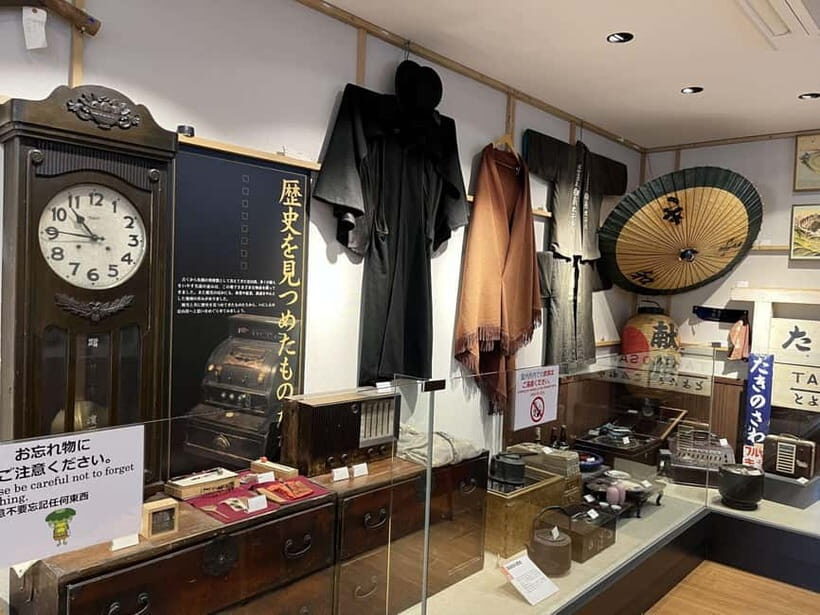
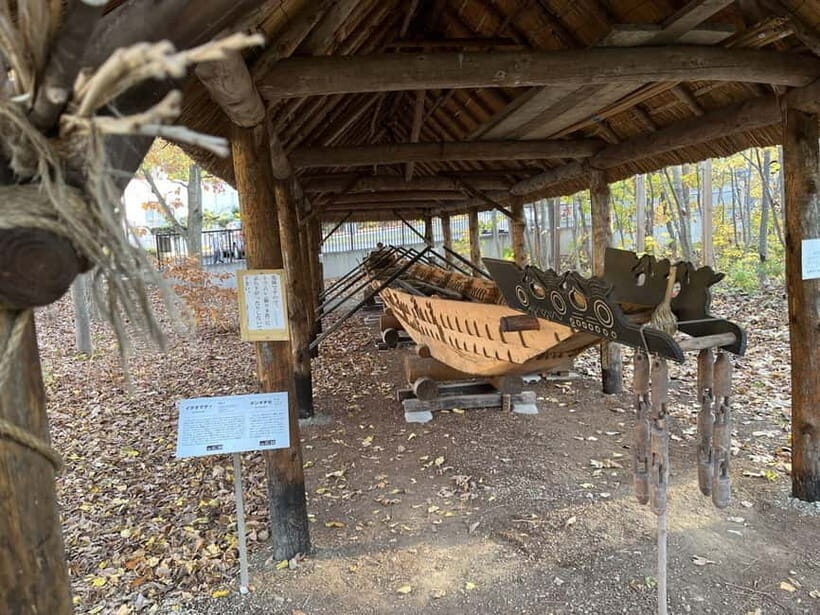
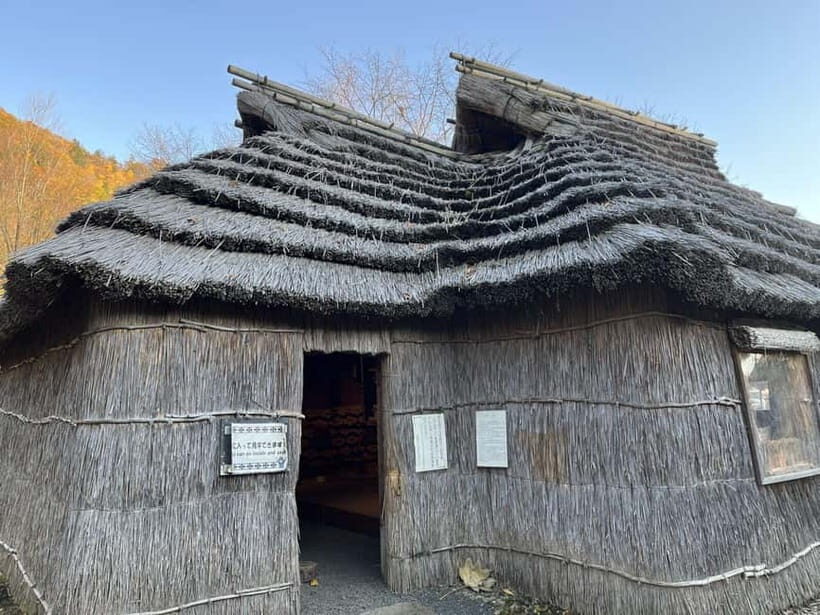
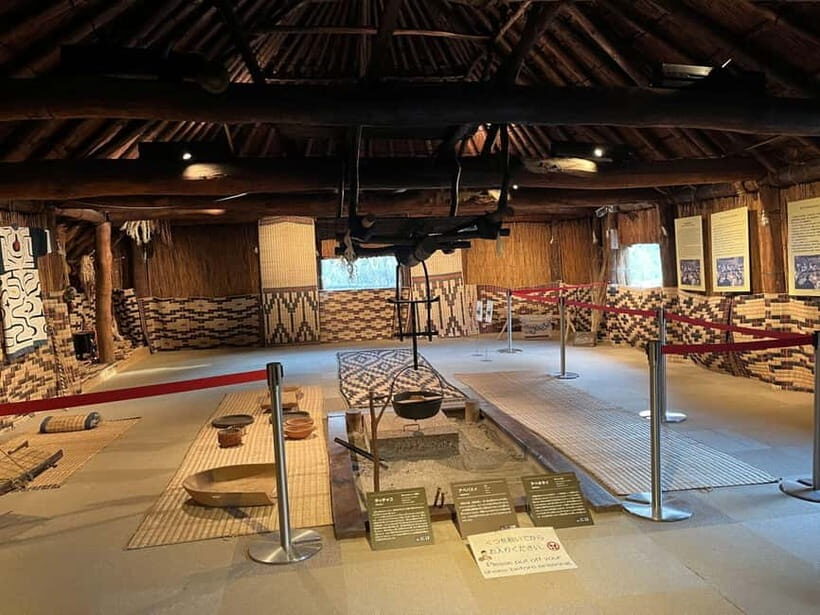
Start your day in Sapporo at the Myomu meetup point near the south exit of Sapporo Station, and then head straight to the Ainu Cultural Center. The tone here is educational, but it doesn’t feel like a classroom. This center is the first in Japan focused on the original inhabitants, and it’s designed so you can interact with traditional Ainu craftworks made by Ainu artisans.
One of the smartest parts of this stop is the way it frames culture as living practice. Instead of treating Ainu culture as something frozen in time, the center highlights lifestyle, history, and art, and it encourages visitors to feel and experience craftworks. If you care about respectful understanding (not just photos), this is where you get it.
And yes, there’s a practical side: having this cultural anchor early in the day makes the rest of the outing click. When you later see the religious sites and hot spring village atmosphere in Jozankei, you’re already in a mindset of seeing places as more than just scenery.
If you’re traveling in winter, this is also a good move. You’ll be outdoors later, but the museum time gives you a warm, steady start while your brain resets after train travel.
You can also read our reviews of more walking tours in Sapporo

The guided trip to Jozankei: why this village works as a day tour
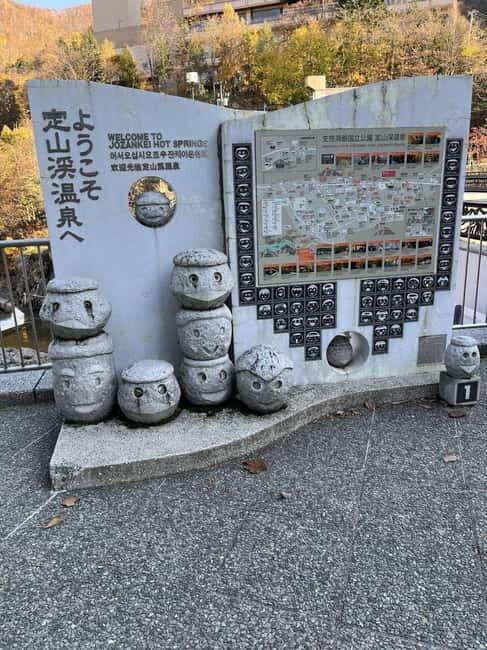
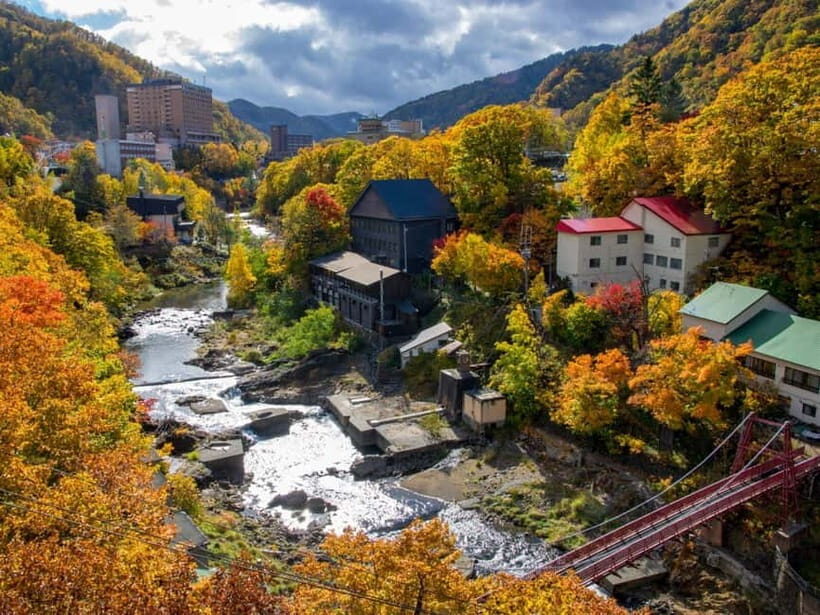
After the Ainu stop, you’ll head to Jozankei, a hot spring village set within Shikotsu-Toya National Park. The setting matters here. Jozankei’s terrain and even the phenomena around it connect to hundreds of years of volcanic activity, so the village’s hot spring identity isn’t random—it’s built into the geology.
Once you arrive, you follow your guide through key sights rather than trying to piece things together on your own. That’s a real value in Hokkaido, where distances and transit timing can squeeze your day. You also get guided context at the places you’d otherwise just pass through with a quick glance.
This part of the tour is built for walking plus pauses. You’re given a chunk of time to explore Jozankei, which helps if you want photos, warm breaks, or just to watch how the village feels when you slow down.
One thing to keep in mind: the winter schedule can mean some waits. In one review, bus waiting time was a little long because of the winter timetable. It’s not a dealbreaker, but it’s a reason to plan your expectations around a structured day—not a perfectly clockwork sprint.
Jozankei on foot: shrine, temple, parks, and what to look for
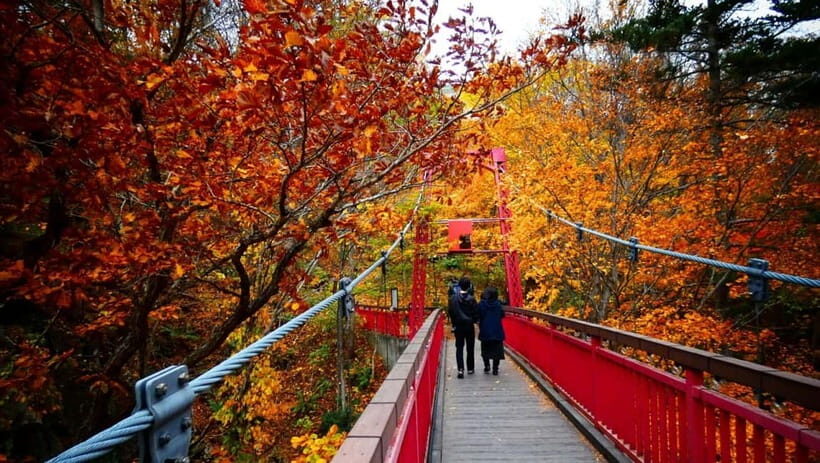
The main walking portion includes the Jozankei Shrine and Temple, Gesen Park, Futami Park, and the famous Futami Tsuribashi Suspension Bridge. Even if you’ve seen Japanese shrines before, this cluster works well because it gives you different ways to experience the village: sacred spaces, park time, and then the dramatic bridge crossing.
At the Jozankei Shrine and Temple, the value is in the guidance. Your guide helps you connect what you’re seeing to the location and to the day’s theme, so it doesn’t become a checklist. Go slow here. Look for the details you’d normally skip because you’re busy finding the right angle for a photo.
Gesen Park adds a more relaxed mood. It’s also where the footbath experience fits naturally—walk, warm up, and reset. If you’re traveling with cold hands or stiff legs, this is one of the nicest “small win” moments of the day.
Futami Park keeps the pace light while still feeling like you’re moving through real stops, not just getting transported between viewpoints. Then comes the bridge.
Crossing Futami Tsuribashi Suspension Bridge: the walking thrill
The Futami Tsuribashi Suspension Bridge is one of the day’s most memorable moments because it’s an actual walking segment, not just a photo stop. Suspension bridges have a way of putting you into the moment—you feel the movement, you look farther across, and you get a clearer sense of how Jozankei sits in its environment.
You’ll cross the bridge as part of the guided route, and then you’ll keep going with the day’s rhythm. Bring warm layers and comfortable shoes. In winter, that “comfortable” part matters more than usual, because the tour notes there can be uneven surfaces.
This is also where your guide’s presence helps. Walking a route you don’t know in winter is easier when someone is setting expectations and helping you avoid unnecessary slip-and-stop moments.
Gesen Park footbath: your legs’ warm-up act
At Gesen Park, you’ll have access to a footbath. This is one of those experiences that seems simple until you’re actually standing there with tired feet. It’s a practical break that matches the day’s overall theme: walk through the hot spring village, then let the village meet you halfway.
The tour also describes a different onsen-style option at the end of the day, so this footbath works like the appetizer. If you’re worried about cold weather or long distances, the footbath helps you feel like you’re not just enduring the day—you’re being cared for by the routine.
In winter, foot warming also makes it easier to stay engaged. When your feet are comfortable, you tend to look longer, ask questions, and actually enjoy the bridge and parks instead of just counting minutes.

Hotel Shika no Yu onsen: the best finish to a long day
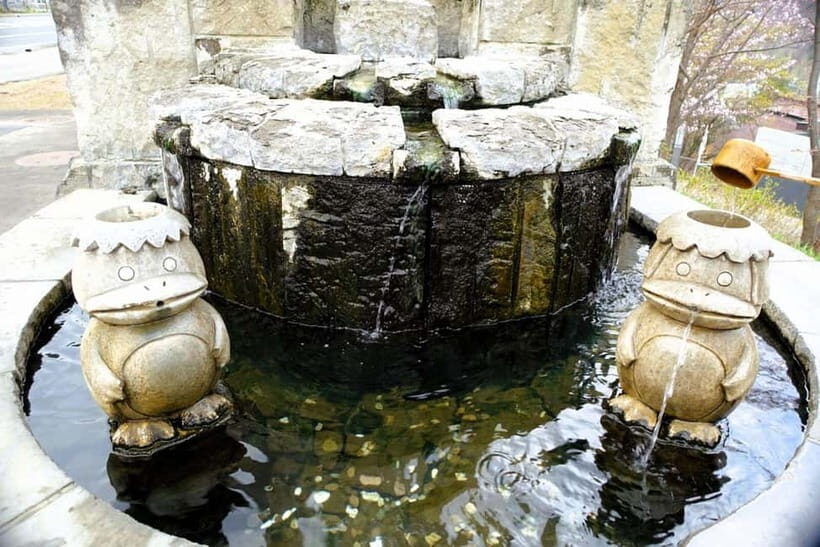
The day ends at Hotel Shika no Yu with a 2-hour day-bath experience. This is the kind of ending that makes the earlier walking and museum visit feel worth it. You don’t just “reach” an onsen—you get time to soak for a full stretch.
The tour also includes an explanation of the bathing etiquette and rules you need to follow. That matters more than people think. Onsen culture is full of small expectations, and having them spelled out ahead of time saves you from awkward guesswork.
This is also where your packing list becomes non-negotiable. The tour specifically advises you to bring a towel and a change of clothes, and to expect that you’ll be spending real time in bathing areas. You’ll also want water to stay hydrated, especially after a long day outdoors.
If you like ending a trip day with something that feels genuinely local, this onsen finish is the heart of the whole experience. One review specifically called out how soothing the onsen feels and how it helps you feel like a local rather than a visitor passing through.
Price and value: is $170 a fair deal?
$170 per person is not cheap, but it can be fair value depending on how you compare it to self-planning.
Here’s what’s included:
- an English-speaking tour guide
- transportation fees from Sapporo Station to the destinations and activities listed
- entry and admission tickets for the stops on the day’s route
- a 2-hour day-bath at Hotel Shika no Yu (with etiquette explained)
When a tour bundles transport and tickets, the math changes. You’re also paying for the “how to move through a day smoothly” factor—especially important in winter, where timing and conditions can make independent travel stressful.
What’s not included is lunch, so budget for food on your own. Also, since the total duration is 570 minutes (about 9.5 hours), you should treat this as a full-day commitment rather than a quick add-on.
Overall, I’d call this a solid value if you want both culture and a proper onsen ending without spending hours figuring out logistics.
How the pace works from Myomu: timing, transit, and walking tips
You meet at 9 a.m. at the Myomu circular white stone structure near the south exits of Sapporo Station, with your guide standing there wearing a SNOW MONKEY RESORTS tour tag. From there, the day has multiple segments with transport breaks, including a coach/bus portion on the way to and from Jozankei.
The timing feels like a real Hokkaido day: museum early, travel to the hot spring village, then sightseeing with walking segments, then the onsen finish, then heading back to Sapporo. If you’re the kind of traveler who hates waiting, take a deep breath. One review noted that some bus wait times were longer due to the winter schedule, which is normal in cold-season logistics.
Walking-wise, come prepared:
- wear comfortable shoes with good grip
- expect uneven surfaces
- pack a change of clothes and a towel for the onsen
- bring water for hydration
Also, the tour isn’t suitable for wheelchair users or people with back problems. If you’re managing pain, this is the kind of day that can escalate quickly, even if the sights are worth it.
Who should book this Ainu and Jozankei day tour
Book it if you want:
- a guided, English-friendly day that covers both culture and hot spring life
- a hands-on Ainu Cultural Center experience, not just a quick exhibit visit
- an easy way to see Jozankei’s main highlights—bridge, parks, and shrine/temple—without map confusion
- a proper onsen finish with etiquette explained
Skip it if:
- you need fully step-free access or you use a wheelchair
- your back (or legs) don’t do well with uneven winter surfaces
- you’d rather travel at your own pace and hate structured days with transport segments
One review also praised the guide’s conversation during downtime and noted how the small-group feel made it easy to follow commentary and chat with others. If you like a day that doesn’t feel like a giant factory line, that’s a good sign.
Should you book this tour?
Yes, if you want a well-rounded day that pairs Ainu cultural understanding with Jozankei’s hot spring rhythm and a real onsen soak at the end. The value is strongest when you appreciate what’s included—guide, transport, tickets, and the 2-hour day-bath—so you’re not spending your time juggling transit and entry fees.
I’d only hesitate if you know you’ll struggle with long winter walking or you fall into the tour’s non-suitable categories. Otherwise, it’s a thoughtful way to spend your time in Hokkaido: learn first, walk second, soak last.
FAQ
How long is the Sapporo Ainu and Jozankei walking tour?
The tour duration is 570 minutes, which is about 9.5 hours.
Where do I meet the guide, and what time?
Meet your guide at 9 a.m. at the Myomu circular white stone structure near the south exits of Sapporo Station. Exit the main JR gates, turn left, and walk toward the South Exits.
What’s included in the tour price?
The price includes an English speaking tour guide, transportation fees from Sapporo Station to the listed destinations and activities, and all entry/admission tickets.
Is lunch included?
No, lunch is not included.
What onsen experience do you get at the end of the day?
You’ll enjoy a 2-hour day-bath experience at Hotel Shika no Yu, and you’ll learn the rules and bathing etiquette you must follow.
Which stops are included in Jozankei?
The tour includes Jozankei Shrine and Temple, Gesen Park (including a footbath), Futami Park, and the Futami Tsuribashi Suspension Bridge.
What should I bring for the day?
Bring comfortable shoes, a change of clothes, a towel, and water.
Can I cancel, and is pay later available?
Yes. You can cancel up to 24 hours in advance for a full refund, and you can reserve now and pay later.