REVIEW · TOKYO
Shibuya Highlights Hachiko Scramble Meiji Jingu and Sky
Book on Viator →Operated by TokyoGuidePartner · Bookable on Viator
Shibuya hits fast, then keeps going. This private 3-hour walk pairs icon stops like Hachiko and the Scramble Crossing with quieter breathing space at Meiji Jingu, so you get the real “two faces” of Tokyo in one go. I especially like the way the route mixes street-level energy (Center-gai, Miyashita Park, Cat Street, Takeshita Street) with a calm reset at the torii gate. One consideration: Shibuya Sky costs extra and timed tickets can be hard to grab near your travel dates.
This is also a smart value if you’re traveling with up to 6 people. The guide fee is included and you even get a taxi covered from Takeshita Street to Shibuya Sky, which saves time when foot traffic and crossings start eating your schedule. A possible drawback is that the tour requires good weather, and it’s built for walking and short stops rather than long stays in each neighborhood.
I like how the guides act like a concierge, not just a pointer. People in past groups have raved about guides like Berkay, Mitsu, and Bernal for tailoring what you want to see and helping with practical stuff like photos and ordering at a favorite ramen spot.
In This Review
- Key Highlights Worth Your Time
- Price and Logistics: What You’re Really Paying For
- Meeting at Hachiko: Starting With Tokyo’s Most Photo-Ready Dog
- Shibuya Crossing and Center-gai: The Fastest Way to Understand Shibuya
- Miyashita Park and Shibuya Yokocho: Trendy Edges With a Japanese Flavor
- Cat Street and Harajuku Energy: From Shibuya River Walk to Takeshita
- Meiji Jingu Shrine: The Green Reset You’ll Actually Feel
- Shibuya Sky at Scramble Square: The Ticket Part That Changes Everything
- Guides and Tailoring: Why Private Matters in a City Like This
- Best Fit: Who Should Book This Tour
- Booking Decision: Should You Book This One?
- FAQ
- How long is the tour?
- How many people are in a group?
- What are the tour start and end points?
- Is Shibuya Sky included in the tour price?
- How much are Shibuya Sky tickets?
- Do you need to buy Shibuya Sky tickets in advance?
- Does the tour include any transportation?
- What if the weather is bad?
Key Highlights Worth Your Time
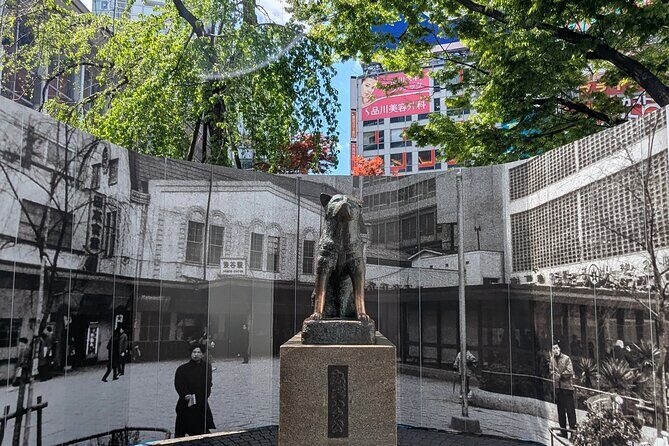
- Icon-stop sequence in a tight 3 hours: Hachiko, Scramble Crossing, and Shibuya’s key streets in one organized flow
- Meiji Jingu as the emotional reset: torii gate photo time plus a green break from the city noise
- Modern Shibuya meets Harajuku street culture: Miyashita Park rooftop vibes, then Cat Street and Takeshita Street’s pop-culture lanes
- Free photo moments at the big Shibuya sites: quick stops designed for videos and souvenir photos
- Shibuya Sky ticket planning matters: you’ll need to purchase the observation deck separately, and demand can be tight
- Private group feel (up to 6): you can ask for route tweaks and pacing without being swept into a crowd
Price and Logistics: What You’re Really Paying For
The headline price is $195.11 per group for up to 6 people, for about 3 hours with a mobile ticket. On paper, that doesn’t sound huge for Tokyo. In practice, it’s the structure that makes it pay off: you’re buying a guide who can stitch together big-name Shibuya landmarks, trend-forward streets, and a classic shrine visit without you wasting time figuring out the route, transit, and timing.
Here’s the part you should budget carefully: Shibuya Sky is not included. Tickets are sold separately at about 2,700–3,400 yen per adult depending on whether you go before or after 3pm. The tour covers the move to the Scramble Square area (and includes a taxi from Takeshita Street to Shibuya Sky), but you’re responsible for the observation-deck ticket itself.
That “extra ticket” detail can feel annoying until you understand why it exists. Shibuya Sky uses timed entry, and the listing warns that tickets for the next 10 days can sell out. If you want a specific day and time window, plan early and respond quickly to the email request that comes after booking. If you miss the window, the whole last stretch of your day is still fun, but you’ll lose the timed-deck plan.
You can also read our reviews of more tours and experiences in Tokyo.



Meeting at Hachiko: Starting With Tokyo’s Most Photo-Ready Dog
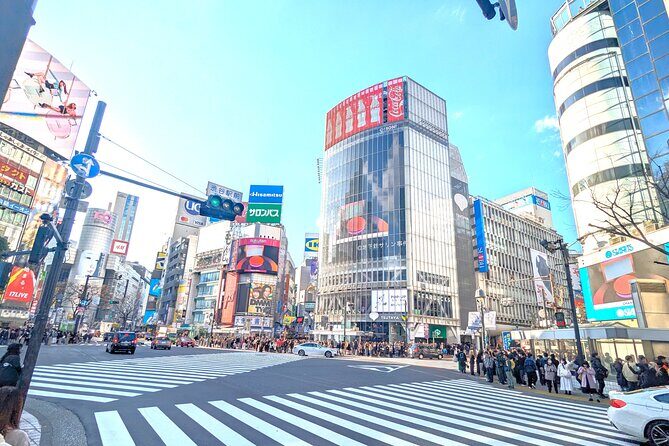
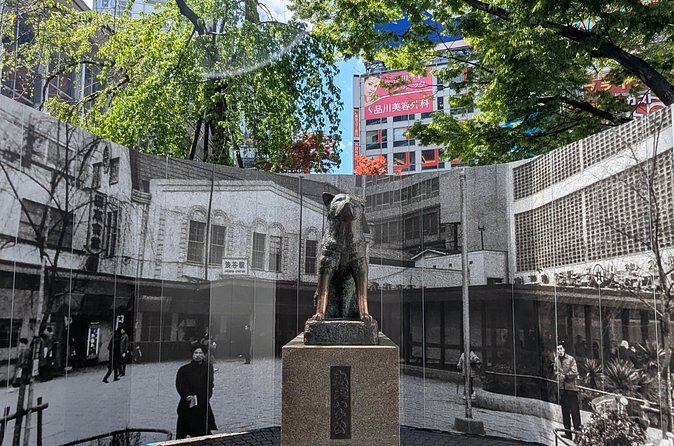
Your tour begins at the Hachiko statue area in Shibuya (Dogenzaka). This matters more than it sounds. Hachiko is a magnet for photos, and the statue is one of those “you’re in Tokyo” moments you don’t need to overthink. You’ll likely spend around 20 minutes here, including a commemorative photo.
Two practical tips from how this stop is set up:
- If it’s busy, come early. There’s mention of lining up during peak periods, which is exactly when Shibuya can feel like an organized machine.
- Use this stop to get oriented. Before the scramble crossing, this is your calm-and-clear starting point.
If you’ve ever watched street videos from Tokyo, Hachiko is usually where those begin. Treat it like your warm-up lap.
Shibuya Crossing and Center-gai: The Fastest Way to Understand Shibuya
Next is the Scramble Crossing, the famous intersection where up to 3,000 people can move at once. Your time here is short (about 10 minutes), and that’s on purpose. The goal is not to “visit” the crossing like a museum. It’s to see it happen with your own eyes and grab photos and video while the flow is active.
What I like about this style of stop is that you don’t end up standing there so long that you start feeling like a traffic camera. With only about ten minutes, you get the hit, then you move on while the energy stays fun.
After that, you’ll head to Shibuya Center-gai (Center Street) for about 15 minutes. This is where Shibuya’s youth culture roots show up in everyday form: a mix of apparel stores, general shops, game shops, and multinational restaurants. It’s busy, but it’s the kind of busy that feels like daily life, not a curated tourist lane.
If you like people-watching, this is a good section to slow down just a bit. Watch the shopping rhythm: groups drifting together, solo shoppers hopping stores, and the constant mix of styles.
Miyashita Park and Shibuya Yokocho: Trendy Edges With a Japanese Flavor
The route shifts toward Miyashita Park, with about 15 minutes allocated. Miyashita Park is described as a commercial building space with luxury brands, stylish cafes and restaurants, and an open rooftop area where you might meet that world-famous character people associate with the space. Even if you don’t catch anything like that, you’ll feel the difference from classic shrine-and-temple Tokyo. This is Shibuya as lifestyle.
On the way there, you pass by Shibuya Yokocho, known for traditional-style eating and drinking streets lined with red lantern izakayas. You’re not necessarily stopping for a meal, but the “you pass by” setup is smart. It gives you texture without forcing you to commit to food on a tight schedule.
If you do want food, plan it strategically. This tour is short enough that grabbing snacks can turn into an accidental time sink. If you’re hungry, ask your guide when to stop—or save the izakaya wander for later.
Cat Street and Harajuku Energy: From Shibuya River Walk to Takeshita
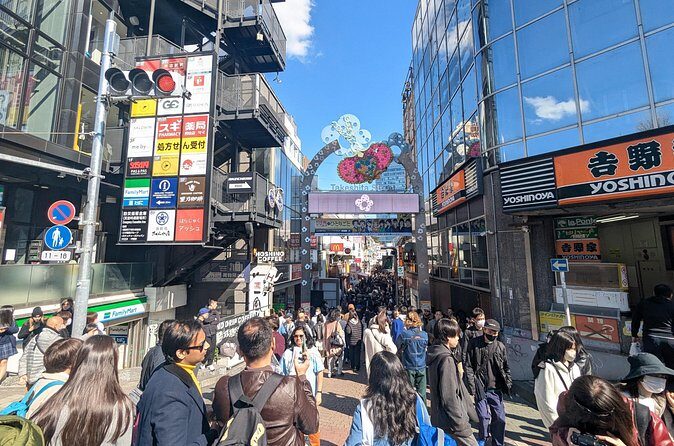
After Miyashita, you’ll head to Shibuya Cat Street for about 15 minutes. This is part of the stretch people associate with Harajuku style: brand shops, glass shops, stylish cafes, and a promenade route that follows the older river line between Shibuya and Omotesando.
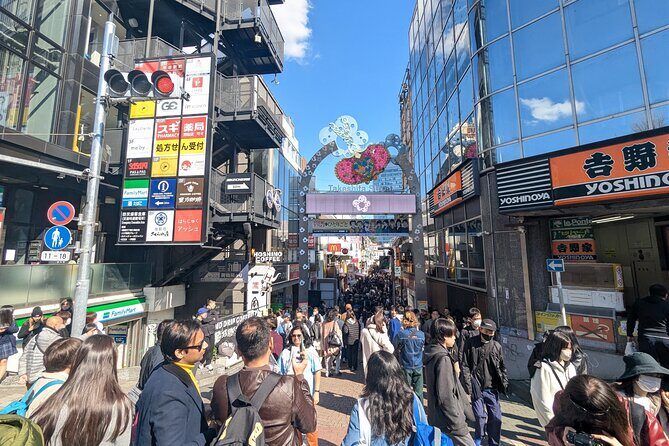
Then the tour continues to Takeshita Street for about 20 minutes. Takeshita is described as a birthplace of Japanese pop culture, with “kawaii” culture as the export. It also mentions fashion trends shifting toward an “edge” and “goth” vibe in recent years, so don’t expect only pastel everything.
Here’s the practical reality: Takeshita can feel like a live-action fashion feed. It’s fun, but it can also feel like sensory overload if you’re tired. The short time window is helpful. You get the essence, take your photos, then move.
And this is where the logistics improve: a taxi from Takeshita Street to Shibuya Sky is included. That’s a big deal. Tokyo’s crossings and crowds can slow you down in the final act, and this taxi helps you keep your timeline for the timed entry situation.





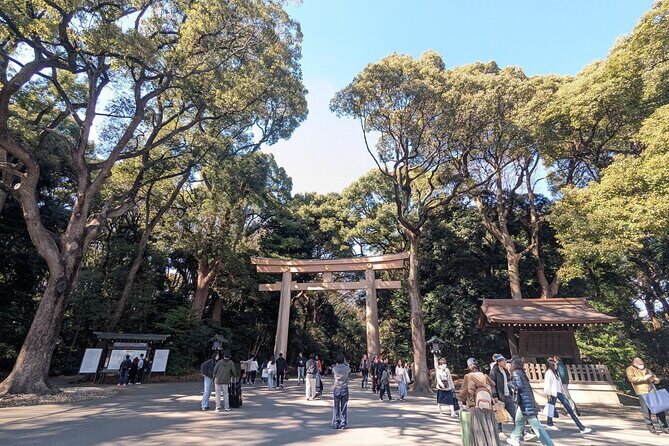
Meiji Jingu Shrine: The Green Reset You’ll Actually Feel
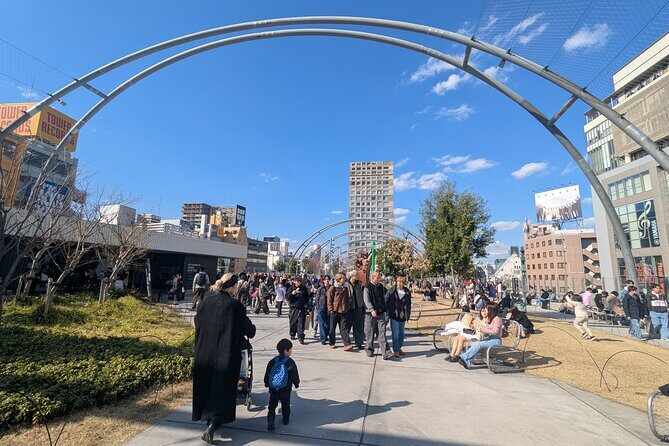
Then you’re off to Meiji Jingu Shrine, with about 45 minutes here. This is the longest stop on the tour, and it’s also the emotional counterweight to Shibuya’s street speed.
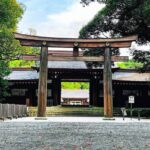
You’ll take in a torii gate photo moment and visit a shrine described as one of Japan’s highest-visited. The tour frames it as a power spot in the middle of the city—an oasis of green that helps you feel healed and grounded.
One of the most useful ways to approach Meiji Jingu on a short schedule: don’t try to “complete” it like a checklist. Use your time to slow down. Walk the approach, look at the forest-like calm, and let your senses adjust after hours of crowds.
If you care about contrast, this stop is the payoff. Shibuya without Meiji Jingu can feel like one long noise session. With Meiji Jingu in the middle, the whole tour feels more balanced.
Shibuya Sky at Scramble Square: The Ticket Part That Changes Everything
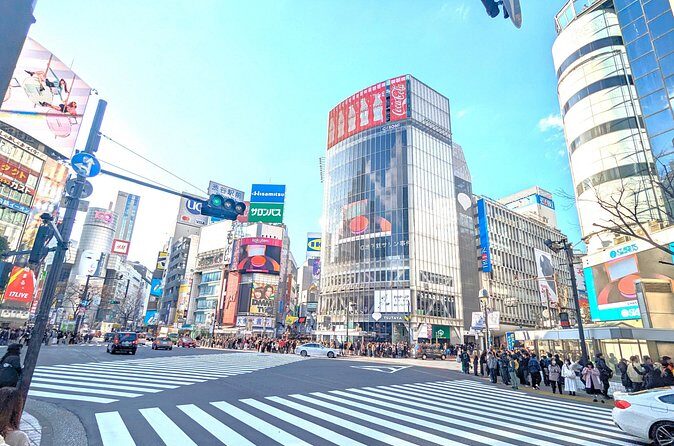
The final move is to Scramble Square, where Shibuya Sky is located. This is your last stop, about 20 minutes on the tour side.
The key thing: Shibuya Sky entry requires a separate ticket. The listing states ticket prices around 2,700 yen for admission before 3pm and 3,400 yen for admission after 3pm (adult pricing). Children have a different price mentioned as 1,200 yen.
Also, tickets for the next 10 days can be sold out, so the advice is simple: plan early, and when you get the email after booking, reply promptly to secure your spot.
What about the observation deck time? Even without knowing the exact view schedule, you’ll appreciate that this is end-of-tour timing. You’re tired enough to enjoy the escape into height, but not so tired that you can’t absorb the moment.
If you want the best experience from this last step, do this: make a quick plan for what you’ll shoot (a wide skyline photo vs. a detailed street shot). With only a short window, you’ll feel less rushed.
Guides and Tailoring: Why Private Matters in a City Like This
The tour is private, meaning it’s only your group. You’re capped at up to 6 people, which is big enough for families and small friend groups, but small enough that your guide can adjust pace.
This is where the praise comes in. People have specifically highlighted guides like Berkay for tailoring the route to what the group wanted and even taking lots of pictures, with at least one guide preparing a slideshow of those photos after the tour. Others have raved about Mitsu being attentive and fulfilling wishes, and Bernal leading families in an easygoing way while also sharing advice for what to do next.
Even if you don’t get one of those exact guides, the point is consistent: you should treat your guide as your Tokyo translator. Ask for:
- a photo strategy (where to stand, when to film),
- a “quiet vs. busy” balance,
- and one or two priorities you care about most.
Because the route can be customized, you’re not stuck doing every segment the same way every group does. That matters in Shibuya and Harajuku, where the crowd mood can change fast.
Best Fit: Who Should Book This Tour
I think this fits best if you:
- want the Shibuya hits without building a full day plan yourself,
- like both modern Tokyo and a classic nature pause at a shrine,
- are traveling in a small group (up to 6) and value private pacing,
- and care about getting photos and orientation quickly.
It’s also a decent option if you’re short on time. The whole experience is about 3 hours, and the route gives you a lot of city variety in one block.
If you’re the type who wants long museum-style stays, or if you want to linger for food shopping breaks for an hour at each stop, you’ll probably feel rushed. This isn’t that kind of tour. Think highlights plus breathing space, not slow travel.
Booking Decision: Should You Book This One?
Book it if you want an efficient, friendly way to understand Shibuya and Harajuku in one organized sweep, with Meiji Jingu as the calm counterbalance. The value improves because the guide fee is included and you get the taxi to Shibuya Sky, which is usually the part where timing gets tricky.
Consider skipping—or at least being cautious—if you’re not ready to handle the Shibuya Sky ticket situation. Timed entry and the possibility of sold-out windows for the next 10 days is the one stress point built into the experience. If Shibuya Sky isn’t a priority for you, ask your guide about alternatives once you confirm your plan.
FAQ
How long is the tour?
The tour lasts about 3 hours.
How many people are in a group?
The tour is private and can include up to 6 people.
What are the tour start and end points?
It starts at the Hachiko Statue area in Shibuya and ends at Shibuya Scramble Square, where Shibuya Sky is located.
Is Shibuya Sky included in the tour price?
No. Shibuya Sky tickets are sold separately.
How much are Shibuya Sky tickets?
The listed adult prices are about 2,700–3,400 yen depending on the time slot (before or after 3pm). A child price of 1,200 yen is also mentioned.
Do you need to buy Shibuya Sky tickets in advance?
Yes. You’ll be asked to secure Shibuya Sky tickets by replying to an email after booking, and tickets for the next 10 days can sell out.
Does the tour include any transportation?
The tour includes a taxi fare from Takeshita Street to Shibuya Sky.
What if the weather is bad?
The experience requires good weather. If it’s canceled due to poor weather, you’ll be offered a different date or a full refund.
![[Okinawa Blue Cave] Snorkeling with Private Guide+ Free Photos - Cape Maeda stop: the warm-up where fish spotting starts](https://images.thejapantraveler.com/wp-content/uploads/okinawa-blue-cave-snorkeling-with-private-guide-free-photos.jpg)