REVIEW · TOKYO
Shibuya Official Street Go-Kart in Shibuya Annex
Book on Viator →Operated by Street Kart · Bookable on Viator
Shibuya from a go-kart cockpit is unreal. This small-group street ride gives you real guidance while you zip through Shibuya Crossing and the fashion lanes around Harajuku and Omotesando. I like that you get hands-on instruction and a lead guide in the kart, plus you can dress up with costumes for a silly-fun Tokyo vibe.
My other big win is the night-show feel. Several guides (Abrar, Cole, Newaz, and Tomas show up in feedback) keep the pace friendly, and the ride turns some of the most famous intersections into a you-are-there moment. The main drawback to plan for is the paperwork for driving in Japan plus the very real chance of exhaust in your face during the ride.
In This Review
- Key points to know before you book
- Why the Shibuya Annex route feels like a real Tokyo experience
- Shibuya Crossing from multiple angles, not a quick photo stop
- Harajuku and Omotesando: fashion sightseeing at speed
- How the ride actually works: guide-led check-in and confidence building
- Cost and value: what $69.64 buys you (and what it doesn’t)
- Finding the meeting point in Shibuya and getting ready
- Timing your night: start times, weather, and the real Tokyo vibe
- Who should book this go-kart ride, and who should skip it
- Should you book the Shibuya Official Street Go-Kart at Shibuya Annex?
- FAQ
- What does the Shibuya Annex go-kart tour cost, and how long is it?
- What’s included in the price?
- Do I need an International Driving Permit (IDP) to drive in Japan?
- Can I drive with just my home country’s license?
- What are the age requirements?
- Can non-drivers or children ride along?
- What should I wear for the tour?
- Can I wear Mario or Nintendo-themed costumes?
- What happens if weather is poor?
Key points to know before you book
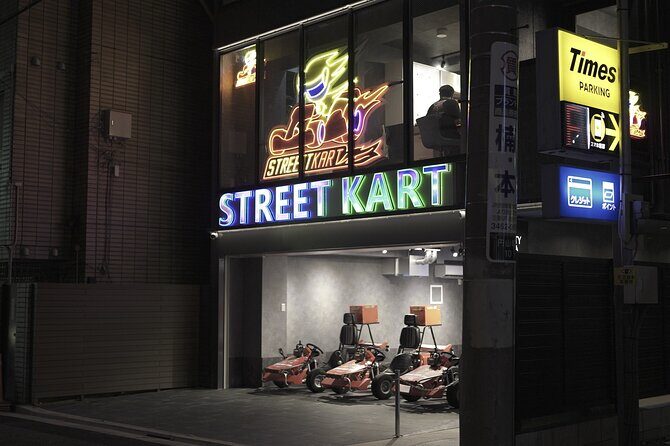
- You drive in real Tokyo traffic with instruction: a lead guide rides with you and helps you understand what to do fast.
- Shibuya Crossing is the star: you’ll cross it more than one way, so you get angles instead of one quick view.
- Costumes are part of the fun: you rent one on site, which also helps you stand out less as a visitor with a GoPro-shaped dream.
- Harajuku meets Omotesando: you’ll move between pop-fashion energy and more grown-up street style and backstreets.
- Max 6 people: small group size keeps it manageable, and it helps the guide keep an eye on everyone.
- You get guide photo data: you’re not stuck with only shaky phone footage after the ride.
Why the Shibuya Annex route feels like a real Tokyo experience
Tokyo has a way of making you feel like you’re either looking from the outside, or you’re moving too fast to notice anything. This go-kart format flips that. You’re not just walking past landmarks. You’re threading the streets with a guide who’s focused on how you ride, not just where you pose.
What makes Shibuya Annex especially fun is the mix of famous and very “everyday Tokyo.” You hit headline spots like the Shibuya Crossing area, then you roll through Harajuku and into Omotesando’s side streets. That combo matters, because it gives you contrast: neon landmark energy, then the more human, neighborhood feel where you start clocking details like street layouts and how people move.
And yes, you’ll be noticed. Expect stares and plenty of phones out. That’s part of the deal here. If you can handle being the weirdest thing on the street for an hour, you’ll leave grinning.
You can also read our reviews of more tours and experiences in Tokyo.



Shibuya Crossing from multiple angles, not a quick photo stop
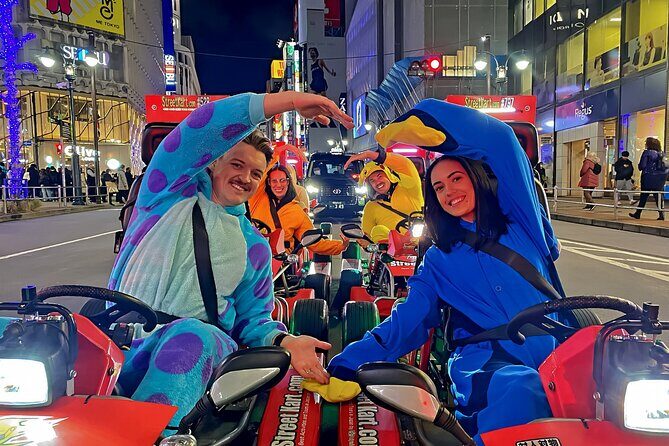
This is the segment you plan around. You’re crossing the world-famous crosswalk from different angles, which changes the entire experience. A walking viewpoint is fixed. A cart viewpoint moves. You feel the crossing as a sequence of choices rather than a single scenic moment.
If you ride at night, the effect gets stronger. Multiple reviews call out the neon glow and neon reflections, and it’s easy to see why: the city looks like it’s been designed for cameras, except you’re inside the action. The karts are also not set up like a full-on race. Many people describe it as thrilling without being out of control, as long as you pay attention to your guide and the kart in front of you.
One operational detail I’d watch for: the karts may stop and everyone rotates so you get a front and back experience. That’s great for groups, because you all get a turn at the most dramatic viewpoint.
Harajuku and Omotesando: fashion sightseeing at speed
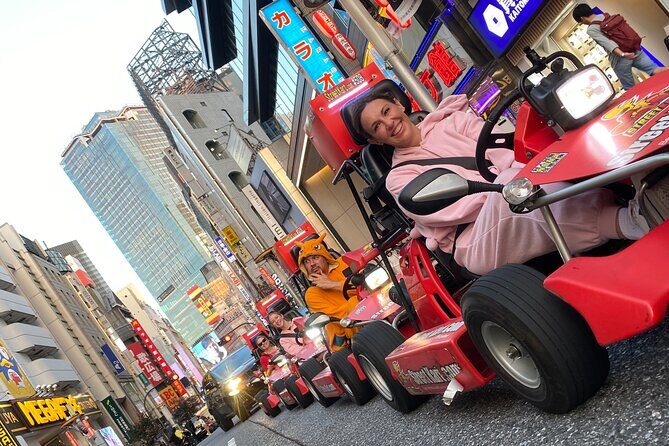
Harajuku is pop-culture in motion. On this route, you get an up-close view of the changing street scenes, and you’ll also drive through the intersection where Harajuku’s younger, louder style meets Omotesando’s more polished, mature fashion. Then you dip into backstreets where the pace and streetscape feel different from the main shopping corridors.
This stop is valuable even if you’re not a “fashion person.” Why? Because it helps you read the city. You start noticing how districts shift by just a few blocks: the street width, the storefront style, the vibe of pedestrian traffic, and the way intersections are managed. From a visitor perspective, that’s the kind of information that maps on your phone can’t give you.
Also, you can lean into the costume part here. Dress-up tends to make you more playful in the moment, and Harajuku is where that energy fits. You’ll look like part of the scene instead of someone constantly trying to line up a perfect photo.
How the ride actually works: guide-led check-in and confidence building
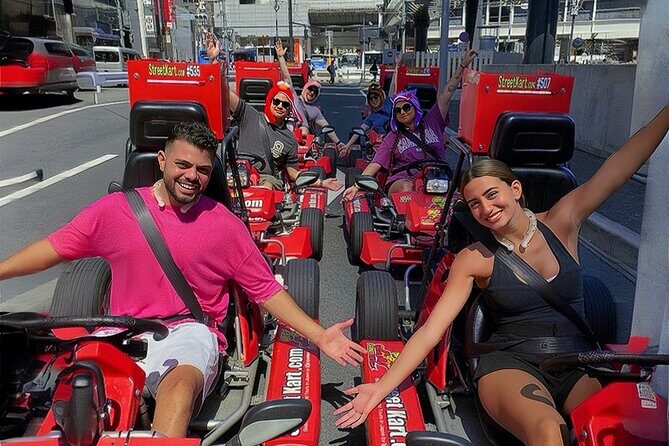
You’re not thrown into Tokyo with a kart and a prayer. The experience is built around guidance. You meet at Street Kart Shibuya Annex, get your gear and costume, and then you’re set up to ride with a lead guide in a kart.
In feedback, people mention an instructional process that helps you understand what to do before you hit the main streets. The important thing for you is to treat the first minutes seriously. If you get your bearings early, the rest feels smooth.
A few practical expectations:
- You’ll want flat, closed-toe footwear because you’re moving around at check-in and you’ll be wearing kart gear.
- You should expect noise and exhaust. One review calls out getting exhaust in the face, which is worth taking seriously even if you’re prepared.
- You’ll be driving through a place where people stop and stare. If you’re self-conscious, that’s the one moment you’ll feel it. If you’re excited, it becomes funny fast.
Safety-wise, most reviews use words like safe and well taken care of, and they directly thank staff for patient instruction. That lines up with the small-group setup, too. With a maximum group size of 6, the guide has an easier job keeping everyone on track.
Cost and value: what $69.64 buys you (and what it doesn’t)
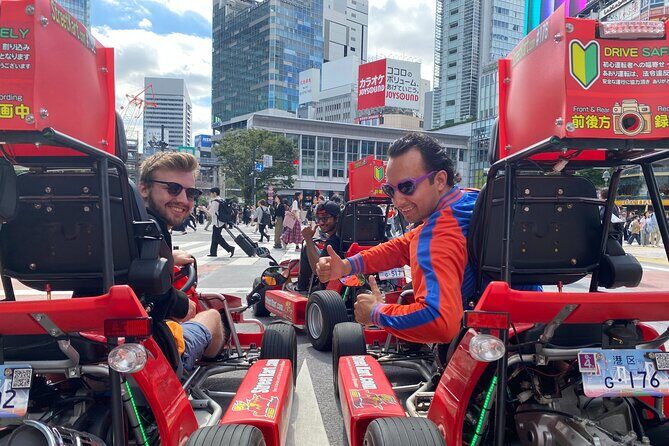
At $69.64 per person, you’re paying for a very specific kind of Tokyo access: the ability to drive a street go-kart in a controlled, guided way, in a real traffic environment, at one of the world’s most famous intersections.
Here’s what’s included:
- 1 hour kart rental fee
- Lead guide in a kart
- Costume rental fee
- All fees and taxes
- Tour photo data from your guide
What you might add:
- Action camera upgrade (action camera rental fee and micro SD are not included)
- Full coverage insurance is listed as ¥1,000 per person (not included)
So what’s the value logic? You’re getting the driving time, the person who makes the driving possible, and the “memory package” through guide photo data. If you’re the type who hates building a complex itinerary just to get one iconic photo, this is simpler. Pay, suit up, drive, and come away with story content.
If you want the cleanest video of the whole run, consider bringing your own stable camera plan. The action camera option exists, but you’ll want to budget for add-ons that aren’t bundled.






Finding the meeting point in Shibuya and getting ready
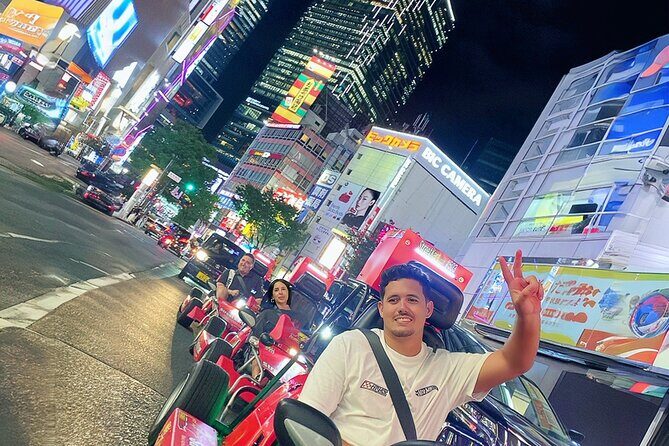
Meet at Street Kart Shibuya Annex in Shibuya (Maruyama-cho, 150-0044). The exact venue is right in the Shibuya area, and the activity is noted as being near public transportation, so you can plan your trip around train access rather than taxi-hunting.
Your real goal at the meeting point is simple: arrive on time and follow the instructions you’re given. One review warns that if you miss your time slot, you may need to reschedule. With something this timing-based, being early is the calm move.
Dress code matters too. Wear flat closed footwear and avoid long flowy skirts or dresses. If you wear something that limits your movement, you’ll feel it during check-in and in the kart setup.
Finally, if you have mobility or hearing impairment, you’re expected to inform the staff so they can guide you appropriately. This is one of those activities where small support needs can make a big difference.
Timing your night: start times, weather, and the real Tokyo vibe
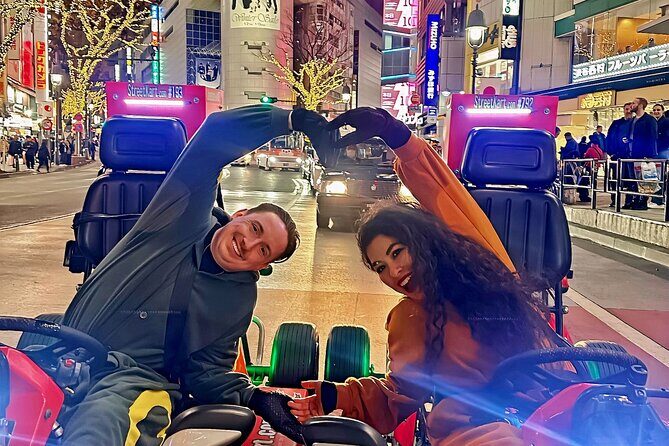
Start times are offered throughout the day, which is helpful if you want daylight for Harajuku streets or night for the neon Shibuya feel. Duration is about 1 hour 30 minutes (approx.), and that tends to include the ride plus the setup time you’ll spend before you roll.
Weather is a factor. The experience requires good weather. If the ride is canceled due to poor weather, you’ll be offered another date or a full refund. In practice, that means you should keep an eye on forecasts the day before and avoid scheduling this as your only “big plan” in Shibuya.
Also, cold/rain can change comfort quickly. One review mentions enjoying driving even on a cold rainy day, but you’ll still feel the elements, especially when you’re out in traffic with exhaust and wind.
Who should book this go-kart ride, and who should skip it
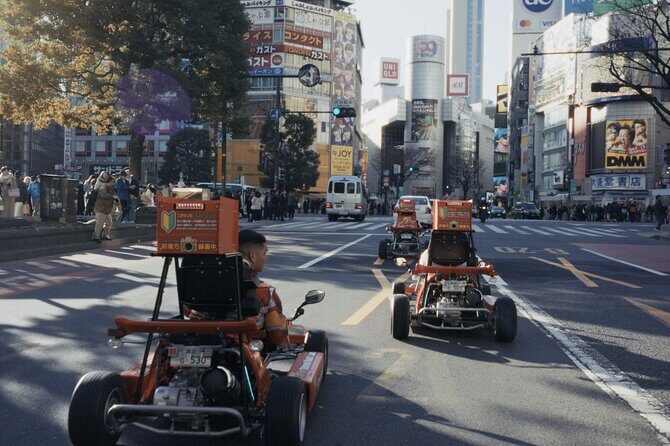
This is a great fit if you want:
- An iconic Tokyo experience that’s not just a walk-and-look day
- A fun group activity with small-group size (maximum 6)
- Hands-on instruction so you feel confident while driving
- A mix of landmarks: Shibuya Crossing plus Harajuku/Omotesando style areas
It’s also popular for families and teens in the feedback, and honeymooners have called it a highlight. If your group can laugh at the fact that you’ll be staring back at the city while the city stares at you, it’s perfect.
Skip it if you can’t meet the driving-document requirements. Japan has specific rules, and no domestic license alone works. You must carry the right physical documents (and your passport). If you don’t already have your permit/translation figured out, you’ll lose time and money fast.
Also skip or at least think hard if exhaust and close air movement make you uncomfortable, since at least one person specifically mentioned exhaust in the face.
Should you book the Shibuya Official Street Go-Kart at Shibuya Annex?
I’d book this if you have the driving documents ready, you’re comfortable following instructions, and you want a Tokyo story that feels active, not staged. The Shibuya Crossing angle changes alone make it worth it, and the Harajuku-to-Omotesando route gives you more than one “tourist checkbox” at speed.
Don’t book it blindly if your paperwork is last-minute. This experience lives or dies on whether you can legally drive in Japan. If you can’t, you’re stuck.
One more practical tip before you decide: if you’re booking for a group, plan to book together as intended. The experience notes that group bookings should avoid being handled separately, since there’s no guarantee everyone can join together.
If you check those boxes, this is one of the more memorable ways to experience central Tokyo with your own hands on the wheel.
FAQ
What does the Shibuya Annex go-kart tour cost, and how long is it?
The price is $69.64 per person, and the tour lasts about 1 hour 30 minutes (approx.).
What’s included in the price?
Your booking includes the 1-hour kart rental, a lead guide in a kart, costume rental, all fees and taxes, and tour photo data from the guide.
Do I need an International Driving Permit (IDP) to drive in Japan?
Yes. A special document is required. A home-country domestic license alone is not accepted as legal proof for driving in Japan.
Can I drive with just my home country’s license?
No. You need the required documents for Japan, such as an International Driving Permit (IDP) in the specified format, or for certain countries a Japanese translation through JAF.
What are the age requirements?
The minimum age is 18. The kart is single-seater, so all participants need to be eligible to drive.
Can non-drivers or children ride along?
No. The karts are single-seaters, and all participants must meet the minimum age requirement and hold a valid driver’s license in Japan.
What should I wear for the tour?
Wear flat closed footwear. Avoid no-long-flowy skirts or dresses.
Can I wear Mario or Nintendo-themed costumes?
No. Mario- or Nintendo-themed costumes (and clothing/items suggesting those characters) are not permitted due to copyright restrictions.
What happens if weather is poor?
This activity requires good weather. If it’s canceled due to poor weather, you’ll be offered a different date or a full refund.