REVIEW · KYOTO
Tea ceremony by the tea master in Kyoto SHIUN AN
Book on Viator →Operated by SHIUN AN · Bookable on Viator
Tea time in Kyoto has a different pace.
At SHIUN AN, you’ll experience a small, traditional matcha ceremony in a quiet setting near Daitoku-ji, with real instruction on the steps, utensils, and room details that make the whole ritual work.
I love how small the group stays—max 6 in regular times (and up to 8 in peak season)—so questions don’t get lost and you can actually practice. I also love that it’s not just watching: you’re taught how to make matcha yourself, and you get to enjoy two bowls during the ceremony.
One thing to consider: the location is in a residential area, and there can be stairs to reach the tea room. If you have mobility limits or prefer not to sit on the floor for long, plan ahead and let the team know.
In This Review
- Quick takeaways
- SHIUN AN Tea Ceremony Near Daitoku-ji: What You’re Actually Buying
- Group Size and the 45-Minute Rhythm (It’s Tighter Than You Think)
- Meeting Point at 955-1 Idachō: Plan for a Quick Find, Not a Fast One
- Entering the Tea Room: Scrolls, Flowers, and the Room as a Teacher
- The Ceremonial Flow: Sweet, Matcha, and Watching the Correct Movements
- Hands-On Matcha Making: Your Bowl, Your Practice, Your Repeatable Skill
- Utensils, Socks, and the Small Props That Make It Feel Real
- Price and Value: Is $33.03 Fair for Matcha, Tools, and Teaching?
- Location Strategy: How to Pair It With Kinkaku-ji Without Losing Your Day
- Who This Tea Ceremony Fits Best (And Where It Might Not)
- Final Verdict: Should You Book SHIUN AN?
- FAQ
- How long is the tea ceremony at SHIUN AN?
- What is the group size?
- What’s included in the price?
- Where do I meet, and do I return there?
- Are pickups or drop-offs included?
- Can I cancel for a refund?
Quick takeaways
- Near Zen Kyoto landmarks: You’re close to Daitoku-ji, and Kinkaku-ji (Golden Pavilion) is about four bus stops away.
- Small-group intimacy: Max 6 normally, up to 8 in busy season—easy to follow along.
- Tea master credentials: Your host is a tea master with a tea name and full professor qualification.
- You practice, not just watch: You’ll make your own bowl of matcha by the end.
- Tatami-friendly setup: You get white socks and a fold fan for the experience.
- What you eat matters: Two kinds of Japanese sweets pair with the matcha experience.
SHIUN AN Tea Ceremony Near Daitoku-ji: What You’re Actually Buying
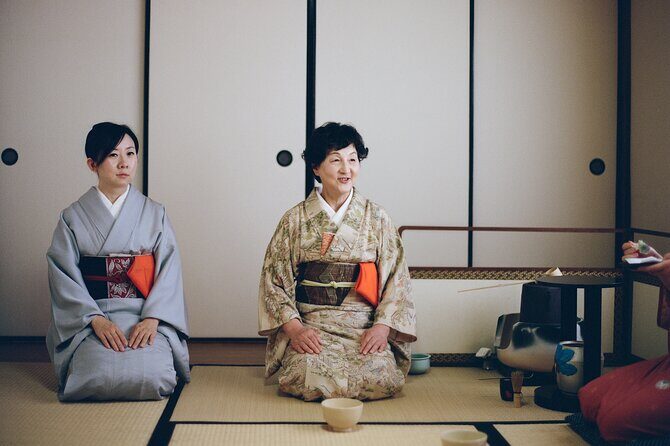
This is a classic Kyoto experience, but with a very practical twist: it teaches you what you’re doing and why you’re doing it. You’re paying for more than matcha and pretty photos. You’re paying for a guided, step-by-step ritual—plus hands-on time—run by a tea master (with a tea name, and full professor qualification).
The ceremony takes place near Daitoku-ji Temple, a Zen monastery area tied closely to Japan’s tea culture. That matters because the atmosphere isn’t an add-on. You’re walking into an environment that fits the mood: quiet, deliberate, and focused on small details rather than big spectacle. Even if you only have an hour, it feels like you learned a real skill.
And because Kinkaku-ji (Golden Pavilion) is just about four bus stops away, you can pair this with other north-Kyoto sights without burning your whole day.
You can also read our reviews of more tours and experiences in Kyoto.


Group Size and the 45-Minute Rhythm (It’s Tighter Than You Think)
The ceremony runs about 45 minutes. That sounds short, but with tea, timing is part of the lesson. The rhythm keeps you from turning it into a performance you just sit through. You’ll watch the process, then practice the key motions yourself.
Group size is the secret sauce here. Maximum is 6 travelers, and it can rise to 8 during peak season. That extra capacity won’t ruin the experience, but it does mean you should arrive ready to focus. With a larger group, you have to listen harder and keep your questions short so the flow stays smooth.
If you want a calmer Kyoto activity (instead of another line-and-photo stop), this group size helps. If you’re the type who likes your schedule packed tightly, note the location is not in central tourist zones.
Meeting Point at 955-1 Idachō: Plan for a Quick Find, Not a Fast One
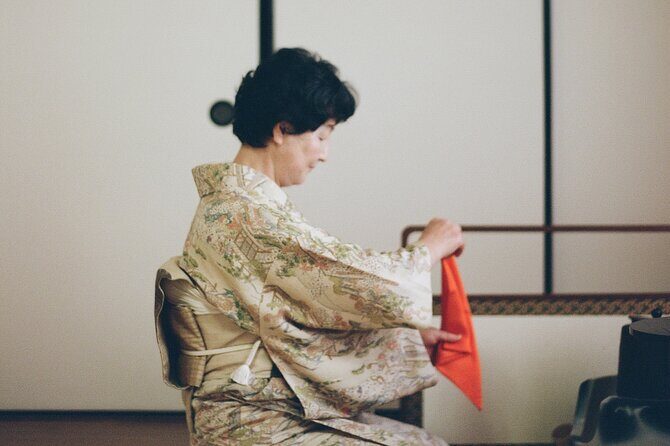
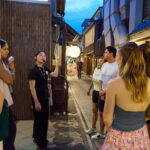
Your start point is 955-1 Idachō, Kamigyo Ward, Kyoto, 602-8302, Japan, and the experience ends back at the same meeting spot.
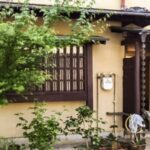
Here’s what that means in plain terms: this is not a place that feels like it’s right off a famous street corner. It’s in the north suburbs in a quieter neighborhood. Use maps, give yourself a little buffer, and don’t treat this like a walk-in.
A common approach that works well in Kyoto’s residential areas is:
- take public transport to get near the neighborhood,
- then use a short taxi from the nearest station if you need it.
That kind of plan keeps your arrival stress low—because once you’re inside, the whole ceremony rewards a calm start.
Entering the Tea Room: Scrolls, Flowers, and the Room as a Teacher
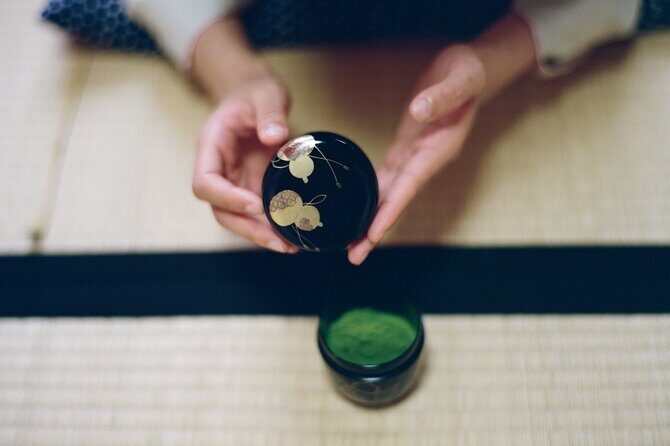
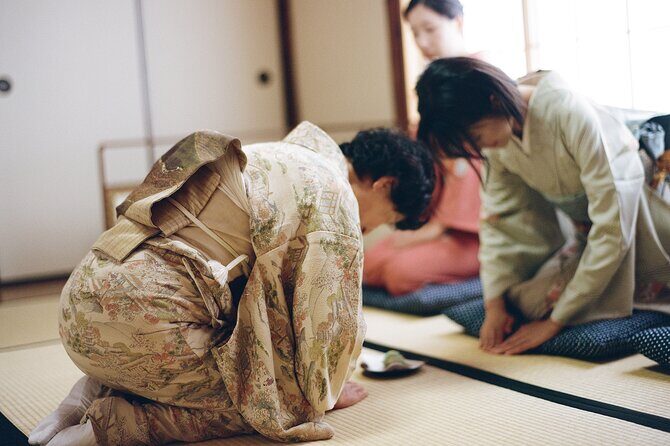
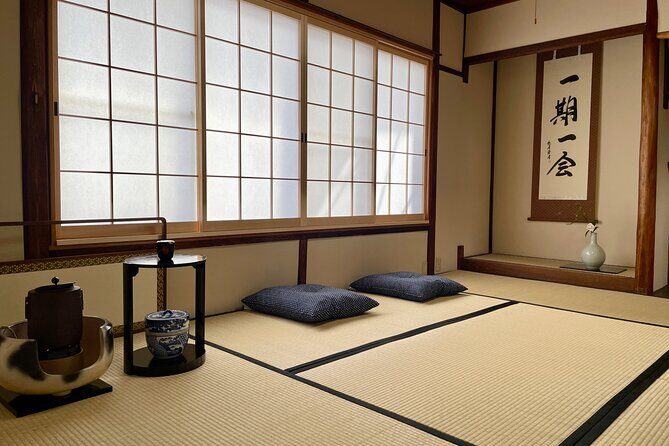
The ceremony begins with a welcome walk into the tea room. Before matcha ever hits the bowl, you’ll get time to admire the hanging scrolls and flower arrangements.
This part is more than decoration. In tea culture, the room is part of the message: it sets the mood for attention, respect, and focus. The host also explains why the room layout matters, not just what the utensils do.
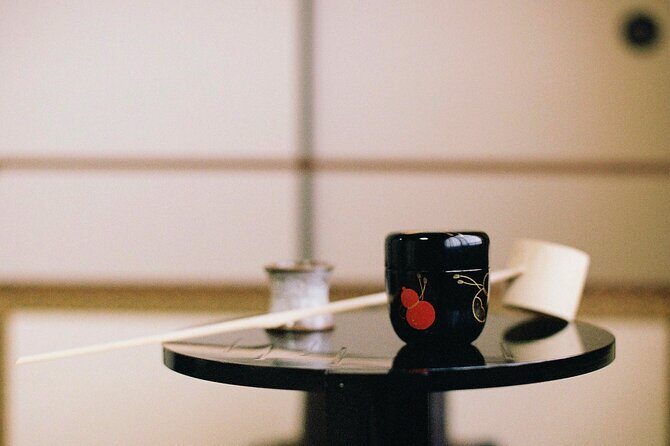
You’ll also get an introduction to the tools you’ll use later—tea container, tea bowl, tea scoops, and the whisk. If you’re a DIY learner, this is where you mentally prepare for the later step: making your own bowl.
One detail I appreciate is that the host sets expectations upfront. You’re not left guessing what happens next, or when you’re supposed to participate. That makes the 45 minutes feel intentional instead of rushed.
The Ceremonial Flow: Sweet, Matcha, and Watching the Correct Movements
After the room introduction, the host goes through the basics of the steps and the utensils. Then the experience shifts into tasting mode.
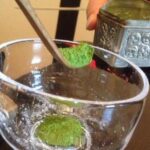
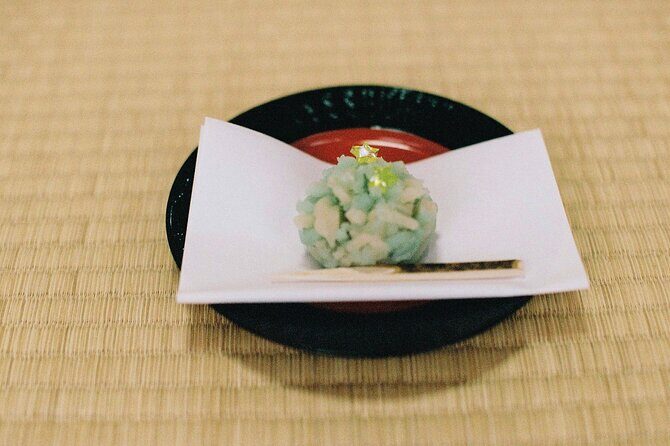
You’ll enjoy a seasonal sweet alongside your matcha, and you’ll watch the tea-serving process. You’ll be served two bowls of matcha across the ceremony, and you’ll also have two kinds of Japanese sweets.
This is where the pairing matters. In matcha culture, sweets aren’t an afterthought; they balance the flavors and help you experience the matcha as something more than just a strong green drink. If you’re used to matcha that tastes like powdery bitterness, this kind of pairing can be a pleasant reset.
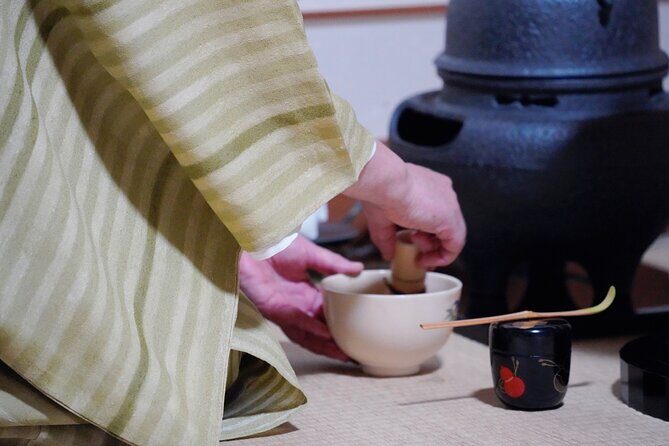
Also, watch how the host moves. The ceremony is built on precise actions: how the bowl is held, how utensils are handled, how the steps keep time with one another. Even if you don’t copy every motion perfectly later, you’ll learn what good practice feels like.



Hands-On Matcha Making: Your Bowl, Your Practice, Your Repeatable Skill
The best part is the ending: you get the chance to make your own bowl of matcha. That’s where this experience becomes useful beyond the moment.
You’ll be guided through the basics and shown how to use the tools properly:
- tea bowl
- tea scoop
- whisk
- tea container
The goal is not to turn you into a tea expert overnight. The goal is to understand the core technique well enough that you can repeat it at home. And because the group is small, instruction can actually land—your host and assistants can correct what you’re doing.
Also, you’ll be given the right context for the movements. Instead of just copying someone’s hands, you’ll learn what the steps are trying to achieve. That’s the difference between doing something once and learning something you can use.
If you care about details, this session rewards you. If you’re just curious, you’ll still get a satisfying takeaway: a bowl you made, matcha you whisked, and an explanation that makes the ritual click.
Utensils, Socks, and the Small Props That Make It Feel Real
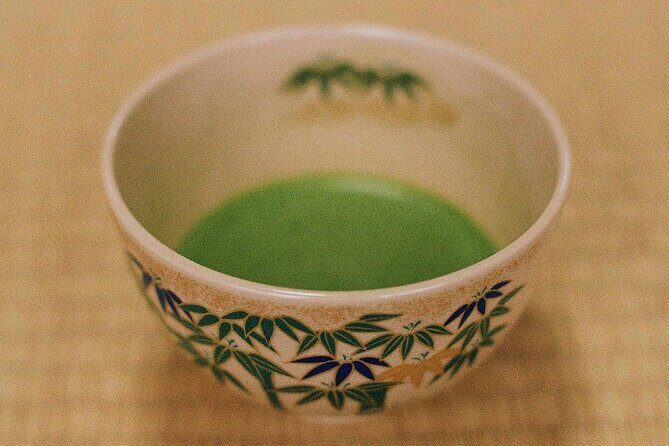
SHIUN AN provides the core items you need, including tea bowls, tea containers, tea scoops, and tea whisks. You also get white socks and a fold fan.
Why those small details matter: socks signal you’re entering a space meant for tatami-style seating. The fold fan isn’t just a souvenir prop—it fits the feel and pacing of the ceremony.
This is also why the experience feels authentic. It’s set up for the ritual, not staged around a generic demo. You use the tools as intended and you’re dressed for the space.
If you’ve never done a tea ceremony before, this kind of preparation makes it easier to relax. You don’t have to wonder what to bring, what footwear to wear, or how to handle the tatami setting.
Price and Value: Is $33.03 Fair for Matcha, Tools, and Teaching?
At $33.03 per person, you’re paying for:
- a tea ceremony run by a tea master
- instruction on the steps and utensil use
- two bowls of matcha
- two kinds of Japanese sweets
- access to hands-on preparation (you make your own bowl)
- provided items like socks and a fan
Compared with tours that only show you the process and move you along, this pricing makes more sense because you’re doing a key part yourself. You’re also getting multiple servings during the ceremony, not just a single tasting.
Is it expensive compared to grocery-store matcha? Sure. But it’s not competing with groceries. It’s competing with other Kyoto cultural experiences that usually require you to pay for a guide and a setting while offering less practical learning.
The fact that group size is capped at 6 (and only grows during peak times) improves value too. With smaller groups, you get more attention during the parts where it counts: the hands-on bowl and the utensil technique.
If you’re trying to choose one authentic, traditional activity in Kyoto that goes beyond the mainstream circuit, this price-to-experience ratio is strong.
Location Strategy: How to Pair It With Kinkaku-ji Without Losing Your Day
Because Kinkaku-ji is four bus stops away, you can plan a clean north-Kyoto half-day.
A practical way to structure your day:
- Start with the tea ceremony first, while you’re fresh and not exhausted from crowds.
- Then head to Kinkaku-ji afterward, using the short bus hop.
The ceremony is calm, and Kinkaku-ji can be busy—so doing tea first helps your energy and your attention. Also, you’ll have an easier time appreciating Kinkaku-ji when you’re not rushing.
Just remember: getting to the SHIUN AN meeting point may take a bit more effort than attractions on the main tourist routes. Give yourself time to arrive early so you can settle in without stress.
Who This Tea Ceremony Fits Best (And Where It Might Not)
This experience fits best if you want:
- a quiet, traditional Kyoto activity
- a small-group setting
- real matcha instruction you can bring home as a skill
- a ceremony tied to Zen culture near Daitoku-ji
It also works well if you’re traveling with someone who enjoys learning craft traditions, not just collecting sights. The mix of explanation, tasting, and your own bowl makes it balanced.
Where you might want to think twice: if you have trouble with stairs or prefer not to sit on the floor for any reason. The experience provides white socks, which strongly suggests tatami-style seating. A few practical considerations can help:
- plan to arrive on time and move carefully,
- mention any limitations or concerns ahead of time.
If food matters to you, you’ll also want to tell the team about any allergies. The experience asks you to let them know about food allergies.
Final Verdict: Should You Book SHIUN AN?
If you’re trying to avoid a mass-tour vibe and you want an experience where matcha is treated as a craft, I’d book this. The small-group size, the tea master-led format, and the chance to make your own bowl are the big wins. At $33.03, you’re getting multiple tastings, the tools, and instruction—so you’re not just paying for a pretty hour.
Two reasons not to book would be: you strongly dislike activities that require floor seating, or you’re the type who hates navigating quiet neighborhoods where you’ll need a bit of map time and possibly a short taxi leg.
If neither applies, SHIUN AN is a smart, genuinely Kyoto choice—especially if you’re pairing it with Kinkaku-ji and want your day to have both calm and iconic sights.
FAQ
How long is the tea ceremony at SHIUN AN?
It lasts about 45 minutes.
What is the group size?
The maximum is 6 travelers per session, and during peak seasons it may increase to a maximum of 8 people.
What’s included in the price?
You get tea bowls and utensils for the ceremony (tea container, tea bowl, tea scoops, and whisk), white socks and a fold fan, matcha tea, and Japanese sweets.
Where do I meet, and do I return there?
The meeting point is 955-1 Idachō, Kamigyo Ward, Kyoto, 602-8302, Japan, and the experience ends back at the meeting point.
Are pickups or drop-offs included?
No, pickups and drop-offs are not included.
Can I cancel for a refund?
Yes. Free cancellation is available up to 24 hours before the experience starts for a full refund.