REVIEW · TOKYO
Tokyo: Learn to play traditonal songs on Tsugaru Shamisen
Book on GetYourGuide →Operated by Shishido Inc. · Bookable on GetYourGuide
One hour, then you can play Tsugaru shamisen. This class near Shinjuku is interesting because you get fast, hands-on instruction in the punchy Tsugaru style, not a slow museum talk. I love that you work directly with master performer Kouzan Oyama, and I love that his own written practice books help you get a playable result before the hour ends.
You’ll likely leave with at least one full song attempt (based on what you choose at the start), plus photos and video with the instructor. The one real drawback: 1 hour is not long enough to master a shamisen the way a lifelong player does, so you should go in expecting progress, not perfection.
In This Review
- Key points to know before you go
- Tsugaru Shamisen in One Hour: what you’re really signing up for
- Meeting Kouzan Oyama and learning the Oyama approach
- Your song choice: request it early, practice it fast
- How Tsugaru sound is made: three strings, striking technique, and timing
- Beyond Tsugaru: hearing other shamisen styles (including Okinawa sanshin)
- Photos, video, and a real performance moment
- Price and value: is $59 a good deal for an intro?
- Practical details that matter in Tokyo
- Who should book this Tsugaru shamisen lesson
- Should you book it? My take
- FAQ
- How long is the Tsugaru shamisen lesson?
- Where in Tokyo does the class take place?
- How much does it cost?
- Can I request a specific song to learn?
- Will the instructor teach in English?
- Is the group private?
- Is the venue wheelchair accessible?
Key points to know before you go
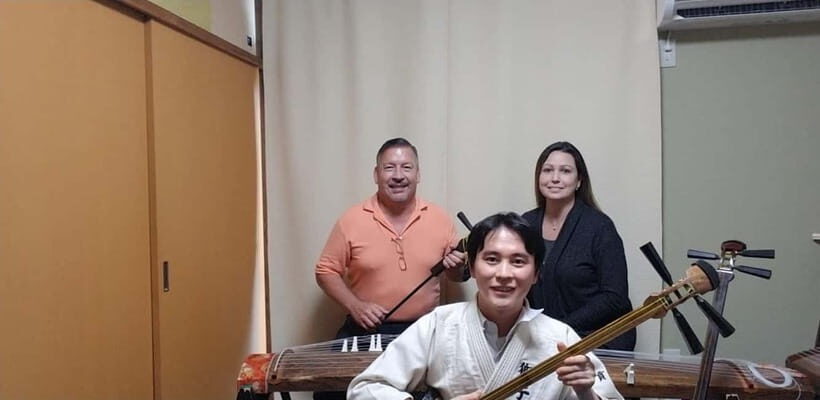
- Kouzan Oyama (Oyama style) teaches you in English and explains what makes Tsugaru technique feel different
- Written practice books are used during the lesson, so you’re not just listening
- You choose your song if you have one in mind, or you’ll learn a traditional Japanese folk song
- You learn “three-string secrets” and what the shamisen is made of, not just finger positions
- You practice Tsugaru sound production with a lively, fast-paced approach
- You take photos and video together with the instructor so you can actually measure your improvement
Tsugaru Shamisen in One Hour: what you’re really signing up for
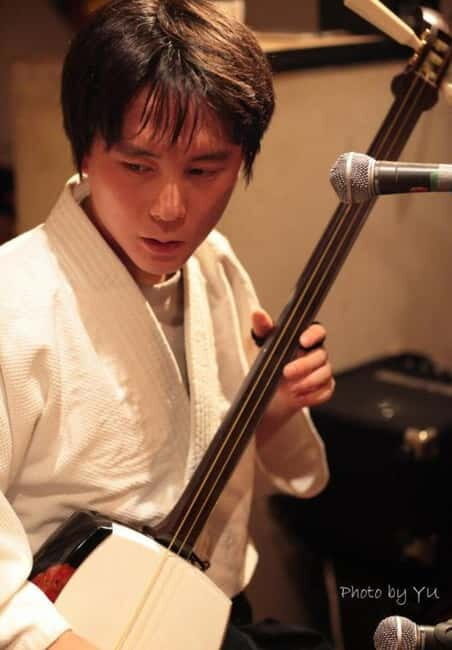
This is a short, focused lesson, and that’s part of the appeal. A shamisen is a traditional Japanese three-string instrument that people often compare to a banjo because it’s played with striking motions. But Tsugaru shamisen, specifically, has its own personality: the sound is sharp and clear, and it feels like it’s driven by energy and rhythm, the way wind and the sea feel when they get moving.
In a single hour near Shinjuku, you’re working toward something concrete: you’re learning how to produce the Tsugaru sound and play a song of your choice (or a traditional tune if you don’t pick one ahead of time). The pacing matters. If your goal is to learn the basics and leave able to play recognizable music, this format fits well.
The private group setup is also meaningful. With a personal instructor, you can ask questions and get corrections quickly, instead of waiting your turn in a bigger class.
You can also read our reviews of more tours and experiences in Tokyo.



Meeting Kouzan Oyama and learning the Oyama approach
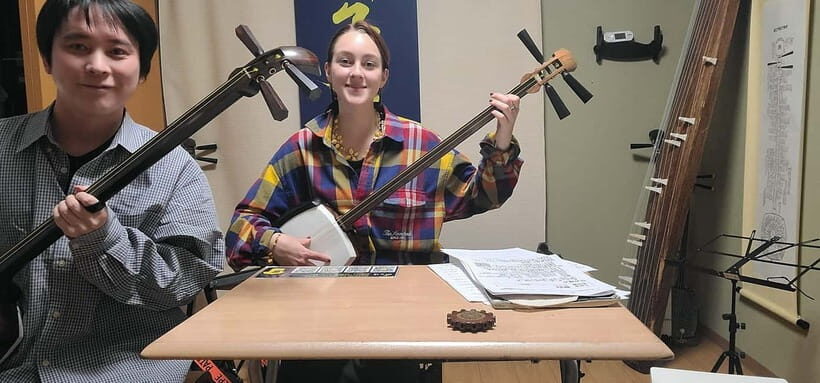
Your teacher is Kouzan Oyama, a master of Oyama style, which is described as one of the prominent schools of Tsugaru shamisen. He’s also a double champion in the Tsugaru Shamisen World Cup (2018 and 2019). That matters because you’re not just getting an enthusiastic beginner introduction. You’re getting coaching from someone who competes at a high level and understands what beginners need to grasp first.
What I like about this kind of instruction is the balance: performance and teaching happen side by side. He doesn’t only explain techniques in words. He performs the music himself as examples, so you can connect what he’s saying to what the sound should feel like.
You’ll also benefit from his preparation. One key detail that stands out is that he uses books he wrote himself during the class. For a first-time learner, that’s huge. Instead of trying to remember everything after the lesson, you get structured practice guidance you can follow while the memory is fresh.
And yes, he explains history and answers questions in English. You’re not stuck with music-only mechanics. You get context, which helps the playing make more sense.
Your song choice: request it early, practice it fast
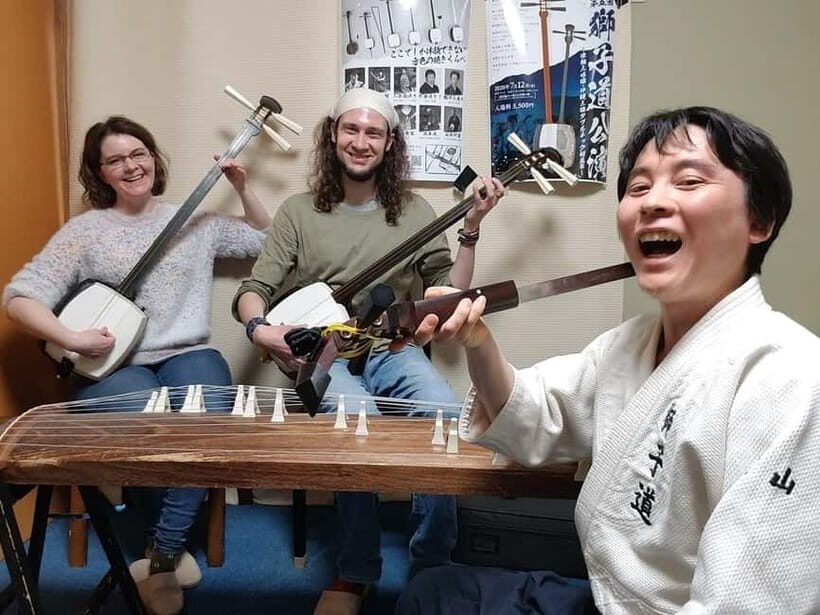
At the start of the lesson, you can request a song you want to challenge yourself with. If you don’t have a preference, you’ll practice a traditional Japanese folk song. Either way, your time is limited, so having a specific song in mind can make the lesson feel more personal.
Here’s the practical angle: picking something you already know (even vaguely) helps your brain “aim” while you practice. You’ll spend less time guessing how the rhythm should land and more time making the shamisen sound match the tune you’re working on.
If you request a song, plan to share it at the beginning, before you’re deep into learning techniques. That’s when you’ll get the best chance to align the teaching to what you want to play.
How Tsugaru sound is made: three strings, striking technique, and timing
The lesson isn’t just about “press here, pluck there.” The focus is on sound production—how the shamisen creates its distinctive voice.
You’ll practice producing that sharp, clear Tsugaru tone using the techniques the instructor teaches, and you’ll learn why Tsugaru feels fast-paced compared with other styles. Tsugaru shamisen is described as having a powerful vibe and energetic performances, which is what you’re trying to recreate in miniature during your lesson.
You’ll also learn about the instrument itself. Part of the experience is discovering the secrets of the three-stringed shamisen and what it’s made of. You won’t need to become a luthier to enjoy the lesson, but understanding what you’re holding makes technique feel less like magic and more like physics and rhythm.
Finally, there’s an extra layer: you’ll learn about differences in sound-producing between Western and Japanese musical instruments. The instructor talks through what’s different in approach, which can help you stop trying to translate everything using Western guitar or banjo instincts.
If you’re new to Japanese instruments, this is a good reality check. You don’t need prior musical knowledge, but you do need a willingness to learn a different method of making sound.
Beyond Tsugaru: hearing other shamisen styles (including Okinawa sanshin)
One of the more satisfying parts of this lesson is that it doesn’t trap you in a single style. You’ll hear examples of various types of shamisen, so you can understand Tsugaru as a specific voice rather than “the only way shamisen sounds.”
Okinawa sanshin is mentioned as one of the styles you’ll be exposed to. Even if you don’t immediately play it, hearing how it differs gives you a better listening framework. It’s the kind of contrast that makes you appreciate why Tsugaru is described as unique—fast pace, energetic performance style, and that lively, driven tone.
This is also where history becomes more than trivia. Tsugaru shamisen originated as music of traveling musicians and commoners from the Tsugaru area in northern Japan. That origin story helps explain the attitude behind the playing. It’s not polite background music. It’s music with motion.






Photos, video, and a real performance moment
This class builds in a performance payoff. You take photos and videos of your performance together with the instructor. I love this part because it turns the lesson into something you can share and revisit.
It also gives you something rare on a first lesson: evidence. When you watch your video later, you can spot exactly what improved during the hour. Was it rhythm? Was it tone? Was it confidence? That’s how you know what to practice if you take another class or try on your own.
And because the instructor performs examples throughout, you get a strong “target” to compare against.
Price and value: is $59 a good deal for an intro?
At $59 per person for a 1-hour lesson, the value comes down to three things: private attention, a highly credentialed teacher, and a structured learning goal.
First, you’re paying for coaching time from Kouzan Oyama, an instructor described as both a top performer and a specialist in Oyama style. That’s not the typical setup for entry-level music experiences.
Second, the lesson uses his own practice books. That reduces guesswork and boosts the chance you’ll leave able to play something coherent within the hour.
Third, you get outcome-based learning. Instead of watching someone demonstrate and hoping you can copy it later, you practice a song—either your chosen piece or a traditional folk tune.
One fair caution: since the fee covers the lesson fee, you’re paying mainly for instruction, not a longer-term course. If your ambition is deep mastery, you’ll want follow-up practice sessions. If your goal is to get started and get results quickly, this price-to-time ratio feels reasonable.
Practical details that matter in Tokyo
This lesson runs for one hour and happens near Shinjuku. The location is a big deal because Shinjuku is easy to reach by train, and it’s simpler to fit a music class into a busy day than it would be in a remote part of Tokyo.
The instruction is in English, which is ideal if you don’t read or speak Japanese fluently. In practice, communication still benefits from a calm approach: if you’re not sure about a technique, ask for repetition. The instructor is set up to explain and demonstrate.
The group type is a private group, which is ideal for first-timers. You’ll get hands-on correction without feeling rushed by other people’s progress.
Wheelchair accessibility is listed, so the experience is designed to be workable for mobility needs.
Who should book this Tsugaru shamisen lesson
This is a great choice if you want:
- a hands-on music experience in Tokyo that doesn’t require any prior skills
- a chance to learn a specific, energetic style like Tsugaru
- a short activity that ends with you playing and recording something
- a teacher who can explain technique and history in English
It may not be the best fit if:
- you’re looking for a long-form conservatory-style course
- you want lots of sightseeing instead of focused practice time
- you expect full mastery in a single session
Should you book it? My take
If you like Tokyo experiences that are practical and close to the craft, book this. The main reason is simple: you don’t just hear about Tsugaru shamisen—you practice it with a top Oyama-style instructor, guided by books you can use to remember what to do next. The built-in photo and video moment turns the hour into an actual milestone.
If you can, go in with a song you’d like to play, even if you’re not sure you’ll nail it. That choice gives the lesson a personal target, and it helps you feel the progress as the session moves fast.
FAQ
How long is the Tsugaru shamisen lesson?
The lesson lasts 1 hour.
Where in Tokyo does the class take place?
It’s offered near Shinjuku in Tokyo.
How much does it cost?
The price is $59 per person.
Can I request a specific song to learn?
Yes. You can request your preferred song at the beginning of the lesson. If you don’t request one, you’ll practice a traditional Japanese folk song.
Will the instructor teach in English?
Yes. The instructor provides English explanations.
Is the group private?
Yes. This experience is a private group.
Is the venue wheelchair accessible?
Yes. The activity is listed as wheelchair accessible.