REVIEW · TOKYO
Tokyo: Wagyu and Sushi Gastronomic Journey
Book on GetYourGuide →Operated by TriX Co. Ltd. · Bookable on GetYourGuide
Wagyu and sushi under Shinjuku neon. This 3-hour Tokyo experience threads together wagyu flavor history, expert-led sushi, and an after-dark walk through neighborhoods where you can still feel Tokyo’s post-war edge. It’s English-led, small-group (up to 10), and built around two distinct food venues.
I love the way the evening teaches you what you’re eating. You get expert guidance to make sushi feel less mysterious and wagyu feel like more than just expensive beef. I also like the pacing: you taste, you learn, then you walk off the meal through Shinjuku’s iconic streets.
One thing to think about: this is a nightlife-heavy route. Expect loud blocks, neon crowds, and plenty of bar energy around Kabukicho and Golden Gai, so it’s not the best fit if you want a quiet cultural stroll all night.
In This Review
- Quick reasons this Shinjuku food night hits
- Shinjuku After Dark: what this 3-hour wagyu and sushi night really feels like
- Meeting near the 3rd Burger: how to start smoothly
- Kabukicho on foot: neon distractions, and why the guide’s timing helps
- Wagyu and sushi tasting: what to watch for at the two food stops
- Golden Gai alleys: tiny bars, big character, and a lesson in Tokyo’s bar culture
- Hanazono Shrine calm, plus Godzilla and Omoide Yokocho comfort-food energy
- Hanazono Shrine: a quieter pause
- Omoide Yokocho: tiny bars and comfort food
- Godzilla Head and the Shinjuku Toho Building
- Price and value: what $154 buys you in Shinjuku (and what it doesn’t)
- Who this tour suits best (and who should adjust expectations)
- Should you book this Tokyo wagyu and sushi gastronomic journey?
- FAQ
- How long is the Wagyu and Sushi gastronomic journey?
- Where do I meet the guide?
- What’s included in the price?
- Is transportation included?
- Is the tour offered in English?
- How many people are in the group?
- Can I cancel, and what about paying later?
Quick reasons this Shinjuku food night hits
- Wagyu explained in plain terms while you’re actually eating it, including regional-style thinking
- Sushi with a guide at your shoulder, so you know what to notice bite by bite
- Kabukicho + Golden Gai in one plan, with alley-walking that’s part of the fun
- Hanazono Shrine break for a calmer reset between food and nightlife
- Omoide Yokocho tiny-bar vibes, including the comfort-food side of Tokyo dining
- A small group (max 10) that keeps the conversation going, not just following a line
Shinjuku After Dark: what this 3-hour wagyu and sushi night really feels like
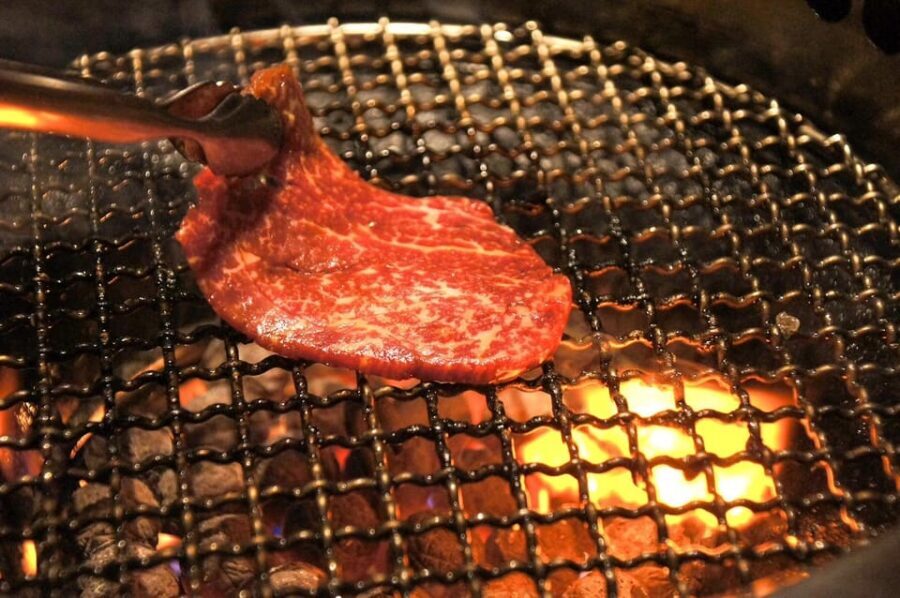
This isn’t a sit-down tasting with a museum voiceover. It’s a food-focused walk where Tokyo’s personality shows up between the plates. You start in Nishishinjuku and spend the evening moving through Kabukicho and Golden Gai, two areas people often describe differently than the rest of the city—because the mood is different.
The payoff is that you don’t just eat. You learn how to eat. A good sushi stop is about tiny details: texture, temperature, balance, and timing. A good wagyu meal is about fat, aroma, and how it changes with cut and preparation. The tour’s structure—two food venues plus guided street time—keeps those ideas connected instead of turning them into random trivia.
Also, the group size matters. With a max of 10 people, you’re less likely to feel like you’re on rails, and more likely to ask the practical stuff: what order to try, what to pay attention to, and how to make sense of the menu without panicking.
You can also read our reviews of more tours and experiences in Tokyo.



Meeting near the 3rd Burger: how to start smoothly
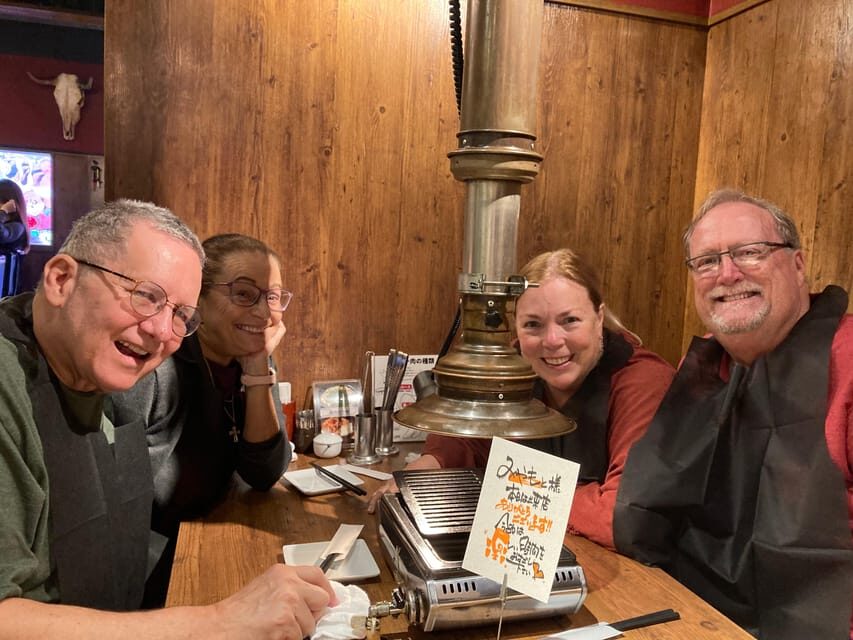
Your meeting point is just in front of the 3rd Burger. That’s wonderfully specific in a city that can be… aggressively confusing at street level.
A couple practical tips that make this smoother:
- Arrive a few minutes early and check you’re at the correct frontage (street signs in Shinjuku can be a maze).
- Wear comfortable shoes. The route includes alley-walking, shrine grounds, and back-to-back food blocks.
- If you plan to use transit, remember transport costs aren’t included (the tour notes a range of 200 to 800 yen). Build that into your evening budget.
The good news: once you’re with the group, the guide handles the flow. You’re not trying to figure out where the next photo-worthy corner is while also trying to order dinner.
Kabukicho on foot: neon distractions, and why the guide’s timing helps
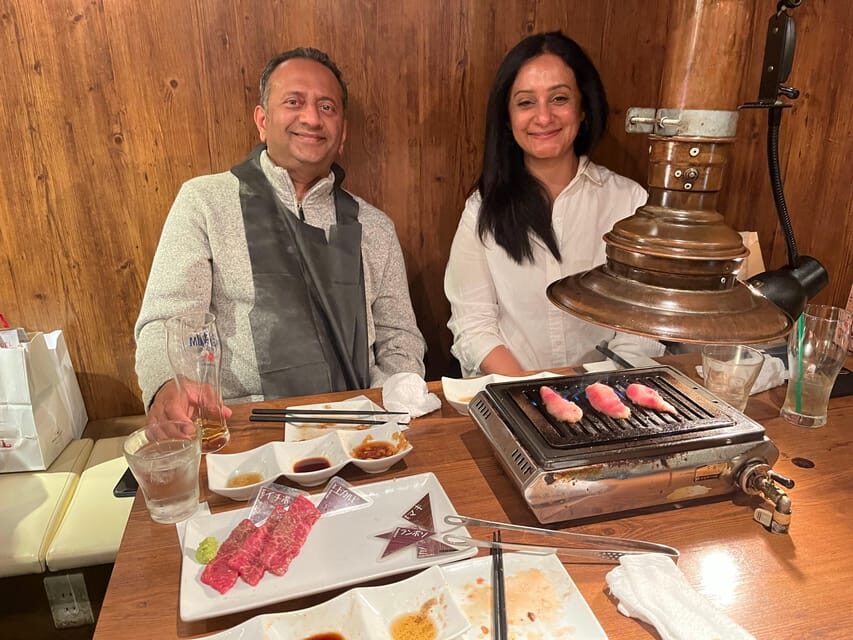
Kabukicho is the kind of Tokyo neighborhood that makes you look up automatically. Neon signs. Neon reflections. A constant hum of people searching for the next bar, meal, or night out.
For you, that matters because it sets the appetite mood. Starting here before the food fully kicks in gives you that street-level Tokyo feeling—without pretending it’s a quiet shrine visit. And when the guide’s pacing is good, you don’t get overwhelmed. Instead, you get just enough context to understand what you’re seeing: entertainment-district life, modern energy, and how this part of Shinjuku functions after dark.
One small caution: Kabukicho is lively. If you’re sensitive to noise or crowds, keep your expectations realistic. You’ll get a fun Tokyo night, not a calm walking tour.
Wagyu and sushi tasting: what to watch for at the two food stops
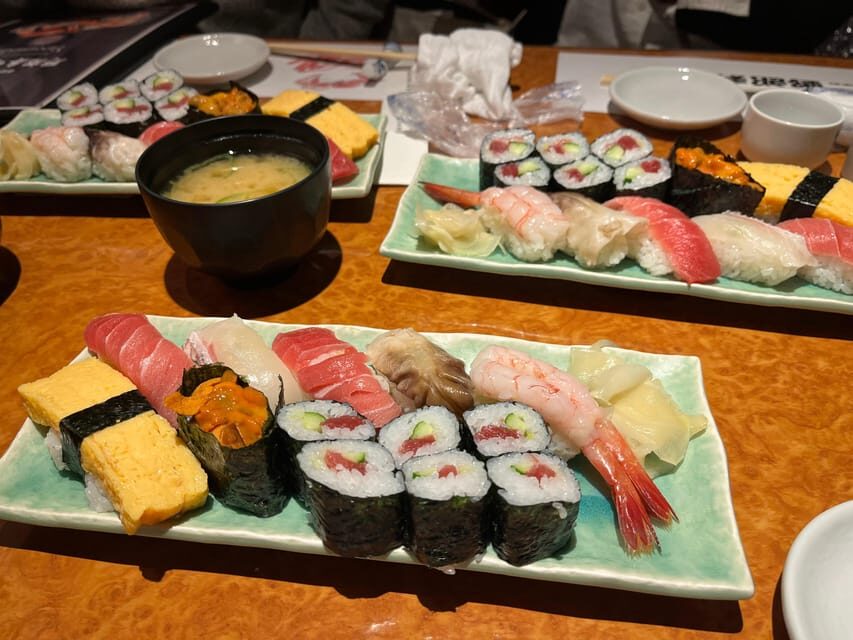
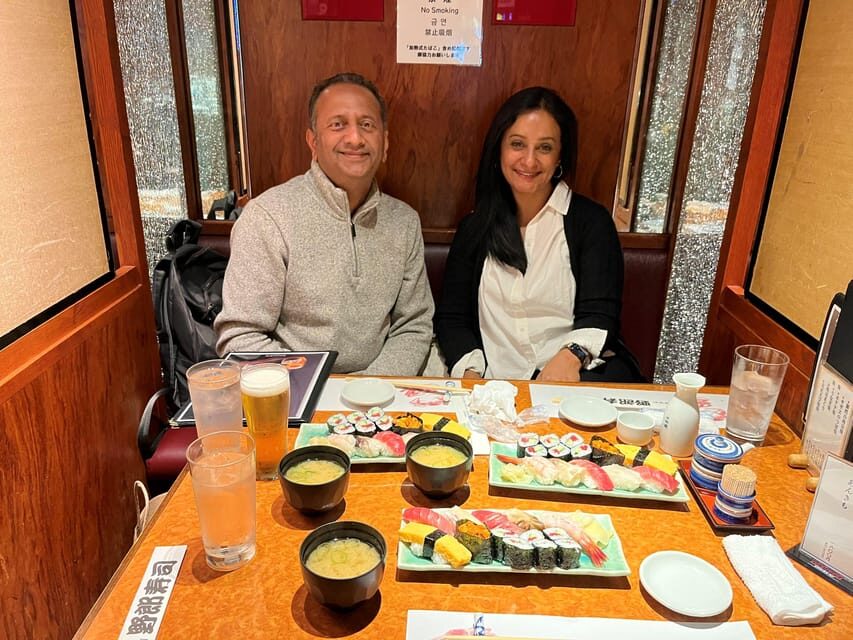
The tour includes dinner and two distinct food venues: one centered on wagyu beef and another focused on sushi, with expert guidance for both.
Here’s what that combo does especially well:
- Wagyu teaches you flavor through texture and fat. If you’re new to Japanese barbecue, you’ll likely get help on how the beef should taste, how it should feel, and what makes a slice different from another.
- Sushi teaches you precision. You’re not just eating raw fish—you’re learning what makes the chef’s choices work together.
And if you’re wondering whether you’ll feel lost at the sushi bar: the tour is designed for exactly that moment. An English-speaking guide can explain what you’re looking at and how to enjoy it without turning your meal into a guessing game.
The wagyu side also benefits from context. The tour includes discussion of wagyu’s history and its regional variations. That matters because it gives you a framework for why something tastes the way it does. You’re more likely to notice aroma changes, differences in richness, and how preparation affects the bite when someone gives you the words for it.
A fun detail from the vibe of the experience: the guide energy tends to be friendly and personal. One recurring theme from the people who do this is that the guide doesn’t act like a textbook—they act like a host. Emma is specifically mentioned by name for making the night feel fun and making first-time Japanese barbecue feel like a treat, not a challenge.
Golden Gai alleys: tiny bars, big character, and a lesson in Tokyo’s bar culture
After Kabukicho, you head into the maze-like lanes of Shinjuku Golden Gai. This area is famous for its over 200 small bars, most tucked into tight alley spaces. The effect is immediate: instead of one big venue, you get dozens of little doors, each with its own personality.
This is where the walking part becomes more than transportation. You’re seeing Tokyo’s post-war bar culture in a concentrated form. It’s not about fancy decor. It’s about intimacy—small spaces where conversation and atmosphere matter more than spectacle.
What I like about this stop is how it gives you a real sense of why Tokyo neighborhoods feel different from each other. Golden Gai isn’t just nightlife. It’s a living map of micro-communities built around drinking culture. With the guide, you can understand what you’re passing by without needing inside knowledge.
One consideration: Golden Gai alley time can be tight and slightly chaotic. You’ll be navigating crowds, narrow pathways, and doorways with lots of activity. Go slow, stay aware, and expect it to feel more like a social district than a sightseeing boulevard.






Hanazono Shrine calm, plus Godzilla and Omoide Yokocho comfort-food energy
Not all Shinjuku nights are wall-to-wall chaos, and this tour uses that contrast wisely.
Hanazono Shrine: a quieter pause
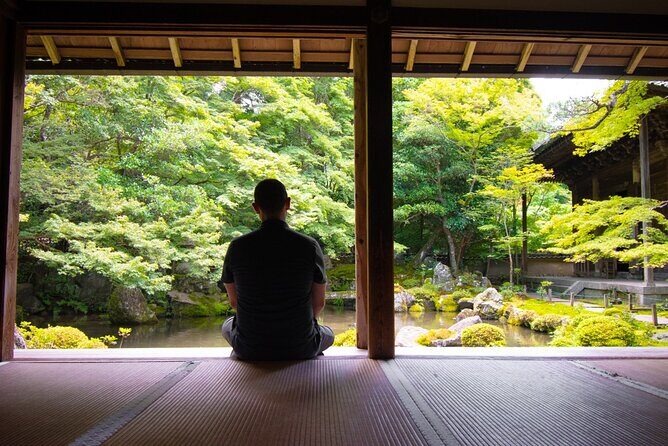
Hanazono Shrine shows up as a peaceful break in the middle of the evening. You’re right in Shinjuku, but you get a moment where the atmosphere changes—calmer, more traditional, and a chance to see the spiritual side of the city without rushing.
That pause is valuable because food and nightlife can blur into one long blur. A shrine stop gives your brain a reset. It also helps you remember that this area of Tokyo isn’t only about entertainment; it’s also about ongoing religious practice and everyday reverence.
Omoide Yokocho: tiny bars and comfort food
Omoide Yokocho is another key contrast. This narrow alley is known for its tiny bars and comfort-food style dining, including yakitori. Think small places, big flavors, and that old-school Tokyo vibe where people go to eat and talk, not to perform.
If you’re the type who likes to experience local life beyond the big landmarks, this is the section that scratches that itch.
Godzilla Head and the Shinjuku Toho Building
You also get a pop-culture moment with the Godzilla Head on top of the Shinjuku Toho Building. This isn’t a deep history lecture; it’s more like a wink from the city. It’s a reminder that Tokyo can be playful even while it’s incredibly serious about food quality and craft.
Price and value: what $154 buys you in Shinjuku (and what it doesn’t)
At $154 per person for a 3-hour experience, you’re paying for more than “dinner and a walk.” You’re paying for:
- A local guide who leads both the food explanations and the street context
- Dinner and access to two food venues
- Alcoholic beverages being available for participants aged 20 and above
- A small-group setting (up to 10 people), which increases the chance the guide can respond to questions
The transport part is on you. The tour notes transportation costs range from 200 to 800 yen and isn’t included. For most people, that’s a manageable add-on, but you shouldn’t plan on skipping it entirely.
So is it value? If you care about learning while you eat—especially if you’re new to wagyu and sushi—yes. The combination of premium food and guided interpretation is hard to replicate on your own in the same time window, particularly in Shinjuku where finding the right spots quickly can be its own workout.
If you’re a very experienced sushi eater and wagyu BBQ pro, you might find the street portion less useful. But even then, the atmosphere and the bar-culture walking stops are part of what makes Shinjuku feel real.
Who this tour suits best (and who should adjust expectations)
This experience fits best if:
- You want a guided Tokyo food night, not a self-guided scramble
- You’re a wagyu or sushi fan, or you’re curious and want the basics explained
- You like nightlife neighborhoods and want your itinerary to include Kabukicho and Golden Gai
- You prefer small-group attention (max 10)
It might be less ideal if:
- You want quiet, museum-style pacing all night
- You’re sensitive to loud crowds and neon energy
- You expect a fully sit-down, slow-food format. This is walking plus tasting, with street time built in.
Should you book this Tokyo wagyu and sushi gastronomic journey?
If your goal is a memorable Shinjuku night that mixes excellent food with meaningful context, I’d book it. The strongest part is the pairing: wagyu flavor education plus sushi precision, both guided, then wrapped in Shinjuku’s street-life contrasts—Kabukicho energy, Golden Gai intimacy, Hanazono Shrine calm, and Omoide Yokocho comfort-food atmosphere.
I’d especially recommend it for first-timers to Japanese BBQ or sushi who don’t want to guess their way through menus. And if you’ve already done Tokyo’s big-ticket sights, this gives you something different: the city’s edible side, told in the places where Tokyo people actually go to eat and drink.
FAQ
How long is the Wagyu and Sushi gastronomic journey?
The tour lasts about 3 to 3.5 hours.
Where do I meet the guide?
The meeting point is just in front of the 3rd Burger.
What’s included in the price?
A local guide, dinner, alcoholic beverages for participants aged 20 and above, and visits to two distinct food venues are included.
Is transportation included?
No. Transportation costs are not included and are listed as ranging from 200 yen to 800 yen.
Is the tour offered in English?
Yes. The tour has an English live guide.
How many people are in the group?
It’s a small group limited to 10 participants.
Can I cancel, and what about paying later?
You can cancel up to 24 hours in advance for a full refund. You can also reserve now and pay later, meaning you can book without paying today.