REVIEW · TOKYO
Tokyo:Calligraphy &Make your original folding fan in Asakusa
Book on GetYourGuide →Operated by Local Earth · Bookable on GetYourGuide
Ink, tea, and a fan you made. In Asakusa, you slow down with Japanese calligraphy taught in English, where the focus is calm practice and good posture more than speed. I especially like that it feels almost meditative while you learn strokes you can actually control.
My second favorite part is the payoff: you create real, personal keepsakes—your calligraphy practice, a postcard you mail to yourself, and an original folding fan to take home. The instructor I kept seeing mentioned in this experience is Mana, and she’s known for being patient and encouraging while you practice until you’re satisfied.
One thing to consider: you’ll be working with ink, so wear clothes that can handle a little mess. They have aprons ready, but you still don’t want your nicest outfit in the rotation, and the session isn’t a good fit for wheelchair users.
In This Review
- Key highlights to know before you go
- Asakusa calligraphy that turns practice into a real keepsake fan
- What you learn: hiragana mindset, Kanji meaning, and the fude method
- The tools and posture part: solid ink sticks, right attitude, and brush control
- Your practice block on thin paper: guide sheets and 8 stroke techniques
- Choosing your design and writing it confidently
- Green tea, a postcard home, and turning art into a memory cue
- Making your original folding fan with your calligraphy
- Price and value: why $16 can feel like a small bargain
- Who this is perfect for (and who should skip it)
- Before you go: what to wear, where to meet, and practical expectations
- Should you book this calligraphy and folding fan workshop?
- FAQ
- How much does the Tokyo calligraphy and folding fan experience cost?
- How long should I plan for the workshop?
- Is the instructor available in English, and do they teach posture?
- What should I wear or bring since there is ink involved?
- Is this experience wheelchair accessible?
- If I choose the Henna Tattoo option, is calligraphy included too?
Key highlights to know before you go
- Asakusa calligraphy with English guidance so you can follow technique without guessing
- Solid ink stick + water setup that shows you how traditional tools behave
- Posture and attitude coaching for brush control (not just copying characters)
- 30 minutes of practice on thin paper using guide paper and structured stroke drills
- Green tea + a postcard to yourself to lock in the memory after you’re home
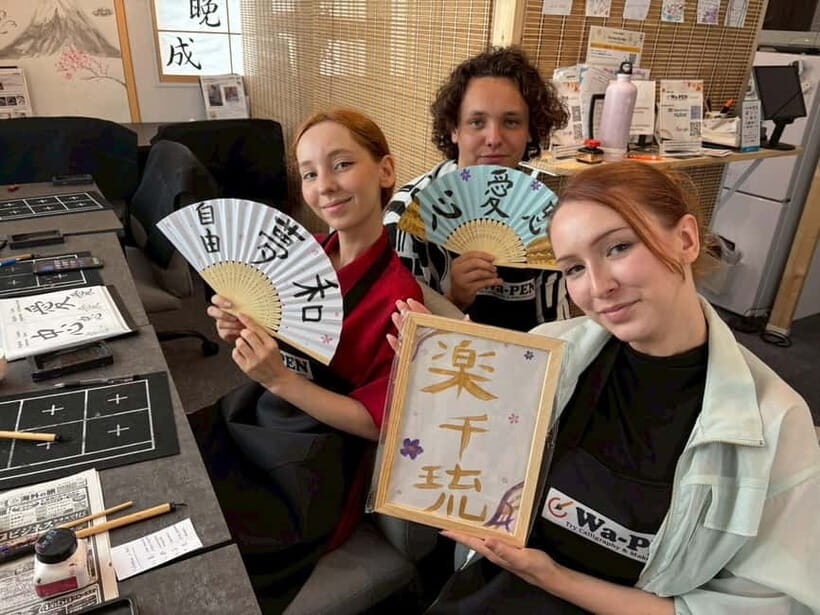
- Finish by making a folding fan with your own chosen calligraphy design
Asakusa calligraphy that turns practice into a real keepsake fan
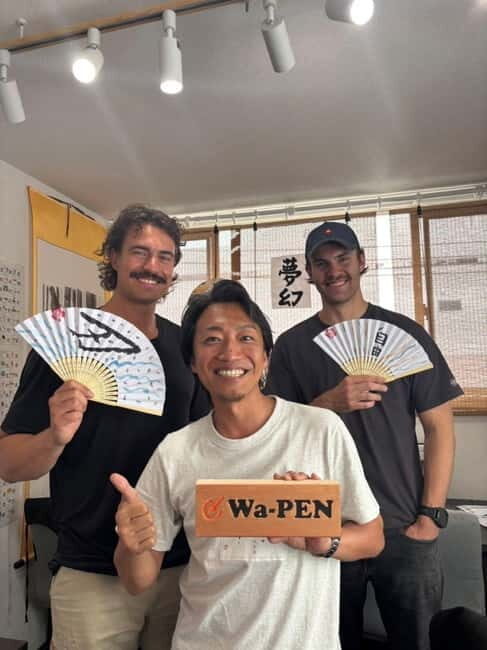
This is the kind of Tokyo activity that stops you from collecting only photos. You’re not just watching brushwork—you’re learning how the strokes feel, how much ink to use, and how to shape characters with intention. The setting in Asakusa gives it an easy, cultural rhythm, but the real magic is that the class keeps pulling you back to the page.
You also walk away with objects that make the learning stick. A folding fan with your calligraphy is useful and display-worthy, and the postcard gives you something to do after the session while it’s still fresh in your mind.
The workshop runs 30 to 90 minutes depending on the option and pace, which matters in Tokyo. If you want a creative break that doesn’t swallow your whole day, this is built for that.
You can also read our reviews of more tours and experiences in Tokyo.



What you learn: hiragana mindset, Kanji meaning, and the fude method
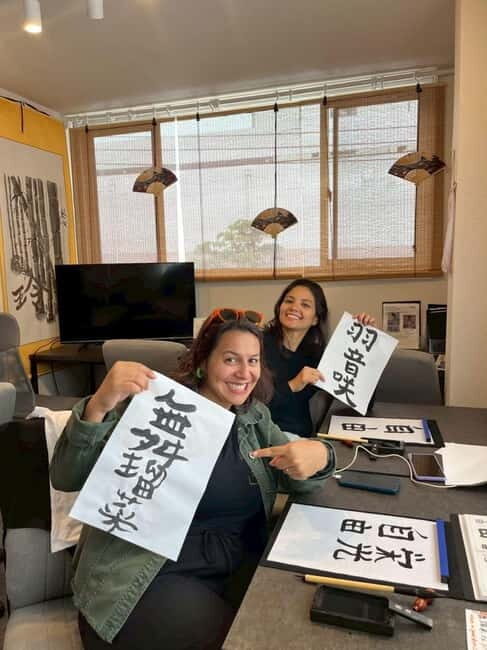
The lesson starts with context, not just technique. You learn the history of Japanese calligraphy, then you shift into the mindset behind hiragana—how it connects to modern life and why the strokes matter beyond aesthetics.
On the technique side, you work directly with a brush called Fude and practice with ink and paper setups that help you get control. You’re taught how to hold the brush, how to time the stroke, and how much ink to pull so your lines look intentional rather than streaky.
A lot of people leave with at least one character that feels personal. Some participants choose designs that include writing names or meaningful characters, and the class framing makes that feel more than decorative.
The tools and posture part: solid ink sticks, right attitude, and brush control
Before you write, you get the physical side of calligraphy. The instructor covers posture and attitude, basically teaching you how to sit and hold yourself so your strokes flow instead of wobbling.
Then comes the ink ritual: you use water to melt traditional solid ink sticks for calligraphy. That step is more than tradition for tradition’s sake. It affects how the ink spreads, how your lines look, and how you learn to react while the ink is workable.
If you’ve ever tried brush calligraphy before and felt like the ink was either too thick or too watery, this part helps you understand why. You’re not just copying shapes—you’re learning how the materials behave.
Your practice block on thin paper: guide sheets and 8 stroke techniques
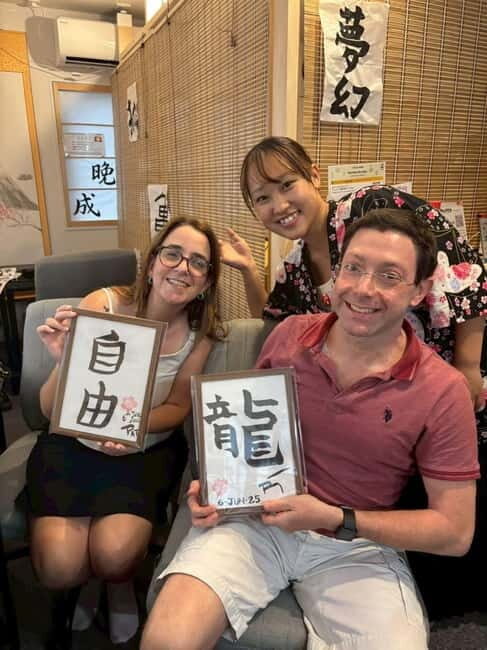
The session is structured, and that’s a big reason it works for first-timers. You practice a set of techniques (the class focuses on basically 8 techniques) using guide paper so you can line up your spacing and direction.
After the guided drills, you get about 30 minutes of practice on thin paper. That time matters because it’s long enough to move from I’m copying to I’m writing on purpose.
A practical detail: the instructor lets you practice until you’re satisfied with what you produce. If you’re the type who needs extra minutes to feel confident, this is one of the few creative classes in Tokyo that doesn’t treat “done” as a hard stop.
Choosing your design and writing it confidently
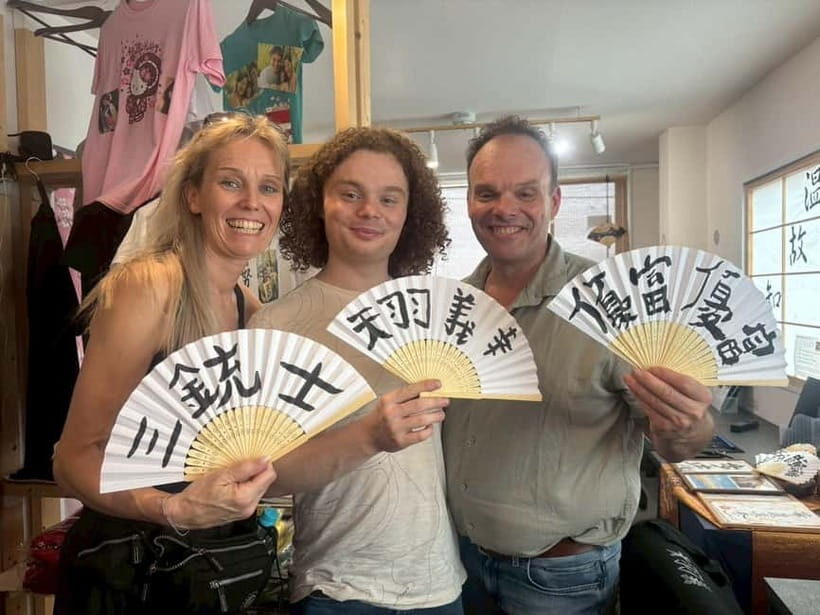
Near the point where you’re ready to make something you’ll keep, you choose your favorite design. The class gives you sample options—either from a sample book or by ordering with the expert staff—then you write using what you practiced.
This design choice is where your calligraphy becomes personal. If you want something simple, you can lean into clean characters. If you want meaning, you can pick symbols that connect to something you care about, like names or language-based notes.
Because the instructor is in English and works step-by-step, you’re not left guessing what the final result should look like. You also get corrections while you’re still in the practice phase, so your final work feels like progress, not luck.






Green tea, a postcard home, and turning art into a memory cue
Most Tokyo activities end when the session ends. This one nudges you to continue the experience after you stand up from the table.
You enjoy a cup of green tea, then you write a postcard for yourself to take home. The postcard prompt is personal: you write about your emotions after calligraphy and what the memory means when you’re back home.
I like this touch because it prevents the workshop from turning into a fast souvenir grab. You’ll still have the texture of the strokes in your mind when you mail or revisit the message later, which makes the souvenir feel less like paper and ink on a shelf.
Making your original folding fan with your calligraphy
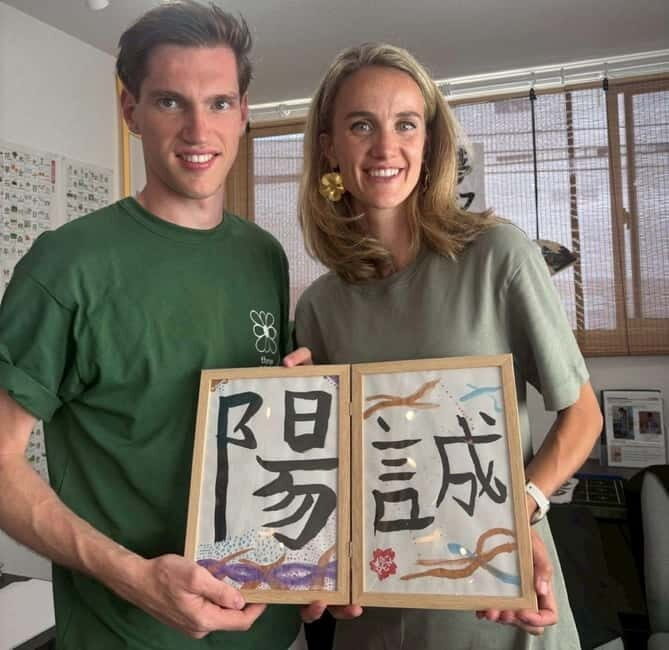
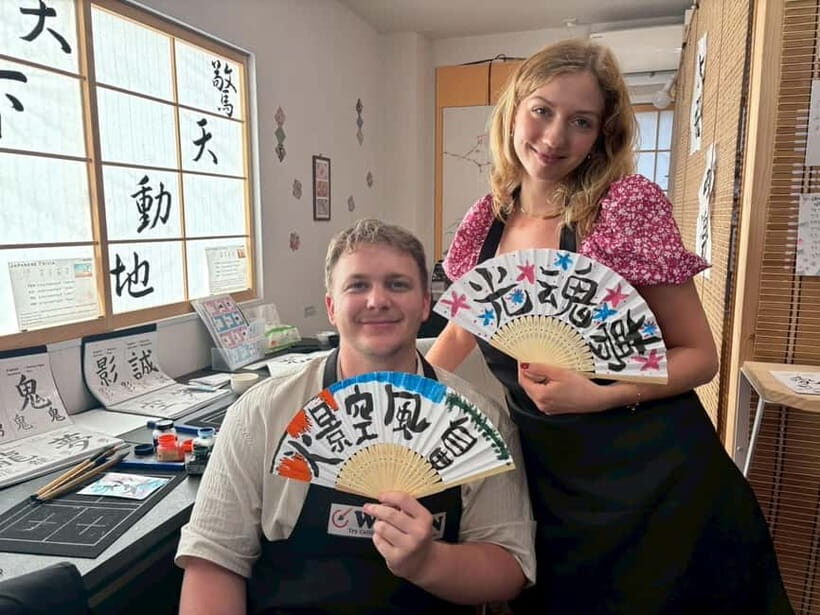
After practice and selection, you finally make your folding fan using your calligraphy. This is the moment where all the technique pays off, because you’re no longer writing on test paper—you’re committing your strokes to a finished object.
The fan is a great Tokyo keepsake because it’s both decorative and practical. It also scales well as a gift. Even if your calligraphy isn’t perfect in the perfection-obsessed sense, it will feel unmistakably yours.
One practical note: the session duration can vary, so plan some buffer if you’re trying to catch another activity right after. The class runs smoothly, but if your schedule is tight, leaving time helps you enjoy the final craft part without stress.
Price and value: why $16 can feel like a small bargain
At $16 per person for 30 to 90 minutes, this is strong value for what you’re getting. You’re paying for instruction (including posture coaching), tools (ink and brush workflow), practice structure, and end products you keep.
The value isn’t just the fan. You also get the green tea, the postcard activity, and the chance to keep practicing until you feel happy with the result. For people who want a real cultural skill instead of a quick craft, that’s where the cost starts to make sense.
Do note what isn’t included: printing your calligraphy design to a T-shirt isn’t part of the package. If you want that, you can buy a T-shirt in the shop, and you should budget extra for that add-on.
Also watch for option choices. If you pick the Henna Tattoo option, the calligraphy experience isn’t included, so double-check what your selected option actually covers.
Who this is perfect for (and who should skip it)
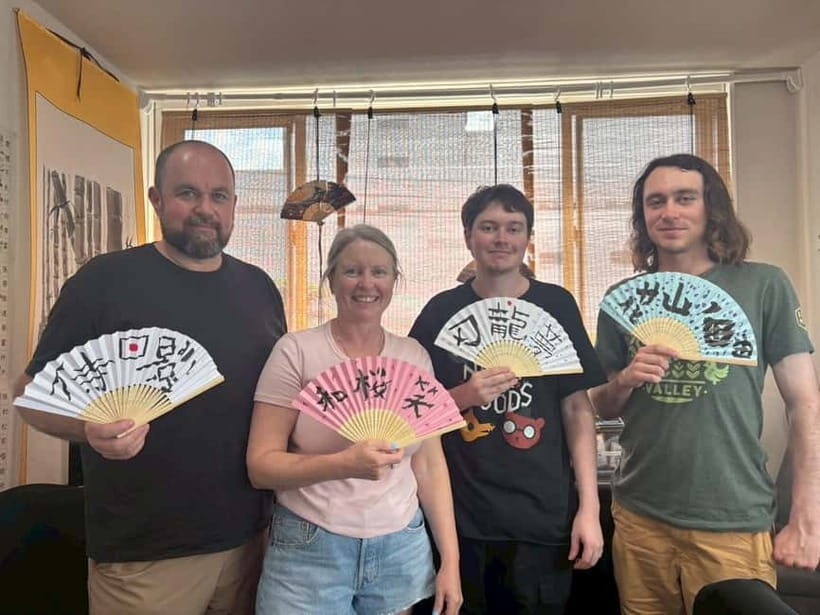
This workshop is ideal if you want a calm Tokyo activity with real skill-building. It’s especially good for first-timers because the class uses guide paper, structured technique practice, and English instruction.
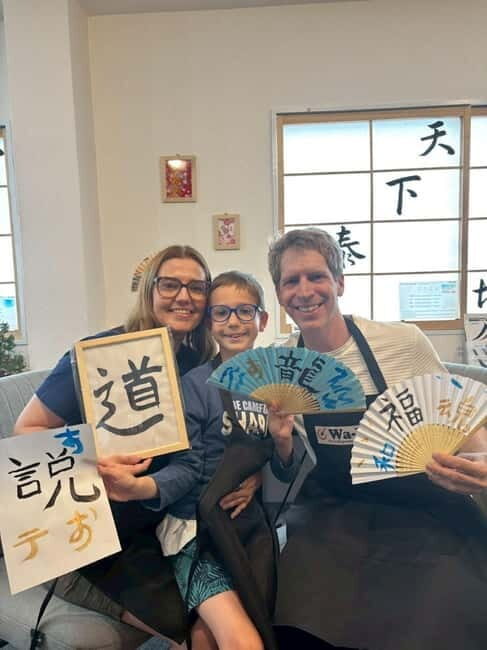
It also works well for people traveling in different age groups. One family experience you can model your decision on: a participant did the class with a 6-year-old, and the instructor’s patience was part of what made it work. If you’re bringing grandparents or someone who wants something gentler than a walking-heavy day, this fits the mood.
Skip it if you need wheelchair access. The workshop is not suitable for wheelchair users. Also consider skipping if you’re strict about mess—ink can stain, and while aprons are provided, you should still wear forgiving clothes.
Finally, keep expectations realistic about food. No food and drinks are allowed during the session, so plan a snack or meal before or after.
Before you go: what to wear, where to meet, and practical expectations
Dress for ink. Wear comfortable clothes that can get a bit dirty, and trust the aprons provided. If you get nervous about stains, wear sleeves and fabrics you don’t mind replacing.
The meeting point can vary depending on your booked option, but it’s in the Asakusa area. The coordinates listed for the experience are 35.7162239, 139.7922354, so it’s worth plugging that into your map app in advance and confirming the exact stop when you book.
You won’t need special gear. The main thing you bring is patience for learning a physical skill. Brush calligraphy rewards steady effort, not rushed effort.
Also note the pet policy: pets aren’t allowed (assistance dogs are allowed). And since this is a seated craft, you’ll want to be comfortable holding your posture for at least the main practice segment.
Should you book this calligraphy and folding fan workshop?
Book it if you want a Tokyo souvenir with meaning and a short skills session you can actually feel good about. The combination of posture coaching, hands-on ink workflow, practice time on thin paper, and a final folding fan makes it more than a casual craft.
It’s also a smart pick if you want a calmer moment away from Tokyo’s constant movement. The workshop format tends to slow your breathing and focus your hands, and you get tangible results to take home.
Skip it if you’re only chasing the trendiest photo. This one is about technique and attention, and it works best when you’re ready to participate.
If you have flexibility, you can often reserve with pay later and cancel up to 24 hours in advance for a full refund, which helps if you’re juggling a packed Tokyo itinerary.
FAQ
How much does the Tokyo calligraphy and folding fan experience cost?
It costs $16 per person.
How long should I plan for the workshop?
Plan for 30 to 90 minutes, depending on the starting time and option you book.
Is the instructor available in English, and do they teach posture?
Yes. The instructor teaches in English and includes study of posture and attitude for calligraphy.
What should I wear or bring since there is ink involved?
Wear comfortable clothes that can get a bit dirty from ink. The session provides aprons, but ink can still be messy enough that you should avoid delicate outfits.
Is this experience wheelchair accessible?
No. This workshop is not suitable for wheelchair users.
If I choose the Henna Tattoo option, is calligraphy included too?
No. If you select the Henna Tattoo options, the calligraphy experience is not included.