REVIEW · TOKYO
:Tokyo,Shibuya /Meiji Shrine tour in KIMONO/English-friendly
Book on GetYourGuide →Operated by SHIBUI · Bookable on GetYourGuide
A kimono makes Meiji Shrine feel like another world. This is a 3-hour, English-friendly small-group walk that pairs Shinto practice with photo stops in a super practical location near Harajuku. I especially like the free choice of kimono from their collection, and the way the guide helps you hit the best spots for pictures. One thing to consider: you’ll be moving outdoors for the shrine portion, and the museum/inner garden are optional but not included.
You start in Harajuku, not out in the middle of nowhere, and that matters because Tokyo sightseeing is easier when logistics are simple. The tour is limited to 10 participants, so you’re not stuck in a slow-moving crowd.
If you want a hands-on cultural experience with plenty of time to look around on your own, this works well. If you’re expecting a private, fully customized itinerary, the group format may feel a bit structured.
In This Review
- Key Highlights You’ll Actually Use
- Why This Meiji Shrine Kimono Tour Works So Well Near Shibuya
- Getting Oriented: Shibui in Harajuku to Meiji Jingu
- Choosing Your Kimono at Shibui (And Picking the Right Extras)
- The 3-Hour Flow: Guided Shrine Walk, Then Time to Explore
- Inside Meiji Shrine: Six Stops and What They Mean for Your Photos
- 1. Torii Gates
- 2. Sake Barrels
- 3. Wine Barrels
- 4. Meiji Shrine Forest
- 5. Main Shrine
- 6. Shinto Prayer Hall
- Museum and Inner Garden: Optional Extras Without Pressure
- Photo Help That Makes Your Group Shots Actually Work
- Price and Value: What $137 Gets You in Tokyo
- Who This Tour Suits (And Who Might Prefer Something Else)
- Should You Book This Meiji Shrine Kimono Tour?
- FAQ
- How long is the Meiji Shrine tour with kimono?
- Is the tour in English?
- Does the price include kimono rental?
- How many people are in the group?
- What’s included at Meiji Shrine?
- Are the Meiji Jingu Museum and Inner Garden included?
- Is hairset included?
Key Highlights You’ll Actually Use
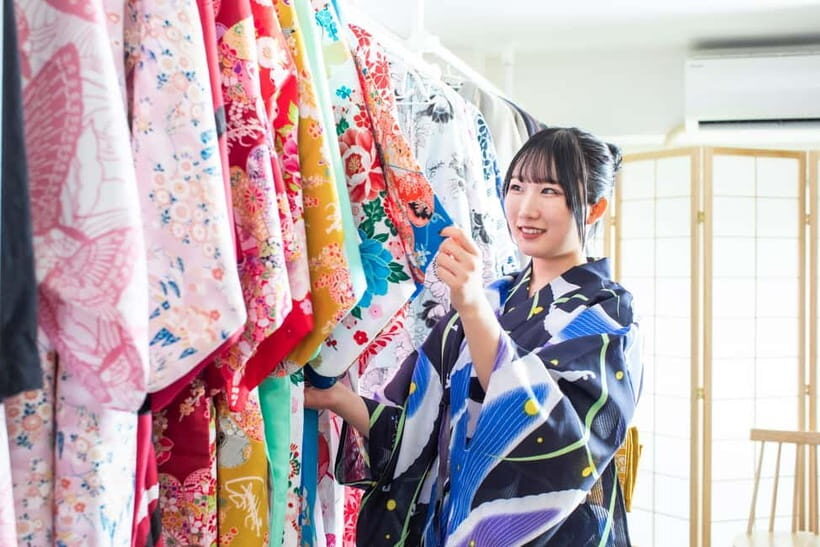
- Kimono rental included: You freely choose from formal kimono and casual yukata styles, plus extras like slippers/bags/accessories.
- Short walk to major sights: Harajuku access makes it easy to combine with Shibuya and Takeshita Street.
- English live guidance: You get a clear, guided explanation of what you’re seeing and how Shinto rituals work.
- Six guided Meiji Shrine photo spots: You’ll be guided to the Torii gates, sake barrels, wine barrels, forest areas, main shrine, and prayer hall.
- Guide-led photos plus free exploring: You get help photographing friends/family, then time to wander at your own pace.
- Optional museum and inner garden: You decide later during free time, and admission fees are extra.
Why This Meiji Shrine Kimono Tour Works So Well Near Shibuya
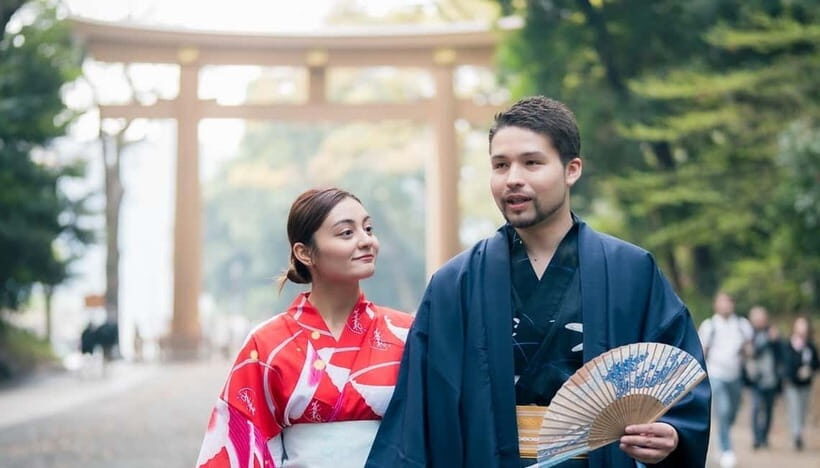
Meiji Shrine is one of those Tokyo places that feels calm even though you’re surrounded by one of the world’s busiest cities. Wearing a kimono (or yukata) shifts the whole experience. You’re not just sightseeing; you’re stepping into a traditional look that matches the shrine setting and makes your photos feel intentional, not random.
The biggest win is how the tour combines culture + practical timing. You get about an hour with an English guide explaining what you’re looking at, then you get time to explore on your own. That rhythm prevents the usual problem with “photo tours,” where you spend the whole time rushing between stops with no breathing room.
Two things I’d call out as especially good value:
- The kimono choice is genuinely flexible. You’re not stuck with one style. You can pick from diverse collections, at all ages, in colors and options you like.
- You’re not alone with the shrine details. The guide points out key places inside Meiji Shrine and highlights photo spots, which helps you feel confident when you’re there.
Possible downside, just being honest: you will spend time outdoors. In colder or rainy weather, you’ll want to bring a layer and rain plan, because most of the magic is outside among the shrine gates and paths.
You can also read our reviews of more tours and experiences in Tokyo.



Getting Oriented: Shibui in Harajuku to Meiji Jingu
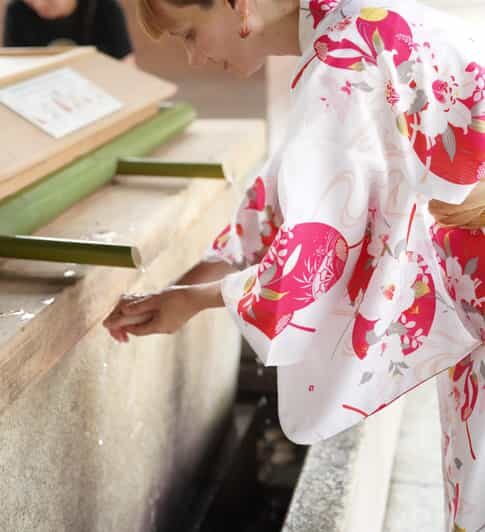
The tour starts at Jingumae Room 413, Harajuku Cope Anex, which is close to where you’ll likely already be spending time. This is the type of location advantage that matters more than people think. Tokyo is big. A tour that keeps you near Harajuku makes it easier to add Shibuya later, or even just return to your hotel area without burning your whole day.
Their shop is described as about a 5-minute walk from Meiji Shrine, so you’re not traveling across the city right before you start. That reduces the “dead time” that can happen with other experiences.
Also, the tour highlights that you’re close to Takeshita Street in Shibuya. Even if you don’t plan to explore immediately, knowing you’re near that energy gives you an easy option after the tour ends.
In short: you’re not only visiting a shrine, you’re also doing it from a base that keeps your Tokyo day efficient.
Choosing Your Kimono at Shibui (And Picking the Right Extras)
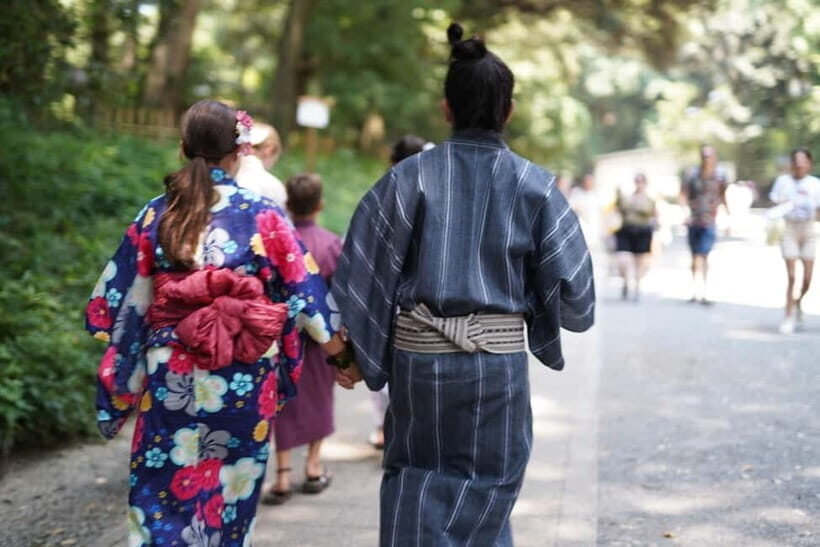
The kimono portion isn’t just a quick rental handoff. You’re given time to choose from their collection, with styles including formal kimono and casual yukata. That’s important because kimono choice can change the whole feel of your photos and comfort level.
What you can choose freely includes:
- A wide selection of kimono/yukata in different colors and options
- Suitable slippers, bags, and accessories at no additional charge
That no-extra-charge detail is one of those quiet “you’ll be glad later” benefits. It means you can match what you’re wearing to how you want to look in pictures without playing an add-on guessing game.
Hairset is optional, but it’s not included. If you want it, it’s an additional 2,000 JPY, paid at the shop. If you’re bringing your own hair tools, you might not need it. If you want a more traditional finish for photos, it can be worth considering.
Small-group format helps here too. With fewer people, you’re more likely to get real assistance while you pick your outfit.
The 3-Hour Flow: Guided Shrine Walk, Then Time to Explore
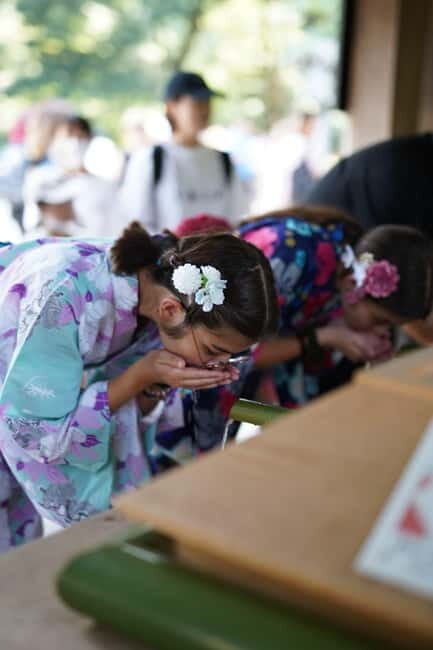
This is a 3-hour experience with a small group of up to 10 participants. The structure is simple, which is good when you’re new to this kind of tour.
Here’s the rhythm you can expect:
- You start at Shibui for kimono rental and outfit setup.
- At Meiji Shrine, you’ll do a guided exploration of six recommended spots.
- The guide presentation is described as 50 or 60 minutes, after which you’ll have free time.
- The group reconvenes about 1.5 hours later to return to the shop and change back out of your kimono.
A key practical note: the Meiji Jingu Museum and Inner Garden are optional. Admission fees for those are not included, so if you want them, you’ll need to pay separately during your free time.
This setup is genuinely traveler-friendly. You’re not locked into a museum ticket or forced to rush through everything. You can decide what you care about most after you’ve heard the guided explanation.
Inside Meiji Shrine: Six Stops and What They Mean for Your Photos
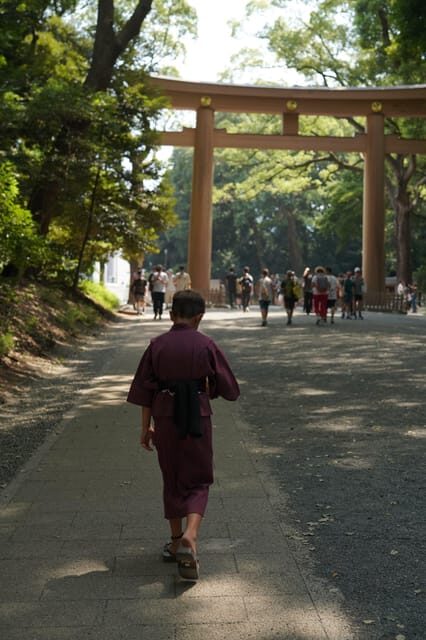
Meiji Shrine is arranged in a way that makes the experience feel like a path with changing atmospheres. The tour leans into that by guiding you through six specific spots and pointing out photo opportunities.





1. Torii Gates
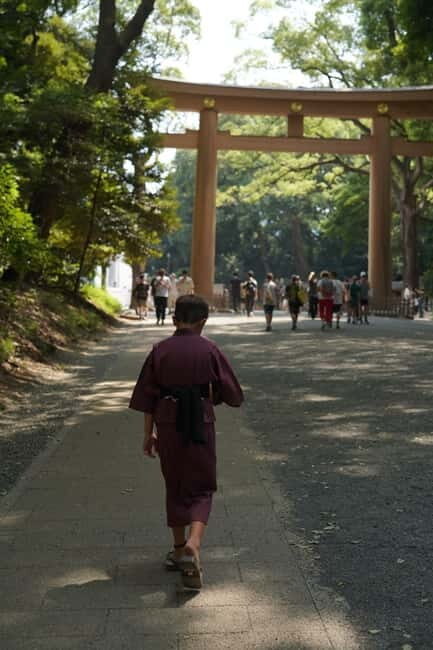
The Torii gates are your big first signal that you’ve arrived in the shrine space. Even if you’ve seen torii gates in other places, the Meiji Shrine approach gives you a strong sense of transition—city life drops away as you move inward.
For photos, this is usually where you want to set your “kimono look.” The guide’s pointing out what to shoot helps you avoid ending up with only side angles or crowded backgrounds.
2. Sake Barrels
Inside the shrine area, you’ll see sake barrels, which link the shrine tradition to offerings. The guide’s role here is useful: it’s not just a photo stop; it’s part of how you understand what you’re looking at.
If you’re new to Shinto, these details help you connect objects to practice. If you already know some basics, it still gives you a structured way to notice things you might otherwise skip.
3. Wine Barrels
You’ll also encounter wine barrels. It’s a surprising contrast, and that contrast is exactly what makes it memorable. It shows that modern offerings can coexist with older shrine customs.
Photo-wise, these stops can create variety in your album because they’re visually different from the more greenery-and-gate-heavy parts.
4. Meiji Shrine Forest
Meiji Shrine’s forest areas are where the experience starts to feel slower. The path through greenery changes the sound and the light, and it helps your photos move beyond just gates and signs.
In a kimono, you tend to get more dramatic contrasts here—fabric against foliage—so this is where you can often get your most atmospheric shots.
5. Main Shrine
The main shrine is the centerpiece. This is where you need to slow down mentally. The guided explanation helps you understand that you’re not just walking to a landmark; you’re visiting a place people treat with respect.
If you’re someone who likes cultural context, this is a moment where you’ll likely feel more grounded after listening rather than just snapping photos.
6. Shinto Prayer Hall
The Shinto prayer hall area is where you get a more practical sense of ritual space. The guide highlights how you should think about what you’re seeing and where to position yourself for photos.
For etiquette-minded visitors, having a guide present reduces uncertainty. You’ll know what you’re supposed to do with your attention and photos.
Museum and Inner Garden: Optional Extras Without Pressure
If you want to go beyond the main shrine areas, you can add the Meiji Jingu Museum and Inner Garden during free time. The tour clearly notes:
- they are optional
- admission fees are not included
That matters because it gives you control. You’re not paying for something you might not enjoy, and you can decide based on time and your energy level after the guided portion.
If you love museum-style explanations and want deeper context, this is the easy add-on. If you’d rather keep your time outdoors and focus on photos, you can skip it and still have a full experience.
Photo Help That Makes Your Group Shots Actually Work
This tour doesn’t treat photos as a side quest. The format includes:
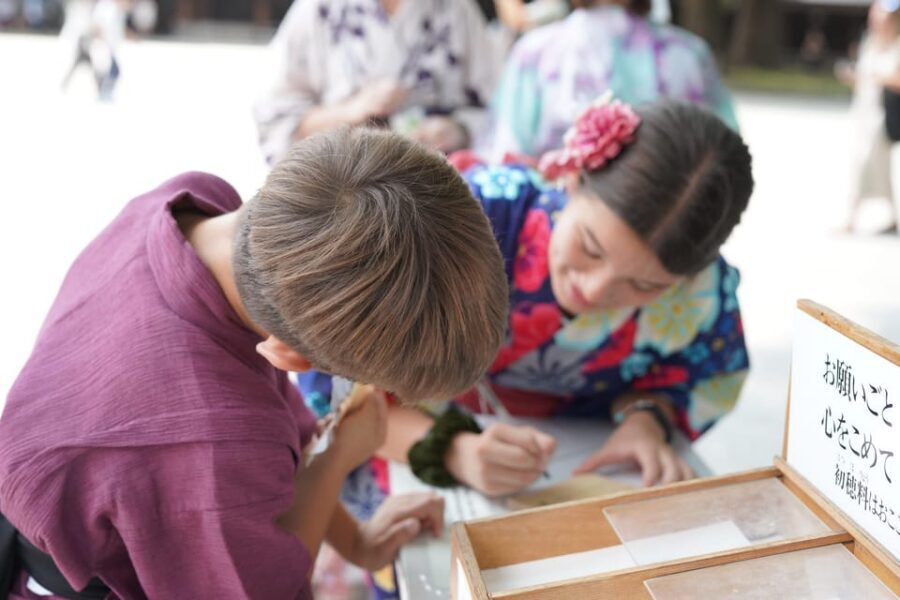
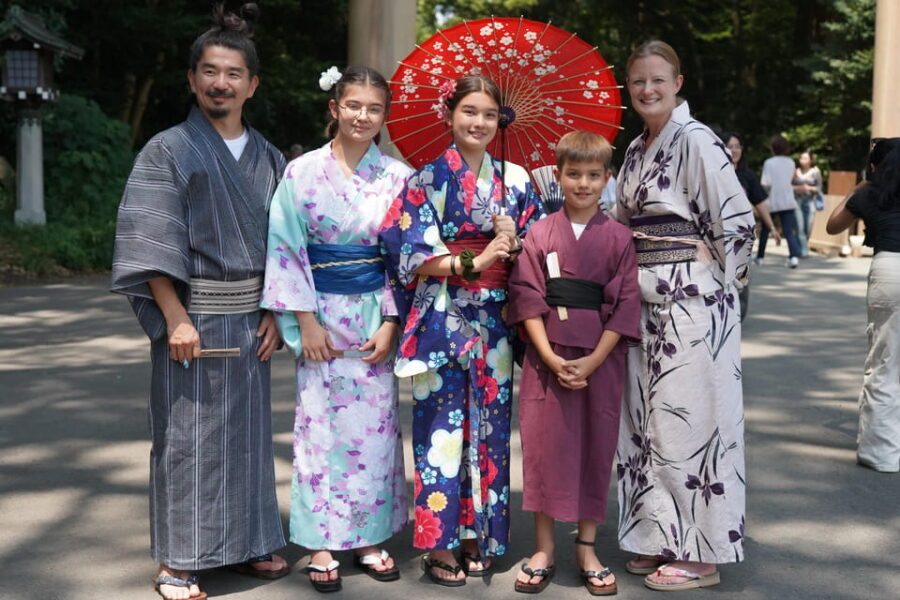
- personal photo sessions with the guide
- help taking photos for groups, friends, or family
- guidance to “best photo spots” within the shrine
They also mention that capturing sightseeing moments on video is possible, so if you like short clips or travel reels, you’re not limited to stills.
One detail from feedback I think you’ll appreciate: the shop location is in an apartment-style building (on the 4th floor). That means it’s worth arriving with enough time to find it calmly before you start changing. If you’re flustered, you’ll feel it during setup. Slow down and give yourself a buffer.
Price and Value: What $137 Gets You in Tokyo
The listed price is $137 per group up to 1 (with up to 10 participants in a group). The pricing structure can be confusing at first glance, but here’s what helps you judge value:
You’re paying for a packaged experience that includes:
- kimono rental service included in the tour package
- an English live guide
- guided time inside Meiji Shrine with photo-spot guidance
- personal photo sessions with the guide
- assistance with pairing your outfit with slippers/bag/accessories (no charge)
What’s not included:
- Meiji Jingu Museum and Inner Garden admission fees (optional)
- food and drink
- any optional paid add-ons like hairset
So the real question is whether kimono rental plus an English guide is worth it for you. If you want the outfit anyway and you value having someone point out what matters inside the shrine, then yes. This is one of those “you’re paying to save time and uncertainty” deals. Tokyo is full of things you can do alone, but doing this with guidance tends to make it smoother and more meaningful.
Also, the small group size helps keep the experience from feeling rushed. That’s part of the value you can feel even if you can’t measure it.
Who This Tour Suits (And Who Might Prefer Something Else)
I’d point this toward you if:
- you want a Shinto-focused visit with context, not just sightseeing
- you want a kimono experience without having to plan rentals, timing, and where to go inside the shrine
- you’re traveling with someone and want photos that don’t end up awkward or half-cut
- you prefer an English guide and clear structure
You might want a different style of activity if:
- you’re only interested in a quick shrine look and don’t care about guided interpretation
- you dislike outdoors time, because the shrine portion includes walking and open-air spaces
- you’re hoping everything is included at a fixed cost, because optional museum/inner garden admission and food/drink are not part of the package
Should You Book This Meiji Shrine Kimono Tour?
If you want a Tokyo cultural experience that feels guided, photogenic, and logistically easy from the Harajuku/Shibuya side, I think this is a strong pick. The combo of kimono rental, English guidance, and structured stops inside Meiji Shrine is what turns it from costume tourism into something more respectful and memorable.
Book it if your goal is:
- wear kimono in a meaningful setting
- learn what you’re seeing at the shrine
- come away with photos that look like you planned them
Skip or rethink if you’re trying to keep the day ultra-light and you don’t care about outfit selection or shrine explanations. That’s when you might feel the package format is more structured than you need.
FAQ
How long is the Meiji Shrine tour with kimono?
The tour lasts about 3 hours.
Is the tour in English?
Yes, the live tour guide language is English.
Does the price include kimono rental?
Yes, the kimono rental service is included in the tour package.
How many people are in the group?
The group is limited to 10 participants.
What’s included at Meiji Shrine?
You’ll be guided through six recommended spots: Torii gates, sake barrels, wine barrels, Meiji Shrine forest, the main shrine, and the Shinto prayer hall. After that, there is free time to explore.
Are the Meiji Jingu Museum and Inner Garden included?
They are optional, and admission fees are not included in the tour package.
Is hairset included?
Hairset is optional and costs an additional 2,000 JPY, paid at the shop.