REVIEW · TOKYO
Watch the Young Geisha do their makeup and Get Ready!
Book on Viator →Operated by Sayuki · Bookable on Viator
This kind of access is rare in Tokyo. You’ll watch a young geisha get ready in a traditional kimono room—makeup first, then the outfit—plus you get the story behind oshiroi and how the role of geisha has changed. It’s the sort of experience you can’t really DIY on a quick stroll.
What I like most is the intimate setup. The group is capped at eight, so you’re not just herded past a spectacle. I also like that your visit has a clear purpose: it supports training for young geisha in their crucial first year and helps revive the Fukagawa geisha district.
One thing to consider: you’re paying a premium for a short, scheduled experience. Also, since confirmations can sometimes be less specific than you’d hope, make sure you have the exact start time before you go—this is not a plan that’s easy to shrug off last-minute.
In This Review
- Key highlights worth planning for
- What happens during the makeup and outfit session
- Oshiroi white makeup: what you’re really looking at
- Kimono fineries and banquet-ready dressing
- Why your ticket supports the Fukagawa revival (and training)
- Price and what you actually get for about $213
- Group size, duration, and what that means for your expectations
- Timing, meeting point in Tomioka, and avoiding time mix-ups
- Who this young geisha get-ready experience is best for
- Should you book this young geisha get-ready experience?
- FAQ
- FAQ
- How long is the young geisha makeup and get-ready experience?
- What is the group size limit?
- What is the price per person?
- What is included in the experience?
- Is private transportation included?
- Where does the experience start?
- What are the opening hours?
- Will I receive confirmation and a ticket?
- Is it refundable or changeable if my plans shift?
- Is this experience suitable for most travelers?
Key highlights worth planning for
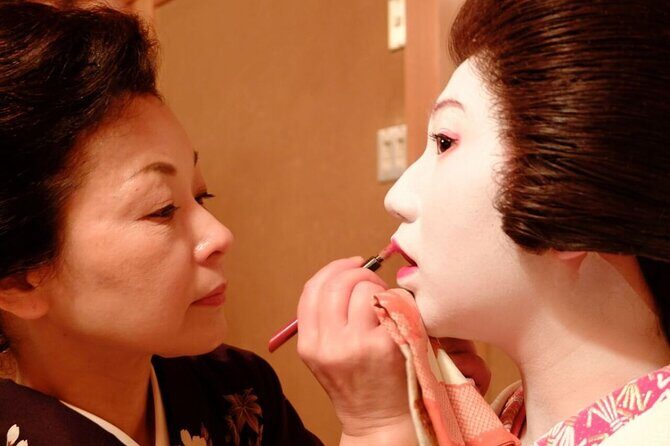
- Small-group access (max 8) for a more personal look at the preparation process
- Full makeup included, so you’re focused on the real craft rather than logistics
- Oshiroi explanation: traditional white makeup and how it’s evolved
- Kimono dressing for work, readying the look for banquets
- Charity-linked purpose supporting young geisha training and Fukagawa revival
- Sayuki as the provider, with a mobile ticket for entry
What happens during the makeup and outfit session
This is a one-hour, hands-on viewing-style experience. The core idea is simple: you get to watch a young geisha as she applies her makeup and then gets dressed in all her finery for work at banquets.
You start in a traditional Japanese kimono room, where the atmosphere matters. It’s meant to feel like you’re in the space where this is normally done—quiet, orderly, and focused—rather than like a performance staged for tourists. The experience includes full makeup, which tells you where the emphasis is: the preparation, not just the final reveal.
The flow typically goes like this. First, you watch the makeup application. Then you’ll learn about the meaning and method of the white base—oshiroi—and how it has adapted as geisha roles have evolved over time. After that, attention shifts to clothing and presentation: the young geisha chooses and wears her outfit so she’s ready for the type of banquets she supports.
You should go in expecting observation more than conversation. This isn’t described as a hands-on class where you do your own makeup. It’s built around watching and learning what you’re seeing.
You can also read our reviews of more tours and experiences in Tokyo.



Oshiroi white makeup: what you’re really looking at
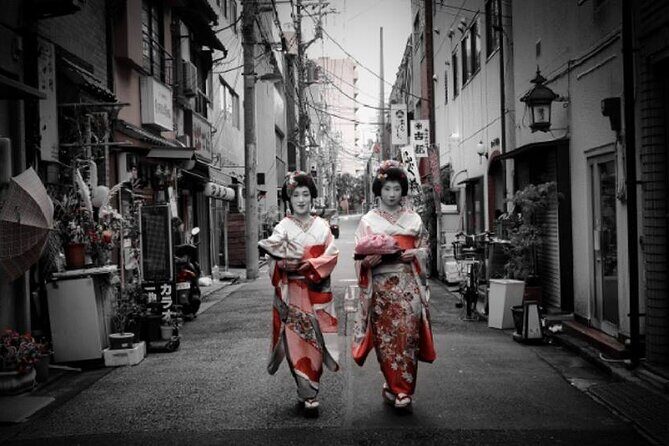
Oshiroi is the centerpiece of geisha appearance in popular imagination—and this experience treats it like more than a costume detail. You’ll hear about the traditional application of oshiroi (the white makeup) and how it has evolved as the geisha role has evolved.
That context is valuable because it keeps you from treating the look as purely decorative. White base makeup in this tradition isn’t just about looking pale; it’s about character, presentation, and visual discipline. When you learn that it has changed alongside the role itself, the whole look starts to make sense as something shaped by time, not just tradition frozen in place.
In practical terms, when you’re watching the makeup application, pay attention to how carefully the process is handled. White makeup stands out instantly, so small changes in placement or finish become obvious. You’re not just watching for the result—you’re getting a front-row view of the method.
Kimono fineries and banquet-ready dressing
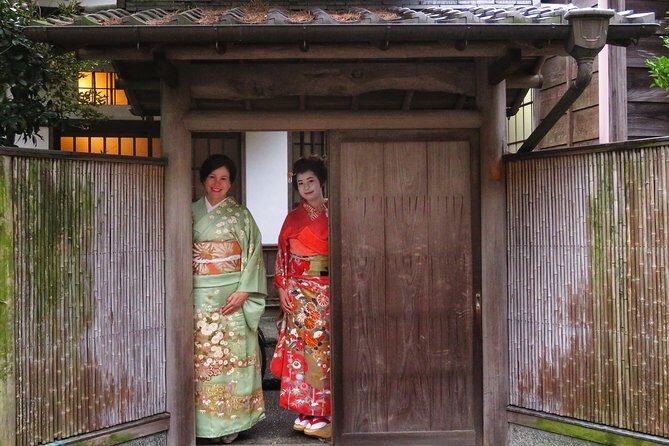
After the makeup work, the focus moves to clothing. You’ll watch the young geisha choose her outfit and get dressed in the traditional kimono look associated with work banquets.
This matters because the kimono isn’t an afterthought. In traditional Japanese dressing, the outfit is part of the overall presentation—how it sits, how it moves, how the full look reads at a distance. Since the experience is timed around her readiness for banquets, the clothing step feels tied to real purpose rather than “tourist photo time.”
One tip for your visit: don’t rush the clothing segment. The final look often changes how everything else is perceived. White makeup plus kimono styling creates a different kind of visual effect than either element alone, and that’s the whole point of the order of operations.
Why your ticket supports the Fukagawa revival (and training)
This experience is tied to charity work. Your visit helps support young geisha during training, with extra focus on the first year after they start. That first year is highlighted as crucial, which tells you your money isn’t just funding an event—it’s supporting a stretch where costs and learning demands can be heavy.
It also supports the revival of the Fukagawa geisha district. That’s important context because it shifts the experience from a single moment you watch to something with a longer-term target. The Fukagawa connection is part of what makes the experience feel more grounded than a generic “watch someone get ready” tourism stop.
If you care about value, this is where the value argument starts. You’re paying to access a normally private moment, yes. But you’re also paying to help keep the training pipeline and cultural district alive. Even if you’re not deeply into geisha culture, that “where the money goes” angle is a real differentiator.
Price and what you actually get for about $213
The price is $213.48 per person. For many Tokyo experiences, that’s not a bargain. So let’s be honest about the math.
You’re buying:
- A guided, scheduled visit to a traditional kimono room
- Full makeup included (meaning the makeup process is the point)
- Small-group access (max 8)
- Learning about oshiroi and how it’s evolved
- A charity-linked purpose supporting training and Fukagawa revival
And you’re not buying:
- Private transportation (not included)
- A long, day-long cultural workshop (it’s about one hour)
So is it worth it? If you want a short, focused window into geisha preparation with a small group, and you like the idea of your money supporting training, then the price is more defensible. If you’re looking for a flexible cultural experience where you can wander, ask lots of questions, or stretch the time, this likely won’t feel like enough.
Think of it as a concentrated cultural access pass. In Tokyo, concentrated access usually costs.






Group size, duration, and what that means for your expectations
The duration is about one hour. The group size is limited to a maximum of eight travelers. That combo—short plus small—is usually a good sign for quality.
In this case, it likely means:
- You won’t be fighting for visibility
- The room setting can stay calm rather than chaotic
- You can actually pay attention to details during makeup application and clothing
Also, the experience says most travelers can participate. That’s helpful, but it doesn’t tell you anything about language level, physical requirements, or sensory intensity. If you’re sensitive to tight rooms or sudden schedule changes, treat the one-hour nature seriously and plan to arrive early.
Timing, meeting point in Tomioka, and avoiding time mix-ups
The meeting point is at 1-chōme-26-7 Tomioka, Koto City, Tokyo 135-0047. It’s listed as near public transportation, and the activity ends back at the meeting point.
Opening hours are 10:00 AM to 9:00 PM, with the experience running across the 2021–2026 date range listed. In other words, you’re choosing a time slot within that broad window.
Here’s the practical caution: one experience detail that can trip people up is the specificity of the start time. You may see confirmations that look like a long range rather than a precise appointment moment. Before you leave your hotel, double-check the exact start time on your confirmation so you don’t show up at the wrong hour and have to scramble.
Also, since private transportation isn’t included, build your travel plan around your ability to arrive smoothly via public transit. Tokyo transit is excellent, but you still don’t want to bet on a last-minute sprint.
Who this young geisha get-ready experience is best for
This tour fits best if you:
- Want a rare Tokyo geisha experience that’s not about chasing famous sites
- Like cultural explanations tied to visible craft (oshiroi makeup, dressing)
- Prefer small groups over crowds
- Care about supporting training and the Fukagawa revival
It might feel less ideal if you:
- Want a hands-on workshop where you do your own makeup or dress yourself
- Need lots of free time for wandering
- Get stressed by schedules where the difference between 10:00 and 11:00 matters
If you’re a photo person, remember: the point here is observation and respect. You’ll enjoy it more if you keep your focus on what’s happening in the room instead of turning it into a photo sprint.
Should you book this young geisha get-ready experience?
I’d book it if you want an authentic, small-group look at oshiroi makeup and kimono dressing and you like the idea of your ticket supporting young geisha training and the Fukagawa revival. The one-hour format is short, but it’s also clear: you’re there for the craft and the meaning behind it.
I’d pause before booking if you’re uneasy about schedule precision or you know you’re likely to need flexibility. Since the experience is non-refundable and can’t be changed, treat it as a fixed appointment. If you do go, confirm the exact start time, plan to arrive early, and go in ready to watch carefully rather than expect a long chat session.
FAQ
FAQ
How long is the young geisha makeup and get-ready experience?
It lasts about 1 hour.
What is the group size limit?
The experience has a maximum of 8 travelers.
What is the price per person?
The price is $213.48 per person.
What is included in the experience?
Full makeup is included.
Is private transportation included?
No, private transportation is not included.
Where does the experience start?
The meeting point is 1-chōme-26-7 Tomioka, Koto City, Tokyo 135-0047, Japan.
What are the opening hours?
It runs daily from 10:00 AM to 9:00 PM.
Will I receive confirmation and a ticket?
Confirmation is received at the time of booking, and the tour includes a mobile ticket.
Is it refundable or changeable if my plans shift?
No. The experience is non-refundable and cannot be changed for any reason.
Is this experience suitable for most travelers?
Yes, it states that most travelers can participate.