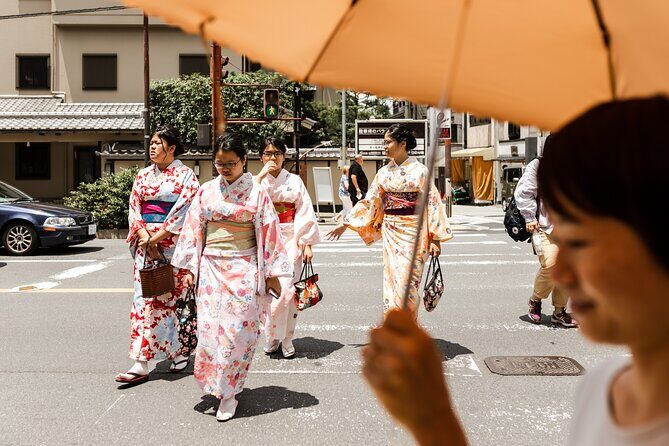
Kimono on a Tokyo side street feels unreal. Makigawa Kimono Rental puts you right in the Asakusa rhythm with a fast fit, lots of style choices, and photo-ready extras near Senso-ji. I like that you get genuine variety here, from classic patterns to trendy lace looks, and you can finish the look with basic Japanese hairstyling plus optional upgrades.
Second, you’ll love how the whole experience is built for motion. After you’re dressed and accessorized, you’re set up to walk around in the area right away—old-street vibes, cameras in hand, and staff guiding you through the details so your outfit feels secure and comfortable.
One thing to keep in mind: this is weather-dependent. If it’s canceled due to poor weather, you’ll need to switch dates or get a refund, so plan with some flexibility.
In This Review
- Key Points to Know Before You Go
- Why Makigawa Kimono Rental Works So Well in Asakusa
- Picking Your Kimono: Classic, Trendy, and Family-Friendly
- If you want a traditional look
- If you want the “modern traditional” look
- If you’re traveling with kids
- The Dressing Process: Quick, Adjusted, and Built for Comfort
- What you should do mentally before you start
- Hair, Makeup, and the “Finish the Look” Moment
- Walking Time: From Senso-ji Area to the Photo Stops
- Photo tips that save frustration
- Where the Value Comes From (Not Just the Price Tag)
- Practical Logistics That Make the Day Easier
- Location and meeting point
- Luggage storage and return
- Language support
- Group size
- What Might Not Be Your Perfect Fit
- Who This Is Best For
- Should You Book Asakusa Kimono Rental Makigawa?
- FAQ
- Where do I meet for Asakusa Kimono Rental Makigawa?
- How long is the kimono rental experience?
- What’s included in the price?
- What language support is available?
- Can I choose my kimono style and accessories?
- Is there an option to upgrade hairstyling or photos?
- Is this suitable for families and children?
- What if the weather is bad?
Key Points to Know Before You Go
- 1-minute walk from Asakusa Station and a short trip to Senso-ji, so you lose less time getting there
- Lots of kimono options: traditional kimono, furisode, lace kimono, hakama, plus kids’ Shichi-Go-San styles
- Professional dressing + Obi adjustment designed to get you comfortable fast
- Hair and accessories included, with upgrades like cherry blossom-themed pieces if you want the extra polish
- Props are free for photos, plus there’s a pro photography upgrade if you want it
- Max 20 people keeps it from feeling chaotic
Why Makigawa Kimono Rental Works So Well in Asakusa
Asakusa is one of those places where dressing the part changes everything. A kimono turns ordinary walking into something theatrical—in a good way. And Makigawa is set up for that exact moment: you rent near the start of the Asakusa sights, get dressed quickly, and then you’re free to explore.
The biggest strength is practical styling. You’re not just handed a garment and told good luck. A professional dresser helps you put on your kimono, adjust the Obi belt for a comfortable fit, and get the look camera-ready without turning your afternoon into a full production.
There’s also a modern angle that matters for today’s travelers. You can choose both classic designs and Instagram-friendly lace kimono options. That’s a nice mix if you want something traditional but still want the outfit to feel current on photos—especially if you’re sharing to platforms like Xiaohongshu.
You can also read our reviews of more tours and experiences in Tokyo.



Picking Your Kimono: Classic, Trendy, and Family-Friendly
Your first decision is the kimono itself, and this shop makes that part fun. You’ll have options across several categories, including traditional kimono, furisode, lace kimono, hakama, and Shichi-Go-San for kids.
If you want a traditional look
Classic kimono styles are a great choice if your goal is classic Asakusa photos—especially near Kaminari-mon and Nakamise where the streets and shops already look like period film sets.
If you want the “modern traditional” look
The lace kimono option is the standout for people who want something a bit softer, a bit trendier, and still clearly Japanese. The point isn’t to replace tradition—it’s to let you see it through a more contemporary lens.
If you’re traveling with kids
Makigawa specifically offers 753 kids’ hairstyles and children’s kimono styling. That matters because kids usually do best when the outfit process is structured and not too fussy. You’ll also have a dedicated look plan for the younger set.
If you’re a couple or a family, there are also single, couple, and family plans, which usually means less stress coordinating sizes and styles.






The Dressing Process: Quick, Adjusted, and Built for Comfort
The experience flow is simple and structured, which is exactly what you want for a garment that takes some know-how.
1) Arrive at your reserved time
You’ll check in at the reception and start the process when you’re scheduled, not when the line finally clears.
2) Choose your kimono
You pick what you want to wear before you get dressed, so you’re not guessing later. This is one of those small freedoms that makes the whole experience feel more personal.
3) Professional dressing service
A kimono dresser helps you put it on and adjust the Obi belt. This is key. The Obi is where comfort can make or break the day—if it’s too loose, it shifts. If it’s too tight, you feel it quickly.
4) Japanese hairstyling
A basic hairstyle is included, and you can upgrade to an elegant hairdo with cherry blossom accessories. If you’ve ever worn an outfit that looks great in photos but feels awkward in real life, this is the opposite: the staff helps you get a polished look while still keeping you ready to walk.
5) Select accessories
You can choose traditional accessories like handbags and wooden sandals (Geta). Geta are fun, but they also affect your walking style—so you’ll want to walk a little slower at first until you get used to the fit.
6) Props for photos
Free Japanese props are provided. This is the part that turns the session from dressing into actual memories.
What you should do mentally before you start
Plan to move a bit slower than usual. Even with excellent fitting, kimono takes a minute to learn. Once you do, your photo stops get easier, and your legs stop feeling like they’re racing against your outfit.
Hair, Makeup, and the “Finish the Look” Moment
Hair is often the biggest difference between a kimono rental and a kimono experience. Makigawa includes basic hairstyling, and you can add a more elegant style with cherry blossom details.
There’s also special styling for kids, including 753 kids’ hairstyles. And for special occasions or higher-drama looks, the program includes Geisha/Maiko makeup options (with styles designed for a finished, theatrical appearance).
If your goal is authentic-looking photos, I’d treat hair and makeup as part of the outfit, not as an add-on. You’ll look more intentional in pictures, and you’ll feel more like you stepped into a different era.
Walking Time: From Senso-ji Area to the Photo Stops
After you’re dressed, you’re set to explore. This is where the value shows up: you’re not paying for a photo booth. You’re paying for a wearable costume with a built-in route through one of Tokyo’s most photo-friendly neighborhoods.
Makigawa is extremely close to the sights that people actually want to see:
- A short walk to Senso-ji Temple
- Near Kaminari-mon and Nakamise
- Also positioned well for time outdoors around the area, including Sumida Park options
One detail that makes a difference: the kimono experience is timed, but you can spend the day in your outfit for sightseeing. In practice, people have found they can walk around until 6pm, which is great if you want daylight photos and a slower pace rather than rushing everything into one tight window.
Photo tips that save frustration
- Start with a few wide shots near the main temple approach, then move into smaller street angles.
- Take a quick moment to check your Obi fit before you settle into long walks. A good adjustment is comfortable; a shifting one is annoying.
- If you use Geta, keep an eye on uneven pavement and steps.
Where the Value Comes From (Not Just the Price Tag)
At $31.30 per person, Makigawa sits in a reasonable range for Tokyo kimono rentals. The real question is: what are you getting for that spend?
Here’s the value breakdown:
- Kimono rental
- Professional kimono dressing
- Basic hairstyling
- Japanese props
- Multiple outfit categories (including kids’ options and lace styles)
That’s not just cloth. You’re getting hands-on help to get the outfit right, plus photo-ready extras and styling time. Add the fact that the shop is near the station and major sights, and you avoid “transport tax”—the time and energy cost of getting there, changing plans, or missing your reservation window.
If you want extra help with photos, there’s a pro photography upgrade option, but that’s not required. Even without it, the free props and local sights do most of the work for you.
Practical Logistics That Make the Day Easier
Even when a tour is “only two hours,” the real goal is how smooth your day feels. Makigawa’s setup supports that.
Location and meeting point
You start at Hanakawado, 1-chōme at a Satellite Fuji Building location, and the shop is described as very close to Asakusa Station. That convenience matters because kimono days tend to create a domino effect: if your transport is stressful, your outfit process is stressed too.
Luggage storage and return
There’s luggage storage so you don’t have to haul bags around while you’re trying to enjoy the neighborhood. The activity ends back at the meeting point, which keeps things orderly.
Language support
Staff support is available in Japanese, Chinese, and English, which is a comfort factor if you’re not confident with basic Japanese vocabulary.
Group size
With a maximum of 20 travelers, you’re less likely to feel stuck in a massive, slow-moving crowd.
What Might Not Be Your Perfect Fit
Most people love this style of experience because it’s structured and scenic. Still, it’s not for everyone.
If you hate dress-up clothes or want zero fuss, a kimono fitting process might feel like a time commitment. Also, you should treat weather as a real factor. It requires good weather, and poor weather could mean a date change or refund.
Finally, if you’re expecting a fully guided walking tour with deep commentary at every stop, this is more of a styling-and-sightseeing setup than a lecture-based tour. You’re free to explore, not stuck to a commentary script.
Who This Is Best For
Makigawa fits a few types of travelers especially well:
- Couples and friends who want matching energy in Asakusa, with enough time to enjoy photos and shopping streets
- Parents with kids, because kids’ Shichi-Go-San styling and kids’ hairstyles are offered and the flow is organized
- Instagram and Xiaohongshu fans who want the kind of kimono styling that photographs well without extra effort
- Anyone short on time who wants a convenient, close-to-the-sights rental rather than a long commute
If your priority is wearing a beautiful outfit while you explore one of Tokyo’s most iconic temple streets, this is a strong match.
Should You Book Asakusa Kimono Rental Makigawa?
Yes—if you want an easy, well-supported kimono day in a location that already does half the work for photos. The combination of professional dressing, basic hairstyling, free photo props, and proximity to Senso-ji makes it a practical value, not just a novelty.
Book it if:
- You want classic and modern kimono styles, including lace kimono
- You’re traveling with kids and want 753-style options
- You’d rather pay for comfort and guidance than wrestle with fit and accessories alone
Skip or plan differently if:
- You’re traveling in a period where weather is highly uncertain
- You want a long, guided history tour rather than a styling experience plus free exploration
FAQ
Where do I meet for Asakusa Kimono Rental Makigawa?
You meet at Japan, 111-0033 Tokyo, Taito City, Hanakawado, 1-chōme52, Satellite Fuji Building. The activity ends back at the meeting point.
How long is the kimono rental experience?
It runs about 2 hours (approx.).
What’s included in the price?
Included are kimono rental, professional kimono dressing service, basic hairstyling, and Japanese props.
What language support is available?
The service is available in Japanese, Chinese, and English.
Can I choose my kimono style and accessories?
Yes. You can choose your kimono and also select accessories like handbags and Geta (wooden sandals).
Is there an option to upgrade hairstyling or photos?
Basic hairstyle is free, and you can upgrade to an elegant hairstyle with cherry blossom accessories. A pro photography upgrade is also available, but it is not included.
Is this suitable for families and children?
Yes. There are kimono options for kids, including Shichi-Go-San, plus 753 kids’ hairstyles. There are also single, couple, and family plans.
What if the weather is bad?
This experience requires good weather. If it’s canceled due to poor weather, you’ll be offered a different date or a full refund.
If you tell me your travel dates and whether you want classic vs lace kimono (and who’s going), I can help you pick the most likely best-fit style combo for your day around Asakusa.