REVIEW · TOKYO
Best Samurai Experience in Tokyo
Book on Viator →Operated by Samurai Theater Tokyo · Bookable on Viator
Want to train like a samurai in Tokyo?
I love how this experience mixes a museum-style armor display with a real, step-by-step dojo lesson. You’ll choose your own kimono and hakama, put on a full samurai outfit, and learn basic sword moves you can actually perform—then test them in a short sword-fight routine.
The instructors are the other big win. You get patient, high-energy coaching from teachers with film and drama credentials, and the tone stays fun without getting sloppy. One possible drawback: it’s about 1 hour, so it’s beginner-friendly and memorable, but not a long, deep training session if you’re expecting advanced technique.
In This Review
- Key Highlights at a Glance
- A Samurai Dojo in Shinjuku: What the Setting Feels Like
- Picking Your Kimono and Hakama: The Moment It Becomes Real
- Katana Basics That Teach the Mechanics (Not Just the Movie Moves)
- Choreographed Chambara: Turning Drills Into a Mini Sword Fight
- The Music Battle: Exterminating Bad Guys (Yes, Really)
- Photos, Videos, and Getting Help Looking Sharp
- Price and Value: Is $65 Worth It?
- Who This Samurai Experience Fits Best (And Who Might Skip It)
- Getting There: Meeting Point and How to Not Stress
- Should You Book Samurai Theater Tokyo?
- FAQ
- How long is the Samurai Experience in Tokyo?
- What does it cost?
- Where do I meet for the experience?
- Is this experience suitable if I’m traveling solo?
- Are kimono and samurai costumes included?
- Can I take photos or record video during the experience?
- How big is the group?
- Is free cancellation available?
Key Highlights at a Glance
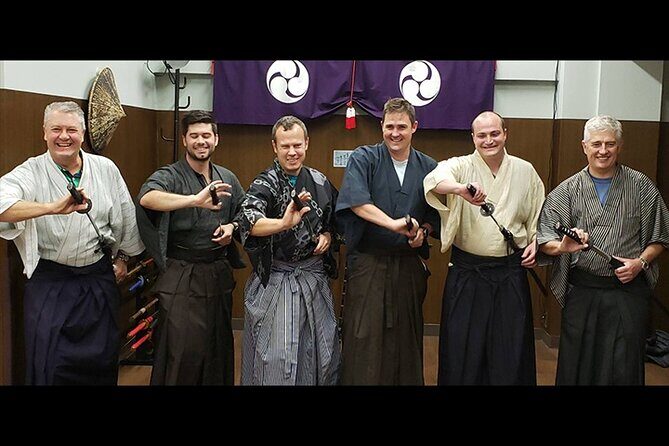
- Choose your kimono and hakama before you train, then look the part right away
- Katana basics with safety-focused coaching: draw, hold, swing, and retract
- Chambara practice that turns drills into a simple mini sword fight
- Phone-friendly: filming and photos are allowed inside the museum space
- Small group size (max 10) keeps the pace fast but not rushed
A Samurai Dojo in Shinjuku: What the Setting Feels Like
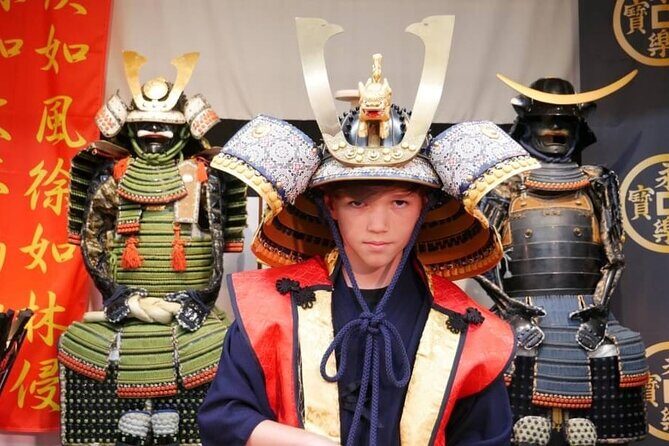
This is not a bare-bones “watch and leave” show. The space is designed to feel like an Edo-period dojo, with armor and weapons on display in a way that looks more museum than theater. You’ll see swords and spears, plus lots of armor, so even before training starts, you’ve got real visual context for how samurai culture looked in movies and history books.
The atmosphere matters. You’re not just dressing up in costume—you’re walking into a room that doesn’t feel modern. That makes the training section click faster, especially if you’re visiting Tokyo for the first time and want an authentic-feeling activity that stays fun.
Logistics are simple on paper: the experience starts and ends back at the meeting point. It’s also near public transportation, which is helpful because you’re traveling to Shinjuku for a focused 1-hour block.
You can also read our reviews of more tours and experiences in Tokyo.



Picking Your Kimono and Hakama: The Moment It Becomes Real
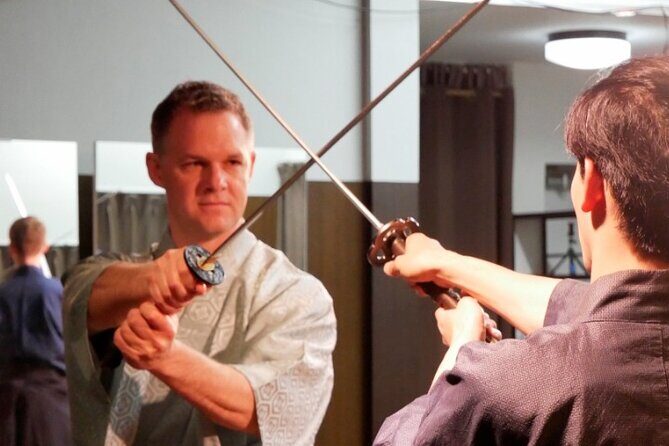
One of the smartest parts of this experience is when you get to choose. You don’t just get handed a random outfit. You choose your favorite kimono and hakama, change into samurai gear, and then start training in costume.
I like this because it changes your mindset. Before you ever touch a sword, you’re already acting the part—posture, movement, and even how seriously you hold yourself. That’s why guests rave about the “formal wear” aspect and how comfortable it feels once you’re in it.
And yes, it’s photo-ready. Since you can take pictures and videos inside, you’ll naturally end up capturing your outfit and the armor room before you step into the training space. If you’re traveling with family, this is also the part that keeps kids engaged—everyone wants to see which costume they got.
Katana Basics That Teach the Mechanics (Not Just the Movie Moves)
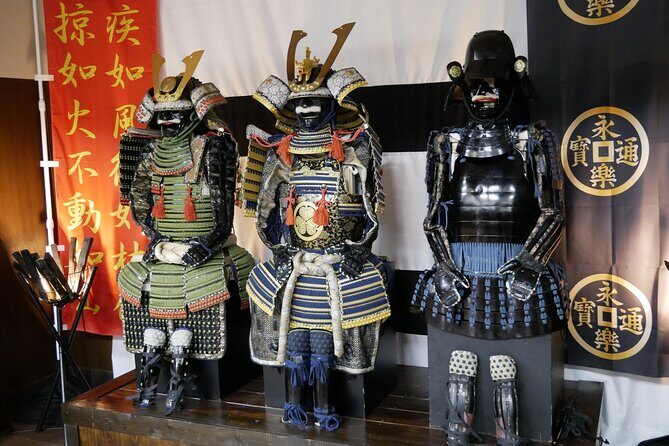
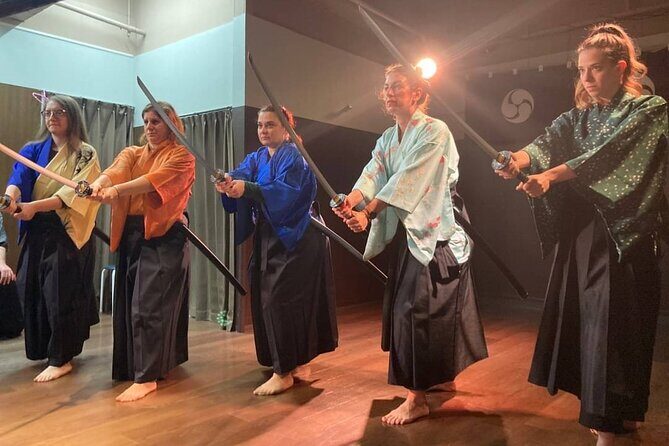
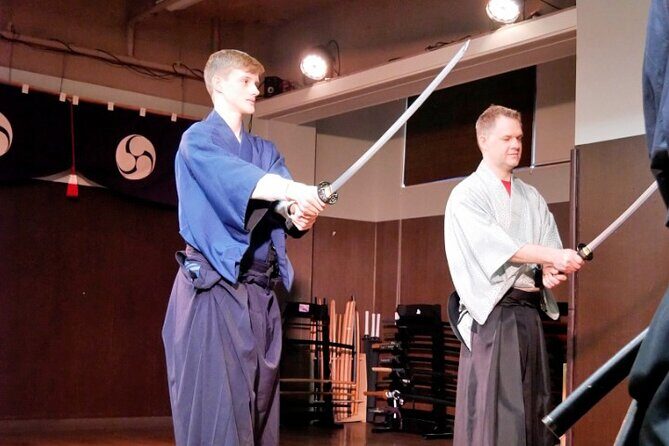
The core of the experience is a structured katana lesson led by instructors. You’ll learn basic sword use with clear demonstrations and hands-on practice. The sequence covers things like drawing a sword, how to hold it, how to swing it, and how to retract it.
This is where the value shows up for beginners. You’re not left guessing. You get coaching to make the basic actions feel safe and repeatable, which is exactly what you want when you’re doing this for the first time in Tokyo.
A detail I appreciate: the vibe stays serious about technique and safety, but it doesn’t drag. The goal isn’t to intimidate you. It’s to help you build confidence quickly, so you can join the later fight routine without feeling lost.
You’ll also get time to practice the movements, not just watch a demonstration. That hands-on practice is the difference between a costume photo and an experience you actually remember for years.
Choreographed Chambara: Turning Drills Into a Mini Sword Fight
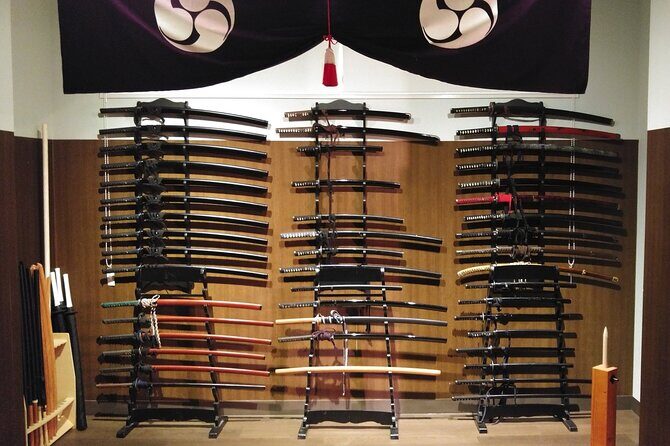
Once you’ve learned the basic moves, the experience shifts into a simple chambara (sword-fight) practice. This part takes what you rehearsed and turns it into a short “show” format.
Chambara is a great bridge activity. It’s more fun than a pure drill session, but it’s still controlled enough for first-timers. You’ll move through a straightforward sequence designed to feel like a real battle moment without requiring advanced fighting skills.
Then comes the fun part: you’ll perform a simple battle routine, and you’ll do it to music. It’s part training, part entertainment, and that mix is why the session stays energetic from start to finish.
For your phone: the program allows video recording inside the museum space, so you can capture your routine. It also helps that instructors are prepared for the camera moment, since they take photos and help guests get good shots during the event.
The Music Battle: Exterminating Bad Guys (Yes, Really)
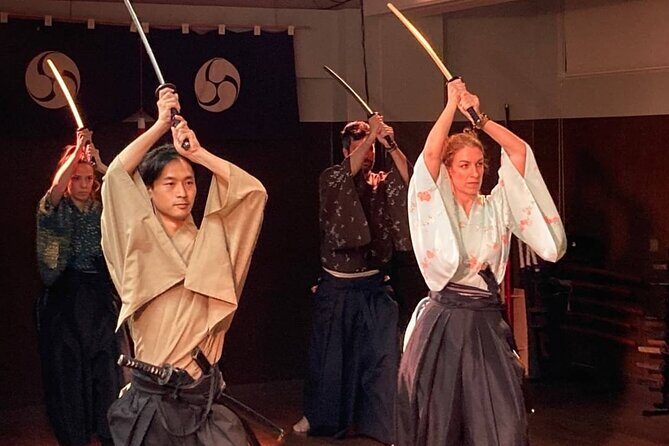
After the chambara practice, you join a more playful battle segment where you try to exterminate bad guys to the music. The wording is a little theatrical, but the structure is what matters: it gives you a clear endpoint and a payoff for the skills you built in the first half.
This section is especially good if you’re the type who needs a “final scene.” You’ll feel like you learned something, then you get to use it immediately in a short, memorable performance.
The whole thing stays family-friendly. In particular, parents often mention that kids enjoy it because the action feels like a game, not a lecture.






Photos, Videos, and Getting Help Looking Sharp
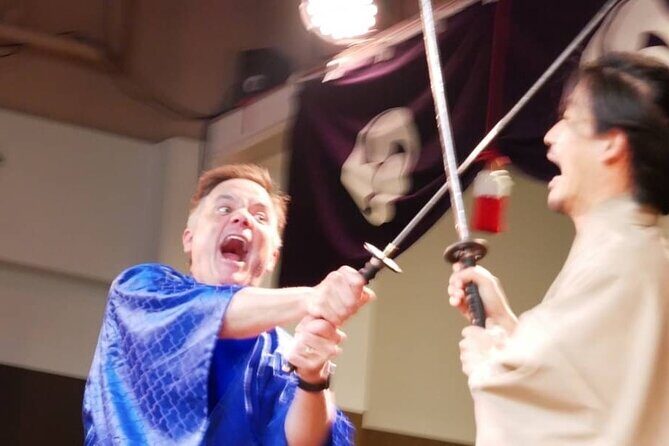
This experience is built for memories. You can take photos and videos inside, and instructors actively assist with capturing moments. Many people specifically mention that the staff took plenty of photos and videos for them.
That matters more than you might think. Sword training can make you hyper-focused on your own steps, so having staff handle some of the photo work means you don’t walk away only with shaky phone clips. You get the “I did this” shots plus the action footage you can rewatch later.
If you’re traveling with kids, the end of the experience often brings a small extra treat. One review notes they even gave kids a gift at the end, which is a nice touch when you’re trying to make the day feel special for younger travelers.
Price and Value: Is $65 Worth It?
$65 per person for a 1-hour experience can sound either cheap or steep depending on what you compare it to. Here’s the way I’d judge the value, using what this experience includes.
You’re paying for:
- A professional instructor/guide
- Costumes (kimono/hakama and samurai gear)
- Fees and taxes included
- A structured lesson with hands-on practice and a short finale routine
That cost makes sense because it’s not just a performance. You’re getting guided training plus the wardrobe that makes the whole thing feel real. For families, that can be a stronger deal than paying for separate costume rentals and separate attractions, since you’re bundling the “dress up + learn + perform” in one place.
Also, the group size is capped at 10 travelers, which usually means more attention per person and a faster training rhythm. That matters when you’re learning something physical for the first time.
If you’re expecting a huge, multi-hour museum visit, it won’t fill the whole day. But if you want a focused Tokyo activity that gives you skills, photos, and a story to tell, the price starts to look very fair.
Who This Samurai Experience Fits Best (And Who Might Skip It)
This is a great fit if you:
- Want a hands-on katana lesson without needing prior experience
- Like dressing up and taking photos in a themed setting
- Travel as a family and want an activity that holds kids’ attention
- Prefer smaller groups (max 10) over big tour crowds
It may be less ideal if you:
- Want a long, museum-style deep dive into Japanese sword history (this is practical training plus a short performance)
- Are looking for advanced, professional-level combat instruction (the focus is beginner fundamentals and a simple routine)
For most people, though, it hits a sweet spot: it’s beginner-friendly, high-energy, and you end with proof on your phone that you actually did the moves.
Getting There: Meeting Point and How to Not Stress
You’ll meet at Samurai Theater Tokyo, 40 Yokoteramachi, Shinjuku City, Tokyo 162-0831. It ends back at the same place.
Two practical tips:
- Build in a small buffer. Even though it’s near public transport, reviews note the location can feel tucked away on side roads, so you might take an extra minute to spot the right spot.
- Plan your timing around the full hour. It’s designed as a single block, not something you stretch across the day.
If you’re juggling a packed Shinjuku day, this is still workable. The experience is short enough that you won’t feel like you lost an entire chunk of your trip.
Should You Book Samurai Theater Tokyo?
If you want a Tokyo activity that combines real costume dressing, beginner katana basics, and a fun chambara finale you can film, then yes, you should book it. The ratings are extremely high, and the format clearly hits what people want: hands-on training, supportive instructors, and a big payoff in photos and performance.
If you dislike structured, physical activities, you might prefer a calmer museum day. But if you’re curious about samurai culture and you like doing things with your hands, this is one of the most memorable ways to spend an hour in Tokyo.
FAQ
How long is the Samurai Experience in Tokyo?
It lasts about 1 hour.
What does it cost?
The price is $65.00 per person.
Where do I meet for the experience?
You meet at Samurai Theater Tokyo, 40 Yokoteramachi, Shinjuku City, Tokyo 162-0831, Japan, and the activity ends back at the meeting point.
Is this experience suitable if I’m traveling solo?
Yes. One person can join the tour.
Are kimono and samurai costumes included?
Yes. Samurai costumes are included, and you’ll choose your kimono and hakama.
Can I take photos or record video during the experience?
Yes. Photography and video recording are allowed inside the museum.
How big is the group?
There’s a maximum of 10 travelers.
Is free cancellation available?
Yes. You can cancel up to 24 hours in advance for a full refund.