REVIEW · KYOTO
Gion Walking Tour, Geisha Show and Japanese Game in Kyoto
Book on GetYourGuide →Operated by GuideMe Japan · Bookable on GetYourGuide
Gion feels like a movie set, but it’s real. I like the small-group approach in the alleys and I especially like the close-up maiko apprentice show with time for questions. One thing to consider: this is not a purely passive sightseeing stop, and there may be brief shop-style pauses depending on the night’s flow.
This 2-hour Kyoto evening starts at the Izumo-no-Okuni Statue above Gion-Shijo Station and keeps you moving through Gion with a live English guide holding a sign that says GuideMe Japan. After the walk, you’ll watch the maiko dance, sit with tea and a Japanese snack, and then play a traditional Japanese fan game with her.
Why it works so well is the pacing: you get context first, then the performance hits with meaning. With a group limited to 6 people, you’re not stuck at the back trying to hear around shoulders, and guides like Ai Iwata and Rin are specifically praised for making the experience feel personal and respectful.
In This Review
- Key things I’d circle on your Kyoto to-do list
- Entering Gion from the Izumo-no-Okuni Statue and actually learning the district
- What I like about the first hour
- A consideration before you go
- The maiko apprentice show: elegance you can watch, then questions you can ask
- How to get the most out of your Q&A
- Family-friendly note
- Tea, a Japanese snack, and the feel of sitting together
- The traditional fan game with the maiko: why it’s more fun than it sounds
- Practical tips for the fan game moment
- Meeting point and end point: where to go before you start, and where it ends
- Small-group timing: how 2 hours fits into a Kyoto evening
- Price and value: what $108 buys (and what it doesn’t)
- Who this Gion tour suits best
- Should you book this Gion walking tour with the maiko show and fan game?
- FAQ
- How long is the Gion walking tour and maiko experience?
- Where do I meet the guide?
- Is this tour a small group?
- What language is the tour guide?
- What’s included in the tour price?
- What happens during the second hour?
- Is food included beyond tea and a Japanese snack?
- What’s the price per person?
- What is the cancellation policy?
- Can I reserve now and pay later?
Key things I’d circle on your Kyoto to-do list
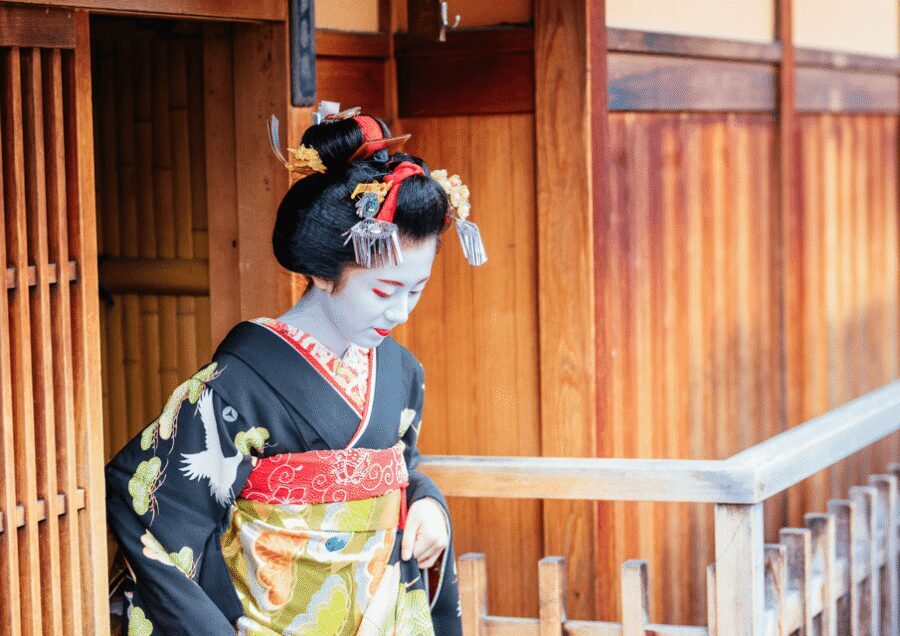
- Up-close maiko time: watch the dance, then ask questions directly
- Gion orientation first: you learn what you’re looking at before the show
- Traditional fan game: it’s interactive, not just watching
- Small group (max 6): easier conversation and a calmer feel
- Tea and a Japanese snack included: a proper break between walk and performance
- English live guide: you won’t have to “guess” the cultural context
Entering Gion from the Izumo-no-Okuni Statue and actually learning the district
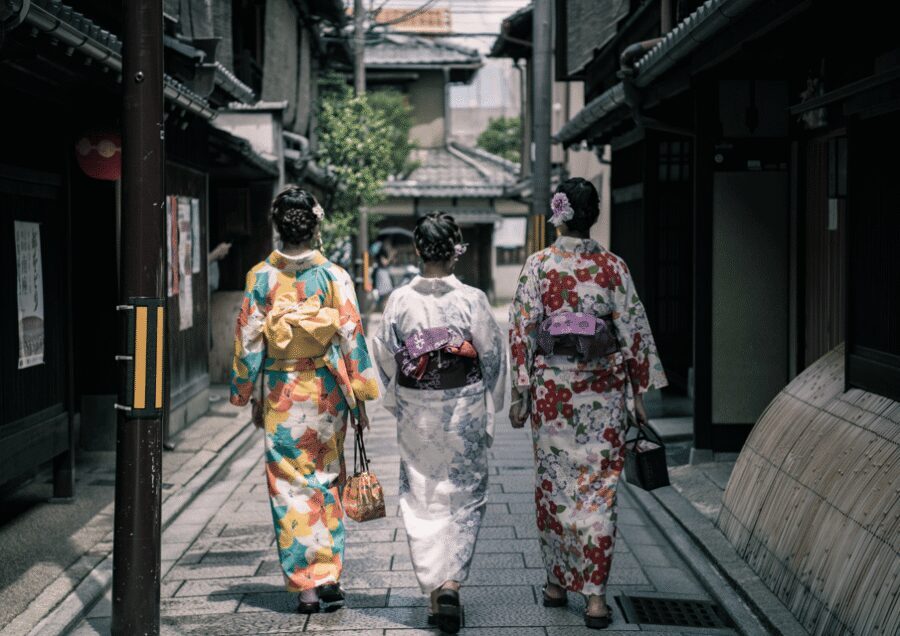
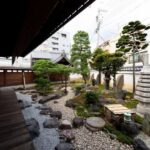
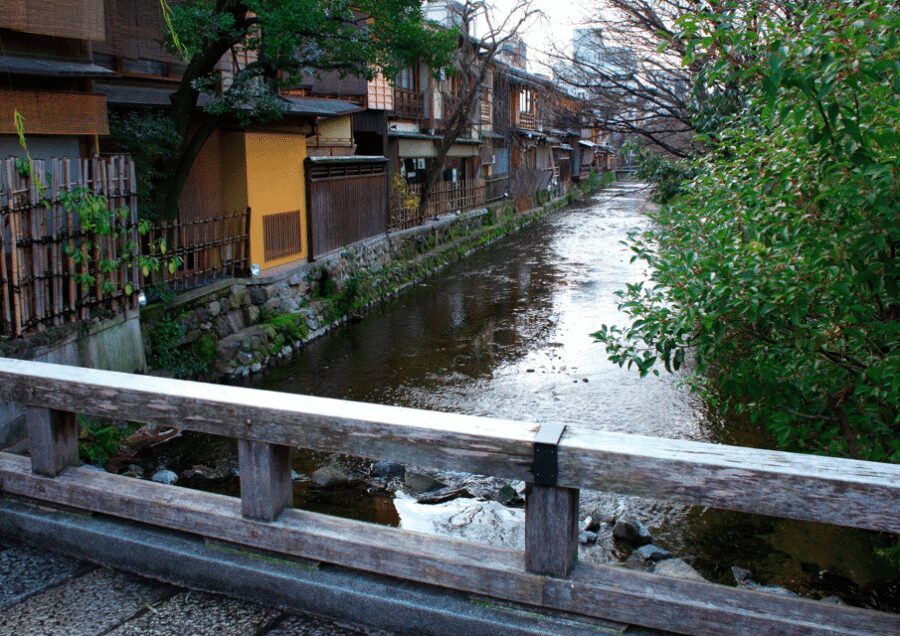
The tour begins at the Izumo-no-Okuni Statue right above Gion Shijo Station. If you’ve tried to navigate Gion on your own, you know how easy it is to walk past history without realizing it. This tour’s first hour fixes that by guiding you through the main area of Gion and pointing out what matters and why.
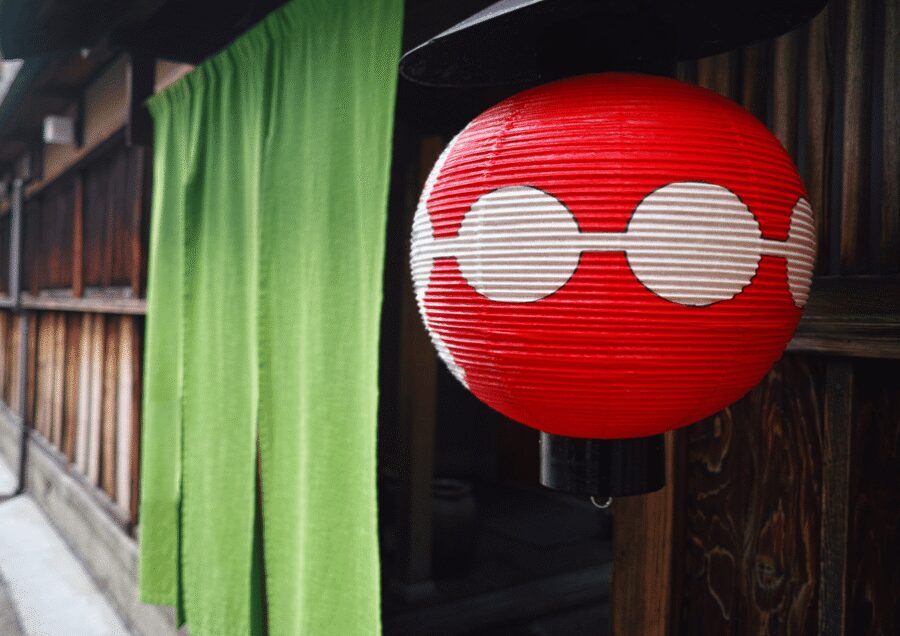
You’ll be walking through the kind of streets where the details are the story: small architectural cues, the rhythm of the district, and how the geisha culture is woven into everyday Kyoto life. Guides mentioned in feedback, such as Ai Iwata and Soichiro, are praised for showing spots even people who researched on their own missed. That’s the practical value here: you’re not just collecting photos, you’re building understanding fast.
You can also read our reviews of more walking tours in Kyoto


What I like about the first hour
- You get the cultural and historical context before you sit down for the performance.
- The pace feels designed for conversation, not a nonstop sprint.
- You’re guided through areas that can feel less crowded, which helps you actually notice what you’re being told.
A consideration before you go
If you want zero “in-between” stops, be aware that one person flagged that there were pit stops at designated shops. The overall tour is still focused on the walk and the maiko experience, but if you get annoyed by anything resembling a store visit, it’s worth keeping that in mind on the day you book.
The maiko apprentice show: elegance you can watch, then questions you can ask
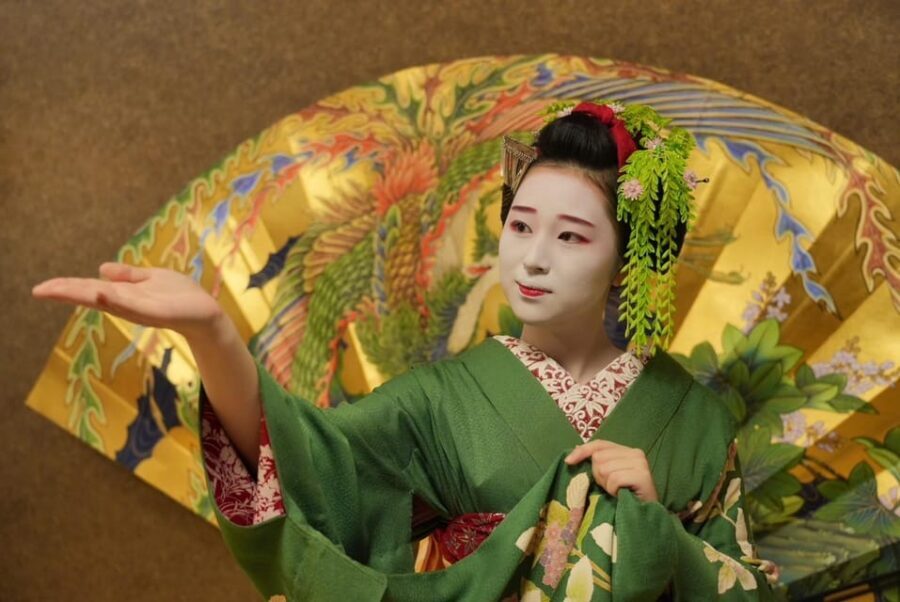
The second hour is the main event: a traditional dance show featuring a maiko, the apprentice trained in the arts. You’ll watch her dance, then you’ll have time to ask about her current life. That Q&A is a big part of why the experience gets such strong ratings.
This isn’t a “sit silently and leave” situation. In multiple accounts, the dance is described as mesmerizing and elegant, but the real payoff comes from the conversation afterward. One guide team, described as extremely patient with translation, helped people ask thoughtful questions without feeling rushed. That matters because when you understand what a movement or tradition means, the whole thing clicks.
How to get the most out of your Q&A
Keep your questions simple and sincere. You’ll likely get a better response if you ask about what training or daily life looks like, how the arts work, or what the experience is like from the maiko’s perspective. And if photography is on your mind, pay attention to the guide’s etiquette notes. One guide was specifically praised for advising when it was OK to take pictures and for explaining proper behavior, which helps everyone feel comfortable.
A few more Kyoto tours and experiences worth a look


Family-friendly note
If you’re traveling with a teen or tween, this format is one reason it can work. You’re not only watching an hour-long lecture. There’s a dance you can appreciate visually, plus interactive time where questions are welcome. That combination tends to hold attention better than a long museum-style talk.
Tea, a Japanese snack, and the feel of sitting together
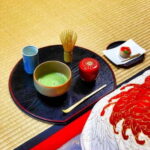
Between the walking and the show, the tour includes tea and a Japanese snack. This small detail changes the mood. You’re not just transitioning from “Kyoto streets” to “performance mode.” You’re getting an actual pause in a way that feels more like being hosted than being processed.
A lot of the atmosphere comes from the tone of the room and the small-group size. People describe the interaction as intimate, and that’s believable here: when you’re capped at 6 participants, the maiko doesn’t feel like part of a crowd experience. It feels more like you’re being welcomed into the moment.
If tea is part of the script, take a beat. Sip when it’s offered, and treat the snack like part of the experience rather than an afterthought. It’s a simple way to keep the tone respectful and relaxed.
The traditional fan game with the maiko: why it’s more fun than it sounds
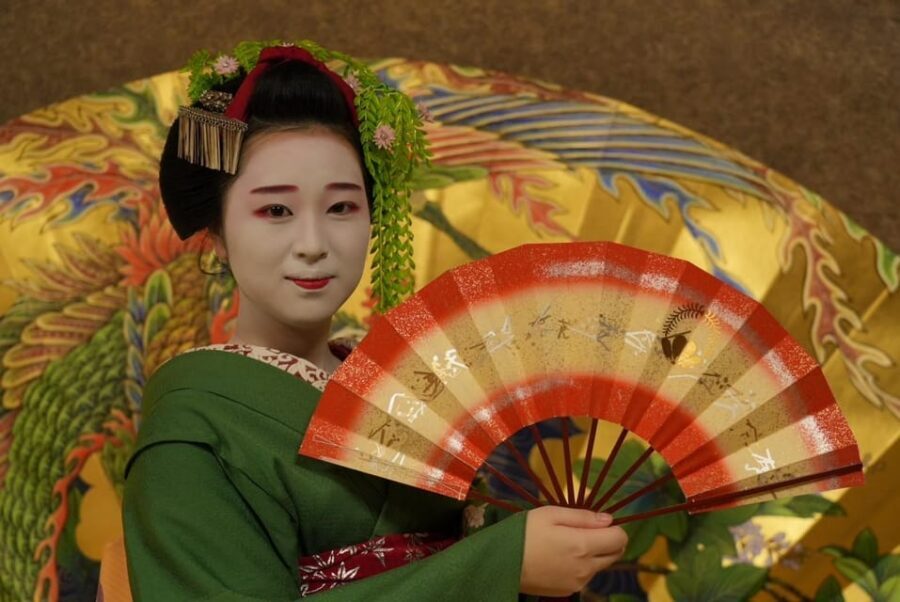
After the dance and Q&A, the tour includes a traditional Japanese fan game with the maiko apprentice. This is the part that surprises people in the best way, because it moves the experience from viewing to doing.
A fan game also acts like cultural glue. You’re learning through interaction, not by reading a label. Several accounts mention laughing during the game and scoring poorly at least once, which is honestly part of the charm. It’s not a test; it’s a shared activity that helps you connect with what you’re watching.
Practical tips for the fan game moment
- Listen first, then play. Don’t rush your turn.
- Keep your body relaxed. If the guide explains the rules, follow her lead.
- Don’t overthink winning. The goal is participation and respect.
Meeting point and end point: where to go before you start, and where it ends
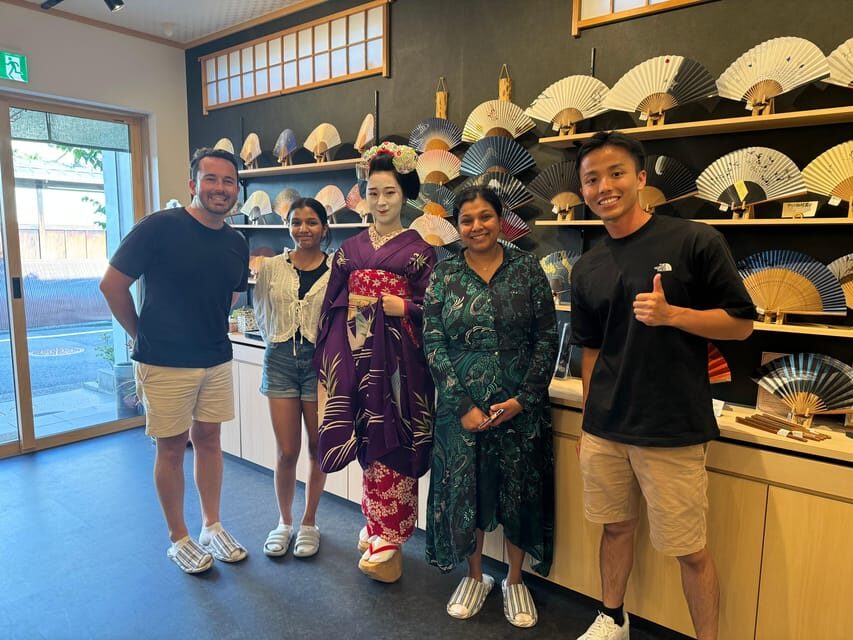
You’ll start at the Izumo-no-Okuni Statue above Gion Shijo Station. The guide will be holding a white board that says GuideMe Japan, so you can spot the group quickly.
The tour ends at Hangesho. That matters because Gion can feel like a maze after an event, and having a clear endpoint helps you plan the next step, whether that’s dinner nearby or heading back to your hotel.
Small-group timing: how 2 hours fits into a Kyoto evening
This experience is 2 hours total, split into:
- 1 hour walking around Gion with historical insight
- 1 hour watching the maiko dance and having time for questions, plus the fan game
That timing is a sweet spot. It’s long enough to do something meaningful, but short enough that you won’t feel like you’ve locked up your whole evening. For many people, it becomes a centerpiece activity rather than just another “thing to do.”
Because it’s a walk + performance combo, I strongly recommend planning the rest of your evening with a little breathing room. Wear comfortable shoes. Gion’s streets are easy to enjoy when you’re not worried about aching feet.
Price and value: what $108 buys (and what it doesn’t)
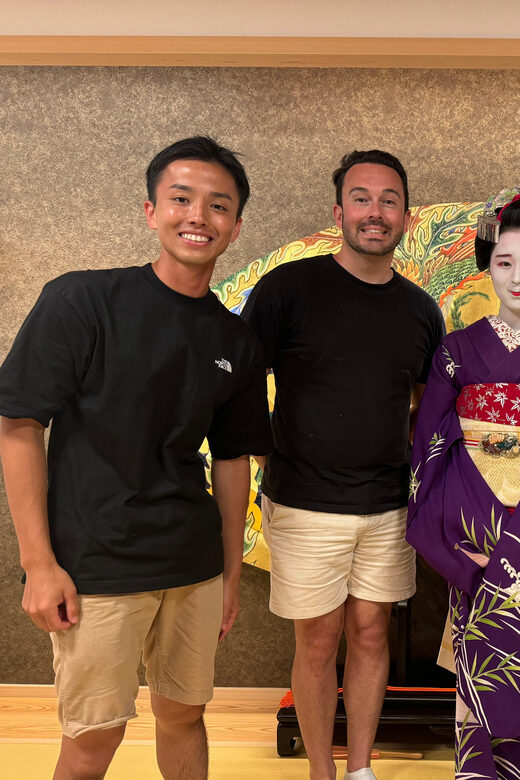
The price is listed as $108 per person for a 2-hour, English-led small-group experience. That may sound high until you break down what’s included.
Here’s what you are paying for:
- A guided walk of Gion with historical and cultural interpretation
- An up-close maiko apprentice dance show
- Tea and a Japanese snack
- Time to ask questions in a small-group setting
- A traditional fan game with the maiko
What you’re not paying for is additional food. Since Kyoto dinners can get expensive fast, you’ll want to eat before or after depending on timing. If you’re aiming to keep costs down, treat the included snack and tea as a purposeful “buffer,” not as your full meal.
Also, $108 makes more sense when you care about depth. If you only want a quick look at Gion, you can do plenty on your own. But if you want a structured evening where the cultural meaning is explained and the interaction is part of the point, the price is easier to justify.
Who this Gion tour suits best
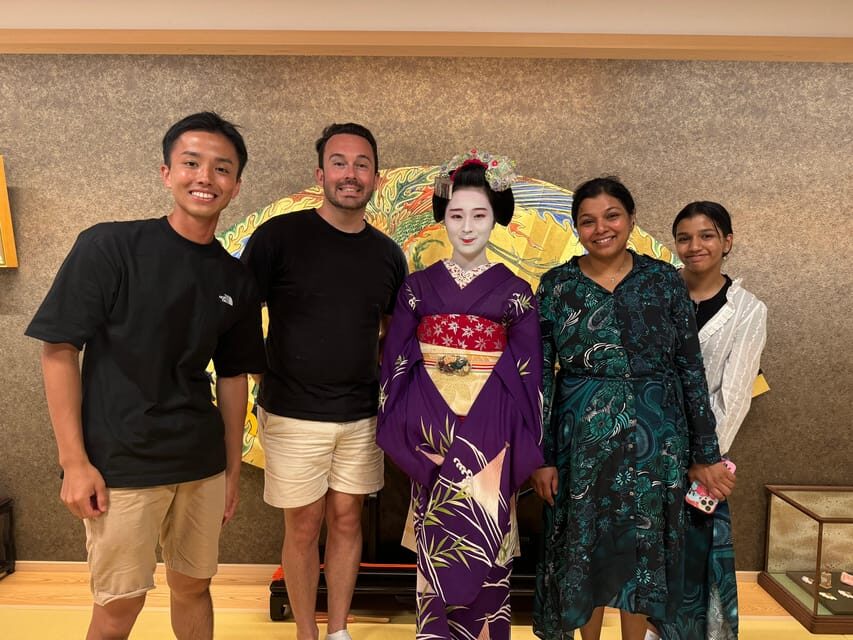
This is a great fit if you:
- want an organized Gion introduction that goes beyond postcard photos
- like interactive cultural experiences, not only watching
- appreciate small groups and easier conversation
- want an English-speaking guide for context and etiquette
It may be less ideal if you:
- strongly prefer to wander without any structured stop-and-start flow
- dislike shop-style pauses at all (one person specifically mentioned this as a downside)
- are uncomfortable with any interactive element, since the fan game is part of the deal
Should you book this Gion walking tour with the maiko show and fan game?
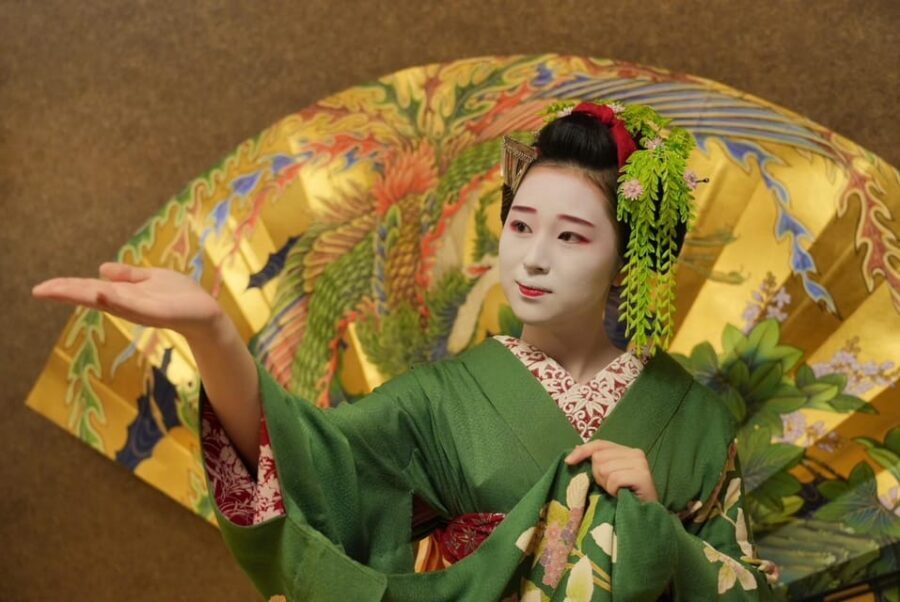
If your ideal Kyoto night includes art, etiquette, and conversation, book it. The biggest reason is that the experience isn’t only visual. You get context on the streets first, then the performance, then real time with a maiko apprentice through Q&A and a traditional game. With the group capped at 6, it stays personal in a way that large shows can’t.
My only pause is practical: plan your expectations. This isn’t a casual stroll where nothing happens. It’s structured, interactive, and designed for respectful participation. If that sounds like your kind of evening, this is an easy yes for Kyoto.
FAQ
How long is the Gion walking tour and maiko experience?
The tour runs for 2 hours total.
Where do I meet the guide?
You meet at the Izumo-no-Okuni Statue right above Gion-Shijo Station. The guide will be holding a white board that says GuideMe Japan.
Is this tour a small group?
Yes. The group size is limited to 6 participants.
What language is the tour guide?
The live tour guide speaks English.
What’s included in the tour price?
Tea and a Japanese snack are included, along with a 1-hour walking tour of Gion, a 1-hour maiko apprentice show, and a traditional Japanese fan game with the maiko apprentice.
What happens during the second hour?
You watch the maiko apprentice dance, have time to ask questions about her current life, and then play the traditional fan game.
Is food included beyond tea and a Japanese snack?
No. Additional expenses such as food are not included.
What’s the price per person?
The price is $108 per person.
What is the cancellation policy?
You can cancel up to 24 hours in advance for a full refund.
Can I reserve now and pay later?
Yes. The tour offers a reserve now & pay later option.