REVIEW · TOKYO
Daikoku Parking Area : JDM car meet tour by a local Japanese
Book on GetYourGuide →Operated by toshiro · Bookable on GetYourGuide
Tokyo night meets real car culture fast.
This tour is built around the places that show up in Japanese car media, so you get that wow moment without spending a whole trip guessing where the action is. I particularly love the chance to see Daikoku Parking Area and Tatsumi 1st PA in person, because the vibe is clearly more than just parked cars. I also like the way the drive strings together skyline sights—Rainbow Bridge and Tokyo Tower/SkyTree—so even if you are not a gearhead, Tokyo still feels big, glossy, and alive. One thing to consider: this is a shared night meetup experience with a set timing window, and parking access can be affected by traffic police.
With an English live guide named Toshiro, you are not stuck reading your phone or translating your way through chaos. The route also uses the kind of roads you see on TV and in video-game-style driving scenes—metropolitan expressways plus the bay shore route—so the trip itself feels like part of the show, not just transportation.
The main drawback is simple: during the parking time, you should expect freedom more than constant commentary. If you want a running stream of car-talk every minute, you may find the experience more chill than talk-heavy, especially once you arrive at Daikoku.
In This Review
- Key things to know before you go
- Why Daikoku and Tatsumi are worth your Tokyo night
- Meeting in Ōba and settling into a small-group night drive
- The road part: expressways, bay shore views, and the feel of Tokyo at night
- Tatsumi 1st PA: the 15-minute photo stop that sets the tone
- Tokyo Skytree Town passing: quick orientation and skyline framing
- Daikoku Parking Area: your 1.5 hours of real JDM atmosphere
- A balanced reality check
- Rainbow Bridge plus Tokyo Tower passing: the night skyline payoff
- Price and value: what $127 buys in a guided JDM meetup
- Best days and timing: when to go for the fullest Daikoku experience
- Who this tour fits best (and who might want a different plan)
- Should you book Daikoku Parking Area JDM tour?
- FAQ
- FAQ
- How long is the tour?
- What is the price per person?
- Where do I meet the tour?
- What are the main stops?
- How much time do we spend at Daikoku Parking Area?
- Does the tour include fuel and toll roads?
- Is hotel transportation included?
- Is there an English-speaking guide?
- Is the tour a small group?
- What happens if it rains?
- Can parking close during the night?
Key things to know before you go
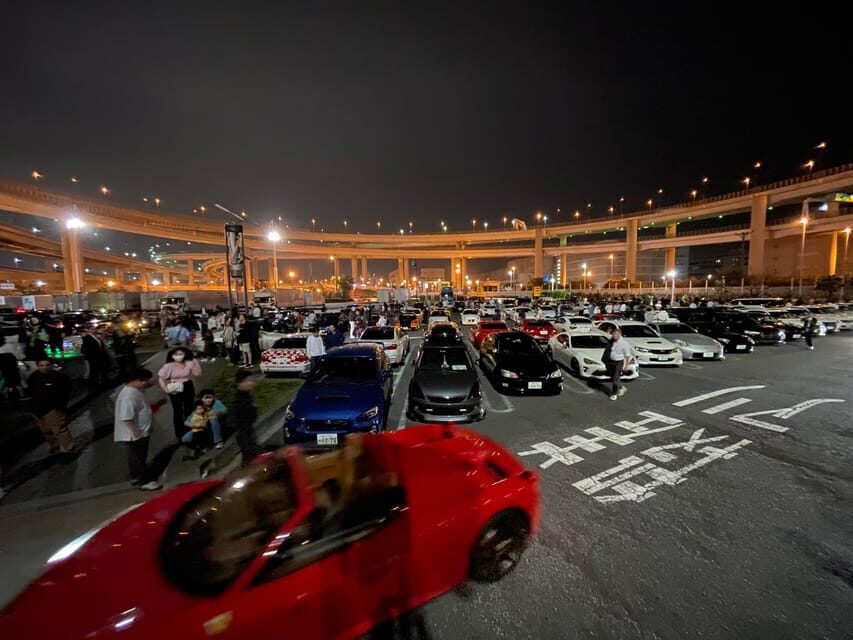
- Daikoku Parking Area is the centerpiece with about 1.5 hours of photo time and free roaming inside the meet atmosphere
- Tatsumi 1st PA is a quick photo stop (around 15 minutes) that helps you orient fast before the big arrival
- Expressway + bay shore routing connects car-meet spots with classic Tokyo night scenery
- Rainbow Bridge and Tokyo Tower/SkyTree are passing views—great for photos, not full-on sightseeing time
- Timing can shift on Fri/Sat nights if traffic police close the parking earlier
- Small group, up to 3 customers keeps the experience flexible and easier to manage
Why Daikoku and Tatsumi are worth your Tokyo night
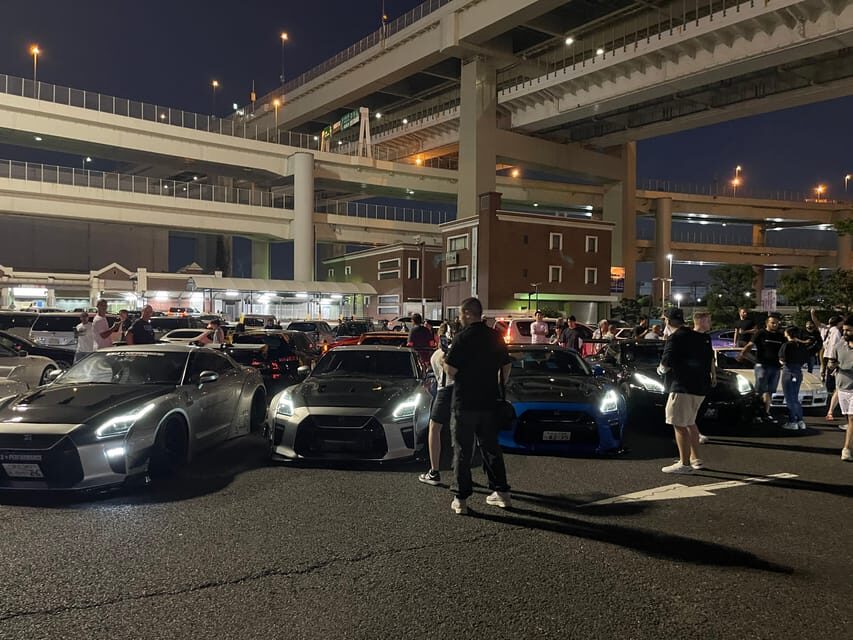
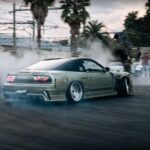
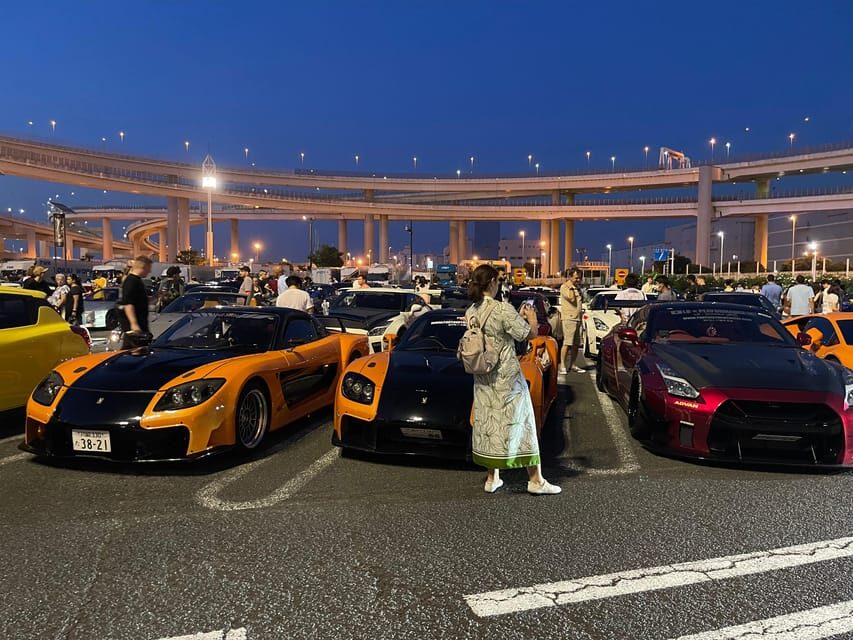
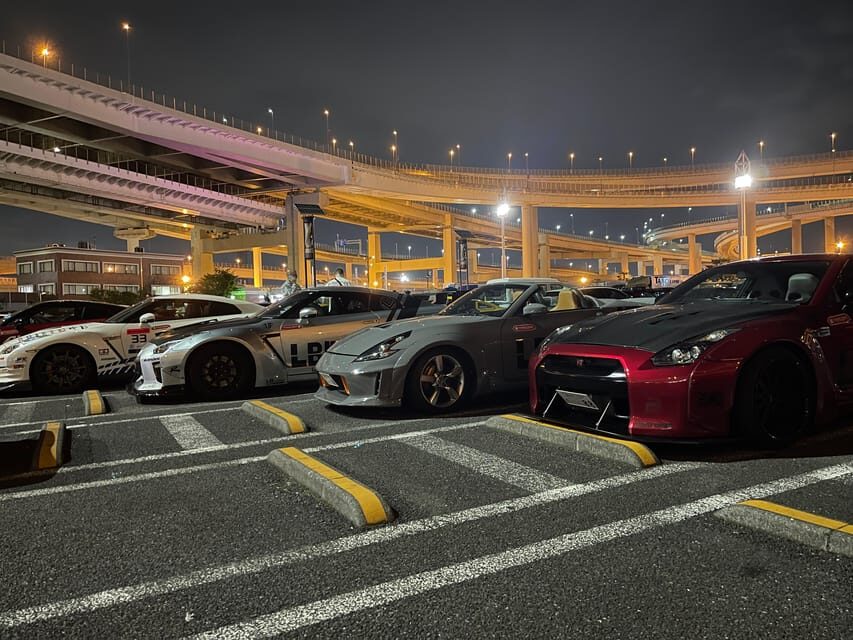
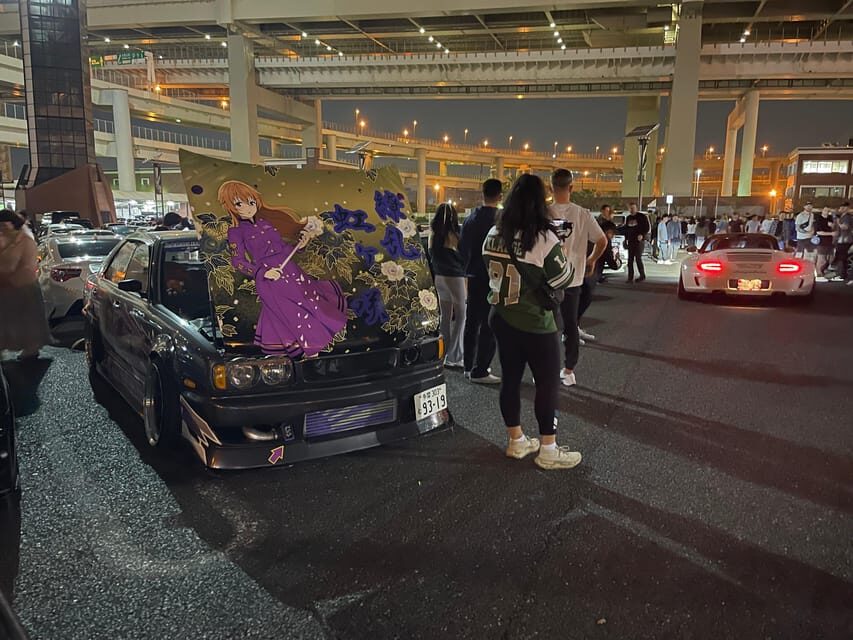
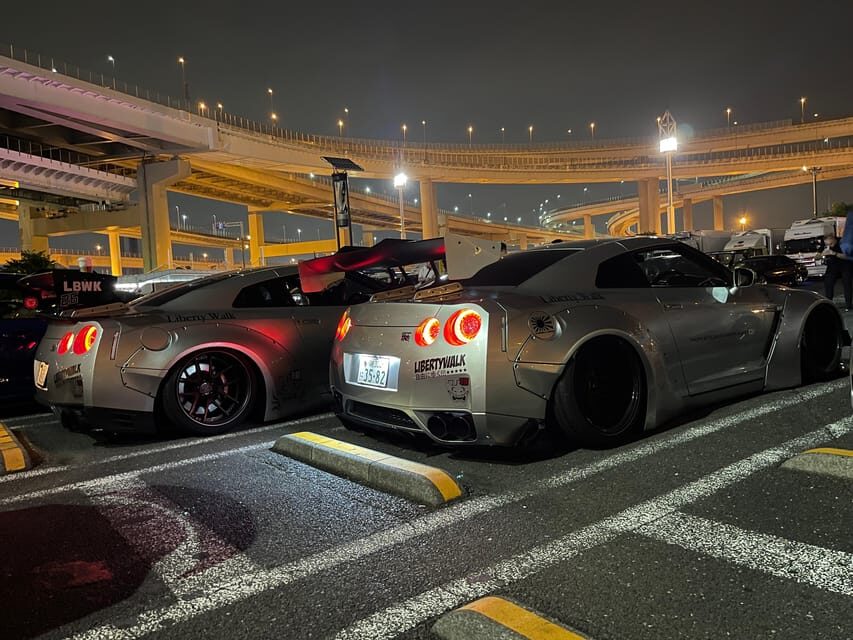
If you like JDM culture, you already know Daikoku. It is the kind of location that feels like a scene from Wangan Mid-Night or Shuto Ko Battle—not because it is trying to be art, but because it is genuinely the sort of place where that culture gathers. Seeing it in real life hits different. The cars, the lighting, the background city glow, the way people move around with purpose—it all feels more like a living meeting than a tourist photo spot.
Tatsumi 1st PA matters too. It is not the giant main event, but it is a strong warm-up: you get a taste of the style and the flow of car culture before you go into the bigger Daikoku parking area. Even if you mainly came for one place, Tatsumi helps the whole night feel connected instead of random.
And if you are not into cars? You still get Tokyo’s nighttime scale. The meet areas sit within a city that runs fast and looks sharp after dark. When you combine that with the bridge and tower passing views, it becomes a night drive with a purpose.
You can also read our reviews of more tours and experiences in Tokyo.



Meeting in Ōba and settling into a small-group night drive
You meet in front of MOS BURGER in the Ōba area. That matters more than you might think. This is a small shared tour, and it only works if everyone shows up on time—late arrivals can throw off the tight plan, especially because you are heading toward places that can be impacted by late-night traffic rules.
The group size is intentionally small (up to 3 customers). That usually means you spend less time waiting around and more time actually doing the fun parts: getting to the right spots and moving between them efficiently. This also tends to make the ride feel more like a guided local outing than a bus tour where everyone does everything on their own.
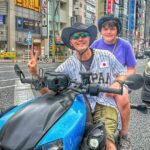
Your guide for the drive is Toshiro, and the tour is in English. That is a big deal on a night where road names and signage blur into one another. A good guide also helps you understand what you are looking at, not just where you are going.
The road part: expressways, bay shore views, and the feel of Tokyo at night
A lot of Tokyo “car culture” tours either drop you at one spot or only focus on photos. This one connects the dots with driving segments on major roads: metropolitan expressways and the bay shore route, plus the Rainbow Bridge crossing as a passing moment.
Why this matters: Tokyo at night looks best in motion. You get those long streaks of light, the layered skyline depth, and the sense of speed that static sightseeing never quite delivers. The drive is also how you get from meeting-area to car-meet area without wasting the short time you have after dark.
It is also why the tour is only 3 hours. You are not meant to treat it like a full Tokyo evening. You are meant to hit the highlights, absorb the JDM energy at Daikoku, then end with landmark views while you still remember the ride feeling like part of the culture.
Tatsumi 1st PA: the 15-minute photo stop that sets the tone
Your first proper stop is Tatsumi 1st PA, with a 15-minute photo stop. That timing is short on purpose. You do not linger because the real payoff is later at Daikoku with much more time.
In those 15 minutes, your goal is to get your bearings:
- Take wide shots that show scale and city background
- Look for patterns in car styling and how people park and interact
- Use it to spot the kind of cars you will likely see more of later
The photo-stop format also keeps the schedule realistic. It gives you a taste without forcing you to wait around for too long before the main meet.
Tokyo Skytree Town passing: quick orientation and skyline framing
You will pass by Tokyo Skytree Town. This is not a long stop where you walk around and shop. It is about perspective. Passing it gives you the landmark in context, while you are still rolling through the city’s night rhythm.
I like this approach for two reasons. First, it avoids turning your night into a slow sightseeing crawl. Second, it helps you connect Tokyo’s famous skyline to the car culture stops. Skytree is bright and distinctive, and it works well as a contrast to the darker, gear-focused meetup energy.
If you are the type who wants time on foot, you should know this is not that kind of experience. But if you want the landmark look without losing meet time, passing stops are efficient and usually more enjoyable.



Daikoku Parking Area: your 1.5 hours of real JDM atmosphere
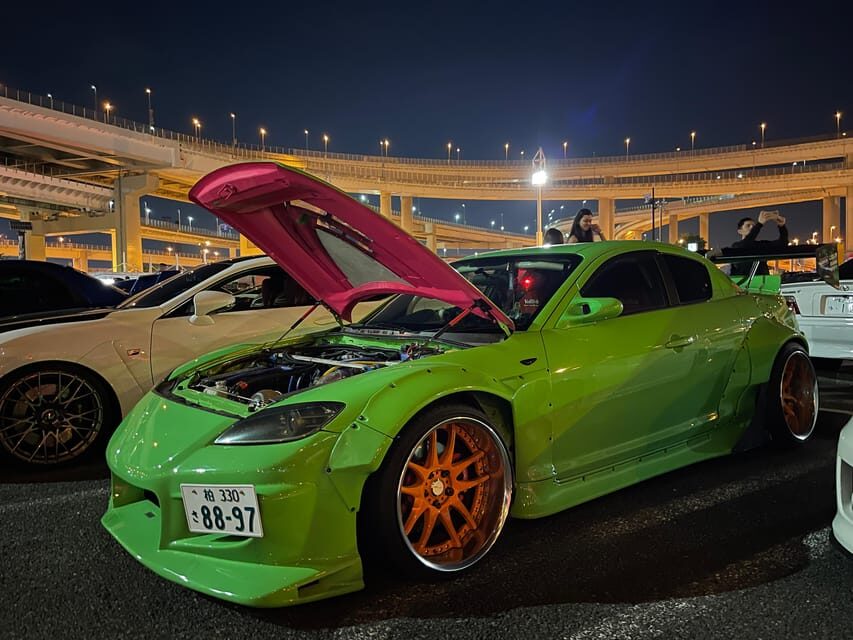
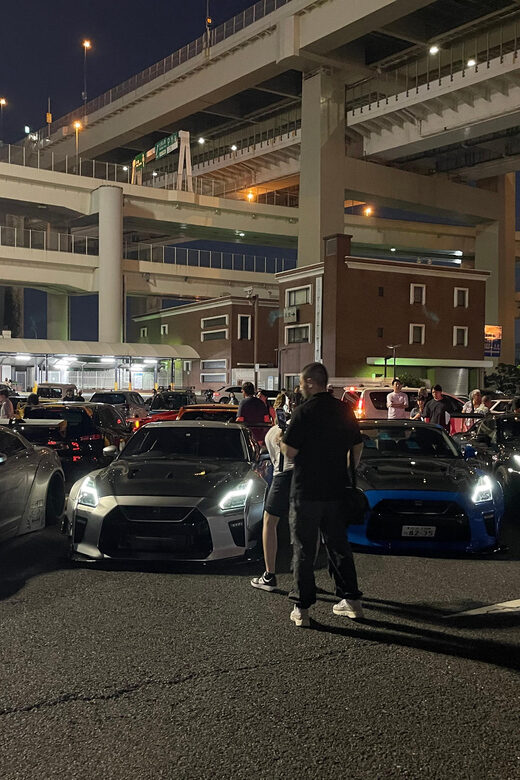
Daikoku is the big one. You get a photo stop + visit + about 1.5 hours of free time. This is where the tour earns its reputation.
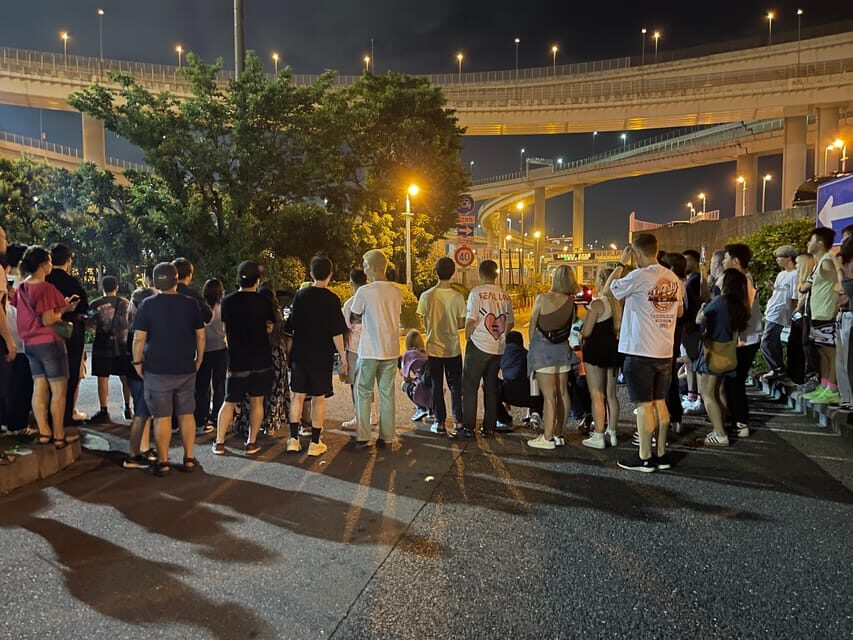
What I love about this setup is that it respects how these meets work. You can wander, find your angle, talk to people if you want, and take photos without a rigid script. It is not about rushing through a checklist of photo poses. It is about letting the meet happen around you.
Practical tip for using your time well: once you arrive, pick a plan within the first few minutes. Decide if you want more wide shots first or more close-ups. The first 20 minutes often feel the most energetic, so locking in your initial photo strategy can save you from spending the rest of the time chasing the perfect shot.
A balanced reality check
This is also where you should calibrate expectations. One review experience described it as more like pick-up and drop-off than constant guided commentary once you are inside the parking area. Another highlighted that the meet itself is spectacular because of the people sharing the same passion.
So think of Toshiro’s role as helping you get there, keeping the flow smooth, and giving you enough context to understand what you are seeing. Then let the meet do the talking.
If you want nonstop narration and a highly structured “tour guide speech” style, this might feel looser than you expect. If you want a chill, high-energy meetup time with freedom, you are in the right place.
Rainbow Bridge plus Tokyo Tower passing: the night skyline payoff
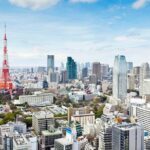
After Daikoku, you go toward Rainbow Bridge, Tokyo, and you also pass Tokyo Tower on the way. These are passing views, not long walking breaks.
Even so, they are not filler. Rainbow Bridge is one of the most recognizable Tokyo night silhouettes, and seeing it from the road gives you that classic “movie scene” feeling—except this time you are actually in the traffic and surrounded by real city lighting.
Tokyo Tower passing adds a different look: it is closer and more vertical, and it often reads more “Tokyo tourist postcard” in a way that pairs well with the underground-meet vibe from Daikoku.
If your brain likes variety—cars, bridge lighting, then a landmark moment—this section gives you that rhythm.
Price and value: what $127 buys in a guided JDM meetup
At $127 per person for a 3-hour outing, you are paying for three things:
1) Access to the meetup locations at the right time of night
2) A small-group English live guide (Toshiro) handling the route and driving logistics
3) Fuel and toll roads included
What you should notice: hotel transportation is not included. So your true cost depends on how you get to the meeting point in Ōba. Still, if you are starting near central Tokyo or you already know how you will reach MOS BURGER, the all-in nature of fuel and tolls keeps the tour price feeling more straightforward than one that charges extra later.
Compared with DIY attempts (especially at night), the value is in reducing stress. You do not have to figure out timing, routing, and how to connect car-meet spots with landmark sights in a short window. This is a “targeted evening,” and the price reflects that focus.
Best days and timing: when to go for the fullest Daikoku experience
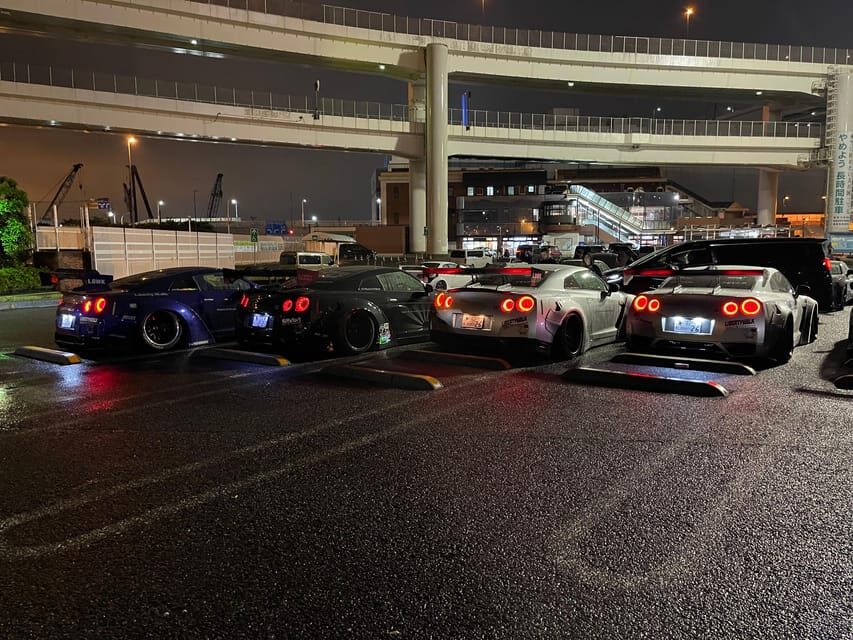
Timing is the make-or-break factor for this style of tour.
On Friday and Saturday nights, you may leave at around 18:00 and return around 21:00. Parking access can also be affected by traffic control—parking may close from about 20:30 due to traffic police.
That is why the tour advice leans toward:
- Going on Fridays, Saturdays, or Sundays
- Being flexible with the day if your schedule is tight
And if it rains, the plan can be postponed to a convenient day. That flexibility is important, because car-meet energy is heavily linked to people showing up in good conditions.
My suggestion: if you have a choice between a random weekday and a weekend night, pick the weekend. The tour is built for that rhythm.
Who this tour fits best (and who might want a different plan)
This tour fits best if you want a structured way to see Tokyo car culture at night without spending hours planning. It is also great if you want the landmark sightseeing payoff—Rainbow Bridge and Tokyo Tower/SkyTree passing—without turning the night into a multi-stop day tour.
You will likely enjoy it most if:
- You came for Daikoku Parking Area and want to actually experience the meet
- You like scenes from Japanese car media like Wangan Mid-Night and Shuto Ko Battle
- You want a small group setting instead of a crowded scramble
It may feel less ideal if you:
- Want a museum-style guided lecture at every moment
- Need long walking time at big attractions (this tour is mostly driving + meet time, not full walking tours)
Also, since it is a shared experience, you should treat it as a coordinated night plan: show up early, follow timing, and be ready for the meet to be the main event while guidance stays practical and light.
Should you book Daikoku Parking Area JDM tour?
If your goal is a memorable Tokyo night with real car-meet energy, I would book it—especially for Fri/Sat or Sunday nights. The combination of Daikoku + Tatsumi, plus the drive over major Tokyo routes and the Rainbow Bridge/Tokyo Tower/SkyTree passing views, makes it feel like more than just one photo stop.
The decision hinges on one thing: how you like your guidance. If you want freedom at the meetup and you are happy to use the guide mainly for navigation, context, and smooth timing, this is a strong match. If you want constant talking and a highly scripted commentary during the meet itself, adjust your expectations and treat it as a chill guided access to an active scene.
FAQ
FAQ
How long is the tour?
The tour duration is 3 hours.
What is the price per person?
The price is listed as $127 per person.
Where do I meet the tour?
You meet in front of MOS BURGER.
What are the main stops?
You have a photo stop at Tatsumi 1st PA, you pass Tokyo Skytree Town, you visit Daikoku Parking Area, then you pass Rainbow Bridge and Tokyo Tower.
How much time do we spend at Daikoku Parking Area?
You have about 1.5 hours for photo time/visit and free time at Daikoku Parking Area.
Does the tour include fuel and toll roads?
Yes. Fuel and toll road costs are included.
Is hotel transportation included?
No. Hotel transportation is not included.
Is there an English-speaking guide?
Yes. The live tour guide speaks English.
Is the tour a small group?
Yes. It is a small shared tour designed for up to only 3 customers.
What happens if it rains?
If it rains, the tour can be postponed to your convenient day.
Can parking close during the night?
Yes. On Friday and Saturday nights, parking may close from around 20:30 due to traffic police.