REVIEW · KYOTO
Early Half Day to Kyoto Highlights
Book on Viator →Operated by Mandala Japan Experience · Bookable on Viator
Kyoto in five hours, and early wins. This half-day highlights tour strings together the big names—Fushimi Inari, the Arashiyama Bamboo Forest, and Kinkakuji—with a smart morning plan meant to dodge the worst lines and still leave you time for your own Kyoto afternoon. It’s also practical: you move between areas by public transport and a guided walking route, so you’re not just checking boxes.
I especially like two things. First, the timing is built for visibility and comfort, with an early start at 8:00am that helps you enjoy the sights without getting crushed by peak crowds. Second, the small group cap (8 people) keeps the pace sane and makes it easy to ask questions to your English-speaking local guide—people have even called the guide planning tight enough to feel almost private. One possible drawback: Kinkakuji’s entrance fee is not included, and public transport is listed as an extra cost too, so check your budget before you book.
In This Review
- Key things that make this Kyoto morning work
- Why this early Kyoto highlights walk feels like a win
- Price and logistics: the real cost picture
- Meeting at Starbucks Kyoto Tower Sando: start on easy mode
- Stop 1: Kyoto Tower area coffee stop and quick orientation
- Stop 2: Fushimi Inari-taisha before the worst crowds
- Stop 3: Arashiyama Bamboo Forest—nature and culture in the same hour
- Stop 4: Kinkakuji Golden Pavilion—what you’re paying for (and what you’re skipping)
- Stop 5: Back to Kyoto Station—use the rest of your day wisely
- What I think the small group size changes
- How long should you budget for each stop?
- Who this tour suits best
- A realistic note on walking and comfort
- Should you book this early half-day Kyoto highlights tour?
- FAQ
- How long is the Kyoto highlights tour?
- What is included in the price?
- Is Kinkakuji entrance fee included?
- Do I need to pay for public transportation?
- Where do I meet the guide?
- How big is the group?
- What is the cancellation policy?
Key things that make this Kyoto morning work
- Early start for better photos and calmer walks across the main highlights
- Small group (max 8) so questions and pace don’t get swallowed by a big bus tour
- Transit + walking combo that helps you learn how to move around Kyoto
- Shinto and Buddhism context added to the scenery, so the stops mean more than postcards
- Kinkakuji is the only paid entrance (¥500) on the route, with other stops marked as free
Why this early Kyoto highlights walk feels like a win
Kyoto can be tricky in the best way. The city is packed with must-sees, but the popular ones—especially Fushimi Inari and the Golden Pavilion—can turn into long waits if you show up late. This tour tackles that problem by going early and keeping the whole morning focused. The result is a route that’s intense enough to feel productive, but short enough that you don’t feel locked into a full-day schedule.
Another big advantage is the mix of “spiritual Kyoto” and “natural Kyoto.” You’re not only doing temples and gates. You also get the bamboo forest experience at Arashiyama, which changes the mood completely. That variety matters when you’ve got limited time and you want your Kyoto to feel like Kyoto—not just a list of monuments.
You can also read our reviews of more tours and experiences in Kyoto.


Price and logistics: the real cost picture
The listed price is $94.71 per person, and what you’re paying for is the guided route, the English-speaking local guide, and the overall time efficiency of hitting several icons in one half day. You’ll also use a mobile ticket, which keeps the start simple.
What’s not included is where your budget needs a quick check:
- Kinkakuji Golden Pavilion entrance fee: ¥500 per person
- Public transportation: ¥1,300 per person
Those add-ons are normal for Kyoto sightseeing, but they do change the total spend. If you want value, this is still a solid deal because you’re bundling multiple top sights into one guided morning. You’re not paying separately for each temple experience and spending your time figuring out routes alone.
Meeting at Starbucks Kyoto Tower Sando: start on easy mode
The meeting point is Starbucks Coffee – Kyoto Tower Sando, near Kyoto Station. The exact address listed is 600-8216 Kyoto, Shimogyo Ward, Higashishiokōjichō, 7211 京都タワービル. You start at 8:00am, and the tour ends back at the meeting point.
This is a smart setup for two reasons. First, Kyoto Station is a hub, so it’s simple to get there. Second, starting at a recognizable landmark reduces that annoying “where do we meet?” stress that can eat up your morning. There’s also a short 15-minute stop tied to the Starbucks meetup area, and the tour notes it as free of admission charge.
Stop 1: Kyoto Tower area coffee stop and quick orientation
You’ll gather at Starbucks at Kyoto Tower Sando. Think of this as your reset moment before the morning gets moving. Your guide is there to organize the group and set expectations, so you’re not starting sightseeing with guesswork.
The practical win here is timing. When a guide handles the early flow—meeting point clarity, who’s going where, and how you’ll keep the schedule on track—you can spend less mental energy and more of your morning simply looking up at the views you traveled for.
Stop 2: Fushimi Inari-taisha before the worst crowds
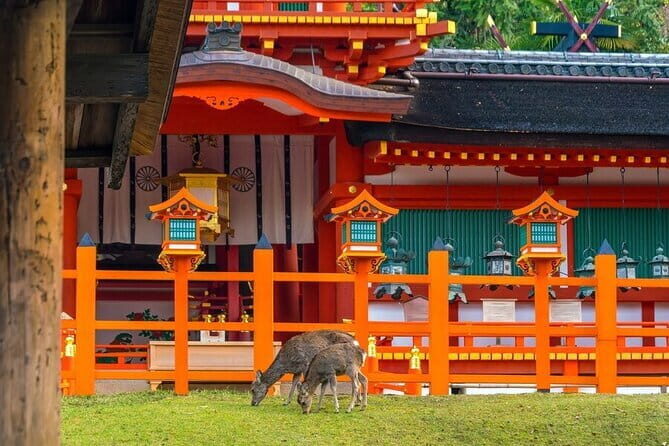
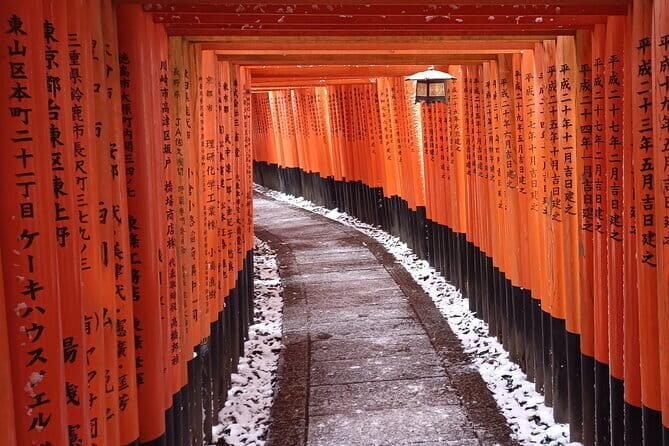
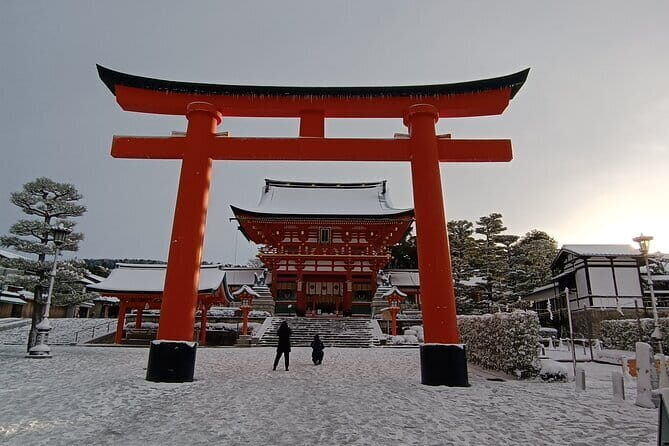
Fushimi Inari is the Kyoto stop most people already know by name. This tour takes you there for about 1 hour 30 minutes, and it’s explicitly planned to help you see the shrine with fewer crowds. The big visual hook is the famous thousand red gates, lined up like a tunnel of color that guides you deeper as you walk.
What I like about the way this stop is framed is that it isn’t only sightseeing. You also learn about the key ideas of Shintoism while you’re there. That matters because the torii gates aren’t just decoration; they’re part of how the shrine experience communicates belief and tradition. Even if you’ve read a little about Shinto before, hearing it explained in context while you’re standing among the gates makes it click faster.
A small heads-up: this is a popular place, even early. The tour’s value comes from being in the right place at the right time, not from pretending crowds don’t exist. Still, the early plan should help you enjoy the view and the walking rhythm without feeling trapped.

Stop 3: Arashiyama Bamboo Forest—nature and culture in the same hour
Next up is Arashiyama Bamboo Forest, again around 1 hour 30 minutes. This is where the morning shifts. Instead of red torii gates and temple atmosphere, you get a forest walk with the bamboo creating that classic vertical pattern—light, shadow, and movement.
What makes this stop more than a photo stop is the cultural angle. The tour says you’ll learn about Japanese society during this segment. While the specifics of what you’ll focus on aren’t spelled out, the purpose is clear: your guide ties what you’re seeing in the natural space back to how people think, behave, and value places in Japan.
In practical terms, I find this is a good middle stop for most people. Fushimi Inari is active and visually loud. The bamboo forest is calmer. That contrast can help you keep energy for the final big temple experience.
Stop 4: Kinkakuji Golden Pavilion—what you’re paying for (and what you’re skipping)
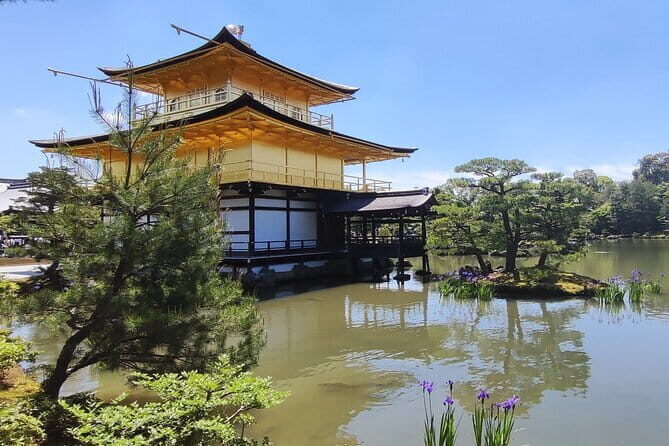
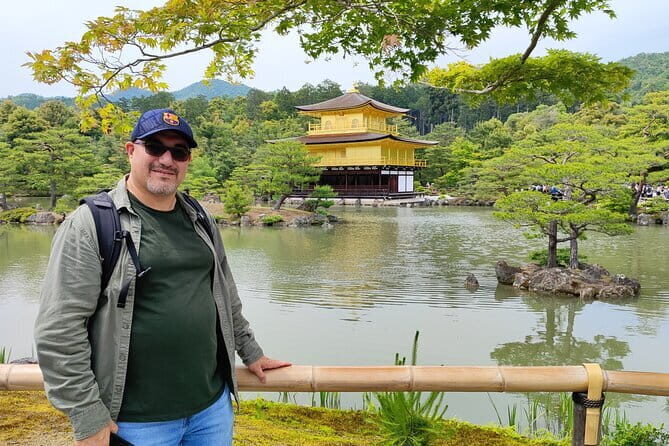
Kinkakuji, the Golden Pavilion—also known as the Golden Temple—is your last major highlight. It’s listed as the 2nd most visited tourist spot in Japan, and the tour gives you about 1 hour 30 minutes there.
Here’s the key budget detail: the entrance fee is not included. You’ll pay ¥500 per person at the site. I like that the tour clearly flags this upfront. It means you don’t arrive surprised by a last-minute payment, and you can decide whether to purchase entry right away without delay.
This stop also includes explanation time. You’ll learn about Buddhism in Japan and the history of the temple, and you’ll have time to enjoy the breathtaking views. I’d treat the entrance fee as part of the value equation: if the pavilion itself is the centerpiece, you want enough time there to actually slow down, look carefully, and take in the setting—not just pass through.
Stop 5: Back to Kyoto Station—use the rest of your day wisely
Your tour wraps with a return to the Kyoto Station area, and you’ll be back at the meeting point. The final portion is short—about 15 minutes—so don’t plan a long sit-down right at the end. Instead, treat it like you’ve just completed the “Kyoto highlights circuit” efficiently.
Because you’ve done this as a half-day, you’ll have the afternoon to roam under your own rules: extra neighborhoods, a museum, a meal you actually want, or even a second look at a place that caught your eye in the morning.
That freedom is a real quality-of-life feature. All-day tours can be great, but they also remove your choice. This one is designed to give choice back.
What I think the small group size changes
Max group size is 8 travelers, and that affects the whole experience in ways you can feel. With a small group, your guide can manage pacing without constant regrouping. It also means questions don’t get lost in a sea of people.
You’ll likely notice this most at the cultural explanation moments—Shinto at Fushimi Inari and Buddhism at Kinkakuji—because those are the moments where your guide’s voice matters more than where you stand. In small groups, it’s easier to hear the explanation and still enjoy the view.
Also, several accounts highlight the guide’s ability to plan the day tightly. That matters because when you’re moving between locations, time slips fast. The guide’s job here is to keep you from wasting time at the edges of each stop.
How long should you budget for each stop?
The tour is about 5 hours, including travel and the coffee meetup. The time allocations are:
- Starbucks meetup area: 15 minutes
- Fushimi Inari-taisha: 1 hour 30 minutes
- Arashiyama Bamboo Forest: 1 hour 30 minutes
- Kinkakuji: 1 hour 30 minutes
- Kyoto Station building back/finish: 15 minutes
That’s a balanced spread. You’re not rushing through Kinkakuji like it’s a checkmark, and you’re not spending half your morning only in one location. For most people, the 1.5-hour windows are a good compromise between seeing enough and still enjoying the place.
Who this tour suits best
This tour is a good match if:
- You want major Kyoto landmarks in one morning
- You like the idea of public transport plus guided walking (so you learn the rhythm of moving around)
- You prefer a smaller group pace over large coach chaos
- You’re interested in the religious and cultural context, not just the visuals
It may be less ideal if you want a super slow, unstructured day. The schedule is tight by design. You’re getting a best-of route, not a meander through side streets.
A realistic note on walking and comfort
This is a walking tour, so comfortable shoes are non-negotiable. Even though each stop is time-managed, you’ll still be on your feet for temple steps, shrine approaches, and the bamboo forest path. If you’re sensitive to walking distances or standing in crowds, plan your comfort accordingly.
Should you book this early half-day Kyoto highlights tour?
Yes, if your goal is efficient Kyoto with strong context. The early start is the headline benefit, and the small group size is what makes it feel relaxed rather than rushed. You’re also paying a fair price for guided structure—especially helpful in Kyoto, where it’s easy to spend more time figuring out routes than enjoying them.
One reason to think twice is cost creep at the end: Kinkakuji entrance (¥500) and public transport (¥1,300) are separate. If you’re the type who dislikes surprise add-ons, calculate the total before you commit. If you’re comfortable with that, this tour is a great way to get the famous stuff without losing your whole day.
In short: if you want the big icons—Fushimi Inari, Arashiyama bamboo, Kinkakuji—and you want them earlier rather than later, this is a smart booking.
FAQ
How long is the Kyoto highlights tour?
The tour is about 5 hours.
What is included in the price?
The price includes an experienced local guide with good English command and a mobile ticket. A gratuity is not included.
Is Kinkakuji entrance fee included?
No. The Kinkakuji Golden Pavilion entrance fee is ¥500 per person and is not included.
Do I need to pay for public transportation?
Yes. Public transportation is ¥1,300 per person and is not included.
Where do I meet the guide?
You meet at Starbucks Coffee – Kyoto Tower Sando near Kyoto Station. The tour starts at 8:00am.
How big is the group?
The tour has a maximum size of 8 travelers.
What is the cancellation policy?
You can cancel for free up to 24 hours in advance for a full refund. If the experience is canceled due to poor weather, you’ll be offered a different date or a full refund.