Kyoto is quieter on a bike. This 3-hour afternoon ride is built for backstreet discoveries and it pairs you with a trained local guide who keeps the route feeling like daily life, not a checklist. You’ll trade crowds for narrow lanes, then pop out into the more familiar streets when it makes sense.
I also like how the tour is set up for comfort: safety-focused guidance, group-cycling know-how, and stops chosen for atmosphere shifts. One thing to consider though: this is still cycling in city traffic, so you’ll want to feel confident riding for the whole 3 hours, especially if it rains.
In This Review
- Key Highlights You’ll Actually Feel
- Kyoto on Two Wheels: Why the Afternoon Route Fits
- Meeting at Higashiaburanokōjichō: How the Tour Stays Smooth
- Miyagawacho Kaburenjo: Wooden Alleys and a Calmer Geisha-District Mood
- Gion: Maiko and Geiko Streets Without the Full Crowd Chaos
- Tatsumi Bridge: Willows, a Stream Walk, and a Softer Pace
- Kyoto Imperial Palace: Gravel Paths and Seasonal Garden Atmosphere
- Kashiwayachō and the Kamo River: A Real Local Rest Stop
- Price and Value: What You’re Paying For
- Rain Plan and Safety: How This Tour Handles Real Kyoto Weather
- Who This Tour Is Best For (and Who Should Skip It)
- Should You Book This Hidden Alleyway Bike Tour?
- FAQ
- How long is the afternoon bike tour?
- What does the tour cost?
- Where do I meet, and when does it start?
- Is this tour private?
- How many people can ride with one guide?
- What happens if it rains?
- What are the child requirements?
- Is the tour a mobile-ticket experience?
- Is this experience refundable if I cancel?
Key Highlights You’ll Actually Feel
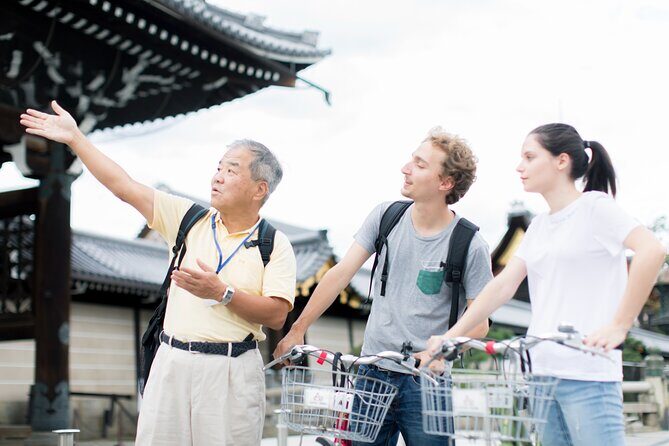
- Quiet alley routing that swaps tourist crowds for real neighborhood streets
- Professionally trained guides focused on traffic safety and local etiquette
- Geisha-district scenery in Miyagawacho and Gion, with calmer street energy
- Kyoto Imperial Palace on bike paths, including gravel-route cycling through the grounds
- A Kamo River break in Kashiwayachō, with time to relax along the water
Kyoto on Two Wheels: Why the Afternoon Route Fits
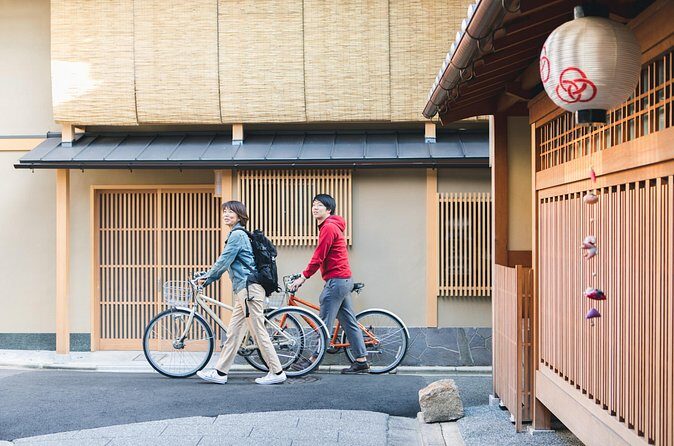
This tour starts at 2:00 pm and runs about 3 hours, which is a sweet spot in Kyoto. Late afternoon can still feel active, but you get to spend the ride portion away from the densest tourist waves. The big win here is pacing: you don’t spend your time hunting streets. Your guide does that, and the result is a route that feels like you’re moving with the city instead of chasing it.
The format also matters. Kyoto’s most memorable moments are often down narrow lanes where cars don’t go fast, and where you notice small details—wooden house textures, street-level light, and the sounds of daily routines. A bike lets you cover ground without losing that close-up street feel.
Finally, the tour is designed around atmosphere changes. You’ll glide through quiet sections, then reconnect with the bigger, more recognizable Kyoto moments—so you don’t leave feeling like you saw only one side of the city.
You can also read our reviews of more tours and experiences in Kyoto.



Meeting at Higashiaburanokōjichō: How the Tour Stays Smooth
You meet at 552-13 Higashiaburanokōjichō, Shimogyo Ward, Kyoto. From there, the tour ends back at the meeting point, which keeps things simple when you’re planning the rest of your day.
A couple other “make it easy” details help: you get a mobile ticket, and the experience is run as a private tour for your group. It’s not mixed with strangers, so your guide can set a rhythm that fits your pace and comfort level.
Also, the bike component isn’t treated as a casual add-on. Guides are trained in traffic safety, group cycling techniques, and local etiquette. That’s important in Kyoto because streets can be narrow, turns can be quick, and etiquette matters when you’re sharing space with pedestrians.
One more practical note: the minimum group size is 2, and 1 person isn’t accepted. If you’re traveling solo, you’ll need to join with at least one other person or plan another option.
Miyagawacho Kaburenjo: Wooden Alleys and a Calmer Geisha-District Mood
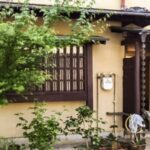
Your first stop is Miyagawacho, with a specific nod to Kaburenjo. Miyagawacho is described as the second biggest of Kyoto’s five geisha districts, and you can feel that distinction in the street vibe. This area is lined on both sides with traditional wooden houses, creating a sheltered, quieter feel than you might expect.
This is where the tour’s theme shows up best: the shift from “main sight” to “real neighborhood.” Instead of standing in a single spot for photos, you’re riding through the edges of the district and soaking up the small street atmosphere—light falling along timber, the rhythm of foot traffic, and the sense of a place that lives on a different schedule than big tourist corridors.
What to watch for: this stop is short (about 15 minutes), so arrive mentally ready to take it in fast. You’ll get the most out of it if you keep your eyes up and your stops purposeful—look at the alley feel, not just one building.
Gion: Maiko and Geiko Streets Without the Full Crowd Chaos
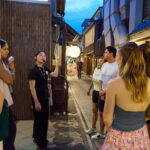
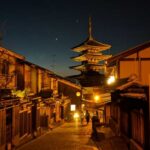
Next comes Gion, the most famous of the geisha districts. Here, the tour highlights the refined atmosphere of old times, including the presence of maiko girls and geiko women. Even if you’re not catching anyone in motion, the street character is the point.
What I like about stopping here after the quieter parts is contrast. Miyagawacho gives you a calm, enclosed mood; Gion reads as more layered and polished, with a stronger sense of tradition meeting everyday city life. It’s the same Kyoto story you see in guidebooks, but the pacing makes it feel less like sightseeing and more like wandering.
This stop is also about 15 minutes, which is realistic. You’re not losing half your day to one area, and you’ll still get to the scenic moments that come right after.
A small consideration: Gion can get busy. Since the tour only has a limited group size per guide, the guide’s navigation and timing should help you avoid the worst bottlenecks, but you’ll still want to be ready for more pedestrian presence than in the backstreets.
Tatsumi Bridge: Willows, a Stream Walk, and a Softer Pace
After Gion, you’ll head toward Tatsumi Bridge, where the tone changes again. The description focuses on the path along a limped stream, and the willow branches swinging in the breeze. This is the part of the tour where Kyoto turns more sensory—sounds of water, movement in leaves, and a slower feeling as you shift from cycling energy to a short walk.
This stop is another 15 minutes, but it’s the kind of short that works. You don’t need a long stretch of time to feel the mood of a riverside walkway when the setting is already doing the work.
If you like photographing reflections or catching the way light moves along water, this is the moment to take it seriously. And if you just want a break from traffic attention, it’s a nice reset.



Kyoto Imperial Palace: Gravel Paths and Seasonal Garden Atmosphere
One of the biggest “value-per-minute” parts is Kyoto Imperial Palace. The grounds were once the residence of Japan’s Imperial Family, and today it’s open to the public as a national garden with seasonal flowers. Even if you’re not in peak bloom season, the structure of the grounds and the garden-style pathways give you a sense of space that feels different from the surrounding city grid.
You cycle along the gravel paths inside the palace area, which is a smart choice for a bike tour. Instead of just circling the perimeter, you’re moving through an internal road system that keeps the pace pleasant and the route logical.
This stop is about 20 minutes, and that’s enough for a couple of passes with your eyes rather than turning it into a long museum-style visit. If you want to linger for photos, check with your guide on where they recommend staying close by, since timing matters for the rest of the ride.
Kashiwayachō and the Kamo River: A Real Local Rest Stop
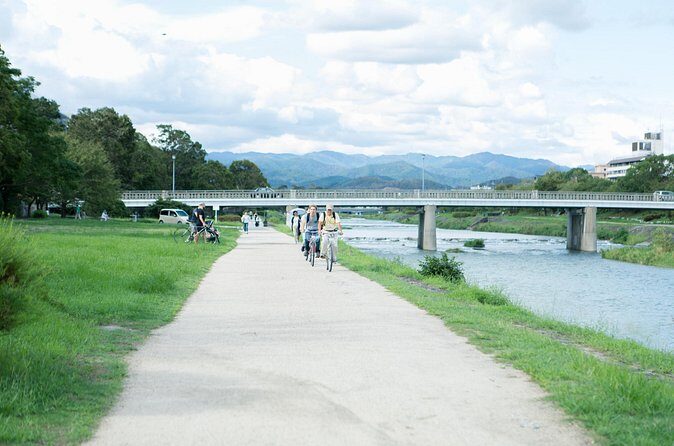
Your final highlighted stop is Kashiwayachō, with a chance to relax at a river area connected to the Kamo River. The description calls it a local residents’ beloved river, and that’s the feel you’re aiming for: less performance, more everyday calm.
This is another 20-minute segment, and it’s paired with an included experience item for this stop. Even with just the short time window, a riverside break helps your body reset after cycling. It also gives you a final “Kyoto balance” moment: geisha-district vibes, palace grounds, and then a calmer street-and-water scene.
A quick practical note: riverside areas can have different walking surfaces than you expect. Wear comfortable footwear. You’ll be fine if you treat the last stretch as a light break, not a full sightseeing marathon.
Price and Value: What You’re Paying For
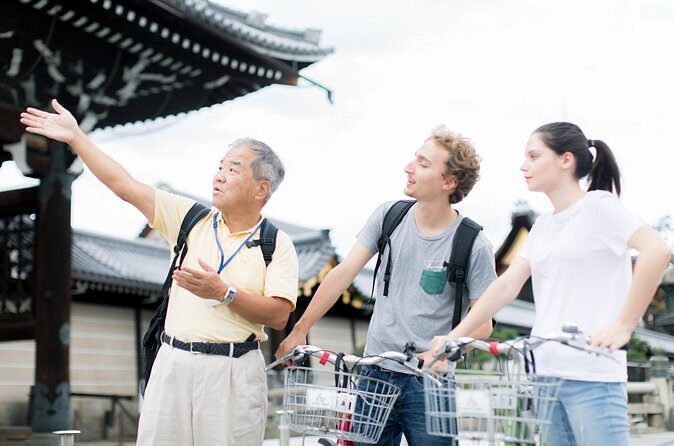
At $102.47 per person for about 3 hours, this isn’t the cheapest way to see Kyoto. But it’s also not priced like a mass-market bus tour. You’re paying for three things that actually change your day:
First, you’re paying for time savings with routing. Kyoto is easy to get turned around in, and hidden alleyways are exactly where self-guided wandering turns slow and frustrating fast.
Second, you’re paying for safety and comfort. The guide training in traffic safety and group cycling technique matters more than most people expect, especially if you’re not used to cycling in a city.
Third, you’re paying for interpretation. Stops like Miyagawacho and Gion aren’t just pretty from a distance. They make sense when someone explains what you’re looking at, why the atmosphere differs, and what to notice in the street flow.
One more angle: e-bikes. A review specifically calls out the e-bike experience as a highlight, and that’s a big deal in Kyoto’s stop-start city motion. If you want to see more without turning the tour into a workout, electric assist can make the whole thing feel effortless.
Rain Plan and Safety: How This Tour Handles Real Kyoto Weather
Kyoto weather can swing fast, so it’s good the tour is planned to operate in rain. You’re offered options if weather is wet: you can continue on bikes with rain poncho, or switch to a walking tour using public transportation (bus or metro) with the tour fee included.
That matters because it keeps you from losing the day if clouds roll in. It also means the itinerary isn’t treated as fragile. The guide can adjust the route format while keeping the core areas the same.
Safety-wise, the tour is built around trained group cycling and local etiquette. Still, I’d suggest you bring a practical mindset: keep a steady pace, listen for instructions, and don’t try to speed ahead for photos. The whole point is moving as a group through narrow streets.
Who This Tour Is Best For (and Who Should Skip It)
This works best for you if you want Kyoto’s quieter side without spending hours planning routes. It’s also ideal if you like a mix of culturescape and street atmosphere: geisha districts, a palace garden setting, and a final river-relax moment.
It’s a strong match for couples or friends who can ride well together, especially since the tour runs as a private tour. If you have a small group, note the guide capacity: typically 2 to 6 people per guide, with an extra guide possible for groups of 7 to 12. That’s a clue the operator tries to keep the experience manageable.
Skip it if you’re not comfortable riding a bicycle on the road. The tour requires that children be at least 10 years old, 145 cm or above, and able to ride safely on the road unassisted. And if you’re solo, remember that 1 person isn’t accepted—the minimum is 2.
Should You Book This Hidden Alleyway Bike Tour?
If you want Kyoto that feels lived-in—quiet alley textures, geisha-district calm, palace grounds, and a river reset—this is a great booking. The strongest reason to go is the combo of trained guidance plus a route that actually uses bikes to reach places and atmospheres that walking-only plans often miss.
Book it if:
- You like street-level experiences over museum-style time
- You’d rather save effort and let a guide handle routing
- You’re open to cycling for the full 3-hour session
- You want the afternoon timing that mixes active streets with calmer pockets
Think twice if you:
- Hate cycling in city traffic, even with safety guidance
- Are traveling solo and can’t meet the minimum of 2
- Need long stop times at one location (this is built for quick, well-timed segments)
FAQ
How long is the afternoon bike tour?
It runs for about 3 hours.
What does the tour cost?
The price is $102.47 per person.
Where do I meet, and when does it start?
You meet at 552-13 Higashiaburanokōjichō, Shimogyo Ward, Kyoto, 600-8235, Japan, and the start time is 2:00 pm.
Is this tour private?
Yes. It’s private, meaning only your group participates.
How many people can ride with one guide?
The guide can accept a minimum of 2 and a maximum of 6 people. If your group is 7–12, an extra guide can be arranged.
What happens if it rains?
The tour operates in rain. You can continue on bikes with a rain poncho at no extra charge, or switch to a walking tour using public transportation (bus or metro) with the tour fee included.
What are the child requirements?
Children must be at least 10 years old, at least 145 cm tall, and able to ride a bicycle safely on the road unassisted.
Is the tour a mobile-ticket experience?
Yes, the tour uses a mobile ticket.
Is this experience refundable if I cancel?
No. The cancellation policy states it is non-refundable and cannot be changed for any reason.
If you tell me your travel dates and whether you’re comfortable cycling in traffic, I can help you decide if this timing and route style fits your day in Kyoto.