REVIEW · TOKYO
GINZA: Go Kart Experience with NEO GINZA
Book on GetYourGuide →Operated by NEO TOKYO KART · Bookable on GetYourGuide
Tokyo gets personal once you’re in costume. I love the costume options and the way the hosts (often Patrick, plus another guide) help you hit the best photo moments at each stop. The only real catch is that driving in Japan takes advance document prep, so it’s not a totally last-minute activity.
This is a 60-minute Ginza-area go-kart thrill built for small groups of up to 6. You’ll drive a scenic loop with photo stops around major landmarks like Zojo-ji Temple, Tokyo Tower, the Imperial Palace Outer Gardens, Tokyo Station, and Kabuki-za, with an English-speaking staff member on hand.
In This Review
- Key highlights you’ll feel right away
- The NEO GINZA feeling: costume first, photos locked in
- Small group isn’t just a number
- Entering Ginza streets with the right driving documents
- The 60-minute loop: what each landmark stop is doing for your trip
- Zojo-ji Temple: your first photo stop and orientation moment
- Tokyo Tower: the classic skyline target
- Imperial Palace Outer Gardens: a calmer-feeling stretch in the middle
- Tokyo Station: big-city scale without leaving your kart
- Kabuki-za: the finale photo and your last guided moments
- Costumes, carts, and safety: fun with structure
- Costume choice: photo-ready and conversation-starting
- Driving setup: built for first-timers, but still rules-based
- What’s included (and what that means for value)
- Night slots: when Tokyo Tower looks even better
- Price and value: why about $64 can make sense
- Who this is best for (and who should pass)
- Practical tips to make your hour smoother
- Should you book the NEO GINZA go-kart experience?
- FAQ
- How long is the NEO GINZA go-kart experience?
- Where does the tour start and end?
- How many people are in the group?
- What is included in the price?
- Do I need an International Driving Permit (IDP)?
- Are there exceptions for certain countries’ licenses?
- What should I bring to participate?
- What is not allowed during the activity?
Key highlights you’ll feel right away
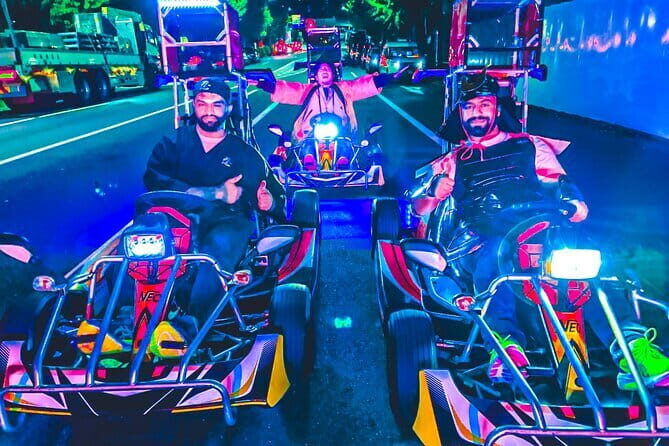
- Costumes that change your whole vibe so you don’t just ride, you show up as part of the scene
- Photo stops led by your guides with a dedicated photo-shooting service included
- Small-group pace (max 6 people) which helps you stay together and enjoy the route
- Icon route through central Tokyo without the stuffiness of a long bus day
- Two-guided setup for support and safety during the drive
The NEO GINZA feeling: costume first, photos locked in
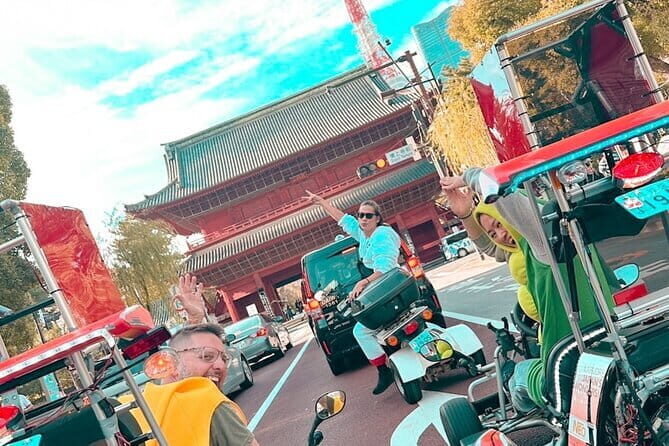
A normal sightseeing day says look at this building. This one says: become part of the city, then prove it with photos.
What makes NEO GINZA work so well is that the costume and the guided stops aren’t random add-ons. You pick your outfit before you ride, then your hosts steer you toward the moments that look great in photos. The result is that you come away with more than a memory of driving—you get pictures that actually capture the locations you came for (Tokyo Tower, Ginza-area landmarks, and the classic central-Tokyo sights).
Also, you’re not stuck guessing. Your guide talks you through what you’re seeing and helps with photo timing. In the recent experiences I’ve heard about, guides like Patrick also add personal tips—extra places to check out in Tokyo beyond the kart route. That’s the kind of “bonus” that turns a fun hour into something you’ll use later.
You can also read our reviews of more tours and experiences in Tokyo.



Small group isn’t just a number
Small group matters here because karts are active. With a limited group size (up to 6 participants), you’re more likely to:
- stay close to your guides during transitions
- get clearer instructions
- feel less rushed at each photo stop
You’ll still drive fast enough to feel the fun, but you’re not doing it with chaos.
Entering Ginza streets with the right driving documents
This is the part many people underestimate: you’re not just a passenger. You’ll be driving in Japan, and the rules for legal driving are strict.
Plan on bringing:
- Passport or ID card
- International Driving Permit (IDP) in the booklet format compliant to the 1949 Geneva Convention
- The physical IDP (and physical passport)
Important details that can affect you:
- You must obtain the IDP from your home country issuing authority; you can’t get it online while traveling.
- If your license is from Switzerland, Germany, France, Taiwan, Belgium, or Monaco, you’ll need an official Japanese translation from JAF, not an IDP.
- Licenses from countries not covered by the 1949 Geneva Convention are not permitted to drive in Japan.
Age also matters. Drivers must be 18+, and the experience isn’t suitable for people who don’t have a driver’s license.
If you’re coming from a country that’s unsure about the IDP rules, check early. This activity goes smoothly when your paperwork is already sorted.
The 60-minute loop: what each landmark stop is doing for your trip
You’re on the kart for a full hour, but the route is paced around landmarks and photo moments rather than just speed.
Your route starts and ends at 新富町一丁目ビル. From there, you’ll move through the city with scenic drive segments, then stop for photos and guided looks at several major sights:
Zojo-ji Temple: your first photo stop and orientation moment
Zojo-ji Temple is one of your early stops. This is often where you get your bearings—both with your kart and with the pace of the tour. You’ll have time for a photo stop and guided sightseeing, plus plenty of “pass by” views while the group keeps moving.
Why it’s a smart start: you’re still building confidence, so the early rhythm sets you up for the rest of the drive.
Possible consideration: because it’s a photo stop, you’ll want to be ready when your guide cues everyone to line up quickly.





Tokyo Tower: the classic skyline target
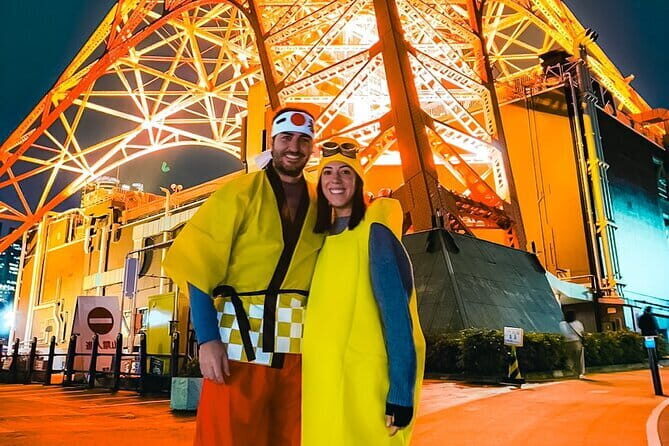
Next up is Tokyo Tower, where you’ll stop for photos and guided sightseeing again. This is the kind of landmark that looks great from the road and gets even better when you can frame it up for a proper photo.
In several experiences, the guides emphasize photo timing so the group gets clean shots—not just a blur from passing traffic. If you’re doing this specifically for Tokyo Tower pictures, be prepared to follow directions fast and keep your spot during the stop.
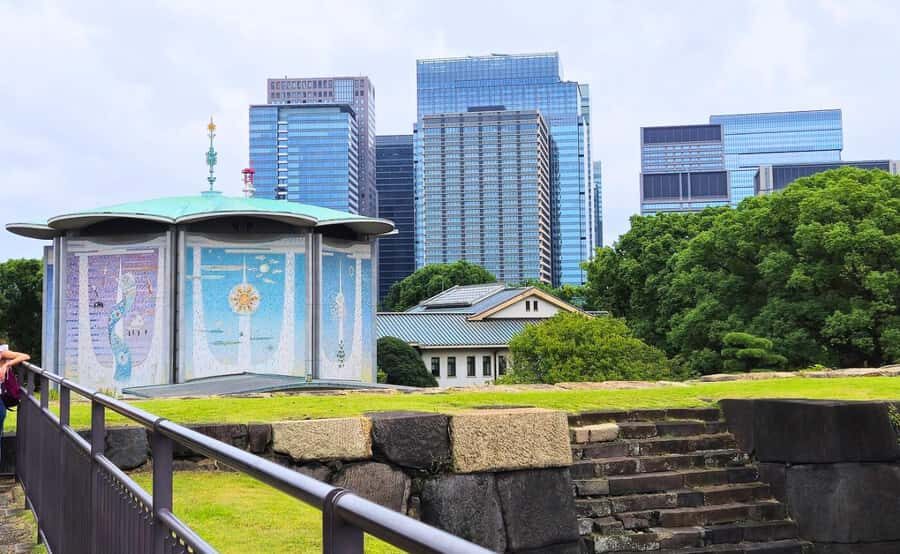
Imperial Palace Outer Gardens: a calmer-feeling stretch in the middle
You’ll pass the Imperial Palace Outer Gardens and stop for photos. This part of the route is useful because it breaks up the motion of the central city.
You get guided context while still seeing the area from the kart. If you like having a “different type” of view during your hour—less neon, more Tokyo grandeur—you’ll likely appreciate this stop.
Tokyo Station: big-city scale without leaving your kart
Tokyo Station comes next as another guided photo stop. It’s one of those places that instantly signals you’re in the center of Tokyo.
From a practical standpoint, this stop also helps you judge how the tour group handles timing: if you’re hoping to take a few photos yourself, you’ll still be working within the guide-led flow.
Kabuki-za: the finale photo and your last guided moments
Your last landmark stop is Kabuki-za. You’ll have another photo moment plus guided sightseeing, with scenic drive views leading into the finish back at 新富町一丁目ビル.
Finishing strong at a recognizable theater landmark helps the whole experience feel complete. By the time you’re done, you’ve checked off several high-profile stops without spending your day trapped on a bus.
Costumes, carts, and safety: fun with structure
This isn’t paint-by-numbers sightseeing. You’re driving a themed go-kart through central Tokyo, and that changes everything.
Costume choice: photo-ready and conversation-starting
Costume is not just for laughs. It’s a key part of why the photos work. You’ll look different at every stop, and that makes your ride feel like an event rather than a commute.
From what I’ve seen described, people choose outfits like wild character-style themes, then the guides help you get your photos in the best angles during stops.
Driving setup: built for first-timers, but still rules-based
You get instructions and you’re supported by hosts while you drive. A recurring theme in the experiences I read is the feeling of safety—clear guidance, a “you can do this” vibe, and a smooth group pace.
You should still take the rules seriously. This is where your good time depends on your own attention:
- no alcohol or drugs
- no cellphones during the activity
- avoid prohibited footwear like high-heeled shoes and slippers
What’s included (and what that means for value)
Included in the price:
- 60 minutes go-kart experience
- English-speaking staff, plus Japanese-speaking staff
- Insurance
- Costume
- Photo shooting service
Not included:
- GoPro rental or SD card (if you want extra recording gear)
If you care about photos, you’ll likely feel the value most here. The photo service is part of what you pay for, and it saves you the stress of trying to film while driving.
Night slots: when Tokyo Tower looks even better
Some departures are run at night, and that can make the whole hour feel more surreal and cinematic. In the experiences I saw, people specifically liked doing it at night because Tokyo Tower looked lit up, and because the streets feel different after dark.
If you’re choosing between day and night, think about what you want your photos to capture:
- Day: cleaner light and sharper building lines
- Night: light effects and a more dramatic skyline vibe
Just remember that your comfort matters. Night driving can feel faster and moodier, so choose what matches your confidence.
Price and value: why about $64 can make sense
At around $64 per person for a full hour, this isn’t the cheapest way to see Tokyo. But it often feels fair because you’re paying for several bundled things:
- a real guided kart experience (not self-guided)
- insurance
- your costume
- guided photo shooting
Also, you’re not spending the whole day getting to and from viewpoints. With multiple major stops packed into one loop, you’re compressing a “top sights” day into something you can do with less time stress.
Small group size (up to 6) is part of the value too. It can make the experience feel more personal and helps the guides keep the group on track.
The main cost-related downside is the upfront document requirement. If your IDP setup is going to be a hassle, this can feel less like “cheap fun” and more like “worth it if you’re already prepared.”
Who this is best for (and who should pass)
This kart experience is best if you want:
- a high-energy way to see central Tokyo landmarks
- themed fun with costumes
- a guided route with built-in photo moments
- a small group feel rather than a large tour bus
It’s not a good fit if:
- you don’t have a valid driver’s license
- you can’t meet the driving-document requirements for Japan
- you’re uncomfortable following safety and equipment rules
If you love “do it once” bucket list experiences, this is the kind of activity that feels like it belongs in the middle of a Tokyo trip.
Practical tips to make your hour smoother
You’ll enjoy this more if you show up ready to drive. A few things to keep in mind:
- Bring your physical IDP and passport (not a screenshot).
- Wear shoes that won’t violate the rules (no high heels, no slippers).
- Leave your phone put away. The activity has a no-cellphone rule.
- Don’t plan on alcohol. It’s not allowed during the experience.
- Start at the meeting point on time: 新富町一丁目ビル is your anchor for check-in and the end of the route.
If you’re doing this at night, dress for comfort and visibility. You’ll be moving fast enough that feeling prepared matters more than style.
Should you book the NEO GINZA go-kart experience?
Book it if you want a fun, photo-friendly way to hit major Ginza-area icons in just one hour—and you’re confident you can handle the Japanese driving document requirements. The included costume and photo service are the big reasons it often feels worth the price.
Skip it if you’re not planning to drive in Japan seriously, or if the IDP prep would be a deal-breaker. This experience shines when you can focus on the ride and photos instead of paperwork stress.
If your Tokyo plan includes Tokyo Tower, Ginza vibes, and a lighthearted Mario Kart-style hour with real guides, NEO GINZA is a strong call.
FAQ
How long is the NEO GINZA go-kart experience?
It runs for 60 minutes.
Where does the tour start and end?
It starts and returns to 新富町一丁目ビル.
How many people are in the group?
The group is limited to 6 participants.
What is included in the price?
The price includes the 60-minute go-kart experience, insurance, your costume, English-speaking and Japanese-speaking staff, and a photo shooting service.
Do I need an International Driving Permit (IDP)?
Yes. For most countries, you need a physical IDP in the 1949 Geneva Convention booklet format, plus a physical passport.
Are there exceptions for certain countries’ licenses?
Yes. If your license is from Switzerland, Germany, France, Taiwan, Belgium, or Monaco, you need a Japanese translation of your license from JAF rather than an IDP.
What should I bring to participate?
Bring your passport or ID card and your physical International Driving Permit (or your domestic license plus the official translation if your country requires it).
What is not allowed during the activity?
High-heeled shoes, alcohol and drugs, slippers, and cellphones are not allowed.