REVIEW · TOKYO
Go Karting Tokyo Uptown Experience|7 Top Destinations in 120 Mins
Book on Viator →Operated by Kartzilla Go Kart Tours | Top Cultural & Historic Destinations in Tokyo · Bookable on Viator
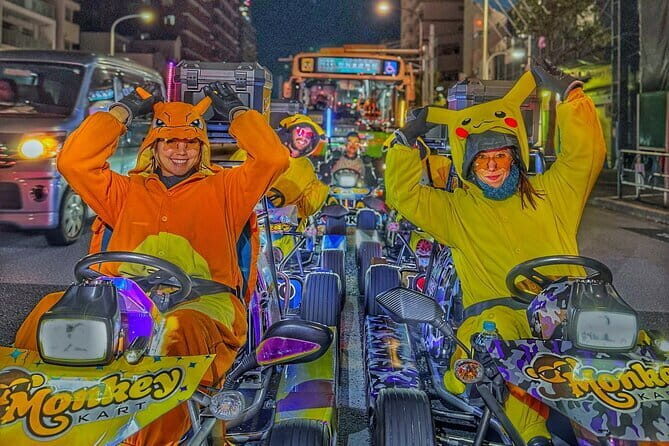
Tokyo from behind the wheel is a rush. This small-group go-kart experience is a fast way to get your bearings in Tokyo without the grind of crowds and long train transfers. You also get costumes plus a guide who captures photos and videos as you cruise by big-name landmarks.
What I like most is how much the tour packs in for the time: you’re not just driving in circles, you’re rolling past major sights like Tokyo Skytree, the Imperial Palace, and Tokyo Tower with enough context to make it feel connected. The only real consideration is the driving paperwork: if you can’t show your original local license and the right International Driving Permit, your ride can be cancelled with no refund.
In This Review
- Key points to know before you go
- Why go-karting Tokyo is a smart way to save time
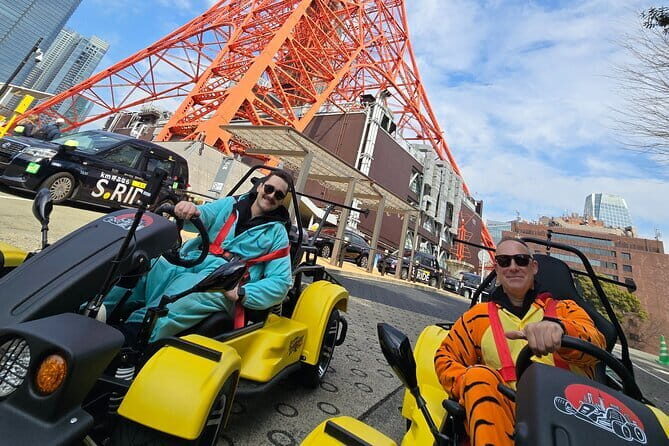
- Costumes and photo/video: the part that makes it feel like more than driving
- The landmarks you’ll hit, and what to look for at each stop
- Tokyo Skytree: the skyline anchor
- Ryogoku and the Sumo Stadium: tradition with a modern edge
- Tokyo Station and Marunouchi: architecture you can feel
- The Imperial Palace: big, formal space in the middle of the city
- Tokyo Tower: resilience on the skyline
- Ginza: upscale shopping and nighttime energy
- Kabukiza Theater: the face of Kabuki
- Timing and ride flow: what 1 hour 40 minutes really gives you
- Price and what makes this $117.27 feel fair
- Logistics that can make or break your day
- Where you meet
- Mobile ticket
- Weather matters
- Driving documents are not optional
- Who this tour suits best (and who should skip it)
- Should you book this go-kart Tokyo experience?
- FAQ
- How long is the go-kart tour?
- What landmarks does the route pass?
- What is included in the price?
- What is not included?
- Where do I meet the guide?
- Do I need a driver’s license?
- Are there any special rules for US Forces in Japan?
- Is the group size limited?
- What should I do if the weather is bad?
- Is a mobile ticket used?
Key points to know before you go
- Small group size (max 10): easier control of the route and a more personal pace.
- Costumes included: instant fun for photos, not just a novelty.
- Landmark route across central Tokyo: Skytree, Ryogoku/Sumo area, Tokyo Station, Imperial Palace, Tokyo Tower, Ginza, Kabukiza.
- Guide captures photo and video: built-in keepsakes during the ride.
- Insurance and fuel included: the price covers more than the kart alone.
Why go-karting Tokyo is a smart way to save time
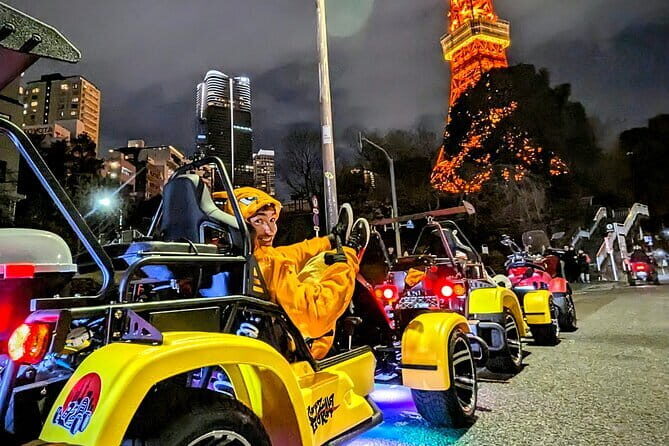
Tokyo can be overwhelming. The streets look busy, the neighborhoods blur together, and you can spend half a day just figuring out the best route to your next stop. A go-kart tour fixes that fast.
Instead of hopping between stations and walking long blocks, you’re moving on a pre-planned loop. That means you get an easy mental map of central Tokyo: you see the skyline, the big civic areas, and the iconic towers in one smooth package. The about-1-hour-40-minutes timing also helps. It’s long enough to feel like a real activity, but not so long that it eats your whole day.
Another thing I appreciate is the “fun-first” structure. You’re not stuck staring at a bus window. You’re actively driving, wearing a costume, and stopping the cognitive load that comes with sightseeing by transit. It’s a different kind of sightseeing, and that’s the point.
You can also read our reviews of more tours and experiences in Tokyo.



Costumes and photo/video: the part that makes it feel like more than driving
This tour includes a costume and adds photo and video capture by the guide along the way. That matters because in Tokyo, photos are often the main souvenir. The difference here is you’re not just posing at one landmark and moving on. You’re collecting moments in motion.
Also, the photo/video angle helps you enjoy the route instead of constantly fumbling for your phone. If you’re the type who forgets to take pictures because you’re busy enjoying the moment, this setup solves that.
One small practical note: if you’re thinking about extra camera gear (like an Insta360), the tour notes that the data card for that camera is available for purchase. So don’t assume you’ll be fully kitted out with everything you own.
The landmarks you’ll hit, and what to look for at each stop
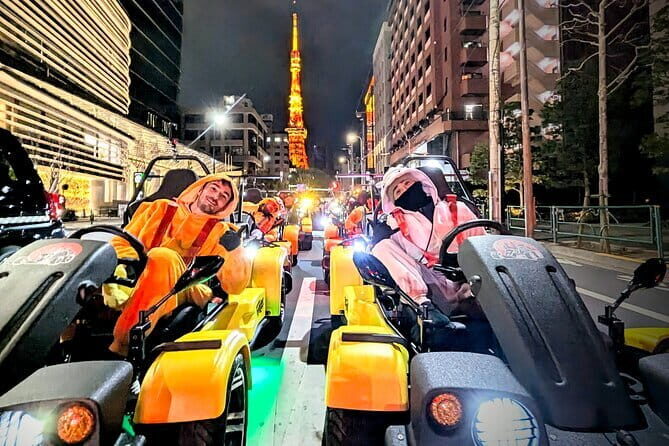
The route is built to show you a lot of Tokyo’s “greatest hits,” but the value is in how the stops connect. Here’s what you can expect, and where your eyes should go.
Tokyo Skytree: the skyline anchor
Tokyo Skytree is the obvious mood-setter. It’s described as the world’s tallest broadcasting and communication tower, and it towers over Sumida City. When you pass it, look for how it changes the feel of the area. You’ll notice it’s not just a standalone monument; it’s a visible landmark that helps you orient yourself.
Practical takeaway: if you’re arriving in Tokyo and everything feels new, passing Skytree early can give you an instant “I get where I am” feeling.
Ryogoku and the Sumo Stadium: tradition with a modern edge
Ryogoku is tied to sumo culture, and the route places the Sumo Stadium front and center. The tour frames this area as a mix of tradition and modern life. Even if you’re not a sumo superfan, this stop gives you Tokyo texture.
What to watch for: the contrast between the formal sports-world vibe and the surrounding city energy. It’s a reminder that Tokyo isn’t only towers and shopping streets.






Tokyo Station and Marunouchi: architecture you can feel
The route guides you through Tokyo Station, in the Marunouchi district. Tokyo Station’s early-20th-century roots are part of its appeal, and when you’re moving by it, the station reads like more than transportation. It feels like a landmark in itself.
Why this matters: Tokyo Station is one of those places where many people pass through but never really look. Seeing it from a different angle—while you’re driving—makes it stick in your memory.
The Imperial Palace: big, formal space in the middle of the city
Next comes the Imperial Palace, described as the residence of the Japanese Emperor and Empress. The tour mentions it was constructed in 1457 by Ota Dokan within the larger Edo Castle grounds.
Even without going inside, this is a meaningful sight because it’s one of the clearest examples of Tokyo’s historical layers. When you pass this kind of space, the city feel changes from commercial pace to a more formal, ceremonial tone.
Tokyo Tower: resilience on the skyline
Tokyo Tower is a classic, and the tour gives you extra context: it’s 333 meters high, and it’s positioned as a symbol of resilience, rebirth, and economic recovery after hard times. That explanation makes the tower more than a postcard.
What to do while you’re driving past: pay attention to its role as a visual reference. It’s the kind of structure you can later use to measure where you are relative to other areas.
Ginza: upscale shopping and nighttime energy
Ginza is Tokyo’s upscale shopping, dining, and entertainment district. The tour notes it as a place with boutiques, art galleries, restaurants, nightclubs, and cafes.
If you like people-watching, Ginza is easy. Just from a passing view, you get a sense of why Tokyo uses it as a benchmark for luxury and style.
Kabukiza Theater: the face of Kabuki
Kabukiza Theater is tied to Kabuki, a classical Japanese dance-drama with stylized storytelling, elaborate makeup, and costumes. The tour is positioning this stop as a cultural landmark, not just a building name.
Even if you’re not catching a performance that day, passing Kabukiza gives you a direct line to Tokyo arts culture.
Timing and ride flow: what 1 hour 40 minutes really gives you
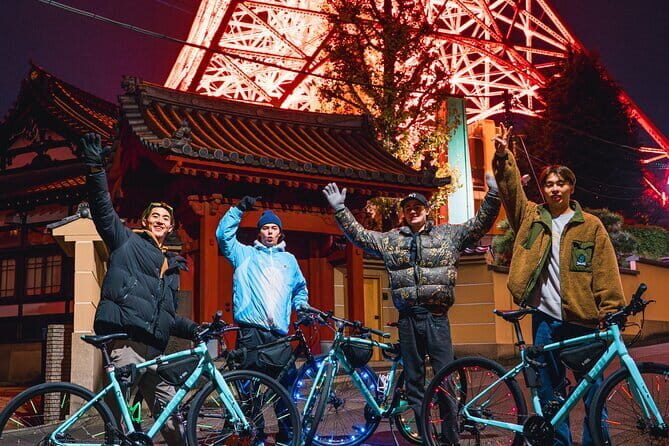
The tour lasts about 1 hour 40 minutes. That’s a sweet spot for this kind of activity. You’re not just gearing up and leaving; there’s time to reach multiple landmarks and still keep the energy up.
You also have the advantage of a maximum of 10 travelers. Smaller groups tend to move better in busy cities. It’s also easier for the guide to manage the photos/video moments and keep everyone together.
One thing you should plan around: this is a driving experience. Your energy goes into the ride first, then you appreciate the sightseeing second. If you’re the type who wants quiet, slow museum time, this won’t be that. If you want motion plus iconic scenery, it’s a great match.
Price and what makes this $117.27 feel fair
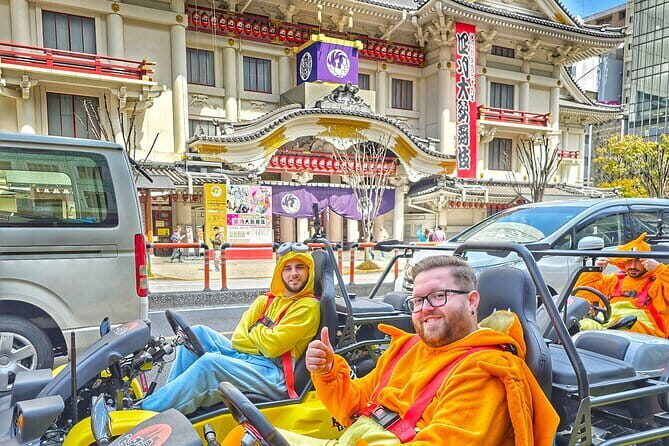
At $117.27 per person, this isn’t a “cheap activity.” But it’s priced like a package, and the inclusions help justify it.
You get:
- Go-kart rental
- Tour guide
- Costume
- Fuel
- Insurance
- Photo and video
- Water
That’s a lot of “hidden costs” you’d normally handle separately. Many DIY alternatives force you to pay for the kart, safety/insurance elements, and then still figure out guides and route planning (plus the photo part). Here, the tour bundles those pieces into one price.
Two cost-realities to keep in mind:
- No pickup or drop-off is included, so you’ll need to get yourself to the meeting point and back.
- No food is included, so plan a snack or meal before or after.
Logistics that can make or break your day
Where you meet
You meet at: Japan, 124-0014 Tokyo, Katsushika City, Higashiyotsugi, 1-chōme202 小島貸事務所. The tour also notes it’s near public transportation, which is good because getting to the starting area can still be tricky in Tokyo.
Mobile ticket
You’ll receive a mobile ticket, which is convenient. Bring your phone and make sure it’s charged.
Weather matters
The experience is described as requiring good weather. If it’s cancelled due to poor weather, you’ll be offered a different date or a full refund. In Tokyo, that’s smart planning.
Driving documents are not optional
This is the big one. You must have:
- Your original local driving license
- Your International Driving Permit (IDP) issued under the 1949 Geneva Convention
The tour also notes special rules:
- For US Forces in Japan (SOFA), a driving license is required (per the tour note).
- Nationals of Switzerland, Germany, France, Belgium, Monaco, and Taiwan can drive if you have Japanese translation of the driving license available. You’re asked to contact the provider about a month in advance if you need assistance.
- If you fail to provide the original local license and IDP, the tour can be cancelled and there will be no refund.
If you’re traveling with a rental car plan already, double-check that your IDP is the right format. It’s one of those “small paperwork items” that can turn into a big lost day.
Who this tour suits best (and who should skip it)
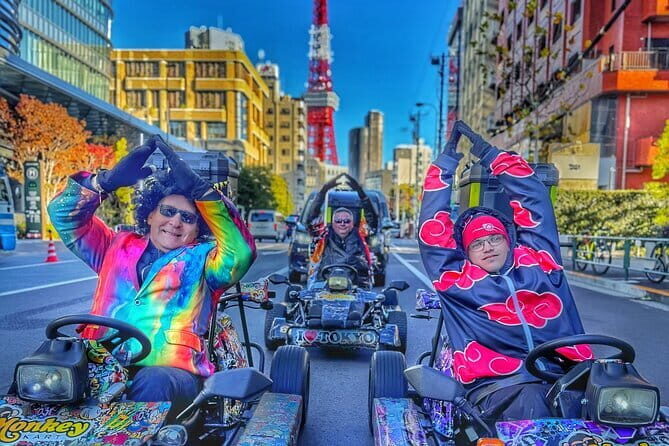
This go-kart tour is built for people who want Tokyo sightseeing with energy. It’s especially good if:
- You want to cover multiple major landmarks without long transit chains
- You like photos and want guided help capturing them
- You’re comfortable driving a kart and meeting driving-document requirements
- You want a smaller group setting (max 10)
It may not be ideal if:
- You’re not able to meet the driving license and IDP requirements
- You prefer quiet, slow-paced sightseeing with lots of walking and time in museums
- You want food included or a full-day itinerary
Should you book this go-kart Tokyo experience?
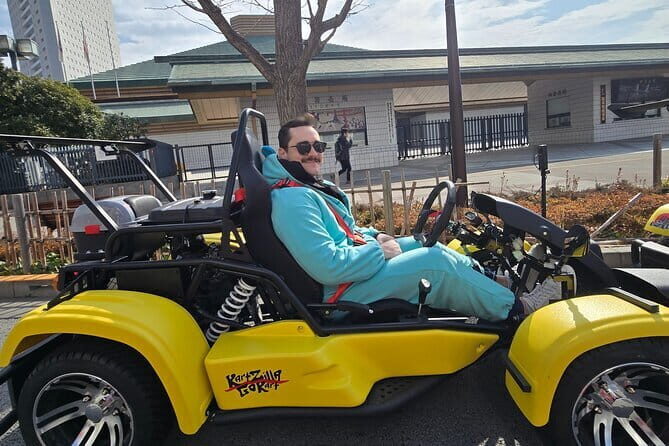
Yes, if your goal is a fun, landmark-heavy Tokyo session with costumes, guide-led photo/video, and a small group. The route is structured to show you key skyline and cultural anchors in one go, and the inclusions (rental, fuel, insurance, water, photo/video) make the price feel more like a package than a basic rental.
Hold off if you’re missing the right driving paperwork or you don’t want to drive as part of your sightseeing plan. In that case, the logistics alone can turn it from a fun day into a frustrating one.
If you do have the right documents and you want a different kind of Tokyo tour—one where you’re not stuck on crowded transit—this is a strong pick.
FAQ
How long is the go-kart tour?
The duration is about 1 hour 40 minutes.
What landmarks does the route pass?
The tour passes major sights including Tokyo Skytree, the Sumo Stadium area in Ryogoku, Tokyo Station in Marunouchi, the Imperial Palace, Tokyo Tower, Ginza, and Kabukiza Theater.
What is included in the price?
Included are go-kart rental, tour guide, costume, fuel, insurance, photo and video, and water.
What is not included?
Food is not included. Pickup and drop-off are also not included, and the data card for an Insta360 camera is available for purchase.
Where do I meet the guide?
The meeting point is at Japan, 124-0014 Tokyo, Katsushika City, Higashiyotsugi, 1-chōme202 小島貸事務所. The tour ends back at the meeting point.
Do I need a driver’s license?
Yes. The tour requires a local driving license and an International Driving Permit (IDP) issued under the 1949 Geneva Convention. If you do not provide the original local driving license and the IDP, the tour can be cancelled with no refund.
Are there any special rules for US Forces in Japan?
The tour notes that for US Forces in Japan (SOFA), a driving license is required.
Is the group size limited?
Yes. The tour has a maximum of 10 travelers.
What should I do if the weather is bad?
The tour requires good weather. If it’s cancelled due to poor weather, you’ll be offered a different date or a full refund.
Is a mobile ticket used?
Yes. The tour uses a mobile ticket, and confirmation is received at booking.