REVIEW · TOKYO
Japanese Calligraphy Experience
Book on Viator →Operated by True Japan Tour · Bookable on Viator
Japanese calligraphy makes time feel different. In Tokyo, you get a practical, hands-on class that mixes tool technique with the story of how this art works. I like that it’s taught by an accredited instructor and paced for real learning, not just photos.
My favorite part is the souvenir outcome: you finish with your own calligraphy on a souvenir board you can bring home. The main drawback to consider is the short duration (about 1 hour 30 minutes), so you’ll get a strong start, but not a lot of repeat practice if you want to get very advanced.
In This Review
- Key Points at a Glance
- A 90-Minute Japanese Calligraphy Workshop in Tokyo (ShibaKōen)
- What You Learn: Your Name, Basic Strokes, and How Japanese Writing Works
- Inkstone and Brush 101: Getting the Tools Right
- The Souvenir Wall Piece: Turning Practice Into Something You Can Hang
- Small-Group Energy and Instructor Support You Can Actually Feel
- Price and Value: What $77.26 Gets You in Real Teaching Time
- Who Should Book This Calligraphy Class (and Who Might Want a Longer One)
- Should You Book Japanese Calligraphy in Tokyo?
- FAQ
- How long is the Japanese calligraphy workshop?
- Where does the workshop start and end?
- What’s the price per person?
- What’s included in the workshop fee?
- Is transportation to and from the venue included?
- Are food and drinks provided?
- How many people are in the group?
- How far in advance do people typically book this tour?
- When will I receive confirmation after booking?
- What is the cancellation policy?
Key Points at a Glance
- Small-group size (max 10) keeps the teaching focused and your questions timely
- Accredited instructor guidance helps you understand strokes, tools, and what to aim for
- Inkstone + brush instruction means you learn the basic workflow instead of guessing
- Write your name in Japanese characters early on, so skills feel useful fast
- You leave with a souvenir wall piece, turning the class into something tangible
A 90-Minute Japanese Calligraphy Workshop in Tokyo (ShibaKōen)
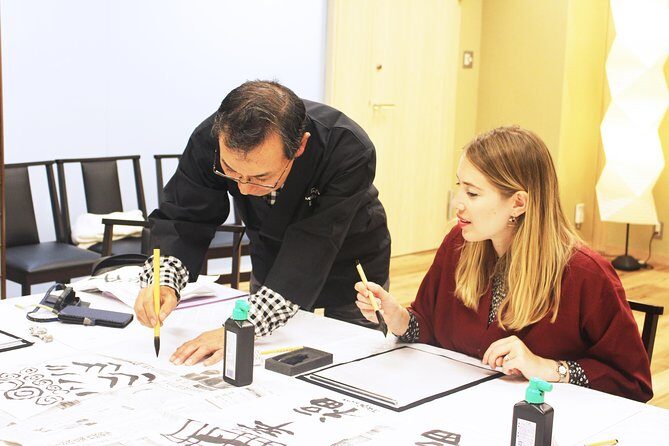
This workshop is a tidy, one-and-a-half-hour plan that fits well into a day of sightseeing. You’re based in the Minato City area near Shibakōen, meeting at Kikai Shinkō Kaikan (3-chōme-5-8 Shibakōen). Since transportation to and from the venue isn’t included, I’d plan your timing like you would for any museum-class add-on: give yourself enough buffer to arrive settled.
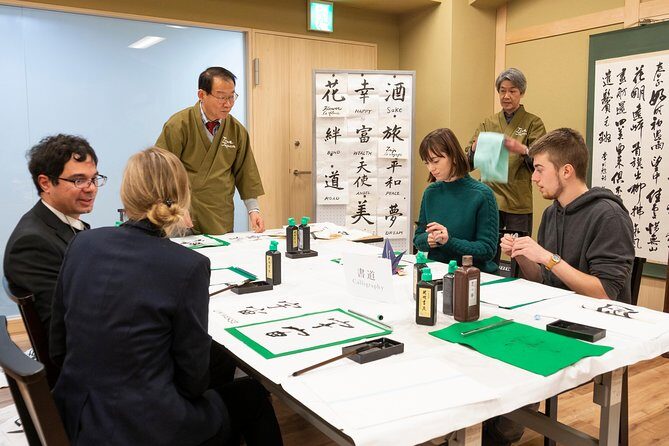
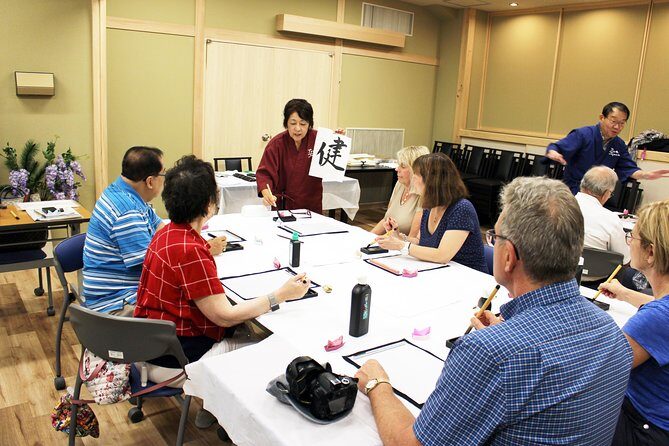
The learning format is a big part of the value. It’s not just a demo where you watch brush movement from the back. The structure is hands-on from the start, and the instructor supports you as you try writing basic characters and strokes. The class size stays capped at 10, so you’re more likely to get corrections when you need them.
Also, the workshop includes equipment rental and the souvenir calligraphy board, which matters. A lot of experiences sound “creative,” but then you’re stuck paying extra for materials. Here, the core supplies are built into the price.
You can also read our reviews of more tours and experiences in Tokyo.



What You Learn: Your Name, Basic Strokes, and How Japanese Writing Works
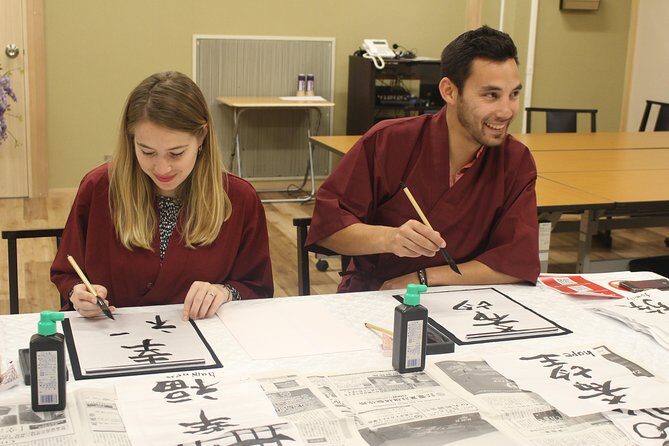
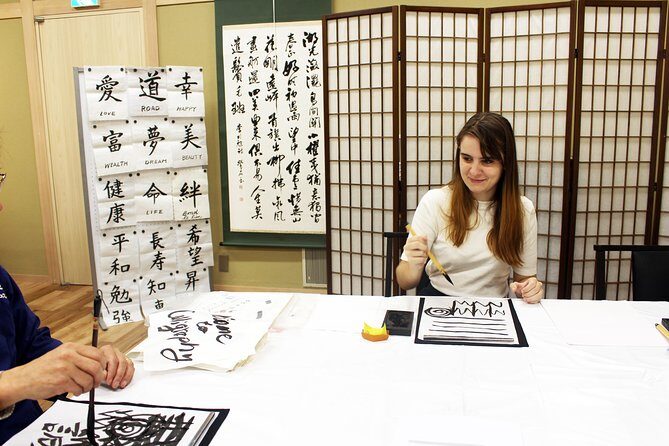
You’ll get a guided introduction to Japanese calligraphy that includes both mechanics and context. In the first half, you learn the basic methods of Japanese calligraphy—how writing characters works and how to produce the right stroke shapes with a brush. A standout is that you practice writing your name in Japanese characters, which gives you an immediate reason to care. Learning becomes personal fast.
The workshop also covers the complexity of Japan’s writing system at a basic level. Even if you’re not studying Japanese formally, it helps to understand that calligraphy is tied to how characters are structured. The instructor’s job isn’t to overwhelm you—it’s to give you a map. You’ll learn basic brushstroke ideas for Japanese characters, so the second half isn’t total guesswork.
In the later portion, you shift from practice to production. You’re making a calligraphy piece of your own on the souvenir board, using what you practiced earlier. That flow is smart: start with foundations, then use them right away.
A practical note: since most sessions are about getting the basics down and producing a piece you’ll keep, don’t expect the class to cover long-form calligraphy mastery. This is the kind of workshop that helps you walk away with understanding and a finished result.
Inkstone and Brush 101: Getting the Tools Right
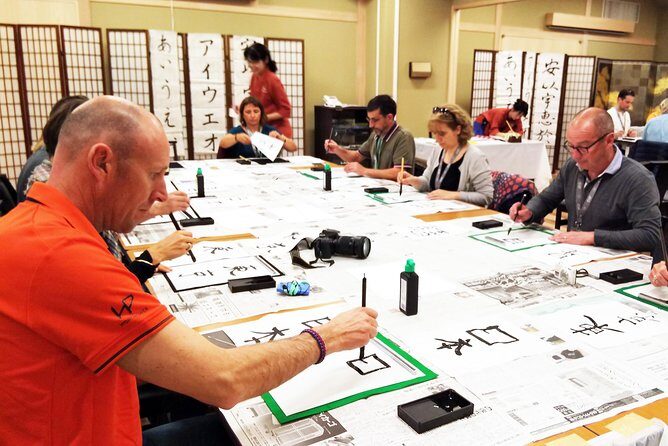
One of the most intimidating parts of trying calligraphy on your own is the tools. This class directly addresses that. You learn how to use an inkstone and brush, which is where a lot of beginners struggle when they try to replicate calligraphy materials at home later.
Here’s what that tool practice can do for you: it turns a scary craft into a set of steps. Instead of only focusing on what the character looks like on the page, you learn what you’re doing with the brush and how the ink workflow supports the strokes. That’s valuable because calligraphy isn’t only shape—it’s also pressure, direction, and the feel of the brush moving across the surface.
In the hands-on part, you’ll also get guidance on the motions needed for basic strokes. Based on the class feedback pattern, the instructor approach tends to be patient and detailed—especially when your handwriting in everyday life isn’t exactly tidy. That matters in calligraphy, because you’re trying to control something delicate with a tool you’re new to.
If you’re worried about your drawing skills, don’t. This workshop is built around teaching the method, not judging your artistic talent.
The Souvenir Wall Piece: Turning Practice Into Something You Can Hang
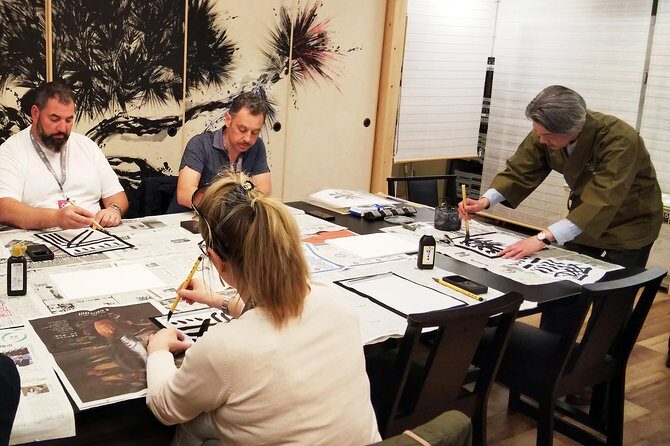
The second half is where the workshop turns from learning into a keepsake. You create your own calligraphy piece on a souvenir board. That’s a big difference versus classes where you finish with a small worksheet or a temporary piece you can’t really display.
Making the souvenir board is valuable for two reasons. First, it forces you to consolidate what you learned in the first half. You don’t just study strokes—you apply them with a real end goal. Second, the finished board gives you something that feels like a real souvenir instead of a generic craft.
I also like that the design supports personal expression without turning the class into a free-for-all. You’re taught the basics, then guided toward creating a piece you’ll genuinely want to keep. If you take your time, you’ll get better results simply because you’re writing with purpose rather than filling a page.
One consideration: because the session is about 90 minutes total, your souvenir outcome depends on using the class time well. If you’re chatting constantly or taking long breaks, you may feel rushed at the end.
Small-Group Energy and Instructor Support You Can Actually Feel
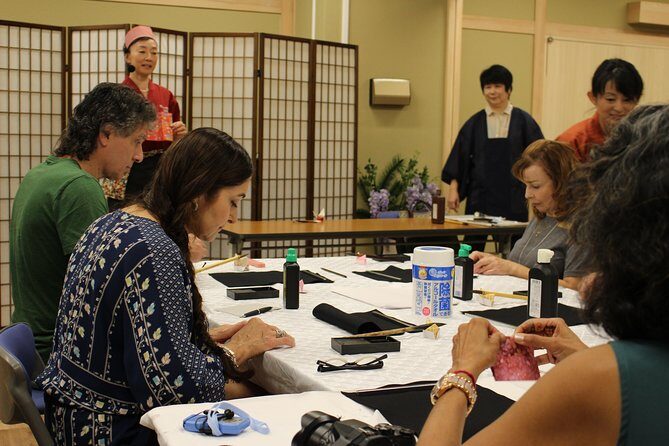
This experience runs with a maximum of 10 travelers, and that size changes everything. In small groups, your instructor can correct what needs correcting instead of offering broad tips to everyone at once. You also get more chances to ask questions when something feels unclear—like how much pressure to use or how a stroke should travel.
The workshop includes a nationally accredited tour guide-interpreter plus calligraphy equipment rental. The goal is clear: you get interpretation and teaching in a way that works for non-Japanese speakers. The class feedback pattern suggests the instructors explain things in a calm, well-spoken way, which makes it easier to follow along while your hands learn the movements.
I’d call out the “patient coaching” element as a major reason this workshop works for beginners. When you’re learning a new script and a new tool at the same time, it’s not the moment to feel embarrassed. The atmosphere here is geared toward letting you try, getting corrections, and trying again.
And yes, the pace can be absorbing. The kind of class where you glance at the clock and realize 90 minutes disappeared.






Price and Value: What $77.26 Gets You in Real Teaching Time
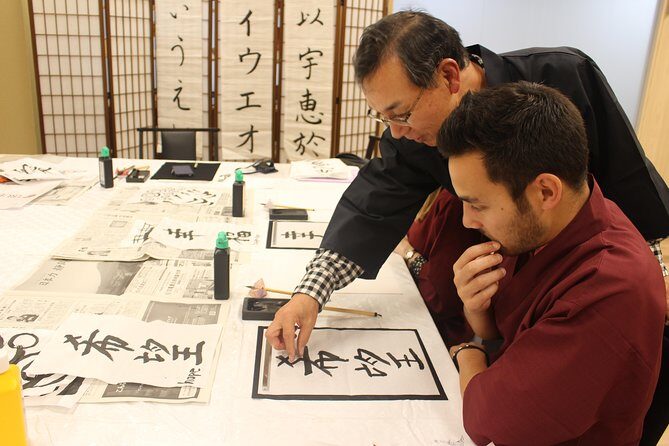
At $77.26 per person, this workshop sits in the range of a short, guided cultural activity. The price makes sense because it includes the parts that usually add up: calligraphy equipment rental and the souvenir calligraphy board, plus an accredited guide-interpreter.
If you tried to DIY this in Tokyo, you’d still need access to tools, a place to practice, and expert guidance so you don’t learn the wrong technique. Here, your money is paying for instructor time and the materials needed to finish something you can keep.
There’s also practical value built into how you book and attend. It uses a mobile ticket, and the experience offers group discounts. Plus, confirmation is received within 48 hours of booking (subject to availability), which helps if you’re planning a trip timeline close to your start dates.
Duration matters too. At about 1 hour 30 minutes, you get a structured experience without burning half a day. That’s a sweet spot when you want something hands-on but don’t want a long commitment.
Who Should Book This Calligraphy Class (and Who Might Want a Longer One)
You’ll likely love this workshop if you:
- Want a hands-on cultural activity that results in a souvenir you can display
- Are a beginner who needs step-by-step instruction with tools
- Like history and context, not just a craft project
- Prefer small-group learning where you can ask questions
This may not be the best fit if you’re looking for hours of practice or a high-level technical deepening. The class is designed for foundations and a finished piece, not for advanced skill building over multiple sessions.
Also, if you have very tight timing, plan your arrival buffer carefully. Transportation isn’t included, and the workshop ends back at the meeting point. You’ll want to make sure you’re not sprinting to get there on time.
Should You Book Japanese Calligraphy in Tokyo?
I’d book it if you want an authentic Tokyo experience that’s practical, not just performative. The combination is strong: tool instruction, basic strokes, writing your name in Japanese characters, and a finished souvenir board within 90 minutes. It’s also beginner-friendly and benefits from small-group teaching.
Before you go, think about your goal. If your goal is to learn a respectful foundation and take home a piece you’re proud of, this hits the mark. If your goal is to become a calligraphy expert, you might want to follow this with additional practice time elsewhere.
If you’re choosing between a short cultural class and another activity that’s mostly observational, pick this. Your hands learn something real, and you’ll leave with proof.
FAQ
How long is the Japanese calligraphy workshop?
The duration is about 1 hour 30 minutes.
Where does the workshop start and end?
It starts at Kikai Shinkō Kaikan, 3-chōme-5-8 Shibakōen, Minato City, Tokyo 105-0011, Japan, and ends back at the meeting point.
What’s the price per person?
The price is $77.26 per person.
What’s included in the workshop fee?
Included are a nationally accredited tour guide-interpreter, calligraphy equipment rental, and a souvenir calligraphy board.
Is transportation to and from the venue included?
No. Transportation to/from the venue is not included.
Are food and drinks provided?
No food or beverages are included.
How many people are in the group?
The workshop has a maximum of 10 travelers.
How far in advance do people typically book this tour?
On average, it’s booked 53 days in advance.
When will I receive confirmation after booking?
Confirmation is received within 48 hours of booking, subject to availability.
What is the cancellation policy?
You can cancel for a full refund up to 24 hours in advance of the experience start time.