REVIEW · KYOTO
Kyoto : Japanese Calligraphy Workshop with a calligrapher
Book on GetYourGuide →Operated by HidB LLC · Bookable on GetYourGuide
Ink teaches patience fast in Kyoto. In this Japanese calligraphy workshop, you learn real brush-and-ink technique from a calligrapher (with English instruction), then you put it to work right away by choosing a Kanji or word and writing your own piece. I especially love the step-by-step stroke practice and how much personal attention you get when you’re shaping your character. I also like that you finish with a take-home item you actually chose—fan, shikishi board, or washi postcard. One drawback to plan for: the meeting location can be a little tricky to spot at first, so build in a few extra minutes to find the entrance sign.
You’ll spend about 1 to 90 minutes learning the tools, practicing foundational strokes (with a strong focus on Kanji, plus some character exploration like Katakana), and then creating a final artwork. You’re not just watching—you’re doing. The class gives you the materials, and you’ll even end with a commemorative photo of your completed piece, so it feels like a proper keepsake, not a quick demo.
In This Review
- Key things to look for before you go
- Kyoto Japanese Calligraphy Workshop: What the 1–90 Minutes Covers
- Tools and posture: brush, ink, and not ruining your outfit
- Learning Kanji strokes: the five foundations you’ll use again later
- Picking your character: Love, Happiness, and other fun choices
- Personalized model with Miran: how your final piece comes together
- Fan, shikishi board, or washi postcard: choosing your take-home art
- Where to meet in Kyoto: the entrance sign and why you should arrive early
- Value for $51: what you’re really paying for
- Who should book this Kyoto calligraphy workshop
- Should you book it?
Key things to look for before you go
- A stroke-first lesson that starts with the fundamentals of Kanji writing
- Your own chosen character/word, so the artwork feels personal
- A personalized model from the calligrapher to guide your final strokes
- Pick your keepsake shape: fan, shikishi board, or washi postcard
- You can add your name in Japanese to the final piece
- A commemorative photo taken with your finished artwork
Kyoto Japanese Calligraphy Workshop: What the 1–90 Minutes Covers
This is the kind of Kyoto activity that gives you something tangible, fast. You start with brush-and-ink basics, then move into the real skill: building characters from controlled strokes. The pace is straightforward—no prior experience needed—and you’ll likely leave feeling like you learned a method, not just copied a pattern.
The heart of the workshop is Kanji practice. You begin by working through five representative strokes that form the foundation for Kanji writing, with the calligrapher showing technique right in front of you. After that, you pick a word or a single character to try. You’ll get a personalized model based on your choice, and then you write your final piece using one of the provided formats.
If you’re in Kyoto on a day where plans feel slippery—like rain or a tight schedule—this is a solid indoor option. It’s not a “pass the time” activity. You’ll actually learn something you can re-create at home later, even if it’s just to write one character slowly and carefully.
A few more Kyoto tours and experiences worth a look

Tools and posture: brush, ink, and not ruining your outfit
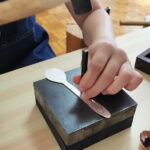
Before you write anything fancy, you get instruction on using the tools. You’ll use a brush and ink, plus standard materials for practice and your final piece. Since ink stains, you’ll want to wear comfortable clothing you don’t mind getting a little risky. Think of it like cooking: you don’t wear your nicest shirt unless you enjoy suspense.
In a class like this, your posture matters because brush calligraphy is physical. The instructor guidance is key here: you’re learning how to hold and control the brush so the stroke starts clean, flows smoothly, and ends with the right weight. Even if your first few marks don’t look like the model yet, the encouragement in the room helps you keep going—this is the part where most people improve quickly.
Also, plan for the fact that you’ll be working on something you’ll take home. That means you’ll need to treat your piece carefully at the end, and you’ll appreciate having the materials already sorted and provided.
Learning Kanji strokes: the five foundations you’ll use again later
The workshop begins with the building blocks. You’ll focus mainly on Kanji and learn the basics of Japanese characters through structured practice. The lesson starts with five representative strokes that form the foundation of Kanji writing. In practice, this is huge value: once you understand the stroke logic, you stop guessing and start controlling.
Here’s what I find helpful about the way this class is set up: the instructor demonstrates the technique right in front of you, so you can match what you see with what you feel in your hand. Then you repeat the motions and build familiarity. That’s how you go from nervous scribbles to more confident characters.
You’ll also explore Kanji along with Katakana. Even though the class leans Kanji-heavy, the character overview helps you understand that Japanese writing has different systems. That makes your final piece more satisfying, because you’re not just copying one symbol—you’re learning what you’re actually drawing.
If you’ve ever watched calligraphy and thought, I could never do that, this is where that worry fades. You’re not expected to become a master. You’re expected to learn the basics in a guided, realistic way.
Picking your character: Love, Happiness, and other fun choices
At some point you get to choose your own subject, and that’s where the workshop turns from class into souvenir-with-meaning. You can pick a word or a Kanji character you want to try. The most popular examples offered include 愛 for love, 幸 for happiness, and 忍者 for ninja.
This choice matters because it changes how you approach the strokes. When you care about the meaning, you’re more likely to slow down and pay attention to the shape and balance. Also, you’ll likely find it easier to remember the character later because you have a reason to connect with it.
Practical tip: if you want something that reads well as a single-character statement, choose one strong Kanji. If you want word energy (like ninja), make sure you’re comfortable taking your time with each part of the writing. Either way, the instruction stays supportive—you’re not left alone to guess.
Personalized model with Miran: how your final piece comes together
One of the standout features here is the personalized attention. After you choose your Kanji (or a word), the calligrapher provides a model tailored to what you picked. That model is your guide for the key points that make the character look right.
In the experience, the calligrapher is patient and encouraging. One instructor name you may hear is Miran, who’s been described as lovely and helpful. That kind of tone really matters in a skill-based workshop. When you’re learning brush control, small corrections can make a noticeable difference, and a kind instructor helps you take feedback without getting tense.
Then comes the “do it for real” portion: you create your final piece. You’ll use the personalized model and write your chosen character onto your selected format. You can expect to work step-by-step and adjust as you go. It’s not about perfection—it’s about finishing with a piece you’re proud to bring home.



Fan, shikishi board, or washi postcard: choosing your take-home art
The final artwork is where you get to make it your own. You can select from different souvenir formats, including:
- a folding fan
- a shikishi board
- a washi postcard
Each one gives a different vibe. A fan feels like a practical Kyoto keepsake—something you could actually keep in a drawer and pull out later. A shikishi board is more display-like, with a classic, centered look that works well as wall art (or tabletop decor). A washi postcard is fun because it’s already in a format that can become a message or a collectible.
You’re also able to write your name in Japanese on your final piece. That’s a nice touch because it turns the artwork from a generic souvenir into a personal document. It also helps you remember the character and the experience in a very concrete way.
At the end, there’s a commemorative photo taken together with your completed artwork. That’s worth it if you’re traveling with friends or family, because your piece will be your proof that you actually did the thing.
Where to meet in Kyoto: the entrance sign and why you should arrive early
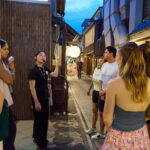
The meeting point is marked by a sign board in front of the entrance. That sounds easy—until you’re in Kyoto, walking a little too fast, and everything looks like an entrance. One review noted the location can be hard to find and suggested more visible signs outside, which is a fair heads-up.
So here’s my practical advice: arrive a little early and treat the entrance sign as the final authority. If you’re even slightly unsure, ask staff at nearby businesses rather than wandering in circles. When you’re working with tools and paper, being rushed at the start is the last thing you want.
Also, if you’re doing this between other Kyoto stops, give yourself breathing room. The workshop runs about 1 hour to 90 minutes depending on scheduling, and you don’t want to cut it close.
Value for $51: what you’re really paying for
At about $51 per person, this workshop isn’t “cheap,” but it’s also not overpriced for what you get. The price makes sense because it includes more than just instruction. You get:
- brush and ink usage instruction
- basic stroke practice
- Kanji character exploration
- a personalized Kanji model
- your souvenir creation (fan, shikishi board, or washi postcard)
- a commemorative photo
That last point matters. Many activities give you nothing physical to show for it. Here, you leave with a completed artwork you picked yourself, plus documentation in the form of a group photo.
Another value driver is that it’s designed for beginners. You don’t need prior calligraphy skills. That removes the hidden cost of learning the basics somewhere else or paying extra for a longer class just to feel oriented.
So if you’re looking for an experience that combines learning with a genuine take-home item, this is a strong value move in Kyoto—especially for one of your short, high-impact cultural days.
Who should book this Kyoto calligraphy workshop
This is best for you if you want a hands-on cultural activity that’s guided and beginner-friendly. It’s a great match when you:
- want to learn the basics of Kanji with real stroke practice
- prefer making your own keepsake rather than buying one
- like structured lessons where someone corrects what you’re doing
- are visiting with friends and want a fun, calm indoor activity (it’s especially nice if rain shows up)
- want an English-instruction workshop with small-group energy
It’s also a good fit for families or travelers who want something meaningful without long hours. The workshop is short enough to fit into a busy Kyoto schedule, but substantial enough to leave you with a finished piece.
Should you book it?
I’d book this workshop if you want a practical introduction to Japanese calligraphy that ends with artwork you chose and can keep. The combination of stroke fundamentals, a personalized model for your chosen character, and a take-home souvenir format is what makes it worth your time.
Skip it only if you’re looking for a museum-style cultural talk with no hand-work. This is a doing-class. If you’re willing to slow down, pick a character you care about, and learn how ink behaves under your hand, you’ll get way more out of it than a quick photo stop.