REVIEW · YOKOHAMA
Kamakura One Day Hike Tour with Government-Licensed Guide
Book on Viator →Operated by Japan Guide Agency · Bookable on Viator
Kamakura is small, but it packs a punch. This one-day hike tour links key samurai-era sites with a 6 km Daibutsu Trail walk and temple visits, all with a licensed local English guide who can tailor your stop list. You’ll start near your hotel or station area and move on foot through Kamakura’s spiritual corridors.
What I like most is the way the tour mixes big-name history with quieter temple moments, especially around the Great Buddha and the Zen-temple cluster. I also love that you can build a practical mini-itinerary by choosing 3–4 sites from the options, instead of getting dragged through a rigid checklist.
The main thing to consider is the time math: it’s about 6 hours total, and Kamakura sits roughly an hour from Tokyo by train—so if you’re starting from Tokyo, it can feel like a rushed taste rather than a slow, deep soak.
In This Review
- Key highlights to expect
- Kamakura in one day: why the hiking format works
- Price and logistics: what you’re paying for (and what you aren’t)
- Your government-licensed guide and the personal touch
- Daibutsu Trail hike: the 6 km section that gives the day its spine
- Starting at Tsurugaoka Hachimangu: shrine energy before the temples
- Great Buddha at Kotoku-in: iconic, bronze, and easy to understand
- Hasedera and Hokoku-ji: the temple stops that feel artsy and calm
- Hasedera (long famous Kannon statue)
- Hokoku-ji (bamboo grove behind the main hall)
- Kamakura’s hiking trails: connecting the dots beyond famous names
- Enoshima Island: the quick coast-side change of mood
- Zen temples: choosing between Engaku-ji and Kencho-ji and friends
- Engaku-ji
- Kencho-ji
- The branch temple options (quick hits)
- Nichiren and other sect temples: when you want the hills to yourself
- Zeniarai Benten and Meigetsuin: tradition + seasonal beauty
- Zeniarai Benten Shrine (coin washing)
- Meigetsuin (Hydrangea Temple)
- Bamboo, bamboo, and more bamboo: the Hokoku-ji effect
- Tsurugaoka to the hills: how the day flows without feeling chaotic
- Time and pacing: can you handle 6 hours on foot?
- Who should book this Kamakura hike tour?
- Should you book it?
Key highlights to expect
- Government-licensed English guide who can explain culture and history in plain language
- Customizable 3–4 stop itinerary chosen from a menu of temples and shrines
- Daibutsu Trail hike (6 km / 3.7 miles) between the Great Buddha area and Jochi-ji
- Zen-temple circuit options across some of Kamakura’s most famous sites
- Enoshima Island add-on by short train ride, with photo-friendly viewpoints
- Built-in flexibility for weather and pacing, especially on hills and trail sections
Kamakura in one day: why the hiking format works
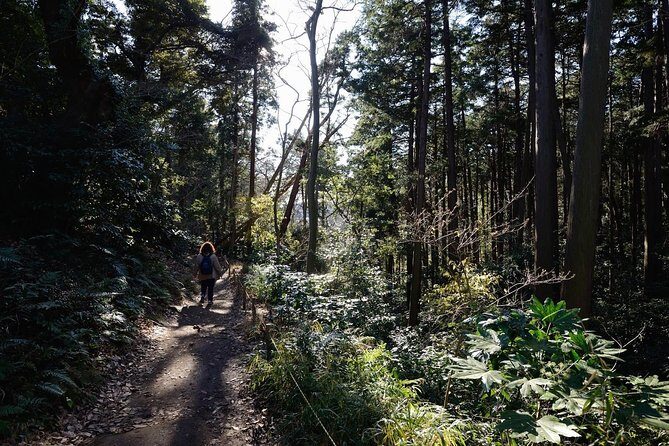
Kamakura is only about an hour from Tokyo, but it feels like a different world. Instead of treating it like a quick stop with train-station sightseeing, this tour turns the day into a walk-with-a-purpose. You get a connected route: shrine start, Great Buddha area, then a proper hike along the Daibutsu Trail, and afterward, temple stops that match the mood you want—Zen, Nichiren, or “just show me pretty and peaceful.”
This format matters. Many visitors see Kamakura as a few famous icons. Here, the walking helps you understand why the temples are where they are: Kamakura’s religious sites grew into the hills, along paths that locals used for generations. When you walk between them, the town stops feeling like a list and starts feeling like a place.
You can also read our reviews of more guided tours in Yokohama


Price and logistics: what you’re paying for (and what you aren’t)
The tour costs $153.50 per person for about 6 hours. That price mainly covers a licensed local English guide plus the planning piece—helping you pick 3–4 sites and keeping the day efficient on foot. In other words, you’re not paying for a bus. You’re paying for local context and routing.
What’s not included is important for budgeting:
- Transportation fees (to reach Kamakura and any additional travel like the Enoshima hop)
- Entrance fees and lunch
- Personal expenses
Also note that it’s described as a walking tour with pickup offered, and you’ll meet your guide near your hotel or the closest station area (with meet-up on foot within a designated area in Yokohama/Kamakura). If you’re expecting a vehicle to handle the distances, this isn’t that kind of day.
The value question becomes simple: if you want a guide who can interpret what you’re seeing and help you choose the right stops, this price can make sense. If you mostly want to wander independently and take photos, it may feel like a lot—because you’ll still be spending most of the day walking.
Your government-licensed guide and the personal touch
This tour is led by a National Government Licensed Guide Interpreter. That credential is specifically tied to Japanese culture and history, which is exactly what you want in Kamakura. Temples here aren’t just pretty buildings; they’re tied to power, sects of Buddhism, and the shifting political story of medieval Japan.
In the reviews, the strongest pattern is clear: the guides are hands-on and responsive. One guide experience stood out because the guide reached out before the tour to ask what you were interested in, then focused on delivering an overview of Kamakura history and a good hike pace. Another review praised a guide’s organization, friendliness, and the ability to point out meaningful details while keeping the group moving.
Even when weather makes trails slippery, the guide planning shows up in how the day runs. One response mentioned that rain the day before made the trail slick, but the tour stayed manageable—because the guide adjusted and kept things safe. Small detail, big impact.
And yes, there’s a human side too: one guide response joked about matching T-shirts worn by the group. It’s the kind of thing that sounds trivial until you’re standing around in unfamiliar places and you suddenly feel like you’re part of a plan.
Daibutsu Trail hike: the 6 km section that gives the day its spine
The heart of the tour is the walk between the Great Buddha (Daibutsu) area and toward Jochi-ji. The trail is listed as 3.7 miles (6 km), and that’s a real hiking segment—not a stroll.
Why this matters:
- You’re moving through the kind of terrain that shaped how Kamakura’s temple network developed.
- The path links religious landmarks in a way that makes the town feel coherent.
- You get a break from constant stop-and-go inside temple halls.
What to watch:
- It’s a hike, so comfortable shoes matter. Even if the total time is about 6 hours, the hike section adds physical demand.
- Weather matters. One review specifically noted slippery conditions after rain, and the guide helped the group stay comfortable. Still, you should plan for uneven ground.
If you’re comfortable walking for multiple hours and you like the idea of seeing temples by foot rather than in a taxi hop, this is the best part of the day.
Starting at Tsurugaoka Hachimangu: shrine energy before the temples
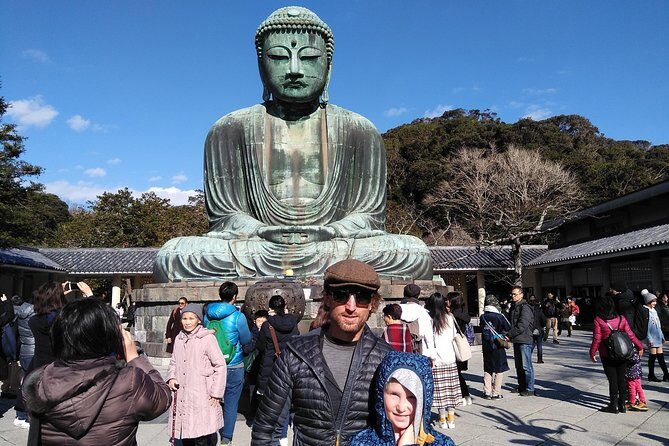
The itinerary begins at Tsurugaoka Hachimangu Shrine, dedicated to Hachiman, known as the patron god associated with the Minamoto family and samurai in general. It’s a fitting start because Kamakura’s samurai identity isn’t background—it’s the engine.
This stop is also a low-friction warm-up:
- About 30 minutes
- Admission free (as listed)
Even if you’re not a shrine expert, you’ll feel the atmosphere right away. It’s a good way to get your bearings before you move into temples and hillside paths later in the day.





Great Buddha at Kotoku-in: iconic, bronze, and easy to understand
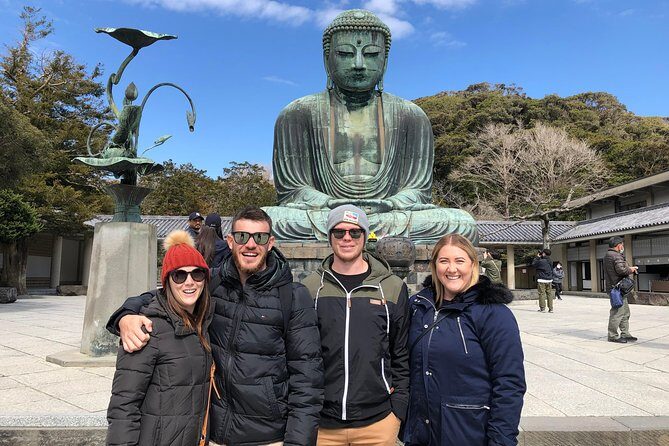
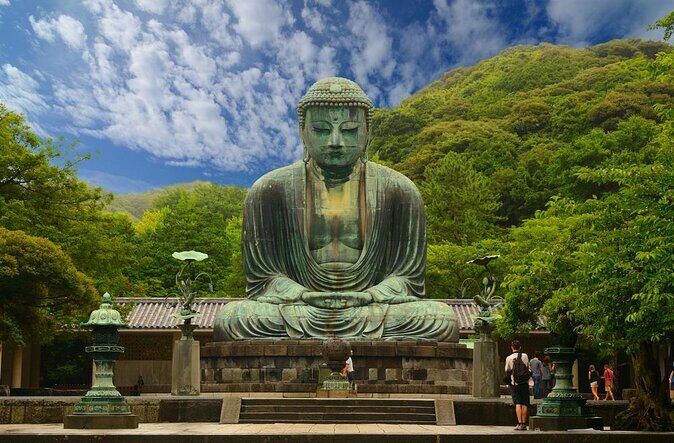
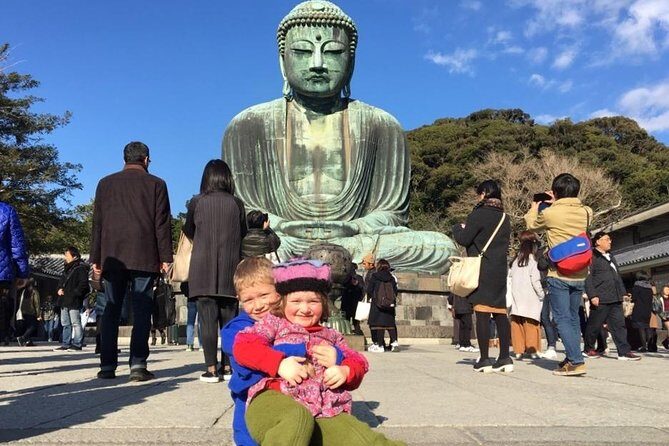
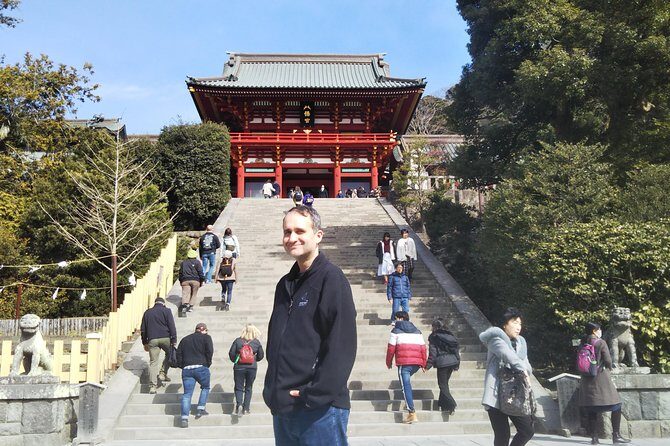
Next you head to Kotoku-in, the Great Buddha of Kamakura. This bronze statue of Amida Buddha stands about 11.4 meters tall and sits on the Kotokuin Temple grounds.
The scheduled time here is short—around 5 minutes—and that’s actually smart. The goal isn’t to spend all day staring at one landmark. It’s to see it, understand what it represents, and then use it as the launch point for the hike.
A practical note: entrance is listed as not included for this stop, so plan for that if you’re budgeting tightly. That said, the time here is brief, which helps keep your day moving.
Hasedera and Hokoku-ji: the temple stops that feel artsy and calm
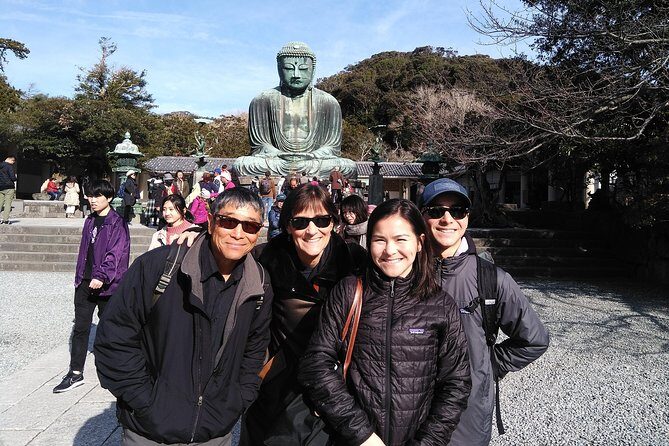
After the big icon, the tour offers more “sensory” temple stops—good for slowing down after the first hike excitement.
Hasedera (long famous Kannon statue)
Hasedera Temple is known for a massive, gilded wooden statue of Kannon (the goddess of mercy), described as an eleven-headed figure. The statue is 9.18 meters tall, which is the kind of detail that makes a temple stop feel real and not just scenic.
This stop is also listed as around 5 minutes, with entrance not included. If you want longer time, ask your guide when customizing the route.
Hokoku-ji (bamboo grove behind the main hall)
Hokoku-ji Temple is famous for a small bamboo grove behind the main hall, with over 2,000 bamboo stalks. Time is listed at 30 minutes, which gives you enough chance to slow down and notice the pattern of the paths.
Entrance isn’t included, but the payoff is visual and atmospheric. It’s also a good photo break if you’ve been carrying your camera during the hike.
Kamakura’s hiking trails: connecting the dots beyond famous names
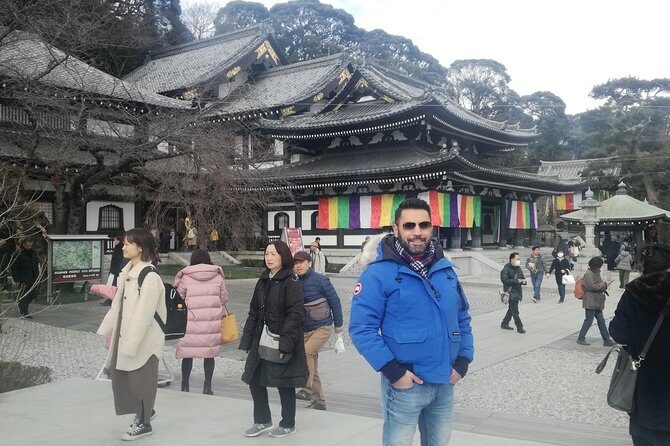
The tour includes time for Kamakura Hiking Trails, described as routes connecting atmospheric temples, shaped by hills and surrounded by ocean to the south. This is a flexible block of about 1 hour, and it helps you feel the rhythm of Kamakura’s religious geography rather than just hopping between stops.
Since the tour is customizable, your guide may choose trails and segments that match your stamina and interests. That flexibility is a real advantage, especially if you want a calmer pace.
Enoshima Island: the quick coast-side change of mood
A favorite option in the itinerary is Enoshima Island, reached by a short train ride west of Kamakura. It’s described as pleasantly touristy and connected to the mainland by bridge, with shrine sites and scenic viewpoints.
The scheduled time is short—about 5 minutes with admission listed as free. Even in a short visit, the area can change the tone of your day from inland hills to coastal air.
One review response mentioned good weather and the chance to see Mount Fuji from Enoshima. You can’t guarantee clear skies, but it’s a smart place to aim for if you want a chance at a dramatic view without adding a full day.
Zen temples: choosing between Engaku-ji and Kencho-ji and friends
Kamakura is famous for Zen temples, and this tour gives you options from the “big names” to smaller branch temples.
Engaku-ji
Engaku-ji is listed as one of Kamakura’s leading Zen temples (noted as number two of the five great Zen temples in Kamakura). Time is around 30 minutes.
Expect a more grounded, contemplative vibe. This is the kind of stop where your guide’s explanations matter—because Zen temples can feel subtle if you don’t know what to notice.
Kencho-ji
Kencho-ji is listed as the number one of Kamakura’s five great Zen temples and the oldest Zen temple in Kamakura, founded in 1253. Time is short—about 5 minutes—so it works best if you’re pairing it with a longer Engaku-ji-style pause somewhere else.
The branch temple options (quick hits)
If you choose more stops, you may also see short-time visits to additional temples that round out a hillside circuit:
- Jomyo-ji (listed as the fifth among the five great Zen temples)
- Zuisen-ji (in a narrow valley, about 30 minutes)
- Jufukuji (number three among the five great Zen temples)
- Jochiji (number four among the five great Zen temples)
- Tokeiji and Jomyo-ji (both branch temples, listed as short stops)
These are usually quick, but the benefit is variety. You see how Zen spreads across the region and how the terrain shapes each temple’s layout.
Nichiren and other sect temples: when you want the hills to yourself
Besides Zen, the itinerary includes Nichiren sect temples, which adds another layer to Kamakura’s religious map.
Some options:
- Ankokuronji (short stop)
- Myohonji (short stop)
- Jochiji also appears as part of the Rinzai branch network in the descriptions, but its role overlaps nicely with the hiking direction
If you like understanding how different Buddhist lines took root in specific areas, these stops are useful. They also give your day texture: not every moment needs to be the most famous building.
Zeniarai Benten and Meigetsuin: tradition + seasonal beauty
These two stops are popular because they feel specific and memorable.
Zeniarai Benten Shrine (coin washing)
Zeniarai Benten Shrine is known for the ritual of people washing money in the shrine’s spring—because it’s said the washed money brings luck. Time listed is 30 minutes, and admission is listed as free.
This isn’t just a gimmick. It’s a quick way to see everyday faith practices, not only the temple architecture.
Meigetsuin (Hydrangea Temple)
Meigetsuin is called Hydrangea Temple because hydrangea blooms are abundant on the temple grounds. It’s a Rinzai Zen sect temple founded in 1160.
The stop time is short—about 5 minutes—and entrance is not included. If you’re traveling during hydrangea season, it can be a surprisingly rewarding quick stop. If not, it’s still worth seeing for the temple atmosphere your guide can describe.
Bamboo, bamboo, and more bamboo: the Hokoku-ji effect
It’s worth calling out Hokoku-ji again because bamboo groves can turn into a real experience when you’re not rushing. In a day like this—where you’ve got a real hike plus multiple temples—having one stop that’s more sensory than instructional can balance things out.
If your legs are feeling it, Hokoku-ji’s longer 30-minute allotment gives you a chance to sit, walk slowly, and take in the shade and sound.
Tsurugaoka to the hills: how the day flows without feeling chaotic
One reason this tour gets good marks is that it’s not just a set of stops. It’s a route with sequencing that makes sense:
1) Start with an important shrine base (Tsurugaoka Hachimangu)
2) See the Great Buddha (Kotoku-in)
3) Walk the Daibutsu Trail toward a Zen-temple direction
4) Add temple stops that match your chosen vibe
5) Optionally angle toward Enoshima for coastal air and views
And the customization piece matters. You choose from the “must-see” options in the tour information, and your guide builds the day around your preferences and your desired start time.
That is also how guides manage real-world problems like weather. If rain made the previous day’s conditions slippery, a good guide keeps the day safe and still enjoyable.
Time and pacing: can you handle 6 hours on foot?
This is where I’d be honest with my planning advice.
You’re looking at about 6 hours total, with hiking and walking. It’s described as suitable for most travelers, but “most” still means you should think about your stamina. If you can comfortably walk for a few hours and you don’t mind stairs or uneven ground, you’re good.
If you’re traveling from Tokyo, the 6-hour day can feel like a tight squeeze because commuting eats time. One review directly warned against treating Kamakura as a quick checkmark trip from Tokyo. If your goal is to enjoy Kamakura slowly—cafés, beach walks, extra temples—plan for more time in the area.
The good news: the tour itself is structured so you don’t waste hours deciding what to do. You’ll be walking with intent and getting context without spending the day hunched over a map app.
Who should book this Kamakura hike tour?
I’d point you to this tour if:
- You want a guided hike that includes explanation, not just movement
- You like temple and shrine stops but also want the day to feel connected by walking
- You prefer 3–4 targeted sites instead of a rushed march through everything
- You’re interested in Kamakura’s samurai-era and Buddhist temple history in a practical way
I’d hesitate if:
- You’re arriving from Tokyo and you only want a short taste of Kamakura
- You hate hiking and uneven ground
- You’re mainly chasing one icon and don’t want a guide’s interpretation
The sweet spot is someone who wants an efficient, meaningful day that uses time well.
Should you book it?
Yes—if you’re ready for a walking-focused day and you want a licensed guide to bring Kamakura to life. The Daibutsu Trail is the kind of experience that makes the day feel earned, and the guide flexibility plus stop customization helps you match the itinerary to your interests.
If you’re unsure, here’s the deciding question: do you want Kamakura as a list, or do you want it as a walkable story? This tour is built for the second option.