REVIEW · YOKOHAMA
Yokohama and Kamakura 6hr Private Trip Government-Licensed Guide
Book on Viator →Operated by Japan Guide Agency · Bookable on Viator
Temple trails without the stress. This private, government-licensed day lets you customize what you see in Yokohama or Kamakura, while a guide handles the storytelling so you don’t waste hours figuring out routes. I like that it’s a true private group, and the guide experience can run from efficient temple-circuit planning to practical help like getting you settled with trains and IC cards, as seen with guides such as Mami and Yasuho Suzuki.
Two things I really like: the flexibility to pick 3–4 stops from a menu, and the chance to connect the places through a guide who explains why each shrine or temple mattered. I also like that the day can mix big-name sights with smaller religious stops, so you’re not just ticking boxes.
One drawback: it’s a walking tour, and Kamakura is famous for stairs and uneven temple paths. If you’re sensitive to steps or rain, tell your guide up front; guides like Sami and Shinji have planned routes to help visitors with mobility and slippery conditions.
In This Review
- Key takeaways before you go
- Why Yokohama and Kamakura in six hours actually works
- Price and what $154.84 buys you (and what it doesn’t)
- Meeting up and keeping the day smooth on foot
- Kamakura must-sees: Tsurugaoka Hachimangu to the Great Buddha
- Hasedera and the bamboo grove: when temples become a mood
- Zen temple circuit: Engaku-ji, Kencho-ji, and the five great temples vibe
- A quick hit of Enoshima: sea air with minimal fuss
- Yokohama after Kamakura: gardens, Chinatown, and the future harbor
- Parks and museums: Yamashita Park, Cup Noodles, and ramen breaks
- Motomachi and Yamate: the story behind Yokohama’s opening
- Best-fit travelers for this private day
- Should you book it?
- FAQ
- How long is the Yokohama and Kamakura private trip?
- Is this tour private or shared with other groups?
- Can I customize which sights I see?
- Do I need to pay for admission tickets?
- Is transportation included?
- How do we get from Yokohama to Kamakura during the day?
- Is there a mobile ticket?
- Where do we meet the guide?
- Is the tour mostly walking?
- What is the cancellation window?
Key takeaways before you go
- Pick 3–4 stops from a menu, so your time goes where your interests are (shrines, Zen temples, or modern Yokohama).
- A licensed English guide means you get context, not just directions, with guidance from experienced hosts like Kahori, Yoshi, and Kozee.
- Public-transport friendly timing: Yokohama to Kamakura is about 30 minutes one way, and the tour stays structured around that.
- Temple variety in one day: shrine traditions at Tsurugaoka Hachimangu, the Great Buddha at Kotoku-in, then multiple Zen and Nichiren stops.
- Real Yokohama flavors: Chinatown, Minato Mirai, parks, and museum time like Cup Noodles and ramen.
- Walking-heavy, weather-dependent: you’ll want comfy shoes and a plan for stairs, especially if rain hits.
Why Yokohama and Kamakura in six hours actually works
The big advantage here is simple: you can cram two very different sides of the same region into one day without doing research math all morning. Kamakura gives you shrines, temples, and that layered mix of Buddhism and samurai-era legacy. Yokohama then shifts you into the port-city story—foreign settlement echoes, Chinatown chaos (in a fun way), and modern skyline views.
You also get a guide who can react to you. In past days on this program, guides like Kahori were praised for staying on time and walking you through the route smoothly. Other guides—Mami in particular—were noted for helping visitors get sorted with taxis, IC cards, and trains, which matters when you’re trying to move fast in Japan.
The tour is listed as flexible with no fixed routes, but the structure still feels coherent: you start with meeting at your chosen Yokohama/Kamakura area, then the guide builds a tight loop around your picks. That’s the real value of a private guide in a limited-time trip.
You can also read our reviews of more guided tours in Yokohama

Price and what $154.84 buys you (and what it doesn’t)
At $154.84 per person for about six hours, you’re paying for three things: a government-licensed local English guide, a private group experience, and time savings. The cost isn’t just for walking beside you—it’s for translating the experience into something you can actually understand and enjoy.
What’s not included is also important. Transportation fees, entrance fees, lunch, and personal expenses are not included, and private transportation isn’t provided. Translation: your guide may guide you through trains and walking, but you still handle transit fares and any ticketed entry fees.
So the best way to think about value is this: if you’d otherwise spend your day juggling train schedules and trying to interpret temples without context, the guide is likely worth it. If you already travel with confidence and enjoy independent planning, you might question the price. But for first-timers or time-tight trips, paying for a guide often buys you a smoother day with less stress.
Meeting up and keeping the day smooth on foot
This is a walking tour, and pickup is on foot within a designated area. That sounds small, but it changes how you should plan your morning. Don’t schedule other timed plans right before you meet the guide. You want a little buffer so you can start clean.
Also, most visitors can participate, but Kamakura’s temple district often means stairs and steep paths. One guest’s group specifically mentioned that Sami adjusted the route to account for fewer stairs. Another praised Shinji for patience when helping an 83-year-old relative handle wet, slippery steps. Take those signals seriously: if you have any mobility concerns, tell the guide early so they can shape the route.
A practical tip: bring a light layer and good shoes. You’ll be outdoors and moving for the full window, especially if your picks include multiple temple stops.
Kamakura must-sees: Tsurugaoka Hachimangu to the Great Buddha
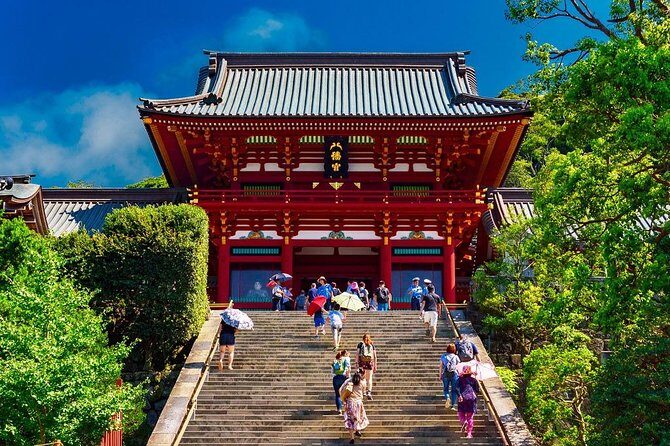
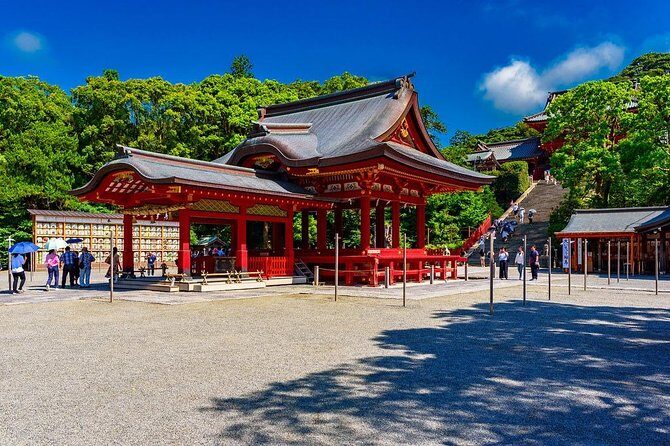
If you choose Kamakura, the day can start with Tsurugaoka Hachimangu Shrine, a shrine dedicated to Hachiman, the patron deity tied to the Minamoto family and samurai in general. Even if you’re not a “shrine person,” the setting is a reason to go: it’s a sense of place, not just a building. You’ll get the big picture of how samurai-era beliefs and later cultural identity connect.
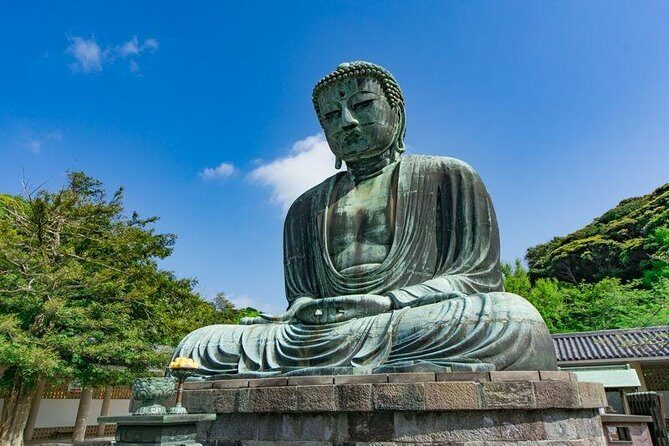
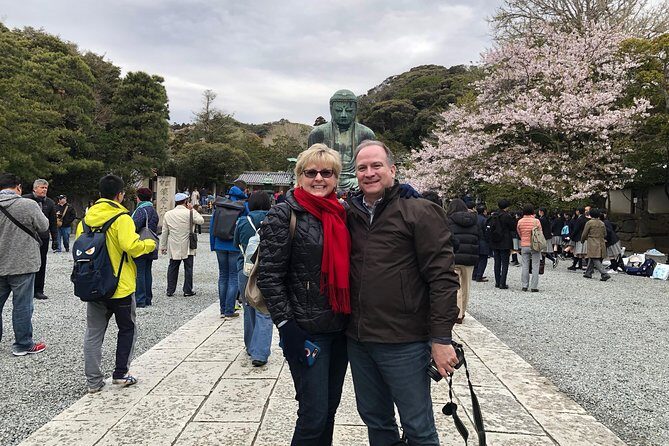
Next, the classic payoff is Kotoku-in and the Great Buddha. The bronze Amida Buddha is 11.4 meters tall, and it sits on the grounds of Kotokuin Temple. This is the kind of sight where your brain goes quiet for a moment. It’s not about tiny details; it’s the sheer scale and the atmosphere around it.
One caution: the Great Buddha stop is popular, so it’s smart to stay aware of the pace your guide sets. If you want photos, say so early. Your guide can often time your moments so you’re not stuck waiting with nothing to do.
Hasedera and the bamboo grove: when temples become a mood
Two of the most “feel it” stops are different in style, but both create strong atmosphere.
Hasedera Temple is known for its eleven-headed statue of Kannon, the goddess of mercy. The gilded wooden statue is described as 9.18 meters tall, and it’s a big reason people come. If you like places where art and belief overlap, Hasedera tends to deliver.
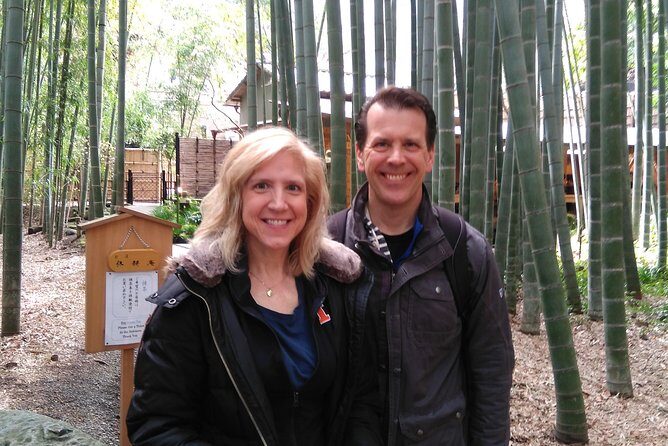
Then there’s Hokoku-ji Temple and its bamboo grove behind the main hall, with over 2,000 dark green stalks. The pathways are narrow, so you’re not wandering a wide park. You’re moving through a living corridor. It’s one of those spots that makes you slow down without anyone telling you to.
The practical drawback is time. Stops like these can be quick if you’re doing several within a short window. But if you choose them as part of your 3–4 picks, the mood lands better than if you treat them as a checkmark.
You can also read our reviews of more private tours in Yokohama


Zen temple circuit: Engaku-ji, Kencho-ji, and the five great temples vibe
Kamakura’s Zen temples are a whole world in miniature. If you pick temple time, you can build a day around the famous “five great Zen temples,” plus branches and related sites.
Start with the bigger anchors.
Engaku-ji is described as one of the leading Zen temples in Eastern Japan and number two among Kamakura’s five great Zen temples. It was founded by Hojo Tokimune in 1282. If you like historical grounding, your guide can connect the temple to the power structures of the time.
Kencho-ji is number one among those five, and also noted as the oldest Zen temple in Kamakura, founded by Hojo Tokiyori in 1253. Kencho-ji gives you a strong “first among equals” feeling in the Zen landscape.
From there, you can tailor your Zen theme based on what you want to see next:
- Zeniarai Benten Shrine: you wash money in a spring, and it’s tied to the idea of wealth fortune. This is fun even if you keep it light.
- Meigetsuin (Hydrangea Temple): known for hydrangea blooms, since it’s also called Ajisaidera. Even outside peak bloom, it’s a temple built around seasonal expectations.
- Hillside Nichiren temples like Ankokuronji and Myohonji add a different Buddhist lane, with Nichiren ties noted in the descriptions.
- Smaller stops like Jomyo-ji, Zuisen-ji, Jochiji, Tokeiji, and Jufukuji keep the variety going, so you’re not repeating one style.
For many people, the biggest value is contrast. A guide can help you notice what changes from temple to temple: how the sect differs, what art or setting draws attention, and why the place matters beyond the main gate.
A quick hit of Enoshima: sea air with minimal fuss
If you want a break from temple density, Enoshima Island is a great add-on. It’s just a short train ride west of Kamakura and connected by bridge to the mainland. The description frames it as pleasantly touristy, but still fun to experience—especially if you want views and a little sea air without a huge travel detour.
This stop tends to work well if you’re doing a 3–4 site mix and want one “reset” moment. You still get cultural ingredients (shrines and scenery), but the pace feels different.
One practical consideration: Enoshima can turn into a walking day of its own once you reach the island. Your guide can help manage the order so you don’t end up exhausted before your Yokohama portion.
Yokohama after Kamakura: gardens, Chinatown, and the future harbor
Once you’ve had your fill of Kamakura’s religious sights, Yokohama brings a totally different rhythm. This is where you can relax into neighborhood strolling.
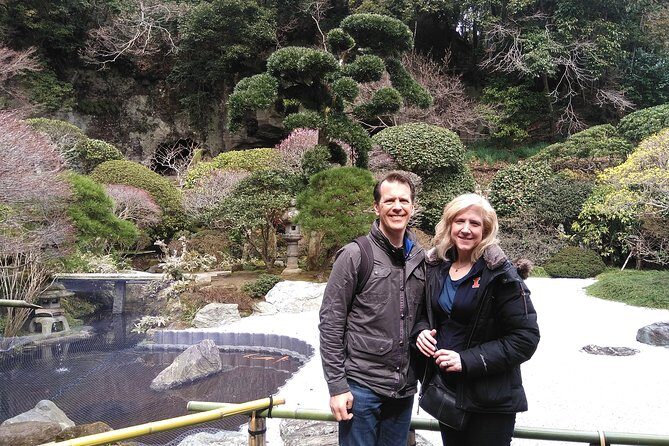
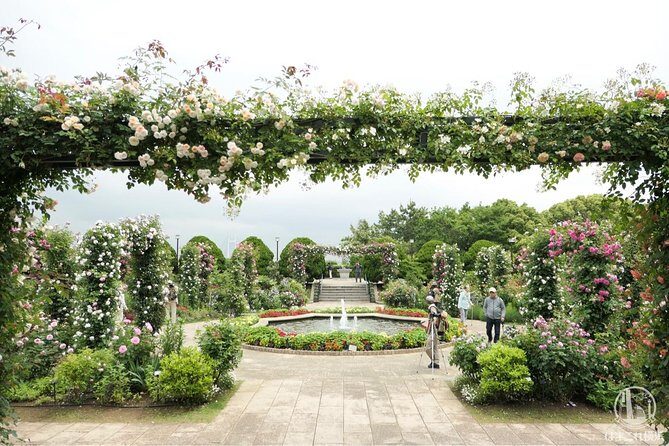
Sankeien Gardens is a strong choice if you want calm after steps. It’s a Japanese-style garden in southern Yokohama with a pond, small rivers, flowers, and trails. The big draw is the historic buildings from across Japan, giving you a “time travel” effect without needing a museum ticket marathon.
Then switch gears to Yokohama Chinatown, described as Japan’s largest Chinatown. This is the place to eat and wander: narrow streets, lots of shops, lots of food. Even if you don’t do a full meal, it’s a sensory hit.
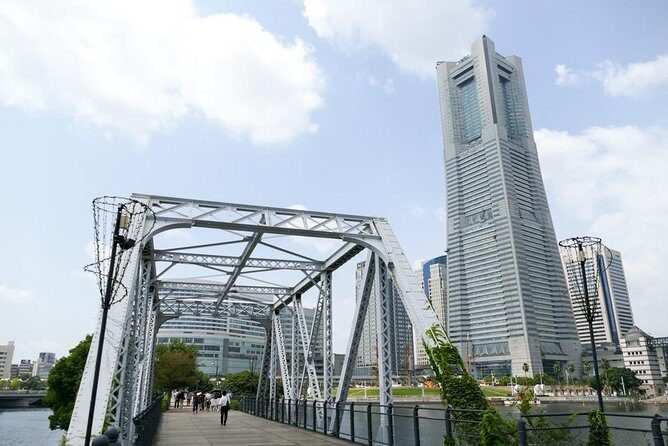
From there, take in Minato Mirai 21, the seaside urban area whose name means harbor of the future. The skyline is dominated by tall buildings, including Landmark Tower. It’s a satisfying contrast to Kamakura: same region, different mood.
Parks and museums: Yamashita Park, Cup Noodles, and ramen breaks
If your picks include the waterfront, plan for an easy win.
Yamashita Park stretches about 750 meters along the waterfront, with mostly open green space. It’s a simple reset after temple hills—good for sitting, photo angles, and just letting your legs catch up.
If you want something a bit more scenic and a bit more “port life,” Osanbashi International Passenger Terminal (also called Osanbashi Pier) sits between Minato Mirai and Yamashita Park. It’s a logical pairing with the park walk.
For museum time, Yokohama has two very popular, very different options:
- Cup Noodles Museum Yokohama in the Minato Mirai district, an interactive look at the history of instant ramen.
- Shinyokohama Ramen Museum in Shin-Yokohama, described as a museum focused on ramen.
One practical note: both are listed as not included on admission, so you’ll need to budget ticket costs separately. Still, they can be perfect when you want something indoor for a chunk of time, especially if weather turns.
Motomachi and Yamate: the story behind Yokohama’s opening
Two other stops in Yokohama that help connect place to story are Motomachi Park and the Yamate 234ban Residence.
The descriptions tie these areas to Japan’s isolation era—when interactions with foreign countries were limited—and the shift after the 1850s opening, when Yokohama became one of the key ports. Even without going deep into details, these stops help you understand why Yokohama feels different from Tokyo or Kyoto. It has that “port gateway” identity built into the city layout.
If you enjoy places that explain how history shapes streets, these are worth considering in your 3–4 picks.
Best-fit travelers for this private day
This tour is made for a very specific kind of trip: you want real variety, but you’re short on time.
You’ll likely love it if:
- You’re coming from Tokyo and want to escape for a day without building your own plan from scratch.
- You want temples plus city life, not one long theme.
- You’re the type who appreciates context—Hachiman’s role, Zen temple distinctions, and how the port city story connects.
You might rethink it if:
- You hate walking and stairs, and your group can’t handle uneven temple paths.
- You already know exactly which stops you want and don’t mind researching train routes yourself.
Your best move is to communicate your priorities. Guides on this program have adapted routes for stair comfort and even handled rainy conditions with care, so you’re not locked into one pace.
Should you book it?
I’d book this if you’re trying to make a single day feel meaningful. The price is reasonable when you factor in a private licensed English guide, the ability to choose 3–4 stops, and the time you save by not building an itinerary from scratch.
Pick Kamakura if you want temples with strong identity—start with Tsurugaoka Hachimangu and the Great Buddha, then decide whether you want bamboo, hydrangeas, or Zen temple depth. Add Yokohama if you want a visual contrast: Chinatown energy, Minato Mirai skyline, a garden reset, and a waterfront break.
If stairs might be rough, message your needs early. A tour that’s built around your comfort will feel like a win, not a grind.
FAQ
How long is the Yokohama and Kamakura private trip?
The tour is about 6 hours.
Is this tour private or shared with other groups?
It’s private. Only your group participates.
Can I customize which sights I see?
Yes. You can customize your itinerary by choosing 3–4 sites from the listed options.
Do I need to pay for admission tickets?
Entrance fees are not included. Some stops are listed as free, but admission costs for ticketed sites are typically on you.
Is transportation included?
Transportation fees are not included, and private transportation is not provided.
How do we get from Yokohama to Kamakura during the day?
Travel time between Yokohama and Kamakura is about 30 minutes one way, and the tour is near public transportation.
Is there a mobile ticket?
Yes, the tour includes a mobile ticket.
Where do we meet the guide?
You meet the guide on foot within a designated Yokohama/Kamakura area.
Is the tour mostly walking?
Yes. It’s a walking tour.
What is the cancellation window?
Free cancellation is available up to 24 hours before the experience starts for a full refund.