REVIEW · TOKYO
Private Tokyo Tour with English Speaking Guide
Book on Viator →Operated by Abc travels · Bookable on Viator
Tokyo feels bigger with a plan. This private walking route threads together Shibuya, Harajuku, Meiji Jingu, Asakusa, Akihabara, and more, so you’re not bouncing around on your own. I especially like the English-speaking guide experience and the fact that you can get hotel pickup and drop-off, which makes the day start fast and end easy.
The mix is also practical: most stops listed are free to enter, so you spend money mainly where it counts. One thing to consider is that Tokyo Tower and Tokyo Skytree observation tickets aren’t included, and the guide style can lean more toward moving you around than giving extra background at every stop.
In This Review
- Key highlights you’ll feel right away
- Price and value: what $97.73 really buys
- Meet-up in Marunouchi: start where transit is easiest
- Shibuya Crossing and Harajuku Station: the Tokyo contrast combo
- Meiji Jingu Shrine: the walk from noise to calm
- Shinjuku for 1 hour: skyscrapers, energy, and options
- Asakusa and Senso-ji: old Tokyo, right at walking distance
- Tsukiji Fish Market: the market atmosphere, minus the ticket rush
- Akihabara: electronics and anime culture in 45 minutes
- Tokyo Tower and Tokyo Skytree: choose your skyline moment
- Odaiba: modern Tokyo on a bay island
- How the guide level affects your day (and what to ask for)
- Practical pacing: walking time, shopping time, and realistic expectations
- Who should book this tour
- Should you book this private Tokyo walking tour?
- FAQ
- Is this tour private?
- Where does the tour start and end?
- Is hotel pickup and drop-off included?
- What language is the guide?
- Are tickets included for all attractions?
- How long is the tour?
- What’s the cancellation policy and what about weather?
Key highlights you’ll feel right away
- Private, English-speaking guidance that helps you navigate between neighborhoods without guesswork
- Hotel meet-up and drop-off so you’re not wrestling with transfers on Day 1
- Most major sights are free entry on this route, keeping costs steadier
- Iconic Tokyo skyline options: Tower or Skytree add-on views with separate tickets
- Route spans West to East Tokyo, plus a Bay-area stop at Odaiba
Price and value: what $97.73 really buys

At $97.73 per person, this tour is priced like a “smart shortcut” to Tokyo orientation. The key value isn’t one single landmark—it’s the number of neighborhoods you can cover in a controlled order, without spending your energy reading train maps.
You also get a cost structure that’s easy to understand. Most listed stops are free to enter, so your budget usually only pops up for the paid viewpoints at Tokyo Tower and Tokyo Skytree. Since public transportation costs are excluded, you’ll still need to cover transit fares if your day involves getting around beyond walking segments, but the overall admissions side stays mostly predictable.
The route is built for time flexibility too. The tour duration is 2 to 8 hours, which matters because Tokyo days can stretch or shrink based on your energy, shopping plans, and how long you linger at the big photo points.
You can also read our reviews of more guided tours in Tokyo
Meet-up in Marunouchi: start where transit is easiest
The tour starts at Tokyo Station (1 Chome-9 Marunouchi, Chiyoda City) and ends back at the meeting point. That’s not a random detail—it’s a huge quality-of-day factor, since Tokyo Station is one of the easiest bases for walking and onward travel.
Because it’s a private tour, your guide can shape the pace around your group. If you want more time to wander in a market or take fewer photos and talk more with the guide, you’re not stuck matching someone else’s speed.
If you’ve booked hotel pickup, the day becomes even smoother. You’ll meet the guide, then move through the neighborhoods with less friction, which is especially helpful if you arrive jet-lagged or you simply don’t want to fight crowds before you’ve even had breakfast.
Shibuya Crossing and Harajuku Station: the Tokyo contrast combo
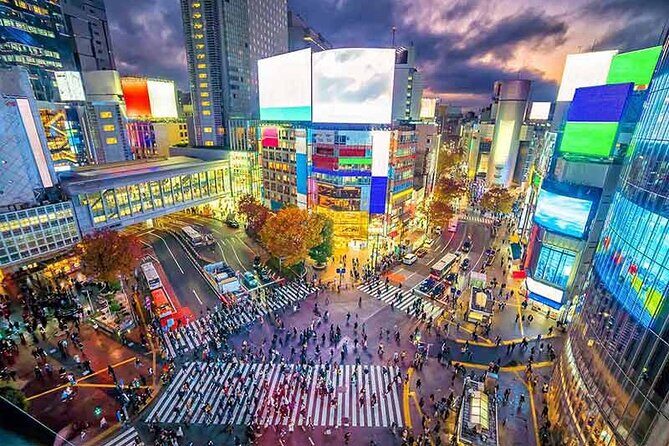
You typically kick off in Shibuya, starting with the area around the famous Shibuya Crossing. Even if you’ve seen it on screens, standing there is different. It’s one of those places that instantly teaches you how Tokyo manages big pedestrian flow without turning the street into chaos.
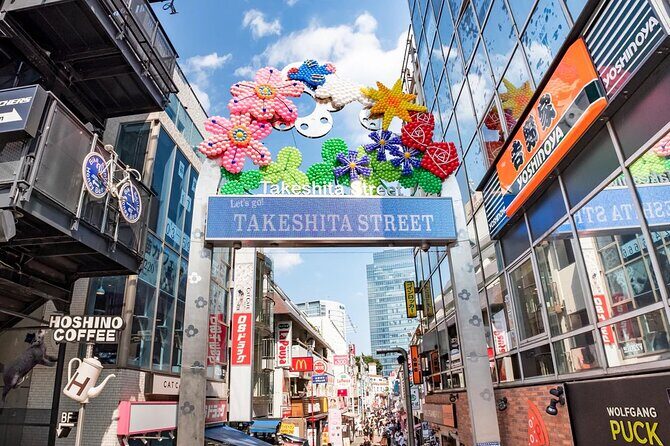
You then head toward Harajuku Station for a look at youth culture in street form—bold fashion, quirky shops, and the kind of browsing Tokyo does well. This stop is listed for about 30 minutes, which is enough to feel the vibe, grab a quick snack if you want one, and spot a few storefronts for later.
The value here is contrast. You go from a massive public intersection moment to a more fashion-and-shopping style zone. If you’re new to Tokyo, that early mix helps you understand that the city isn’t one mood—it’s multiple moods, close together.
Meiji Jingu Shrine: the walk from noise to calm
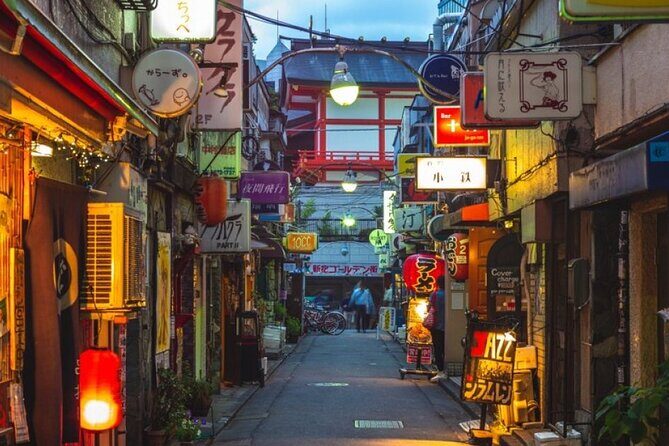
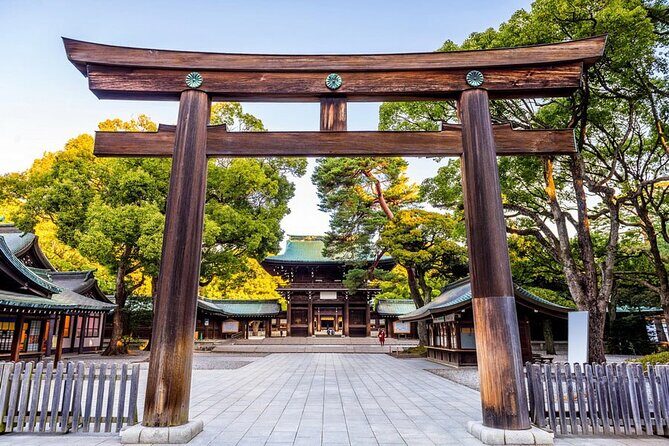
Next comes Meiji Jingu Shrine, dedicated to Emperor Meiji and Empress Shoken. You spend about 30 minutes here, and the biggest payoff is simple: you’re in a forest setting with torii gates, which changes your senses quickly after Shibuya’s intensity.
This is also one of the best spots to slow down and reset. In a walking tour packed with shopping districts and electronics streets, a shrine visit gives you a breather where you can stand, look up, and take in the atmosphere without rushing.
One practical note: because the tour requires good weather, plan your day around the idea that outdoor stops matter. If it’s hot or suddenly rainy, you’ll appreciate having a guide managing timing and route flow.
Shinjuku for 1 hour: skyscrapers, energy, and options
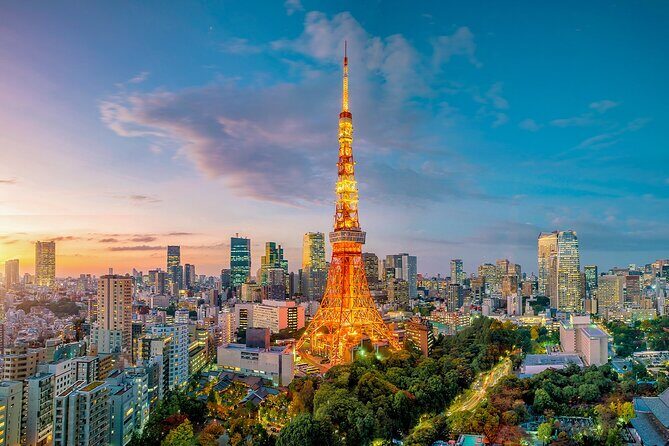
Shinjuku is a big neighborhood, so your tour time here is about 1 hour. That’s enough for a focused taste: towering skyline views, heavy street activity, and the commercial mix of shops and nightlife energy.
Even if you’re not trying to party, Shinjuku is useful on a first tour because it’s a “Tokyo scale” lesson. You see how the city grows up, how districts stack, and how quickly the vibe changes block to block.
If you like street-level photography, this is one of your best time windows. And because it’s private, you can ask your guide for practical photo angles and walking routes that keep you moving instead of backtracking.
You can also read our reviews of more private tours in Tokyo


Asakusa and Senso-ji: old Tokyo, right at walking distance
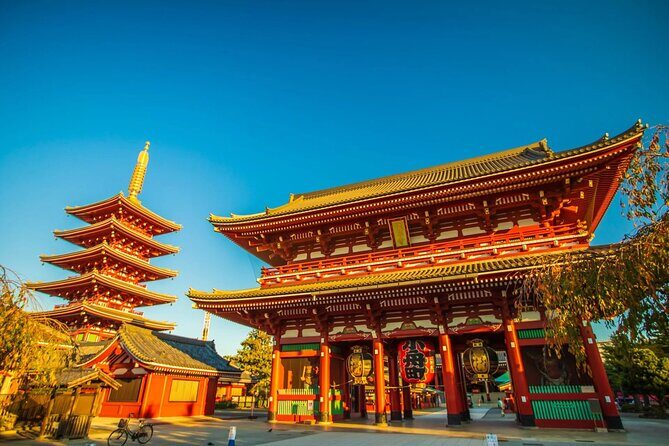
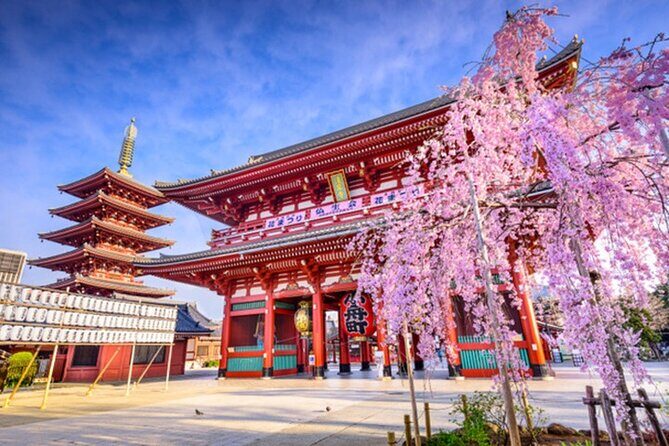
Then it’s Asakusa—listed for about 1 hour—followed by Senso-ji Temple for about 30 minutes. This is classic Tokyo, with an old-style streetscape and the area’s signature temple presence.
Senso-ji is one of Tokyo’s most important Buddhist sites and dates back to the 7th century. The standout feature on your route is the grand gate area: Kaminarimon and the access streets leading toward the temple grounds.
This stop is where you’ll feel the tour’s structure paying off. On your own, Asakusa can take longer because you’ll naturally wander. With a guide, you can still browse and take photos, but you also don’t lose time searching for the main sights.
Also, since entry is free for these stops, your budget stays under control. It’s one of the smartest parts of the day because the experience is major even without tickets.
Tsukiji Fish Market: the market atmosphere, minus the ticket rush
After temples, the route shifts to food energy with Tsukiji Fish Market for about 45 minutes. The inner wholesale market is described as relocated, but the area still works as a visitor-focused stop, especially if you like watching how food culture moves in Tokyo.
Spending 45 minutes here is practical. It gives you time to stroll, look at stalls, and decide if you want to snack or just enjoy the atmosphere. Since snacks aren’t included, you’ll choose your own treats, which can be a good thing—Tokyo food prices vary a lot, and you’ll have control.
If you’re traveling with someone who loves food or just wants a clear “Tokyo market” moment, this is a strong middle stop. It also works well before you head into a more shopping/entertainment-heavy stretch later.
Akihabara: electronics and anime culture in 45 minutes
Next you hit Akihabara, often called Tokyo’s Electric Town, for about 45 minutes. Here the emphasis is on tech shops and the wider anime and gaming culture you see across storefronts.
This is another “compressed but satisfying” stop. You won’t max out the entire district in 45 minutes, but you’ll get a clear sense of what the area is about and what kinds of stores it’s made of.
If you’re shopping for electronics or character goods, you’ll appreciate having a guide to help you move efficiently. And if you’re not buying anything, Akihabara still works as a Tokyo culture lesson—Tokyo’s pop identity isn’t hidden; it’s on display.
Tokyo Tower and Tokyo Skytree: choose your skyline moment
Two separate viewpoint stops appear on the route: Tokyo Tower (about 30 minutes) and Tokyo Skytree (about 30 minutes). The big detail is that observation admission tickets are not included, so factor that into your budget.
Why is this useful instead of redundant? Because Tower and Skytree feel different. Tower has that familiar silhouette, and it’s tied to a classic Tokyo landmark identity. Skytree is the tallest structure in Japan, so the big appeal is the height and the sense of wide-open views.
With a private tour and a flexible 2 to 8 hour duration, you can often match your selection to your time and preferences. If you’re view-focused, you might choose one and keep moving. If you like “Tokyo must-sees,” you might plan to do both and treat it as a full sightseeing block.
Tip for value: decide before you go. Buying both can be worth it, but only if you genuinely want both skyline experiences.
Odaiba: modern Tokyo on a bay island
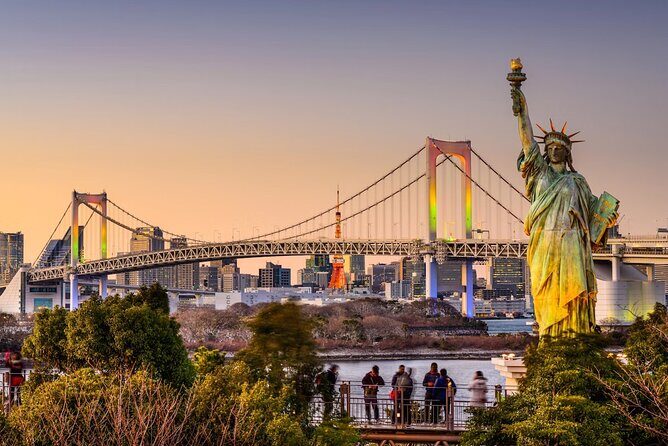
The route also includes Odaiba for about 30 minutes. Odaiba is described as a futuristic entertainment and shopping district on a man-made island in Tokyo Bay, and it’s included as a contrast to the older temple-and-neighborhood feel earlier in the day.
For many visitors, Odaiba is where you see Tokyo’s “planned modern” side. It’s not just one landmark; it’s a zone. In a short block of time, your guide can help you focus on the most worthwhile stops there rather than letting it become a wandering maze.
This is a good place to squeeze in if your day has room and the weather is holding. But if your group is tired after Asakusa and Akihabara, Odaiba is also the easiest stop to skip without breaking your overall experience.
How the guide level affects your day (and what to ask for)
Here’s the honest part: one booking’s feedback emphasized excellent English and responsiveness, with the guide named Hikari being especially proactive before the tour and at hotel pickup. That’s exactly what you want if you’re trying to start the day smoothly.
At the same time, another piece of feedback pointed out that guidance can focus more on navigation than on deeper storytelling. That doesn’t make it bad—just different. If you care about history background and place meaning at every stop, you should set that expectation early.
A simple way to do that: ask your guide at the start how you want the day paced—more “move and see,” or more “stop and learn.” A private setup lets you steer it.
Practical pacing: walking time, shopping time, and realistic expectations
This is a walking tour across multiple major neighborhoods, so build your day around comfort. Wear shoes you trust, and treat the big points—Crossing, Meiji Jingu torii gates, Senso-ji main sights—as moments you can linger at without feeling guilty.
Also remember: admission is free for most stops, but that doesn’t automatically mean the day is slow. You’ll still be moving between areas, and Tokyo crowds can affect your timing.
You’ll likely finish near where you started, since the tour ends back at the meeting point. That’s helpful because it reduces the stress of “Where do we go next?”
Finally, because the tour is near public transportation and uses a mobile ticket, it’s designed to be easy to manage on arrival day. Still, since transportation costs are excluded, you’ll want to keep a transit budget in mind.
Who should book this tour
I think this tour fits best if you want:
- A first-timer Tokyo overview that covers several top districts without you mapping every hop
- An English-speaking guide to help you move between Shibuya, Harajuku, Meiji Jingu, Shinjuku, Asakusa, Tsukiji, Akihabara, and Odaiba
- A day where you can keep costs steadier because most stops have free entry
It may be less ideal if:
- You want a strict, lecture-style deep explanation at every stop. You may need to ask for more story and context upfront.
- You don’t want to plan for paid viewpoint tickets at Tokyo Tower and Tokyo Skytree.
- Your group hates walking or wants lots of inside attractions; this route is built around outdoor and district-hopping time.
Should you book this private Tokyo walking tour?
If your goal is to get oriented and see a lot of Tokyo landmarks without the stress of planning routes, I’d book it. The value is strongest when you’ll appreciate the private pacing, the hotel pickup/drop-off option, and the fact that so many stops are free entry.
Choose it confidently if you’re excited about Tokyo’s mix: big intersection energy (Shibuya), fashion street vibes (Harajuku), a calm shrine reset (Meiji Jingu), old-school temple magic (Senso-ji), market atmosphere (Tsukiji), and pop-tech culture (Akihabara).
Just go in with two thoughts: first, budget for Tower/Skytree tickets if you want both views, and second, decide what kind of guide interaction you want—more moving efficiency or more storytelling—so your day matches your style.
FAQ
Is this tour private?
Yes. It’s a private tour/activity, so only your group participates.
Where does the tour start and end?
The tour starts at Tokyo Station (1 Chome-9 Marunouchi, Chiyoda City, Tokyo 100-0005, Japan) and ends back at the meeting point.
Is hotel pickup and drop-off included?
Yes. Hotel meet-up and drop-off are included.
What language is the guide?
The guide speaks English.
Are tickets included for all attractions?
Most stops are listed as free admission, but Tokyo Tower and Tokyo Skytree observation tickets are not included.
How long is the tour?
The duration is listed as 2 to 8 hours (approx.).
What’s the cancellation policy and what about weather?
You can cancel for a full refund if you cancel at least 24 hours before the experience starts. The experience requires good weather, and if it’s canceled due to poor weather you’ll be offered a different date or a full refund.