REVIEW · KYOTO
Kyoto: Make Zen Garden and Taste Matcha in Pottery Shop
Book on GetYourGuide →Operated by Ninshu · Bookable on GetYourGuide
Sand, tea, and a little Kyoto hands-on calm. You can rake and shape your own Zen garden inside a renovated 100-year-old machiya pottery shop, then enjoy matcha and wagashi right in front of your creation.
I love the hands-on karesansui approach, because most Zen gardens are for looking only, not making. I also like that the tasting is anchored by two Kyoto names: Ippodo matcha and seasonal wagashi from Senbon Tamajushuken.
The only catch is time and guidance: it’s a free-form workshop in just 30 minutes, so if you want lots of step-by-step instruction, you might feel the pace is quick.
In This Review
- Key highlights before you go
- Making Zen garden sand patterns in a Kyoto pottery shop
- Finding Ninshu and the machiya setting near Kyoto Imperial Palace
- Tea and wagashi right where your Zen garden sits
- Pottery shopping: souvenirs you can actually use
- How the 30-minute session and small group shape the experience
- Price and value: what $12 includes in Kyoto
- Who should book this Kyoto zen garden and matcha workshop
- Should you book this Kyoto zen garden and matcha workshop?
- FAQ
- How long is the Kyoto zen garden and matcha experience?
- How much does it cost?
- What is the group size?
- What’s included in the price?
- Where is the meeting point?
- Can I take photos during the experience?
- Is there free cancellation?
Key highlights before you go
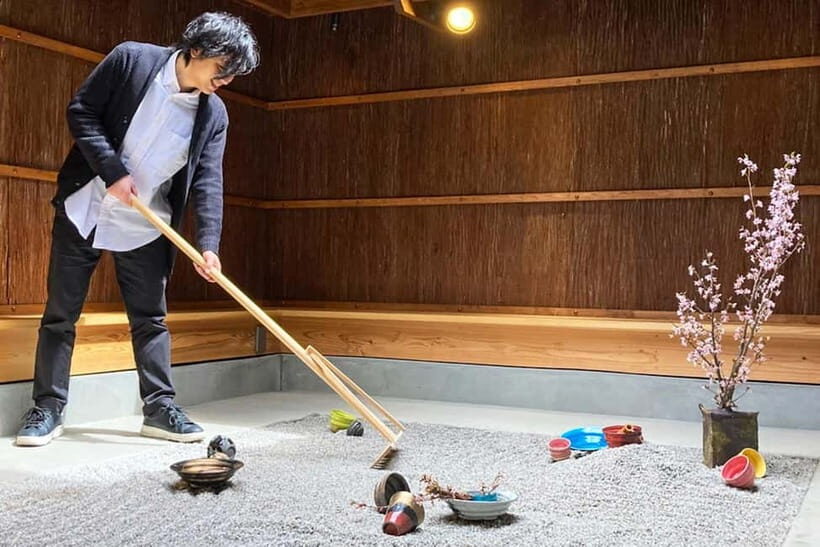
- Make a Zen garden you can actually shape: you rake and decorate your own sand scene in the store’s garden area
- Kyoto-quality matcha and wagashi: Ippodo tea with seasonal sweets from Senbon Tamajushuken
- A real machiya pottery shop setting: this happens inside a renovated 100-year-old Kyoto townhouse
- Photo moment built in: you can take pictures of yourself eating matcha and sweets in front of your garden
- Pottery you can buy and use at home: traditional pieces available and described as dishwasher- and microwave-safe
Making Zen garden sand patterns in a Kyoto pottery shop
Kyoto’s famous Zen gardens are usually something you watch. Here, you get to do the shaping. The experience is built around karesansui, the sand-and-stone style found in temple settings. You’ll rake and decorate your own Zen garden in the store’s garden space, which is exactly the kind of hands-on Kyoto activity that feels different from just taking photos.
What surprised me about the format is how creative it stays. The instruction isn’t heavy or overly strict. It’s more like: here’s the sand, here’s the basic idea, now make something you like. One person noted it can be done quickly if you’re decisive, and that matches the reality of a short 30-minute session. You’re not trying to master temple-level tradition in one sitting. You’re trying to get the feel of the process and walk away with something that feels personal.
Expect the experience to be fairly free-form. You’ll be decorating rather than copying a model design. That’s a good thing if you want calm, gentle focus. It’s also something to consider if you’re someone who likes strict step-by-step teaching. If you need a lot of structure, bring your patience.
You can also read our reviews of more tours and experiences in Kyoto.



Finding Ninshu and the machiya setting near Kyoto Imperial Palace
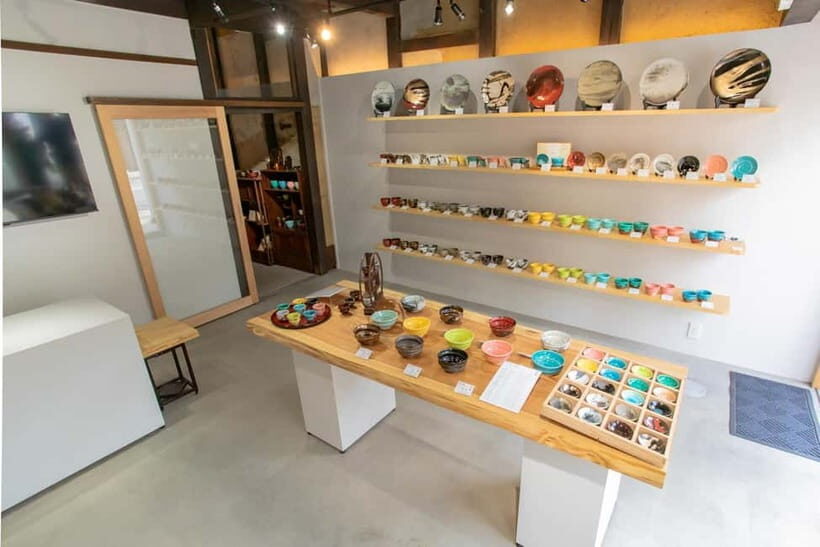
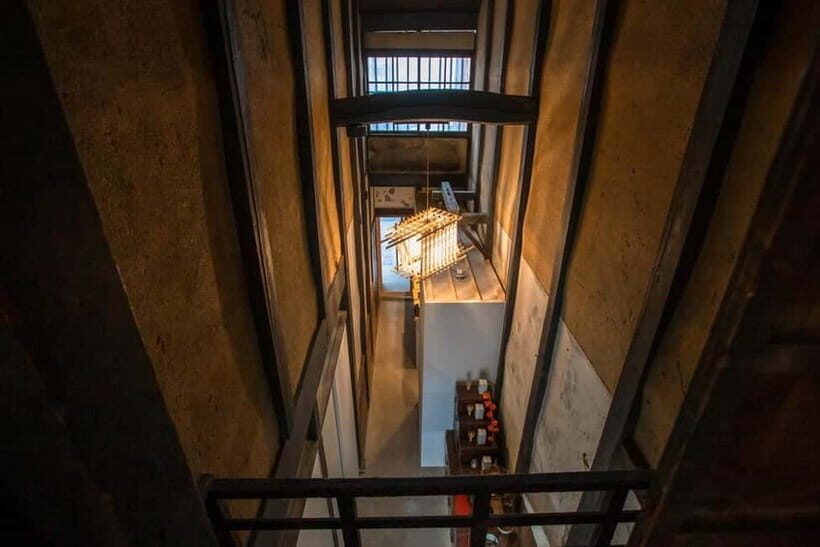
This is not in a big museum or a modern studio. It’s in a small pottery shop inside a renovated 100-year-old Kyoto townhouse (a classic machiya). The garden happens in the back, and the shop environment gives the whole workshop a more lived-in, local feel than a typical workshop building.
The location is practical, too. The meeting point is around Teramachi Dori, very close to Kyoto’s center action but tucked into a quieter street scene. You’ll meet 2 minutes’ walk north from Ippodo and about 100 meters south from Kyoto Imperial Palace Park along Teramachi Dori. If you like to navigate by landmarks, this is easy: find Ippodo, then head north briefly.
You’re also walkable from transit:
- about 11 minutes on foot from Kyoto Shiyakusho-mae Station (Subway Tozai Line)
- about 9 minutes on foot from Jingu-marutamachi Station (Keihan Railway Main Line)
If you use coordinates, the listed spot is 35.0157879, 135.7673992. This kind of detail matters when you’re bouncing between Kyoto sites and you don’t want to waste time hunting.
One more advantage of this shop area: it’s the kind of neighborhood where you can keep wandering before or after your session. A previous participant pointed out the area has antiques and traditional home goods shops, which is perfect if you like to build a mini route around your activity.
Tea and wagashi right where your Zen garden sits
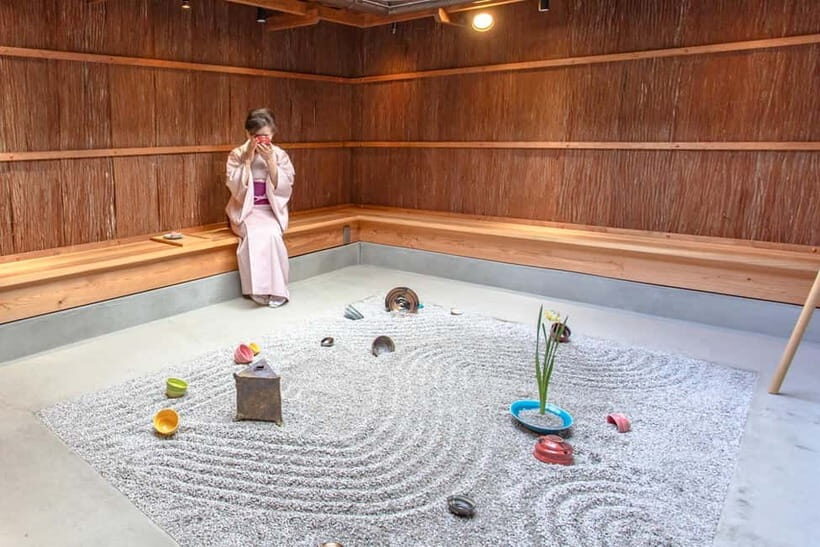
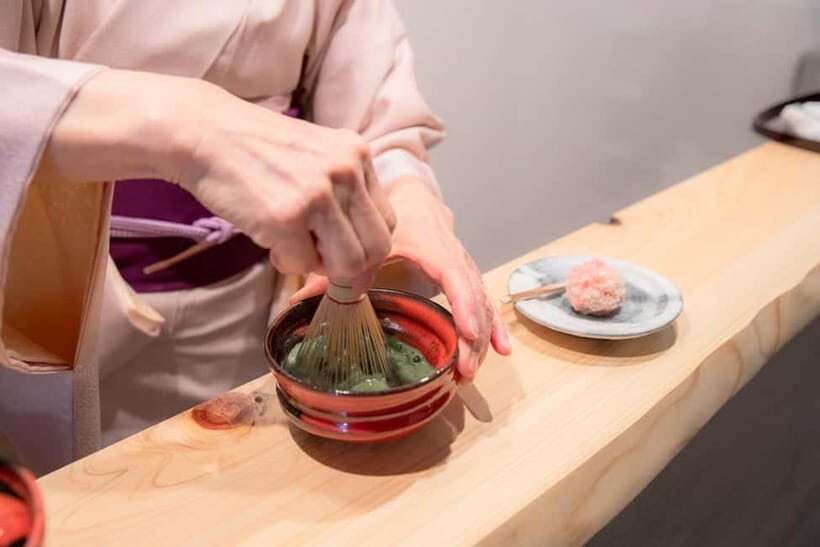
After you shape your sand garden, you get the part that makes the workshop feel like Kyoto, not just a craft session. You’ll enjoy matcha from Ippodo, Kyoto’s famous tea company, in front of the Zen garden you made. Alongside it, you’ll have seasonal wagashi (Japanese sweets) from Senbon Tamajushuken.
The timing is tight, so the tea break is part of the flow rather than a separate long stop. One review mentioned the matcha could be served iced or hot, paired with something like a mochi cookie. Since the wagashi are described as seasonal, what you receive can vary, but the pairing concept stays consistent: tea first, then sweets, with your sand work as the backdrop.
Here’s why I think this matters: it turns the Zen garden from a product you make into a moment you experience. You’re not just decorating sand and leaving. You’re standing in the same space, tasting Kyoto flavors while looking at what you raked. It’s a calmer way to do “culture,” because the tasting becomes part of your own creative output.
And yes, there’s a built-in photo opportunity. You can take pictures of yourself eating matcha and the sweets in front of your Zen garden. That’s the kind of detail that sounds small until you’re in Kyoto and you’re tired of staging photos in places where nothing feels natural.
Pottery shopping: souvenirs you can actually use
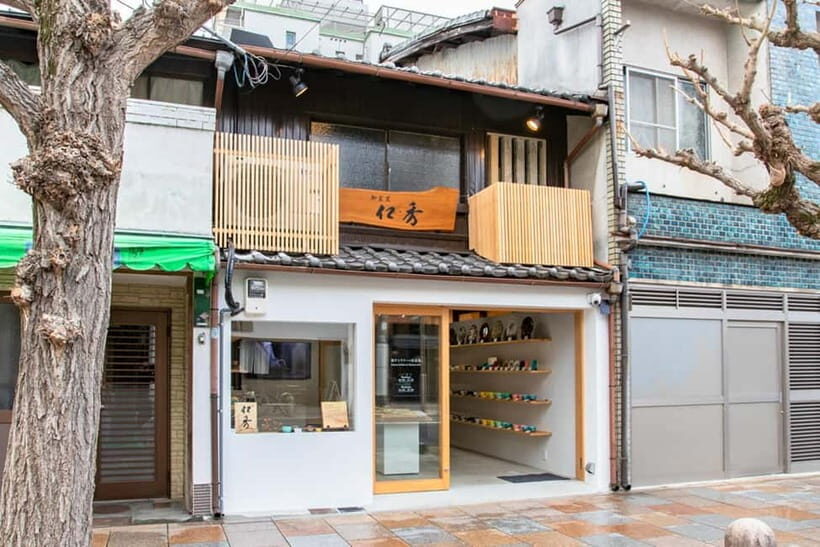
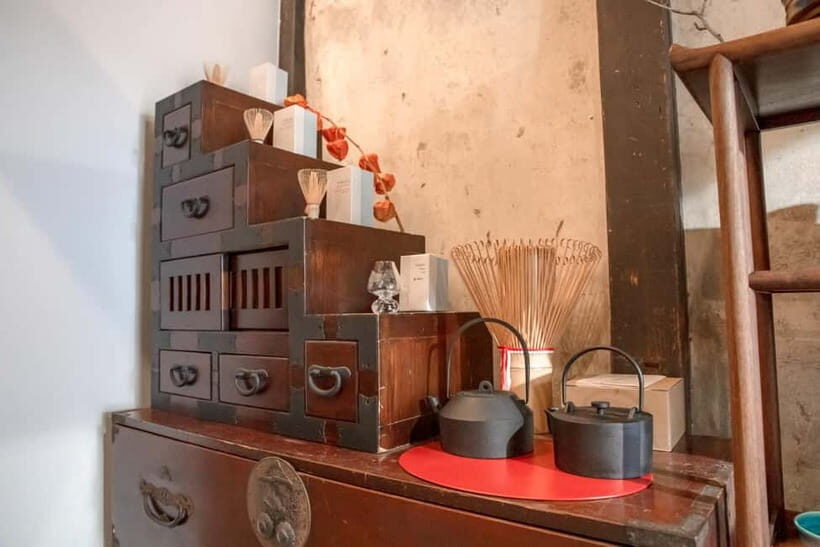
Your activity doesn’t end with sand and tea. The shop also has handmade pottery available for purchase. One of the big practical selling points is that the pieces are described as dishwasher-safe (and in at least one account also microwave safe).
That’s a big deal for souvenirs. Kyoto ceramics are often beautiful but not always realistic for daily use. Here, the safe-for-kitchen detail makes it easier to buy something you’ll keep using instead of saving in a closet. If you like functional travel keepsakes, this is one of the better setups: you can support the craft, bring something home, and still feel confident about using it later.
What should you look for? Keep it simple:
- choose items you can picture in your routine (cups, small bowls, tea-related pieces)
- check the size against how you plan to transport it
- if you want something giftable, look for pieces that are complete and stable, not just single decorative fragments
Since this takes place in a real shop, you’re shopping in a place that feels like it sells pottery every day, not a temporary stand set up just for the class. That tends to make browsing feel more natural.
How the 30-minute session and small group shape the experience
The session is 30 minutes total, and the group is limited to 8 participants. That combination creates a specific vibe: friendly and manageable, but not slow and ceremonial.
A few practical implications:
- With limited time, you’ll likely get light guidance rather than long explanations. That’s especially true if you’re making something you can complete quickly.
- With a group cap, you won’t be waiting around for ages. You’re in and out while still getting tea and sweets.
- You’ll probably spend most of your attention on one thing at a time: raking and decorating, then tasting.
If you like structured classes, you might want a backup plan in your mind. This isn’t presented as a deep lecture on temple design rules. It’s presented as a cultural, hands-on workshop inside a Kyoto shop setting. The value is in doing the activity and experiencing the matcha-and-wagashi moment right after.
If you’re the type who enjoys free-form making, you’ll likely feel more relaxed. If you’re the type who freezes when you’re told to create without a template, consider going in with one or two simple ideas for your sand pattern. Even basic choices can help you get confident fast.






Price and value: what $12 includes in Kyoto
At $12 per person, this is priced as an activity that includes the main cultural ingredients. The cost includes:
- the experience cost
- the matcha & Japanese sweets fee
- reservation and system fees
So you’re not paying separately for tea and sweets on top of the craft. That matters in Kyoto, where food and drinks can add up quickly when you’re hopping between neighborhoods.
The value isn’t only math. You’re getting three things that normally come from three different buckets:
- hands-on Zen garden making (not just viewing)
- matcha from Ippodo
- seasonal wagashi from Senbon Tamajushuken
And it all happens in a machiya pottery shop setting, which is exactly the kind of “small-format Kyoto” that fits well into a day of sightseeing. This is also a good option if your schedule is packed and you still want something creative that isn’t another long museum stop.
One more value note: the class includes an experience that’s designed to be photo-friendly without feeling gimmicky. That’s not always the case in craft workshops.
Who should book this Kyoto zen garden and matcha workshop
I’d steer you toward this experience if you:
- want a hands-on Kyoto activity, not just a photo stop
- enjoy matcha and want a Kyoto-brand tea moment (Ippodo)
- like wagashi and want a seasonal pairing rather than a generic snack
- want a short activity that fits inside a tight itinerary
You might skip it if you:
- want a long, guided deep-dive about temple Zen garden design
- dislike free-form making and need detailed step-by-step instruction
- need a long seated experience, because it’s built to be 30 minutes
It also works well as a “bridge activity.” For example, you can pair it with antiques or traditional home goods browsing in the Teramachi-dori area, since the meeting point puts you right in the middle of that kind of shopping.
Should you book this Kyoto zen garden and matcha workshop?
Yes, if you want a short, Kyoto-flavored activity that mixes craft with real taste. The big win is the combo: create a Zen garden that becomes your backdrop for an Ippodo matcha + Senbon Tamajushuken wagashi moment. The setting also feels authentic, since it’s in a renovated 100-year-old machiya pottery shop rather than a generic workshop space.
I’d hold off only if you’re looking for lots of instruction or a slow, formal ceremony. This is relaxed and creative, with a quick tempo.
If that matches your style, book it. It’s the kind of 30-minute Kyoto experience that gives you a story you can bring home, not just a photo.
FAQ
How long is the Kyoto zen garden and matcha experience?
The duration is 30 minutes.
How much does it cost?
It costs $12 per person.
What is the group size?
The group is limited to 8 participants.
What’s included in the price?
The price includes the experience cost, the matcha and Japanese sweets fee, and reservation and system fees.
Where is the meeting point?
Meet 2 minutes walk north from Ippodo, and about 100m south from Kyoto Imperial Palace Park along Teramachi Dori. The coordinates listed are 35.0157879, 135.7673992.
Can I take photos during the experience?
Yes. You can take pictures of yourself eating matcha and Japanese sweets in front of the Zen garden you made.
Is there free cancellation?
Yes. You can cancel up to 24 hours in advance for a full refund.