REVIEW · YOKOHAMA
Learn Sushi-grade fish with a licensed guide @Yokohama fishmarket
Book on Viator →Operated by AMC Products & Tours · Bookable on Viator
Raw fish, real know-how, and tuna lessons. This Yokohama fish market tour is special because you get hands-on guidance on where sushi ingredients come from and why freshness matters, plus you try free tuna so the facts stick. One key consideration: you really do see raw fish—eyes and bones included—so it’s not a fit if that kind of viewing bothers you.
I also like how the guide turns the whole market into a lesson, with quizzes, Japanese fish-name basics, and practical tips on how fish is caught and kept before freezing tech is common. The other thing I appreciate is the small-group feel (maximum 2 people), which makes it easier to ask questions when the market talk gets fast and local.
In This Review
- Key highlights you’ll feel immediately
- Why Yokohama is such a smart place to learn fish
- Meeting at JR East Yokohama Station and getting to the market
- Wholesale access: what the tour really gives you inside
- The walk that connects “fish” to real fishing grounds
- How fish stays good before freezing technology
- Sushi ingredient learning that goes beyond names
- Free tuna tasting: the lesson you can taste
- Market restaurants after the tour: plan your sushi budget
- Small-group dynamics: why max 2 matters
- Price and value: is $55.28 worth it for 2 hours?
- Who should book this Yokohama fish market sushi-grade tour
- Who should skip it
- Should you book this tour?
- FAQ
- Where do I meet for the tour?
- What time does the tour start, and when does it end?
- How long is the experience?
- Is food included in the tour price?
- Is the tuna tasting included?
- Can I buy tuna at the market?
- What should I wear or bring?
- Is this tour suitable if I do not want to see raw fish?
- How big is the group?
- What is the cancellation policy and what if weather is bad?
Key highlights you’ll feel immediately
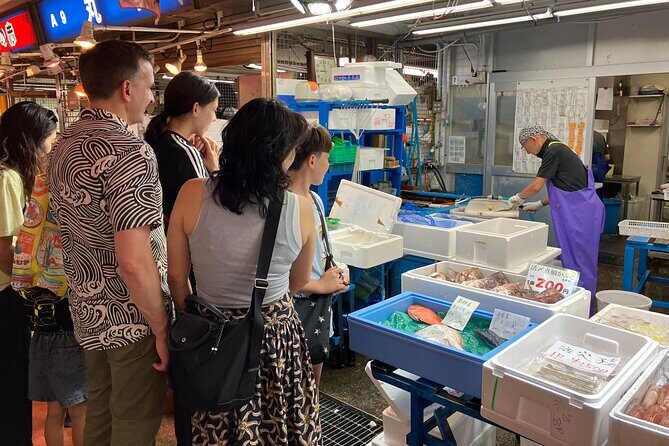
- Wholesale market access so you’re not stuck outside watching from a distance
- Free tuna tasting tied to what you’re learning, not just a random snack
- Japanese fish names + how to ask during a real market walk
- Catch-to-market context from multiple local fishing grounds, explained in plain terms
- No-freshness-magic explanation of preservation methods before widespread freezing
- Practical shopping pointers if you want to buy tuna fillets or blocks to take home
Why Yokohama is such a smart place to learn fish
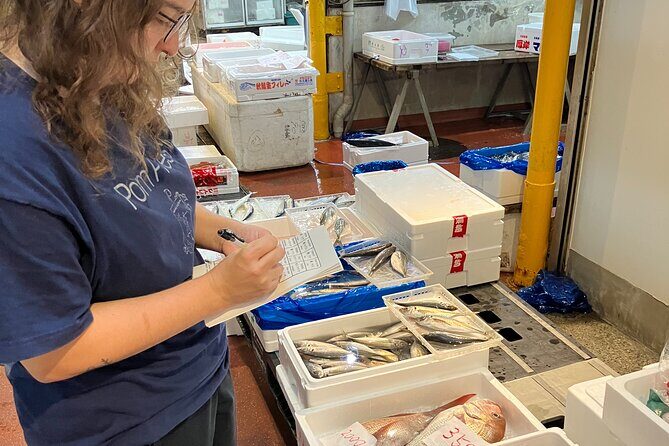
If your only Japan fish memories are from Tokyo’s famous markets, this tour gives you a different angle: the food chain closer to where Kanagawa fishermen actually work. There’s a reason people compare Yokohama to Tokyo. Tokyo is great for seafood culture, but Yokohama sits near real fishing activity—and that shows up in what you’ll see at the market.
What I like most is that the tour doesn’t treat fish as a mystery box. It connects the dots: where the fish comes from, how it gets caught, and how it’s handled afterward. You’ll pick up a more honest way to think about freshness—less marketing, more process.
You’ll also get language tools that matter in real life. Learning fish names is useful, but learning how to ask for them in Japanese is what helps you actually buy or order with confidence later.
You can also read our reviews of more guided tours in Yokohama

Meeting at JR East Yokohama Station and getting to the market
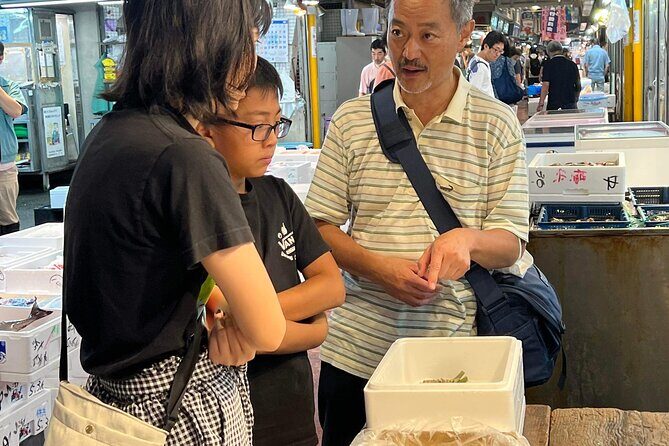
You start at the North gate of JR East Yokohama Station, with the meeting point listed at 2 Chome-16 Takashima, Nishi Ward. Start time is 7:30am, and the tour is about 2 hours total. The experience includes a walk of about 15 minutes to reach the fish market area, so wear shoes that can handle wet floors and tight pacing.
This early start is part of the value. Fish markets work on timing, and the earlier you go, the more sense it makes. You’ll be walking through an active wholesale environment, not a staged street-food vibe.
One practical tip from the tour guidance: avoid high heels. The market floor can be very slippery. Comfort matters here because you’ll be on your feet, looking around, and pausing often for the guide to explain what’s in front of you.
Wholesale access: what the tour really gives you inside
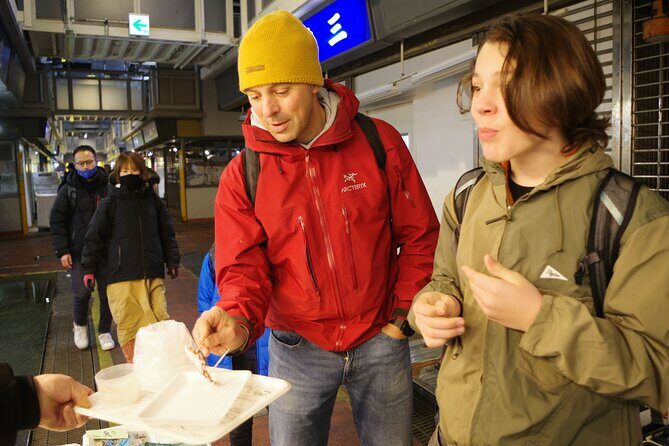
The tour includes permission to enter the whole sale market. That matters because many visitors can only see the market from the edges. Here, you get to move through the area where the seafood arrives, gets sorted, and becomes food you’ll recognize at restaurants later.
You also get a guide who has serious real-world experience. The guide has fished for over 50 years, with experience spanning islands like Hokkaido to Kyushu. Even if you’re not a fishing enthusiast, that perspective changes the tone of the visit. Fish isn’t just a product—it’s a living thing with a supply chain that has to protect it from time and temperature.
Also, the tour is small. Maximum group size is 2 travelers, so you’re less likely to feel rushed while learning. If you like asking questions (and translating in your head), this format is a big plus.
The walk that connects “fish” to real fishing grounds
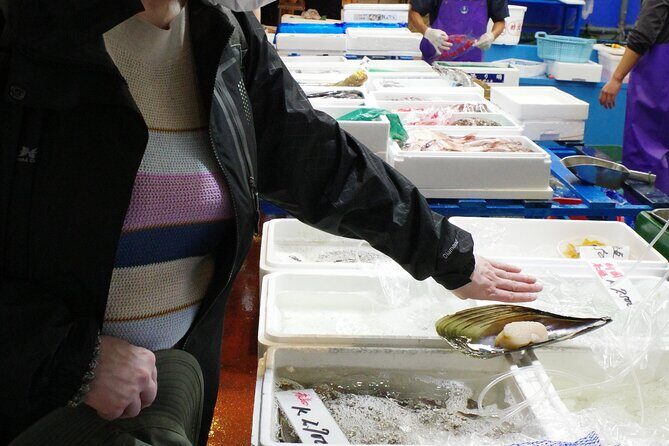
As you stroll through the market, you’re not just looking at trays. You’re learning where the fish comes from and how it ends up there. The tour covers seafood caught that morning at over 20 local fishing grounds across the region, and the guide explains how fish is caught and handled.
This is one of the tour’s most practical benefits: you start seeing patterns. For example, you’ll begin to notice that fish names are not interchangeable. Learning the species also helps you understand how restaurants decide what to serve and how sushi chefs think about texture and taste.
The guide also keeps you alert with quizzes as you go. That might sound like “fun games,” but it has a real purpose: it pushes you to pay attention to details you’d otherwise skim past. If you want to leave with more than photos, this is a smart method.
How fish stays good before freezing technology
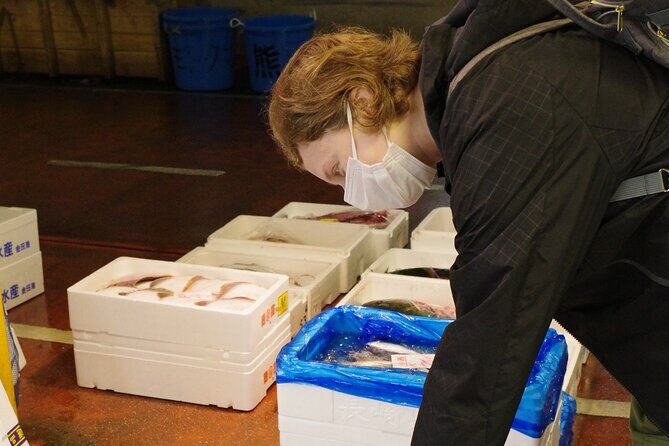
One of the most interesting parts for me is the explanation of preservation—especially the period before freezing became widely available. The tour talks about how fish and seafood were kept fresh using methods that were effective without modern convenience.
Why does that matter to you? Because it changes how you interpret freshness at a restaurant. When you know that preservation is an old problem, you start thinking about handling, time, and temperature instead of just branding or “rare” labels.
The guide’s fishing background makes these points feel grounded. You’re not hearing theory. You’re getting practical “this is what has to happen” reasoning that you can carry into future sushi meals.





Sushi ingredient learning that goes beyond names
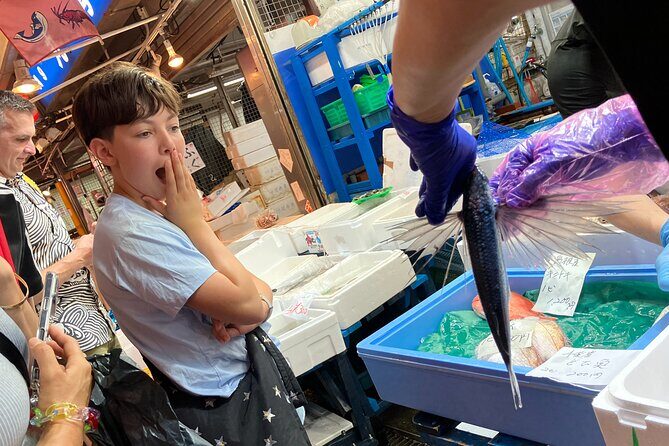
You’ll learn fish names in Japanese, plus how to ask fish names in Japanese. That last part is key. Many tours teach vocabulary lists. This one applies language in motion, while you’re surrounded by the real market setting.
You might also pick up Japanese phrasing for questions you’ll actually use later—especially when you’re ordering sushi or when you want to buy a specific fish cut. Even if you only remember a few phrases, using them at the right moment can turn a “maybe I’ll figure it out” plan into a confident order.
The guide also offers cooking tips during the tour. You’ll hear ideas about how sushi-ready ingredients are treated and why different fish behave differently. This is especially helpful if you’re the type who normally orders by habit. You’ll start ordering with intent.
Free tuna tasting: the lesson you can taste
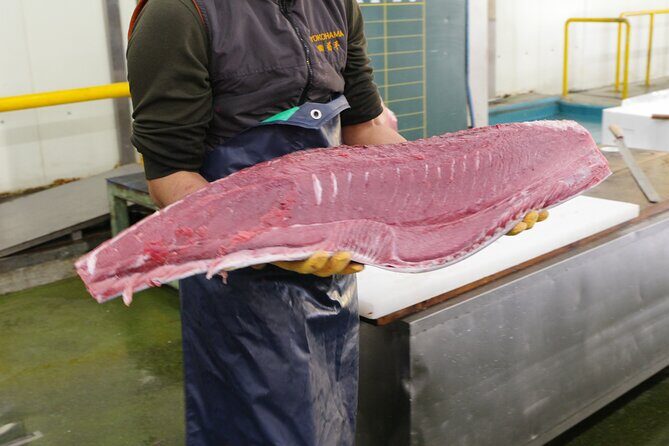
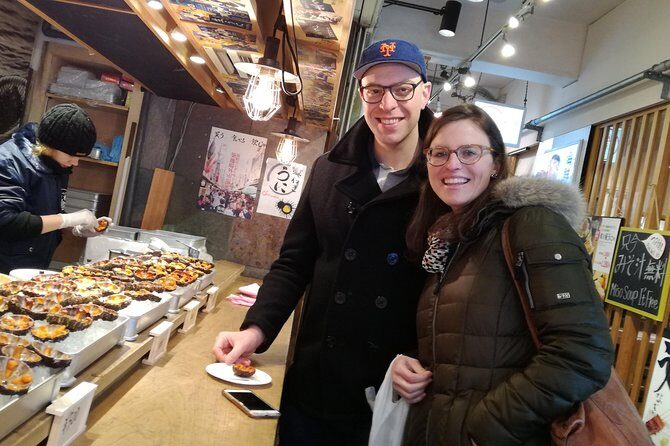
This tour includes FREE TUNA tasting. It’s not just a snack; it’s a feedback loop. You learn what to look for, and then you taste something connected to that fish.
In practical terms, tasting helps you understand texture and flavor quickly. You won’t need to remember every explanation to benefit. A good tasting anchors your memory.
After the tasting, you can also purchase fresh tuna fillets or blocks if you want. That’s ideal if you like cooking at home or if you want to bring ingredient quality back to your own kitchen. Just keep your expectations realistic: what you buy depends on what’s available and what you’re comfortable handling.
Market restaurants after the tour: plan your sushi budget
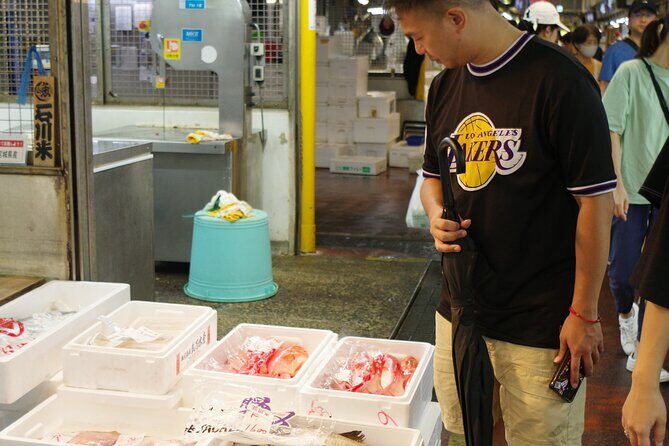
Once the main market walk wraps up, you’ll head around in-market restaurants and shops. This is where the tour’s learning turns into an actual meal decision.
Food isn’t included, so you’ll pay on your own if you choose to eat. The guide notes an approximate price for a sushi set menu of about ¥2,200. If you’re watching your budget, it’s smart to treat the tour as ingredient education plus optional lunch, not a bundled meal deal.
One thing I like here: you’re not rushed into a single tasting choice. You finish the educational part with context, and then you can choose what to eat while you still have market details fresh in your mind.
Also, you’ll likely be hungry. The tour runs early, returns to Yokohama station around 9:00–9:30, and you’ll spend the time walking and focusing. If you plan to eat after, consider making it part of the same morning rhythm.
Small-group dynamics: why max 2 matters
With maximum 2 travelers, the experience doesn’t feel like a lecture with photo stops. You can ask questions without waiting for a crowded group to catch up. That matters a lot at a fish market, where language differences and dialect can make things confusing fast.
The tour also specifically points out that without a knowledgeable guide, navigating the market can be tricky—especially with local Yokohama dialect. In real terms, that means you’ll spend less time guessing and more time learning. You’re not translating everything alone while you’re trying to follow what’s happening around you.
If you’re traveling with a partner, this is also a great “shared learning” style outing. You’ll both hear the explanations and you’ll likely leave with similar vocabulary and ordering ideas.
Price and value: is $55.28 worth it for 2 hours?
At $55.28 per person, you’re paying for more than a walk. You’re paying for:
- permission to enter the wholesale market
- a long-experienced guide with hands-on fishing context
- structured learning (quizzes and sushi ingredient language)
- a free tuna tasting
Food is extra, and bottled water and soda/pop aren’t included, so plan to buy a drink if you need one. But even with that, the value comes from access plus interpretation. Watching a fish market is interesting; understanding it is what makes your future meals better.
If you compare it to a typical generic “market tour,” you’re getting a more direct sushi-fish focus. Also, the small-group limit (max 2) is part of the pricing logic. You’re not paying for a big crowd experience where your questions get lost.
To me, this is a good buy if you care about ingredients and you want the language to match—especially if you’re the kind of person who likes to ask, What am I actually looking at?
Who should book this Yokohama fish market sushi-grade tour
This tour is a great fit if you:
- love sushi and want to understand ingredients beyond what’s written on a menu
- enjoy seafood and want freshness explained in practical terms
- like learning in a real setting, not a classroom
- want a smaller group experience (maximum 2)
It’s also a good match for visitors who prefer a guided environment in a place where foreign-language explanations aren’t guaranteed.
Who should skip it
Skip it if you:
- don’t want to see raw fish, including eyes and bones
- feel uncomfortable with close, realistic fish-market visuals
- hate slippery floors and aren’t willing to wear safe footwear
That last point is simple: this is an active market environment. Even if you’re excited to learn, comfort affects your ability to enjoy the experience.
Should you book this tour?
I’d book it if you want Yokohama to teach you something you can use at sushi counters afterward. The combination of wholesale access, a long-time fishing perspective, Japanese fish-name learning, and a free tuna tasting makes it more than sightseeing.
I’d think twice if raw fish visuals will ruin your morning. Otherwise, this is a strong value way to connect Japanese sushi culture to the real work behind it.
If you go, show up early, wear grippy shoes, and bring a curious attitude. This is the kind of tour where a few minutes of attention turns into a lifetime of better ordering.
FAQ
Where do I meet for the tour?
Meet at the North gate of JR East Yokohama Station (address listed as 2 Chome-16 Takashima, Nishi Ward, Yokohama, Kanagawa 220-0011).
What time does the tour start, and when does it end?
The start time is 7:30am. You’ll return to Yokohama station around 9:00–9:30.
How long is the experience?
It’s approximately 2 hours.
Is food included in the tour price?
No. Meals are not included. You’ll walk around in-market restaurants and shops, but you pay for what you order yourself.
Is the tuna tasting included?
Yes. The tour includes free tuna tasting.
Can I buy tuna at the market?
Yes. After the tasting, you can purchase fresh tuna fillets or blocks (your expense).
What should I wear or bring?
Avoid high heels because the market floor can be very slippery. The tour also notes bottled water and soda/pop are not included.
Is this tour suitable if I do not want to see raw fish?
The guidance says it is not recommended for people who do not want to see raw fish, eyes, and bones.
How big is the group?
Maximum 2 travelers.
What is the cancellation policy and what if weather is bad?
You can cancel for a full refund if you cancel up to 24 hours in advance. The tour requires good weather; if it’s canceled due to poor weather, you’ll be offered a different date or a full refund.