REVIEW · TOKYO
Learn to Make Home Style Tempura Udon and Gyoza
Book on Viator →Operated by byFood · Bookable on Viator
Scratch-made udon beats takeout every time, and this Nerima, Tokyo private class teaches you tempura udon and gyoza from scratch with Emi while you sip barley tea. What I like most is how hands-on it stays, from kneading udon dough to folding gyoza yourself. You’re not just watching and hoping it comes out right.
I also love the practical payoff: you get an English recipe booklet to take home and actually recreate what you made. One possible drawback to plan around is the solo rule for single men, since a single male cannot take part on their own.
In This Review
- Key highlights you’ll care about
- Nerima Station, a private studio setup, and meeting Emi
- Hand-kneading udon and building flavor with dashi
- Tempura technique for crisp results that hold up
- Gyoza folding and choosing your filling options in Tokyo
- Barley tea, eating what you made, and taking home the English booklet
- Price and Tokyo logistics: what you’re really paying for
- Who should book Emi’s tempura udon and gyoza class?
- Should you book it? My practical take
- FAQ
- How long is the cooking class?
- Is this class private?
- What’s included in the price?
- Do I choose my gyoza filling?
- Can vegetarians and pescetarians join?
- Where do I meet for the class?
- Is transportation included?
- Do I need WhatsApp for the booking?
Key highlights you’ll care about
- Private class with Emi: only your group, so you can ask questions while you cook
- English recipe booklet to take home: a real souvenir, not just photos
- Barley tea during the class: you stay hydrated while you’re working the dough and fryer
- From scratch udon, dashi, tempura, and gyoza: you learn the full workflow, not one dish
- Pick your gyoza filling in advance: minced pork, minced pork and shrimp, or vegetables only
- Hands-on technique coaching: the instructor explains not just what to do, but what to look for
Nerima Station, a private studio setup, and meeting Emi
This class is based near Nerima Station, and the vibe is exactly what you want for learning: a cozy studio where you can move without feeling rushed. You start at the meeting point and the activity ends back there, so you’re not left figuring out how to get home after you’ve been cooking for a couple hours.
The big win is that it’s private. Only your group participates, which matters because Japanese cooking is all about small cues. In lessons like this, you can’t always predict how your dough will feel or whether your gyoza folds are tight enough. A private format gives you time to get corrections while you’re still mid-step.
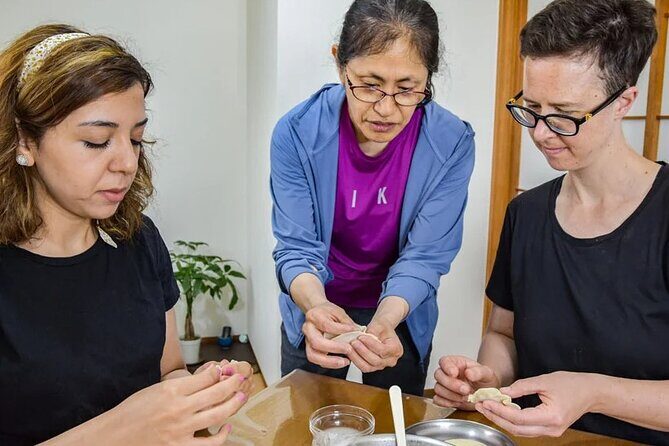
You’ll also meet the instructor, Emi, who runs the session with a very clear teaching style. In particular, the class focuses on getting you the right result by learning what to look for at each step, not just memorizing instructions. That kind of guidance is especially helpful if you’re the type who wants to understand the why behind the how.
One more practical note: the class includes barley tea while you cook. It’s a small detail, but it helps you keep energy up when you’re kneading, frying, and staying busy.
You can also read our reviews of more tours and experiences in Tokyo.



Hand-kneading udon and building flavor with dashi
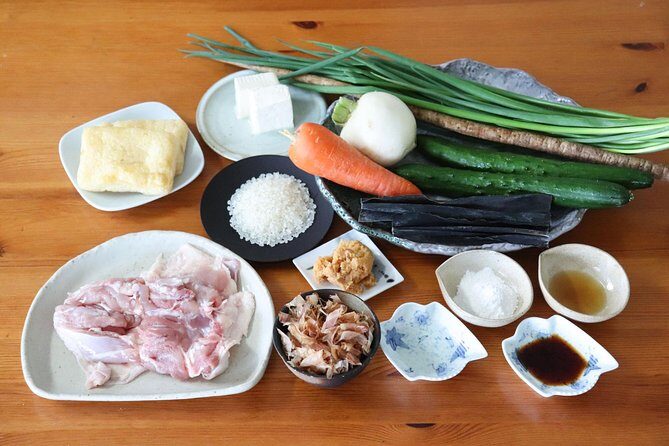
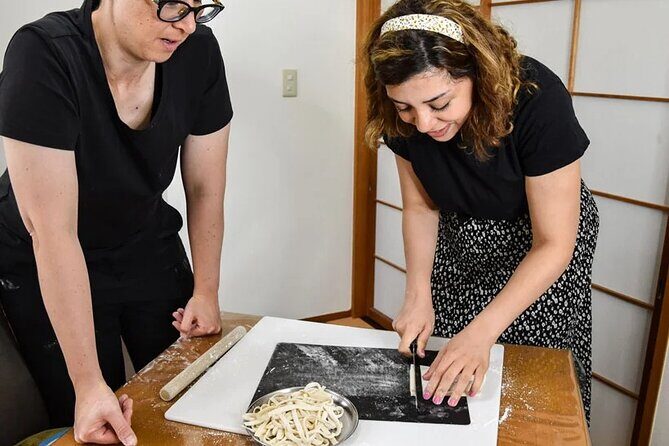
The session is built around making the whole udon experience, not just the final bowl. You’ll start from scratch, which typically begins with working the udon dough by hand. This is where you learn a core skill: how to knead until the dough reaches the right feel for noodles.
Udon has a forgiving reputation once you know the basics, but the texture comes from technique. When you’re kneading, you’re basically training the dough to behave the same way when it’s cooked later. That’s why the instructor’s approach matters. Emi doesn’t just show steps; she talks through what you’re aiming for at each stage. For example, you may get visual guidance on what the dough should look and feel like as you work it.
Right alongside the udon prep, you’ll also prepare dashi. Dashi is the backbone flavor in a lot of Japanese dishes, and learning it here gives you context for why udon tastes like comfort food instead of just hot noodles in broth. Even if you’ve had dashi before, making it yourself helps you understand how the flavor is constructed.
At this point in the class, you’re building two things that will show up in your final meal: properly prepared noodles and a broth base. That sets you up for everything else—tempura and gyoza—because the flavors have a foundation, not just a topping.
Tempura technique for crisp results that hold up
Next comes the part most people want to get right: tempura. This class gives you the chance to learn the right way to fry crispy tempura, which is the difference between soggy batter and that classic light crunch.
Tempura is often misunderstood as simple frying. It’s not only about oil and timing. The coating, the handling, and the frying process all interact. In a hands-on class, you’re not guessing—you’re guided toward the outcome, with feedback as you go.
Emi’s teaching style is a big deal here. The instruction focuses on what you’re looking for while cooking, not just the action you’re taking. That’s useful because frying is all about small adjustments. Your batter might look different depending on the ingredients and your prep pace. When the instructor explains what signals success look like, it’s easier to reproduce the technique at home.
Also, tempering expectations helps. You’re not trying to recreate a perfect restaurant finish in one class. Instead, you’re learning the steps and the indicators that lead to crispness. If you do that, your future bowls get better fast.
Finally, this tempura isn’t served as a separate snack—it’s integrated into the meal you sit down to eat. That gives the frying practice a real purpose beyond the fun of the process.
Gyoza folding and choosing your filling options in Tokyo
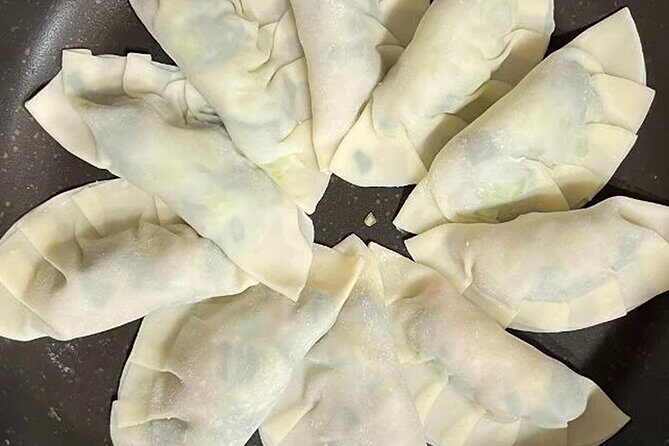
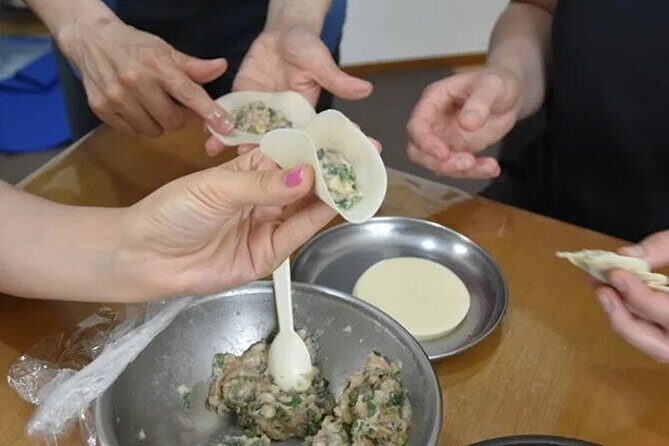
Gyoza is the other star of the class, and it’s where you get to do real hands-on work: filling and folding. You’ll learn how to fold gyoza after you fill them with your chosen ingredients.
You choose your gyoza filling preference at booking, with three options:
- A) Minced pork
- B) Minced pork and shrimp
- C) Vegetables only
That choice matters for two reasons. First, it changes your flavor profile, so you should pick based on what you actually want to eat. Second, it changes how the filling behaves when you shape it. A class like this lets you see the differences instead of reading about them and hoping your kitchen will behave the same way.
If you’re cooking for dietary needs, this option is also handy. The class states it can accommodate Vegetarian and Pescetarian diets if you inform them in advance. And the vegetables-only option makes it easier to align your gyoza with that plan.
Folding is where the class stays practical. Pleats and seal quality aren’t just aesthetic. They affect whether gyoza cooks evenly and keeps its filling inside. With Emi guiding you, you’re learning the mechanics rather than relying on guesswork.
When the folding portion clicks, it feels oddly satisfying. You end up with something that looks like food you’d actually order, not just a cooking project.
Barley tea, eating what you made, and taking home the English booklet
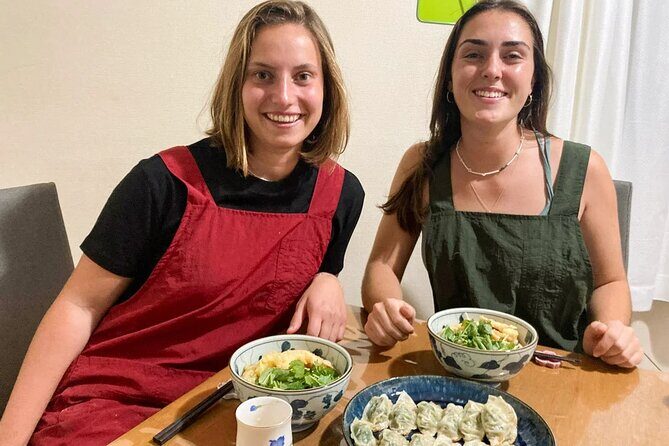
Cooking is fun. Eating is the point. After everything is ready, you’ll sit down and dine on your creations together. Your meal includes udon with tempura and gyoza, so you’re tasting a full meal rather than a plate of components.
Barley tea is included as you cook. It’s not meant to be fancy—it’s there so you stay comfortable while you’re working with your hands and standing near a hot prep area. After kneading, frying, and folding, you’ll probably appreciate anything that helps you reset.
The best take-home part is the recipe booklet in English. It’s more useful than people expect because it turns the class from a one-time meal into a repeatable skill. If you want a souvenir that actually earns its place in your kitchen, this is it.
And it’s not just about listing ingredients. The instructor style—explaining why steps happen and what to look for—tends to carry over to the home-cooking notes. That makes the booklet more than a checklist. It helps you recreate the feel of the process, which is what usually goes wrong when you try to cook at home.
If you’re cooking for family or you want an experience you can share, this kind of “learn and eat” structure is ideal. You leave with food skills plus a documented plan.






Price and Tokyo logistics: what you’re really paying for
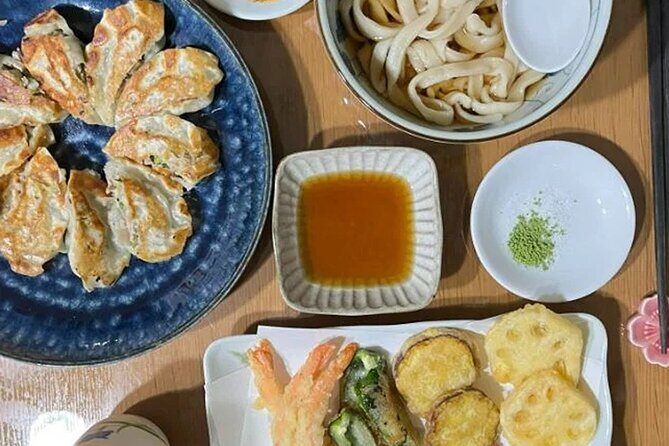
The price is $95.23 per person for an approximately 2 hours 30 minutes private cooking class. That sounds specific for a reason: you’re paying for instructor time, a private studio setup, and all the ingredients and tools. You also get barley tea and the full meal you make—udon with tempura and gyoza—plus the English recipe booklet.
For value, the key is that this isn’t just a tasting. You’re doing the work: kneading udon dough, preparing dashi, frying tempura, and folding gyoza. The included meal means you’re not paying extra for lunch or dinner. And because it’s private, you’re not sharing guidance with strangers who move at a different pace.
Booking timing matters. On average, this is booked about 81 days in advance, and during busy spring and autumn seasons the studio can fill up quickly. For groups of 3 or more, it’s highly recommended to book 2–3 months in advance to help ensure availability.
Transportation is not included, but the meeting point is near public transport, and the class ends back at the start. So you’re not stuck with a long post-class trek.
Also note a communication detail: for seamless communication with the host, you’re asked to provide a WhatsApp registered number when booking. If you already use WhatsApp, great. If not, consider setting it up before your trip so your communication is easy.
Finally, Japan’s legal drinking age is 20+. Barley tea is included, but if you plan to have other drinks, keep that in mind.
Who should book Emi’s tempura udon and gyoza class?
This is a strong fit if you want hands-on Japanese cooking in a private setting and you like learning technique, not just collecting a few recipes. It’s especially good for:
- Food lovers who want to make an actual restaurant-style meal at home
- People interested in udon, tempura, and gyoza as a linked set (broth + noodle + toppings + dumplings)
- Anyone who values an English take-home reference they can use later
- Families and mixed-experience groups, since the class structure supports beginners while still rewarding curiosity
You might want to skip or look for a different option if you’re a solo male, since a single male cannot take part on their own. And if you strongly prefer central Tokyo sights during your class time, Nerima’s station-area location may feel a bit out of the way compared with more tourist-heavy neighborhoods—but the tradeoff is a calmer learning environment.
Should you book it? My practical take
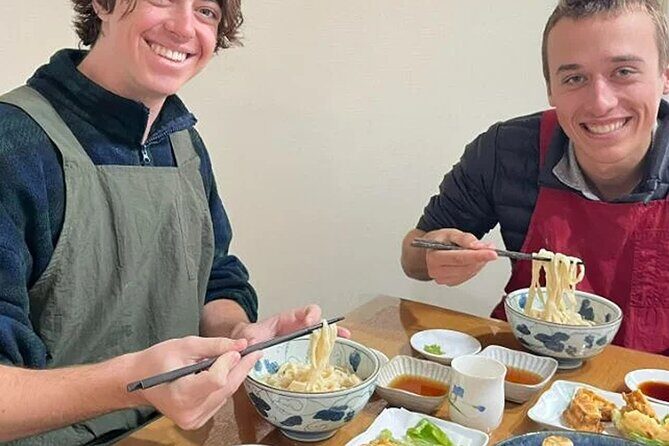
If your goal is to leave Tokyo with more than memories—if you want to bring home a real skill—this class is worth serious consideration. The combination of hand-kneading udon, tempura frying guidance, gyoza folding, and an English recipe booklet is a clear “learn it, eat it, repeat it” package.
The two biggest reasons I’d book are:
1) the private instruction style (Emi focuses on what to look for, not just what to do), and 2) the take-home materials that make the dishes practical to cook later.
The main thing to double-check is whether the solo participation rule affects you, plus your gyoza filling choice at booking. If you can handle those two points, you’ll likely end up with one of the more useful food experiences on your trip.
FAQ
How long is the cooking class?
The class runs for about 2 hours 30 minutes.
Is this class private?
Yes. It’s a private tour/activity, and only your group participates.
What’s included in the price?
The class includes all ingredients and tools, barley tea, and the udon with tempura and gyoza meal, plus an English recipe booklet to take home.
Do I choose my gyoza filling?
Yes. When booking, you need to specify A) minced pork, B) minced pork and shrimp, or C) vegetables only.
Can vegetarians and pescetarians join?
Yes. The class can accommodate vegetarian and pescetarian dietary requirements if you inform them in advance.
Where do I meet for the class?
The meeting point is near Nerima Station (1-chōme-3-5 Nerima, Nerima City, Tokyo 176-0001, Japan). The class ends back at the meeting point.
Is transportation included?
No. Transportation to and from the location is not included, though the meeting point is near public transportation.
Do I need WhatsApp for the booking?
For seamless communication with the host, you’re asked to provide a WhatsApp registered number when booking.