REVIEW · TOKYO
Mt. Fuji Tours with Kawaguchi Lake Ropeway View English Speaking
Book on Viator →Operated by Scenic Bend · Bookable on Viator
Fuji days are won by timing. This tour strings together big views from the Kawaguchi Lake Ropeway and the Kachikachi cable car, then adds Oshino Hakkai’s eight springs and a matcha stop so your day feels like more than one scenic gamble. I like the stacked-plan approach, and I like that you’re traveling with an English-speaking guide who can help you get oriented fast.
Weather matters, but the itinerary tries to protect your chances by hitting several viewpoints instead of just one. Mt. Fuji visibility can still be ruined by cloud or rain, and weekends or Japan red days can bring heavy traffic and queue lines that squeeze the timing.
In This Review
- Key points to know before you go
- Why this Mt. Fuji and Kawaguchi Lake day feels “made” for first-timers
- Tokyo pickup and the practical way the day moves
- Stop 1: Mt. Fuji Panoramic Ropeway on Lake Kawaguchi
- Stop 2: Kachikachi Mountain Cable Car at Lake Kawaguchiko
- Stop 3: Konohana Museum and a matcha experience
- Stop 4: Oishi Park for lake views and seasonal lavender
- Stop 5: Oshino Hakkai—eight springs fed by Mt. Fuji snowmelt
- Price and value: why $81.41 can feel fair
- Your biggest variable: weather, crowds, and “red days”
- Guides: the human difference you’ll feel
- What to pack and how to avoid a stressful day
- Who should book this Mt. Fuji tour
- Should you book this tour?
- FAQ
- What’s included in the tour price?
- How long is the Mt. Fuji day trip?
- What stops are on the itinerary?
- Can I still go if Mt. Fuji is cloudy or rainy?
- What if the ropeway or cable car can’t run due to weather?
- Where do we meet in Tokyo?
Key points to know before you go
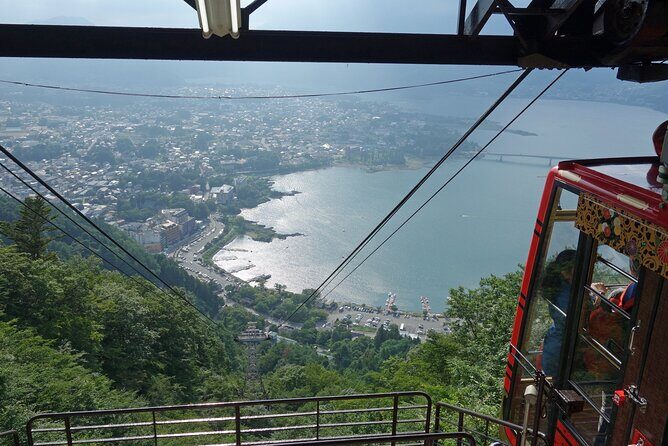
- Ropeway + cable car: two different angles over Lake Kawaguchi
- Oshino Hakkai eight ponds: a classic Fuji foot-of-the-mountain stop
- Matcha experience: a timed cultural break built into the day
- Multiple viewpoints: better odds than a single-photo-stop plan
- Weekend and red-day caution: expect crowds, possible schedule pressure
- Guide support: English (and often Japanese/Mandarin) for the day’s flow
Why this Mt. Fuji and Kawaguchi Lake day feels “made” for first-timers
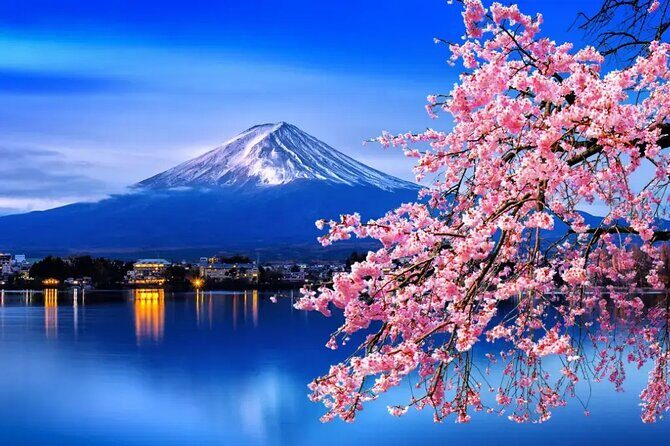
Mt. Fuji is famous, and that also means it’s chaotic. The trick with any day trip is not just reaching the area—it’s making sure you don’t waste your limited hours sitting in lines or repeating the same view.
This one is built around a sensible idea: layer your chances. You start with a ropeway ride over Lake Kawaguchi, then you add the Kachikachi cable car for a higher, different perspective. After that, you still get a real cultural stop with matcha, plus the lakeside gardens and Oshino Hakkai’s eight spring ponds. Even when visibility is mediocre, you’re not stuck with only “maybe I’ll get lucky” planning.
I also like the human side. Guides like Sawaki, Erina, Luis, Louis, and Brewski show up in the feedback again and again for clear communication and keeping the day moving. If you want explanations that actually help you enjoy what you’re seeing—rather than just letting you figure it out—this format tends to work well.
The one real drawback is not the tour’s fault. Fuji visibility is weather math. Clouds can swallow the mountain. You can’t buy certainty in Japan’s foothills.
You can also read our reviews of more tours and experiences in Tokyo.



Tokyo pickup and the practical way the day moves
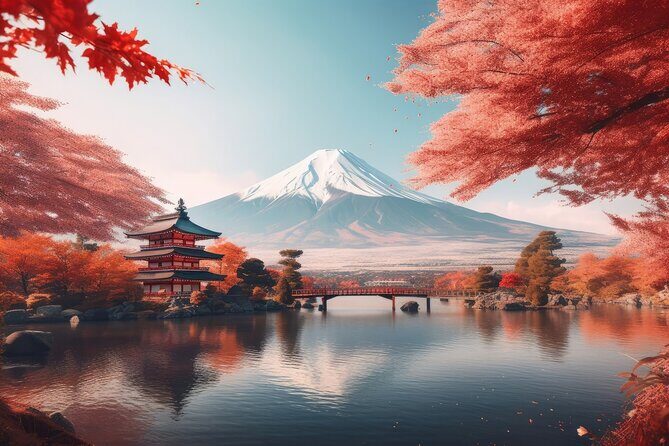
The tour uses two central pickup points in Tokyo, and the transfer setup is designed to be easy for visitors who don’t want to hunt for trains, buses, and timed tickets. You also get a reminder email the night before with pick-up time and vehicle registration number, plus the guide contact information. That matters because meeting points can get crowded—especially when multiple tour groups arrive at once.
If you choose the small group option, you get something more comfort-focused: a door-to-door transfer from some Tokyo hotel areas (generally 7:00–8:30), fewer people in the vehicle, and a more relaxed setup. The trade-off is that the small-group package is described as having no detailed explanation—it’s more about getting you there comfortably.
My advice: build a buffer into your morning. If you’re prone to overthinking, you can still end up stressed at a packed pickup zone. You’ll enjoy the day more if you show up early, with patience ready.
Stop 1: Mt. Fuji Panoramic Ropeway on Lake Kawaguchi
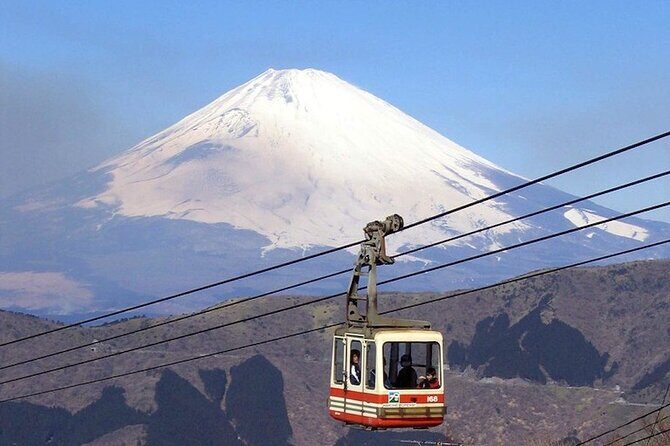
This is your first “wow” moment. You’ll ride the Lake Kawaguchi panoramic gondola/ropeway-style route for aerial views over the lake area.
What I like here is that it’s a clean start to the day. You’re not immediately doing shopping or walking through dense crowds. You’re getting height and a wide horizon, which helps you understand where everything sits around the lake.
A practical heads-up: the Kawaguchi Lake gondola can be under repair for a specific window (noted as Dec. 10 to Dec. 20). In that case, you’ll take the Sengoku Boat instead. If ropeway time is a key reason you booked, check your travel dates before you get there—this is one of the rare schedule changes that’s spelled out in advance.
Also remember: even at the ropeway, your view depends on sky conditions. If it’s hazy, rainy, or just cloudy, Fuji may be reduced to a rumor.
Stop 2: Kachikachi Mountain Cable Car at Lake Kawaguchiko
After the ropeway, the day shifts from “over the lake” to “up the mountain side.” The Kachikachi Mountain Cable Car takes you toward the viewpoints around Lake Kawaguchiko, with a ride time around 1.5 hours including the cable car portion.
Why this stop works: you’re changing elevation and direction. The scenery feels different even if you recognize the same water and shoreline. That’s exactly what you want on a one-day Fuji plan—variety without extra logistics.
Timing note: the Kachikachi cable car operates with specific hours. Weekdays and weekends/holidays have different last descent times. If you’re arriving later due to traffic, this matters.
And yes, weather can suspend the cable car too (strong winds, lightning). If that happens, the tour states the plan shifts to a Sengoku Warrior Boat option or the ticket fee is refunded, depending on the situation. So while you can’t control the mountain, the tour is at least ready for disruptions.
Stop 3: Konohana Museum and a matcha experience
Next is the cultural brake: a Lake Kawaguchiko matcha experience at the Konohana Museum area, with around 60 minutes scheduled.
This stop is more than just a snack break. Matcha is a low-effort way to slow down in a fast day trip. It’s also one of those experiences where the timing helps: you’re not wandering around looking for something “Japanese enough” to do between transport delays. You get a planned slot.
There’s one caution: the tour notes that the overall duration of the matcha experience may be shortened due to traffic or force majeure situations. So if you’re hoping for a very long, detailed ceremony, plan your expectations around a brief, guided experience rather than a full deep-dive session.






Stop 4: Oishi Park for lake views and seasonal lavender
Oishi Park is a short stop, around 30 minutes. It’s one of those Fuji-area basics that looks good even when the day isn’t perfect.
In summer, the park’s lavender blooms and covers the landscape in purple. Even outside lavender season, the park’s value is the same: it offers a lakeside viewpoint where you can grab photos without rushing across a half-dozen spots.
The drawback is also the same: a short visit means you won’t have time to treat it like a full garden day. If you love slow strolling, you’ll want to keep your expectations realistic.
Stop 5: Oshino Hakkai—eight springs fed by Mt. Fuji snowmelt
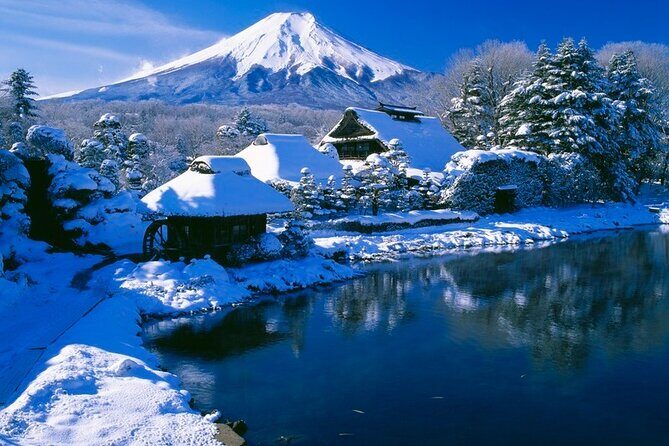
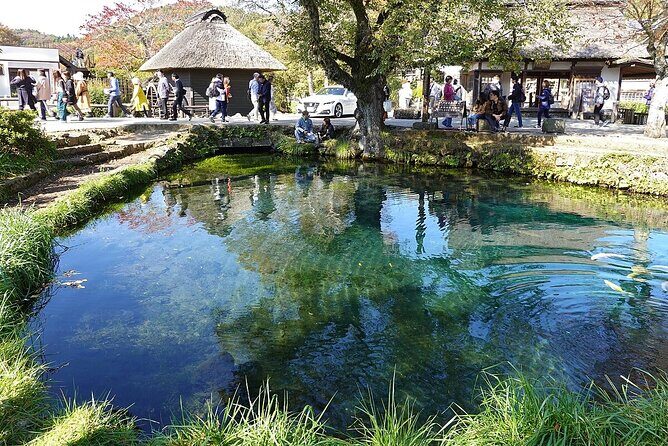
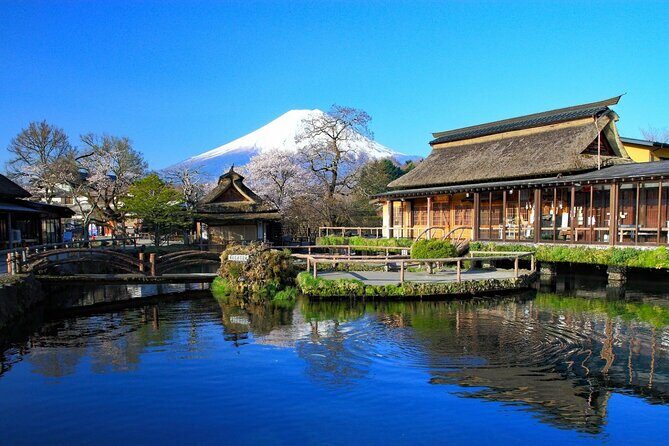
If you want one stop that feels genuinely “Fuji region,” it’s Oshino Hakkai. You’ll spend about 60 minutes here at the eight clear spring ponds.
This is the place that changes the day from scenic rides into actual place-feeling. The springs are formed by snowmelt from Mt. Fuji, and the eight ponds create a calm, photogenic setting that contrasts with the tourist energy around the lake.
What makes it worth your time: it’s not just another viewpoint. It’s a different type of sight—water, greenery, stone pathways, and that classic Fuji-foot-of-the-mountain vibe.
If you’re sensitive to crowds, go with a “quick and calm” mindset. The ponds are popular and can feel busy. Still, the setting is usually worth it if you’re willing to move at a local pace rather than expecting a quiet walk.
Price and value: why $81.41 can feel fair
At about $81.41 per person for roughly a 10-hour day, you’re paying for four things bundled together:
- Round-trip transportation service from Tokyo (including tolls and highway tolls)
- Guide service during the trip
- Ropeway/cable-car admission components (with tickets/fees included for those rides)
- Several sightseeing stops where admission is listed as free (Oishi Park and Oshino Hakkai are included as timed visits)
Food and drinks are not included, and accommodation is not included. In other words, your spend is mostly about getting you there and providing the timed structure.
Is it a steal? Only if you’d otherwise struggle with logistics. If you’d have to rent a car, buy multiple tickets, and build an itinerary from scratch, this kind of bundling is often the practical choice. If you’re the type who loves independent planning and prefers slow trains, then you might compare the cost of transport + attraction tickets and see if you still want the convenience.
Either way, the value sweet spot is clear: you’re not paying extra for a long shopping-heavy day, and you’re getting paid-in-the-right-places scenery (ropeway, cable car, and a meaningful cultural break).
Your biggest variable: weather, crowds, and “red days”
Fuji visibility is the big wildcard. The tour is blunt about it: cloudy and rainy days reduce visibility and can obscure the mountain. That’s not a gimmick; it’s the reality of photographing a volcano in a frequently moody region.
Then there are crowd days. Traffic jams can happen on weekends and Japan’s public holidays (the tour calls them red days). More cars means slower travel, and longer travel means shorter stops. In Japan, tour bus regulations also limit driving time, which can lead to a tighter schedule when roads are slow or lines are long.
My practical tip: if you can choose dates, pick a weekday with better odds of clear sky. If you can’t, you can still enjoy the day—just shift your mindset from getting a perfect Fuji silhouette to enjoying the variety of lake and spring scenery.
Guides: the human difference you’ll feel
One theme that pops up again and again is guide quality. People specifically call out English clarity and a fun, organized vibe.
For example:
- Sawaki gets praised for kindness, humor, and strong English. One feedback story even describes step-by-step help when someone got turned around returning to the bus.
- Erina is noted for fluent English and a smooth, well-planned feel.
- Luis and Louis are mentioned for being knowledgeable and making the bus ride itself feel lighter.
- Brewski is described as entertaining and caring, with clear communication.
You don’t need a “personality check” before booking, but it helps to know that the guide can turn a weather-iffy day into one you still feel good about.
One more note: the tour positioning is English-speaking, and the product notes multilingual support (Japanese/English/Chinese). Still, if English-only is essential for you, plan to confirm your preference during booking messaging.
What to pack and how to avoid a stressful day
A day that starts in Tokyo and ends back there can feel long, even when it’s smoothly organized. Here’s how to keep it comfortable:
- Bring your passport and valuables and keep them secure
- Avoid bringing a lot of luggage; the tour says it’s not recommended
- One luggage per person is allowed. If you fail to note it at booking and end up with extra pieces, an extra charge is stated
- If you’re traveling with a foldable stroller, you should inform customer service so it’s not a surprise
- Bring layers. Lakeside areas can cool down fast, even when Tokyo feels warm
And don’t plan on “just grabbing breakfast later.” Some days have early timing because of travel and pickup. If you’re sensitive to morning hunger, eat before you go.
Who should book this Mt. Fuji tour
This tour fits best if you:
- Want an organized one-day structure from Tokyo without figuring out trains, buses, and ticket timing
- Care about hitting multiple viewpoints to improve your odds on a short schedule
- Would rather spend your energy enjoying scenery than solving logistics
- Like a mix of nature views (ropeway and cable car), a cultural break (matcha), and a classic Fuji-area water stop (Oshino Hakkai)
It’s also a reasonable choice if you’re traveling as a small group and want pickup convenience. If you’re a super independent traveler who hates crowds, you might find the timed stops too short and the area too busy on peak days.
Should you book this tour?
I’d book it if you want the practical version of “Fuji, plus real stops.” The price can feel fair because transportation and key rides are built in, and the route makes sense for first-time planning. The guides seem to matter here, and the schedule is designed to protect your day even when the mountain hides.
I wouldn’t book if your entire trip depends on getting a clear, dramatic Fuji photo. Even on the best day, weather is still the boss. If you’re flexible, though, you can still end up with a strong day—views from multiple angles, matcha time, and Oshino Hakkai’s eight springs.
If you can, pick a clear-forecast day and try to avoid weekends and red days. Do that, and your odds jump fast.
FAQ
What’s included in the tour price?
You’ll get vehicle service fees, driver service fee, vehicle fuel costs, and highway tolls. Ropeway/cable car admission components are included as listed in the itinerary. Food and drinks, plus accommodation and personal expenses, are not included.
How long is the Mt. Fuji day trip?
The total duration is about 10 hours.
What stops are on the itinerary?
The day includes Mt. Fuji Panoramic Ropeway on Lake Kawaguchi, the Kachikachi Mountain Cable Car at Lake Kawaguchiko, a matcha experience around the Konohana Museum area, a stop at Oishi Park, and Oshino Hakkai with its eight springs.
Can I still go if Mt. Fuji is cloudy or rainy?
Visibility can be reduced on cloudy or rainy days, and Mt. Fuji may be obscured. The tour does require good weather, and if it’s canceled due to poor weather, you’ll be offered another date or a full refund.
What if the ropeway or cable car can’t run due to weather?
The tour notes that strong winds, lightning, or other reasons can suspend the cable car. If that happens, the itinerary may be changed to a boat option or the ticket fee may be refunded as described in the additional info. For the Dec. 10 to Dec. 20 gondola repair window, you’ll take the Sengoku Boat instead.
Where do we meet in Tokyo?
You’ll choose from two central pickup points in Tokyo. There’s also an upgrade option for small group service that includes door-to-door transfer from hotels in some Tokyo districts. The pickup area is described as near public transportation.