REVIEW · TOKYO
Best Sushi Making Class in Tokyo: Sushi Making Class Shibuya
Book on Viator →Operated by Tokyo Sushi Experience · Bookable on Viator
You’ll get rice on your hands fast. This small-group sushi making class in Shibuya teaches you how to make sushi from scratch, not just order it. You start with a short sushi history quiz, then move into hands-on roll and nigiri practice, finishing by eating what you made.
Two things I like: the class stays intimate with a maximum of 14, so it’s easier to get help and actually shape sushi correctly. I also appreciate that you can request vegan, vegetarian, or halal options on request, which is rare for activities like this. One thing to consider: if you’re expecting a big, high-volume meal, you may feel it’s pricey for the portion size.
In This Review
- Key points before you go
- A Shibuya sushi class that feels like a workshop, not a meal
- Entering the Shibuya setup: where it starts and how it runs
- The sushi history quiz: a fun warm-up with real payoff
- California roll practice: the easiest start with structure
- Nigiri shaping: where technique becomes real
- Eating at the end: why the meal included matters
- Dietary options: vegan, vegetarian, and halal on request
- Price and value: $31.63 is fair if you want the hands-on part
- Small group up to 14: what it changes day-to-day
- Who this sushi class is best for
- Timing and expectations: a short session with a clear arc
- Should you book Sushi Making Class Shibuya?
- FAQ
- FAQ
- Where is the sushi making class in Tokyo?
- How long does the class last?
- What is the group size limit?
- What sushi will I learn to make?
- Are vegan, vegetarian, or halal options available?
- Is food included?
- What is provided with your meal?
- Is transportation included?
- Do I get a mobile ticket?
Key points before you go
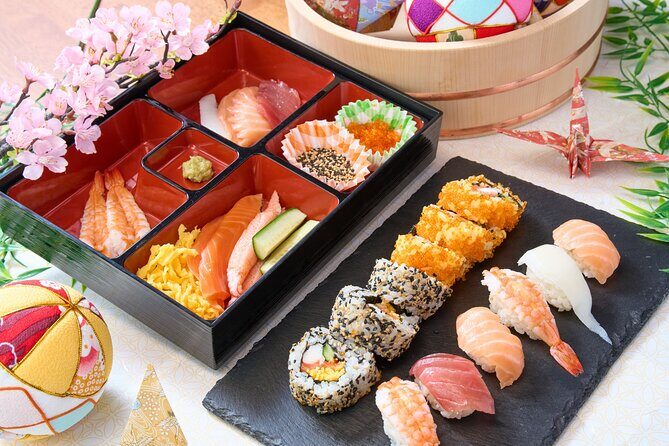
- Hands-on sushi, not just watching: you’ll make multiple styles during the session
- Small group up to 14: more attention from the staff
- Quiz first, then cooking: an easy way to learn while everyone gets comfortable
- California roll + nigiri: you practice both a modern roll and classic nigiri shaping
- Eat at the end: no waiting around hungry with only photos to show for it
- Dietary flexibility on request: vegan, vegetarian, and halal options can be arranged
A Shibuya sushi class that feels like a workshop, not a meal
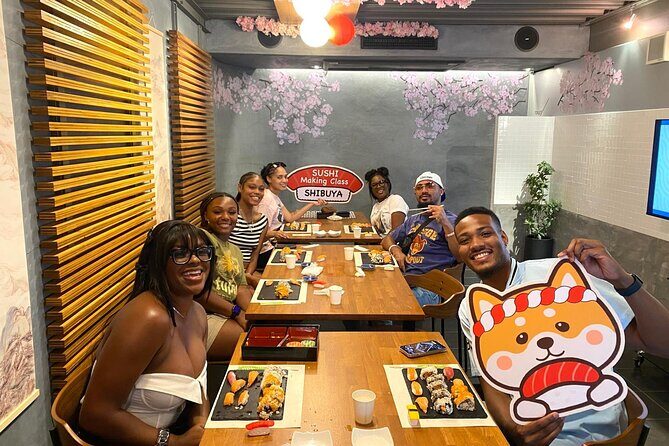
Tokyo is packed with sushi restaurants, but this experience flips the script. You’re not just tasting. You’re learning the basic building blocks of sushi during a hands-on class in Shibuya, with staff guiding you step by step.
The best part for first-timers is that the format keeps moving. You’ll start with a quick quiz, then do a California roll, then shift gears into traditional nigiri. That pacing matters because sushi can feel mysterious when you’re only looking at a counter. Here, you’re touching the process.
Also, the class is built for real participation. The group size is kept small, with a maximum of 14, so you’re not stuck staring at someone else’s hands while the rest of the class moves on. And when people need help—especially with shaping or timing—the staff can actually respond.
A few more Tokyo tours and experiences worth a look

Entering the Shibuya setup: where it starts and how it runs
The class meets in Shibuya, at Nanpeidaichō, 2-5 A-bandsビル (150-0036 Tokyo), and it ends back at the meeting point. You’ll want to treat that address like a destination, not a suggestion. This is a short session (about 1 hour 30 minutes), so being on time helps you get the full experience.
When you arrive, staff confirm your reservation and welcome you. Then you’ll wash your hands and get ready for the session. That little routine sounds basic, but it sets the tone. It gets you into the right headspace—hands clean, attention up, and you’re ready to start working with ingredients.
The class includes meals. That means you’re not paying for cooking instruction alone. You’ll get to sit down and eat what you make at the end, with standard sushi extras provided.
The sushi history quiz: a fun warm-up with real payoff
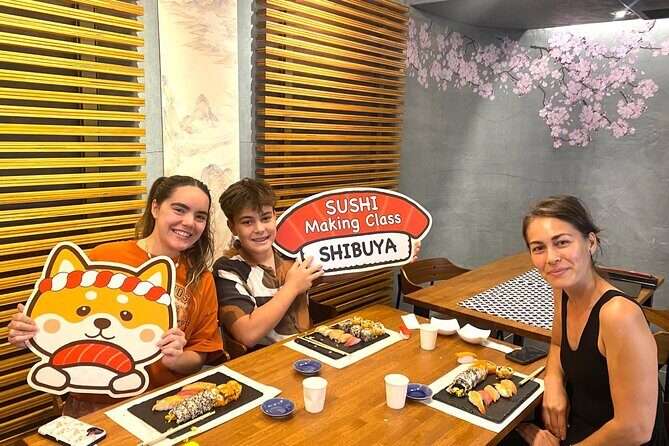
Before you start rolling or shaping, you do a warm-up quiz about the history of sushi. It’s interactive and designed to break the ice. Even if you don’t know much right now, you’re not being tested—you’re getting context while your classmates are getting comfortable too.
This matters because sushi isn’t only about taste. When you understand where ideas came from, the techniques make more sense. The quiz helps you connect the dots between what you’re doing in class and what you’ll recognize later when you see sushi in Tokyo.
And practically, it’s a smart way to get everyone focused early. By the time you start cooking, you’ve already paid attention to the basics and the language around sushi, so you don’t feel lost.
California roll practice: the easiest start with structure
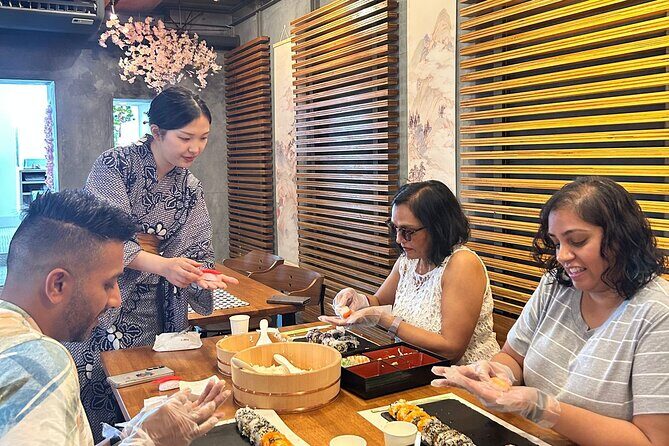
Your first main task is making a California roll. This is a good choice for a beginner class because it’s familiar to many people outside Japan, and it gives you a repeatable workflow.
During this portion, staff demonstrate how it’s done and then you make your own. The benefit is that you don’t have to guess how to form the roll. You get guidance while your hands learn by doing.
You’ll likely find this step builds confidence. Even if your first attempt isn’t perfect, you’re working within a structured process. The class isn’t just about the final look—it’s about helping you understand how sushi comes together.
Nigiri shaping: where technique becomes real
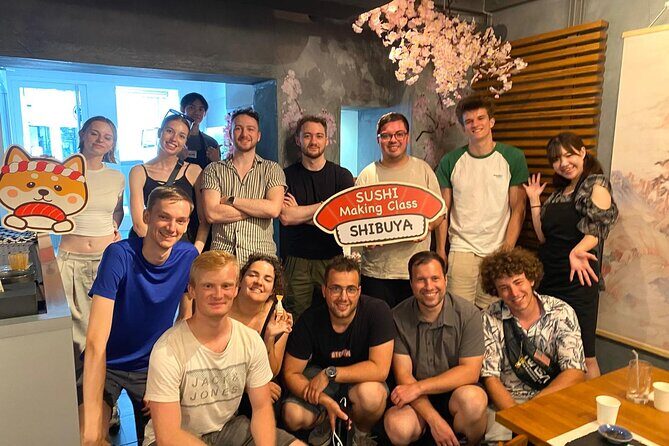
After the California roll, the class moves to traditional nigiri sushi. Nigiri is the classic style where you shape hand-shaped rice and top it with slices of fresh fish or other toppings.
This is the portion that most people remember, because it feels more hands-on and more delicate than rolling. You’ll watch a demonstration, then shape your own pieces with staff support. The goal isn’t restaurant-level perfection in 90 minutes. The point is learning the method and getting comfortable forming the rice and placing toppings.
This is also where the small group size really matters. When your hands get stuck—whether it’s shaping rice or handling toppings—you want a staff member close enough to help. With a maximum of 14, the staff can actually do that instead of floating from table to table.




Eating at the end: why the meal included matters
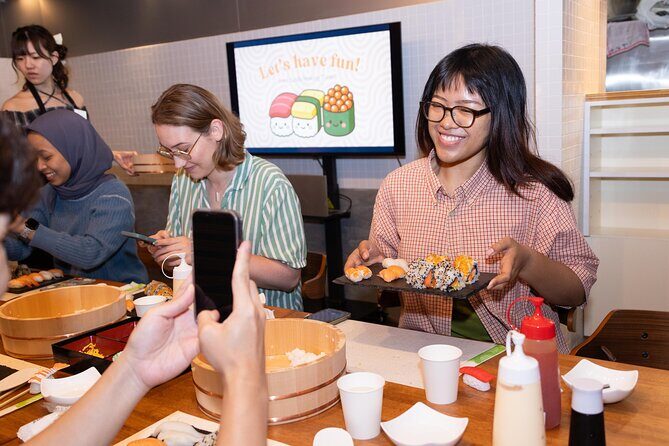
A big promise of this class is simple: no hunger pangs. You make your sushi during the session and then eat it at the end.
That included meal is more than a perk. It changes the experience from a demo you watch into something you can enjoy immediately. After you shape nigiri and assemble your roll, you get to taste your work while it’s still fresh and fun—rather than leaving with only memories.
You’ll have the usual sushi add-ons on hand, including soy sauce, wasabi, and pickled ginger. That means you can taste your sushi the way you’d in a restaurant setting, instead of improvising at home.
And yes, you’ll leave with food in your stomach. That’s useful in Tokyo, where dinner plans can get expensive fast.
Dietary options: vegan, vegetarian, and halal on request
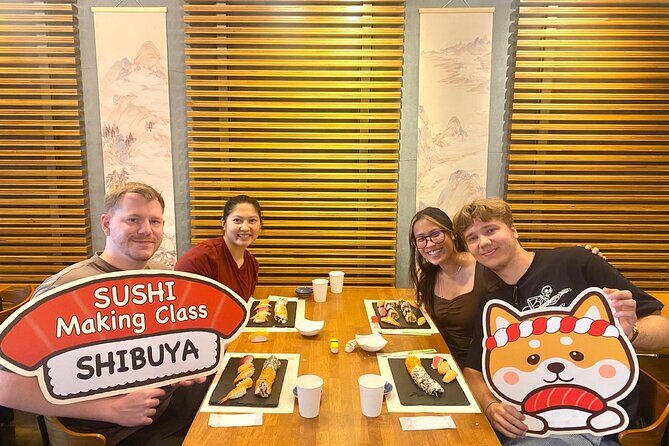
Tokyo can be tough for visitors who avoid certain ingredients, but this class gives you a clear path: vegan, vegetarian, and halal options are available on request.
That’s important because sushi isn’t inherently “one size fits all.” If you have dietary restrictions, you want a class where the experience includes you, not just instruction while you watch someone else eat.
If you’re booking and dietary needs matter, request it early. The class is relatively short, so staff need time to plan the ingredients that match your needs.
Price and value: $31.63 is fair if you want the hands-on part
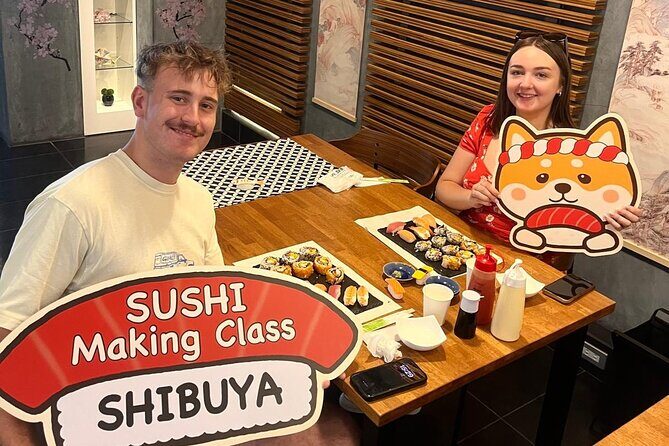
At $31.63 per person, this class sits in the “doable but not cheap” category. The question is: what are you buying?
You’re paying for:
- a short, structured session (about 1 hour 30 minutes)
- hands-on instruction to make California rolls and nigiri
- an interactive quiz about sushi history
- a sit-down meal at the end (you eat what you make)
- a small group size up to 14, which makes help easier
Now the balanced note: some people may feel the portion is limited for the price. The upside is you’re not just getting a meal—you’re getting instruction and participation. If you want a cooking class experience more than a big dinner, this price can feel right.
If you’re hoping for restaurant-style quantity, you may feel slightly shorted. The value works best when you treat it like an activity you’ll remember, not just a way to fill up.
Small group up to 14: what it changes day-to-day
A class capped at 14 participants isn’t just a nice detail. It affects your whole experience.
With a smaller group, you’re more likely to:
- get clearer demonstrations
- have staff nearby when something goes wrong
- keep momentum, instead of waiting through long stretches
One of the strengths people highlight is how friendly and helpful the staff can be. In particular, Kaito is named as a supportive instructor in feedback, and that kind of attitude makes a beginner class feel comfortable rather than intimidating.
If you’re traveling with family, this is also easier to manage. Kids and teens (and adults) tend to stay interested when they’re actively doing something rather than sitting through a long lecture.
Who this sushi class is best for
This is a strong fit if:
- you’re a sushi beginner who wants to learn by doing
- you want a Tokyo activity that includes a meal at the end
- you prefer small-group settings with real guidance
- you need vegan, vegetarian, or halal options
- you’re in Shibuya and want something practical that doesn’t require private transportation
It may be less satisfying if:
- you’re mainly chasing a large quantity of food for the money
- you want a super spontaneous, highly theatrical experience every minute of the way
- you expect every minute to feel like constant hands-on work
Still, the structure is clear: quiz, then you make sushi, then you eat it. It’s not trying to be mysterious.
Timing and expectations: a short session with a clear arc
The class is about 1 hour 30 minutes, so you should think of it as a focused introduction. You’ll cover two recognizable sushi styles in one go, which is helpful if you only have a limited window in Tokyo.
One caution: because the format has defined steps (quiz, then specific sushi styles), the flow can feel more scripted than a fully free-form cooking party. That doesn’t mean it’s bad—it just means your expectation should match the format. This is instruction plus practice, not a free-floating market adventure.
If you’re the type who likes structure, you’ll probably enjoy this. If you’re expecting lots of improvisation and unplanned storytelling, you might notice the difference.
Should you book Sushi Making Class Shibuya?
I’d book this class if you want a hands-on sushi experience in Tokyo with real guidance and a meal included. The combination of a small group, practical instruction, and eating what you made at the end makes it feel worth the time. Plus, the fact that vegan, vegetarian, and halal options are available on request makes it an easier choice for mixed diets.
I’d think twice if you’re coming specifically for a big dinner. The portion can feel modest compared with the price, and the experience is still a class first. If you treat it like a memorable activity—learning California roll and nigiri, then tasting your own work—you’re much more likely to feel satisfied.
Bottom line: if sushi is on your list and you like learning through your hands, this Shibuya workshop is a smart use of 90 minutes.
FAQ
FAQ
Where is the sushi making class in Tokyo?
The class starts at Japan, 150-0036 Tokyo, Shibuya, Nanpeidaichō, 2-5 A-bandsビル, and it ends back at the same meeting point.
How long does the class last?
It runs for about 1 hour 30 minutes (approx.).
What is the group size limit?
This activity has a maximum of 14 travelers.
What sushi will I learn to make?
You’ll make a California roll and also create traditional nigiri sushi.
Are vegan, vegetarian, or halal options available?
Yes. Vegan, vegetarian, and halal options are available on request.
Is food included?
Yes. Meals are included, and you’ll eat your sushi at the end of the class.
What is provided with your meal?
Soy sauce, wasabi, and pickled ginger will be provided.
Is transportation included?
No. Private transportation is not included.
Do I get a mobile ticket?
Yes, the experience includes a mobile ticket.


![[1 Group Only] Tokyo Shinjuku Food Tour for Family - Price and value: what you pay for (and what you don’t)](https://images.thejapantraveler.com/wp-content/uploads/1-group-only-tokyo-shinjuku-food-tour-for-family.jpg)