REVIEW · TOKYO
Sumo Practice Viewing Guided Tour and Photo with Sumo Wrestlers
Book on Viator →Operated by JTB Global Marketing & Travel Inc. · Bookable on Viator
You come for the wrestling, but you stay for the discipline around it. This small-group sumo stable practice viewing at Tatsunami-beya is a rare chance to see the training hall up close, with a licensed English guide interpreter plus audio commentary when talking is prohibited. I like how the tour mixes learning with real access, and how the afternoon-to-morning ritual feels grounded in tradition rather than showmanship. One thing to consider: you’ll sit on tatami and keep totally silent during practice, and if you struggle with audio devices or need lots of live interaction, this format may feel a bit plain.
In This Review
- What you learn (and what you don’t)
- Key points before you go
- Tatsunami-beya and why “practice viewing” matters
- The 8:30 am format: guided lecture, then silent watching
- Stop 1: A short lecture so you understand what you’re seeing
- Stop 2: The practice viewing block (and why silence is part of it)
- Audio guide reality: what to do if English or devices fall short
- What you’ll actually see during training
- The end of practice: photo moment, Q&A corner, and mementos
- Etiquette checklist you should memorize before you arrive
- Getting there from Asakusa: walk, bus, or both
- Group size and comfort: the small details that add up
- Price and value: what $118.60 is really paying for
- Who should book this tour (and who should think twice)
- Should you book Tatsunami-beya practice viewing?
- FAQ
- How long is the sumo practice viewing tour?
- Is speaking or whispering allowed during the practice?
- Is an audio guide provided if we can’t talk?
- Will the yokozuna appear on every visit?
- Do I need to take my shoes off?
- Is a photo with sumo wrestlers included?
- What should I bring for seating comfort?
- How do I get there from Asakusa Station?
What you learn (and what you don’t)
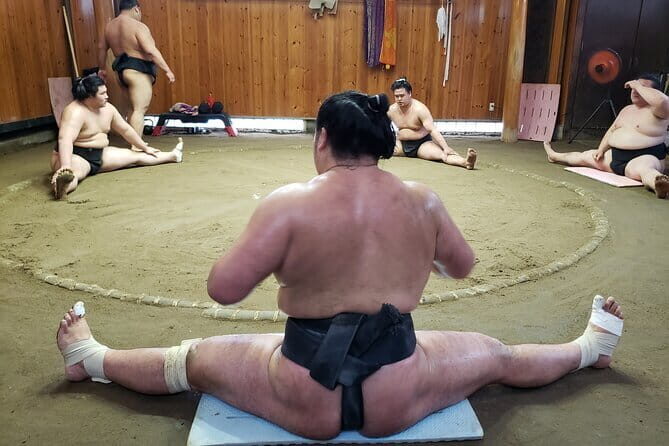
You won’t be chatting your way through sumo. Talking is strictly off while practice is happening, so the experience relies on etiquette and guided explanations. I like that the tour sets you up with clear rules for shoes, posture, scent, and phone use, so you know how to behave in a sacred training space. The trade-off is that the “action” is training rather than a dramatic match, and the exact amount of time and the number of wrestlers practicing can change by day.
Key points before you go
Behind-the-scenes access to Tatsunami-beya’s training hall
Strict silence during practice, with audio guide support instead of conversation
Cushion seating on tatami (chairs available if needed)
Commemorative photo with sumo wrestlers after practice
Most days include educational viewing, but timing and wrestler lineup can vary
You must follow stable etiquette: shoes off, no flash, phone on silent, no scents
You can also read our reviews of more guided tours in Tokyo


Tatsunami-beya and why “practice viewing” matters
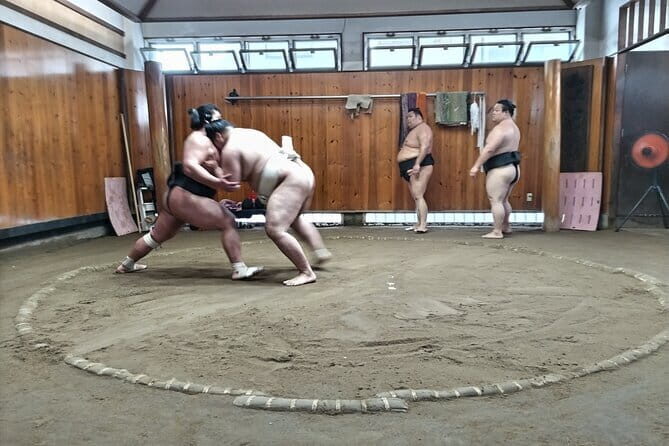
Sumo is full-contact wrestling, yes. But sumo is also routines, repetition, and respect—especially inside the training stable, where wrestlers live and train every day. This tour takes you into Tatsunami-beya, a Tokyo stable known for hosting an active yokozuna during its current tenure (though it’s important to know that the yokozuna doesn’t appear at every practice session).
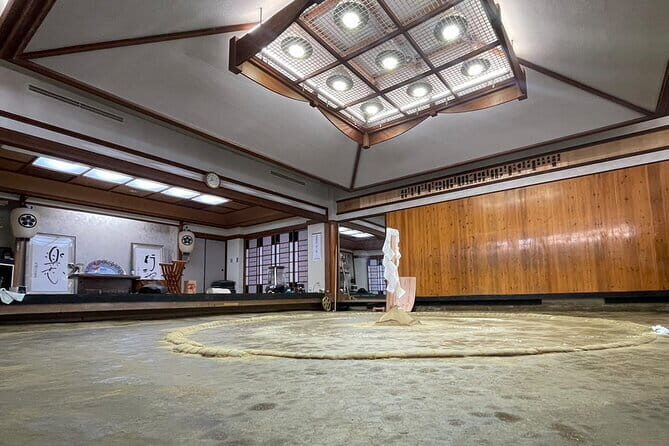
What makes the experience feel special is the setting: the practice space is treated like a sacred place. You’re not just watching a sport like you would watch a gym workout. You’re observing a daily system built around rank, technique, and discipline. That’s why the rules are strict. They protect the wrestlers’ focus and reduce risk in a room that isn’t designed for casual crowd movement.
Also, this is a morning-style viewing. The start time is 8:30 am, and the whole tour runs about 1 hour 20 minutes to around 2 hours depending on how much practice time is scheduled that day. For many people, that timing is a good fit because you’re seeing something real before the city fully ramps up.
The 8:30 am format: guided lecture, then silent watching
The tour is built in three parts inside the same stable area: a short viewing lecture, a longer practice viewing block, then a post-practice photo/Q&A-style moment.
Stop 1: A short lecture so you understand what you’re seeing
You begin with a basic orientation from the National Government Licensed English guide interpreter. The goal here is simple: get you ready for etiquette and basic sumo context so you can watch properly once you sit down. You should expect a quick primer rather than a long history lecture, and that’s fine. The practice itself is the main event.
This first segment matters because sumo technique isn’t always obvious from the outside. Even if you know the basics of how sumo works, watching practice routines is different from watching a tournament bout. You’re learning how wrestlers warm up, train movements, and repeat skills that build the kind of power needed for high-level bouts.
Stop 2: The practice viewing block (and why silence is part of it)
Next comes the longest stretch—about 45 minutes of practice viewing, though it can be shorter or longer depending on the day’s roster and schedule.
Here’s the key point: while you’re watching practice, talking is strictly prohibited. Whispering counts. The tour uses an audio guide service so you can still get explanations without disrupting the training. It’s a smart workaround, and it’s also a reality check: if you expect a lively back-and-forth with your guide during practice, this isn’t that kind of tour.
You’ll sit on a wooden floor and cushioned seating on tatami mat flooring. Chairs are provided for anyone who has difficulty sitting, and you can request that in advance. That detail sounds small, but it can be the difference between a comfortable cultural experience and a crampy one by the time practice ends.
Also watch for the smaller etiquette rules that keep the room respectful:
- No standing up or moving around during practice
- Don’t step on the ring or touch wrestlers without permission
- Avoid stretching your legs out toward the ring, since showing the soles of your feet is considered impolite
- No eating or drinking
- Mobile phones must be on silent or turned off
- No flash photography
- Remove sunglasses and hats inside
These rules do more than enforce order. They make you slow down and pay attention. You start noticing how wrestlers move with control and how the space demands focus.






Audio guide reality: what to do if English or devices fall short
The tour provides guided interpretation and an audio guide service. That’s great in theory, and it’s exactly what you want when stable etiquette forbids talking.
But here’s the practical consideration: audio quality and device usability matter. Some past visitors found it hard to understand the guide via audio equipment, which can make practice explanations feel distant. So my advice is simple: if you’re sensitive to audio clarity, arrive early so you can get settled, confirm your device works, and double-check volume before practice starts.
If you struggle with spoken narration, don’t worry—you’ll still be seeing a real training session. Your visual observations will carry a lot of the experience. But if you want the guide’s words to be part of your enjoyment, treat audio like an essential tool, not a bonus.
What you’ll actually see during training

Even without a match, sumo practice is compelling because you’re watching effort and precision up close. You’re seated within a training hall setting where the distance feels intimate, not like a distant grandstand view.
During practice viewing, the session generally includes multiple wrestlers (often around 6–8 trainees in comparable formats), and you’ll see warm-ups, training drills, and full-contact readiness exercises. The exact lineup and length can shift by day, and the tour notes that the practice viewing time may be shorter or longer depending on how many wrestlers train that day. On a shorter day, you might get less than the planned viewing window. On a longer day, you’ll get more.
That variability is normal for a live training schedule. It’s also why the tour’s “structured timeline” is best viewed as a range, not a guarantee.
The end of practice: photo moment, Q&A corner, and mementos

Once practice finishes, the tone changes. The experience becomes more social and photo-focused, while still staying within stable rules.
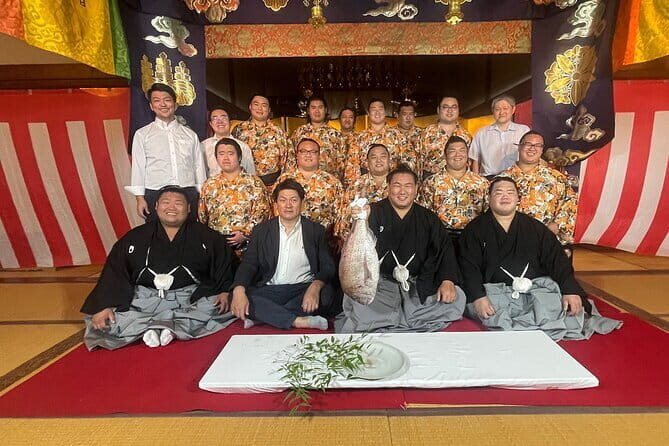
You’ll have time for a commemorative photo with sumo wrestlers. This is one of the most memorable parts for many people because it turns the observation into a personal memory you can take home. The tour also includes a Q&A corner and lets you check out merchandise and exclusive mementoes tied to the experience.
Keep your expectations realistic here: this is a brief post-practice window. The stable is for training first. So think of the photo time as a respectful wrap-up, not a long meet-and-greet.
Also note that the tour includes admission tickets and includes an original merchandise item from JTB Sunrise Tours. For some buyers, that’s where part of the value lives—especially if you like getting authentic, event-specific souvenirs instead of generic keychains.
Etiquette checklist you should memorize before you arrive
This tour is less about “doing stuff” and more about “doing things the right way.” The stable has clear expectations, and following them is part of respecting the space.
Before you go, plan for these non-negotiables:
- Remove shoes when instructed; keep them neatly in place
- Keep quiet during practice—no whispering, no chatting
- No stepping onto the ring and no touching wrestlers
- No flash photography
- Phone on silent/off, and don’t take it out for constant checking
- Avoid strong perfume or fabric softener scents
- No eating or drinking inside
- Hats and sunglasses come off indoors
The restroom is available, but it may be limited. You’ll be better off using the restroom before entry if you can.
One more practical note: strollers and large baggage like suitcases can’t be brought into the stable. If you’re doing this as part of a bigger Tokyo trip, keep your day bag light and roll-friendly.
Getting there from Asakusa: walk, bus, or both
Meeting point is Tatsunami-beya Sumo Stable, 1-chōme-16-5 Hashiba, Taito City, Tokyo 111-0023. The tour ends back at the meeting point.
From Asakusa Station, it’s about a 30-minute walk. You can also take buses, including the Toei Bus East 42-Ko route or the Taito Ward Kita-Megurin loop bus. Because the tour starts at 8:30 am, I recommend you aim to arrive early. Early arrival gives you time for any line, check-in, and shoe removal setup without stressing.
Also remember: the stable entrance is located about 30 minutes on foot from Asakusa Station (Toei Line, Tokyo Metro Line, Tobu Railway), so don’t assume it’s a quick hop even if it looks close on a map.
Group size and comfort: the small details that add up
This is a small-group experience with a maximum of 45 travelers. That matters because it helps keep the stable environment calmer and easier for staff to manage with etiquette.
For comfort, you’ll sit on tatami with cushions. Chairs are available if you have trouble sitting on the floor, but the tour notes you should request that in advance. If you have knee or hip issues, that request can save your day.
Time-wise, you’re looking at roughly 1 hour 20 minutes to 2 hours. That’s a good length for a morning cultural stop. It won’t swallow your whole day, and it pairs well with other nearby sightseeing afterward.
Price and value: what $118.60 is really paying for
$118.60 per person is not cheap. But when you look at what’s included, the price starts to make more sense.
You get:
- A National Government Licensed English guide interpreter
- Audio guide service
- Sumo stable practice viewing
- A commemorative photo with sumo wrestlers
- Original merchandise from JTB Sunrise Tours
The real value is the access. Visiting a sumo stable isn’t like visiting a museum where you wander freely. This is a controlled, scheduled, etiquette-heavy experience, and it includes photo time plus interpretive support. If your goal is to understand how sumo operates day-to-day, not just watch highlights, this is paying for proximity plus context.
The drawback to value comes from one thing: you won’t get a flexible, conversation-heavy experience during practice. You’ll be silent and seated. If you’re looking for constant narration or a “gym workout” style show with lots of commentary, you might feel you paid for structure more than for active engagement. In that case, focus on the main payoff—seeing training close-up in a sacred space.
Who should book this tour (and who should think twice)
This tour is a strong match if you:
- Love Japanese culture and respect-based etiquette experiences
- Want a behind-the-scenes look at an active sumo stable
- Like guided explanations, even if they come via audio during silent viewing
- Want a memorable photo tied to a real training environment
- Can handle sitting on tatami for the practice portion
It’s less ideal if you:
- Need a lot of conversation during the practice segment
- Have major sensitivity to audio quality and you rely on the guide’s spoken explanations
- Want a match-style event rather than training routines
- Are traveling with strollers or large suitcases (since those aren’t allowed)
Also, children 0–3 years old may not join. If you’re traveling with teens, the tour notes parental permission in writing is necessary for anyone under 18, and participants under 15 (or not yet enrolled in middle school) must be joined by a parent or guardian.
Should you book Tatsunami-beya practice viewing?
If you’re choosing between sumo “sightseeing” and a genuine training-room experience, I think this one makes sense. The price is high, but you’re paying for access to Tatsunami-beya’s morning practice, interpretive support, strict etiquette guidance, and a commemorative photo that feels connected to something real.
Book it if your goal is quiet observation with guided context, and if you’re comfortable following stable rules like shoes off and silence during practice. Skip it if you want constant dialogue and a more flexible, interactive vibe during training.
FAQ
How long is the sumo practice viewing tour?
It runs about 1 hour 20 minutes to 2 hours, depending on how practice time changes that day.
Is speaking or whispering allowed during the practice?
No. Talking and whispering are strictly prohibited during practice viewing.
Is an audio guide provided if we can’t talk?
Yes. There is an audio guide service available to explain what you’re seeing while the practice is happening.
Will the yokozuna appear on every visit?
No. The tour notes that the yokozuna does not appear at every practice session.
Do I need to take my shoes off?
Yes. You must remove your shoes inside, and you should keep them neatly in place.
Is a photo with sumo wrestlers included?
Yes. After practice, you can take a commemorative photo with the sumo wrestlers.
What should I bring for seating comfort?
You’ll sit on cushions on tatami mat flooring, and chairs may be provided if you have difficulty sitting. You should request the chair option in advance.
How do I get there from Asakusa Station?
The entrance is about a 30-minute walk from Asakusa Station. You can also reach it by bus, including the Toei Bus East 42-Ko route and the Taito Ward Kita-Megurin loop bus.