REVIEW · NAGASAKI
Nagasaki Peace Park and Atomic Bomb Museum
Book on Viator →Operated by Nagasaki Odyssey · Bookable on Viator
Nagasaki’s peace sites don’t feel staged—they feel lived-in. I love the calm, cared-for grounds of Nagasaki Peace Park and the way the route moves from memorial to place to learning. I also like that you end with a human, hopeful note at the One-Legged Torii, not just another heavy exhibit. One possible drawback: the topic is emotionally serious, so if you want light sightseeing only, this tour may feel intense.
I went into it expecting a monument-and-photos outing. Instead, I found a clear flow that helps you understand what the 1945 bombing meant, and why the message still matters. Your guide (often Tim) keeps the pace thoughtful, and that makes the stops easier to process.
In This Review
- Key points I’d bet on before you book
- Nagasaki’s Peace Park: a memorial you can walk through
- Hypocenter Park: short stop, heavy meaning
- Atomic Bomb Museum: where facts meet the future
- One-Legged Torii at Sanno Shrine: a hopeful final image
- What Tim (and other guides like him) actually add
- Price and timing: is $105 worth it for 4 hours?
- Who should book, and who should plan differently
- Should you book Nagasaki Odyssey’s Peace & Bomb tour?
- FAQ
- How long is the Nagasaki Peace Park and Atomic Bomb Museum tour?
- Is pickup offered?
- What are the ticket costs for each stop?
- Is this tour private or shared?
- Where does the tour start and end?
- How soon after booking will I get confirmation?
- Do I need to bring tickets?
- What is the cancellation policy?
Key points I’d bet on before you book
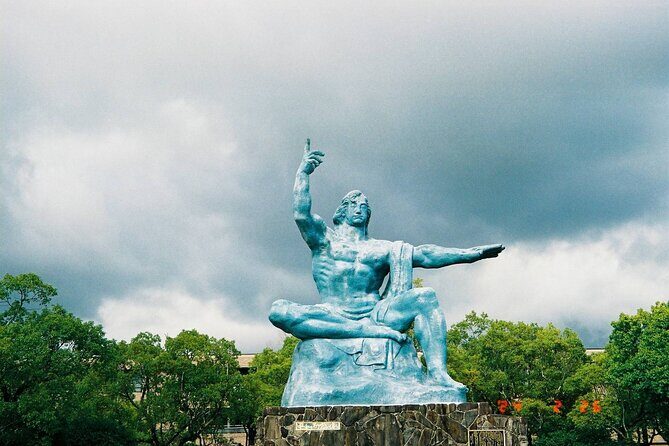
- Peace Park’s world-donated sculptures: public art with international intent, not just local memorial design
- Hypocenter Park’s ground-zero focus: a short stop that helps you picture the moment more clearly
- Atomic Bomb Museum included: you’ll get context on the history and the weapon’s present and future
- One-Legged Torii + surviving trees: a final visual lesson in resilience
- A private group with a guide: you get steadier pacing and fewer wandering problems
- Pickup and tram-ready help: practical support can matter a lot when you’re moving between sites
Nagasaki’s Peace Park: a memorial you can walk through
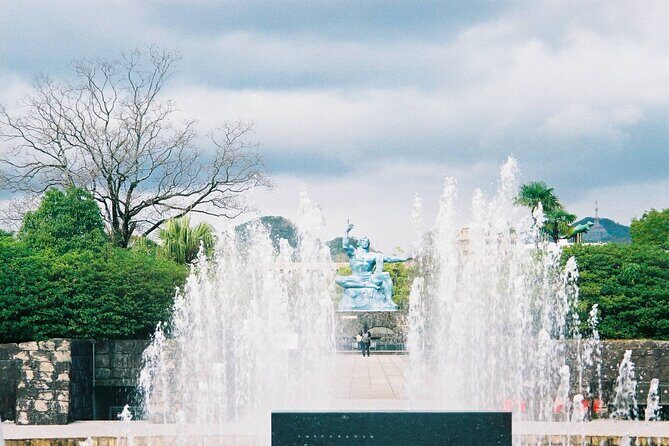
The Peace Park is the start of the story, and it works because it’s built for walking. The park was finished in 1955, meant to memorialize the impact of the 1945 atomic bombing. What I like is that it doesn’t just rely on one big monument. It gives you a landscaped route, so your body is moving while your mind catches up.
Look around and you’ll notice the sculptures donated by many countries. That detail matters. You’re not just seeing a single nation’s grief; you’re seeing an international effort to keep the idea of peace visible. It’s beautifully maintained, and the care you see in the grounds makes the tone feel deliberate—quiet, respectful, and not chaotic.
This stop runs about an hour, and admission here is free. Practically, that’s a good match for the theme. You get enough time to walk, stop when you need to, and take photos without feeling rushed. If you’re the kind of traveler who likes to read and really look, you’ll still have room to do it.
The one thing to keep in mind: this is a “pay attention” place. Even if you take it as a photography stop, keep your pace slow. The park is designed for reflection.
You can also read our reviews of more museum experiences in Nagasaki

Hypocenter Park: short stop, heavy meaning
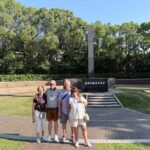
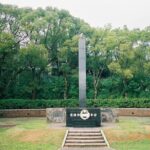
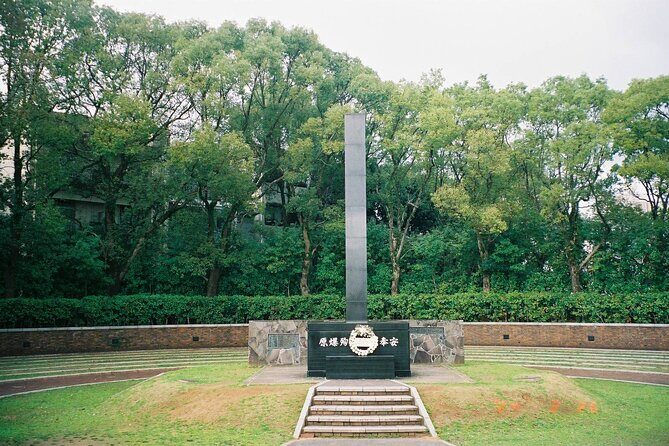
Between the Peace Park and the Atomic Bomb Museum lies Hypocenter Park. It’s compact—about 30 minutes in the tour flow—but it’s one of those places where a short walk can hit harder than you expect. The centerpiece is a monument marking the ground zero of the bombing’s impact.
Here’s the balanced part: it’s solemn, yes. But it’s also a popular cherry blossom viewing spot. That contrast is part of what makes the area so powerful. You’re seeing a place people enjoy, while knowing exactly what happened on that same ground in 1945. It’s not “dark tourism” so much as honest reality—life and loss share the same space.
Admission is free, so you’re not “paying extra” just to stand near something important. The value is in positioning. This stop helps you connect what you saw in the Peace Park to the museum you’ll visit next. Without it, the museum can feel like a time capsule. With it, the museum feels like the continuation of a single story.
If you’re traveling with limited time or stamina, don’t underestimate this stop. It’s quick, but it’s also where your brain starts doing the hard work of linking places to events.
Atomic Bomb Museum: where facts meet the future
Then you move into the Atomic Bomb Museum, and this is the core learning block—about an hour, with admission included. The museum’s goal is not only to teach what happened in 1945, but also to connect that history to the present state of nuclear weapons and their future.
I like that framing. Too many conflict-themed museums stop at the past. Here, you’re guided toward understanding why peace advocacy isn’t just symbolic. It’s tied to real technology, real policy, and the consequences of decisions that last for generations.
What helps most is that the museum slot is scheduled after you’ve walked the memorial grounds. You arrive with the shape of the city in your head. You’ve already stood near the ground-zero monument. So when the exhibits start explaining timeline, impact, and broader meaning, you don’t have to “catch up” with context—you can focus on comprehension.
This stop is included in the price, which is part of why the tour is good value. You’re paying for guidance and a tight route, not for a pile of add-on tickets. And because the museum is the longest paid portion at about an hour, it feels like the tour’s center of gravity.
One note: because the subject matter is difficult, you may want to plan a calmer rest of day after. The museum is the kind of experience that lingers.
One-Legged Torii at Sanno Shrine: a hopeful final image
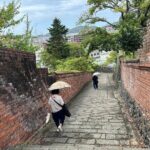
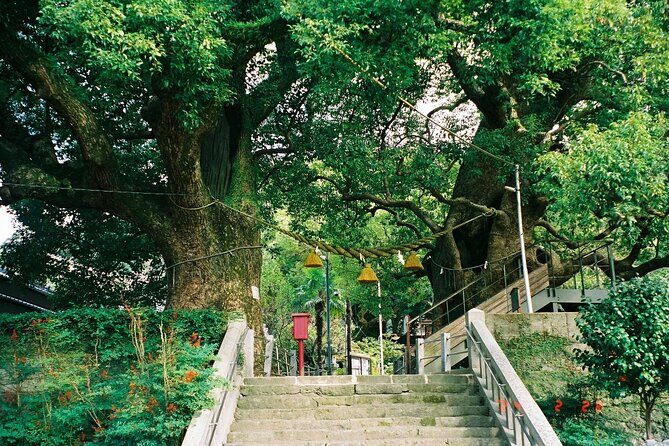
After the museum, you finish with a short walk to the Sanno Shrine area and the One Legged Torii gate marking its path. This is one of those ending choices that turns a heavy day into something that feels complete.
The Torii gate was half destroyed during the 1945 atomic bombing, yet it continues to stand. That image alone can feel like a visual summary of endurance. But the tour adds another powerful detail: just past the gate are two camphor trees that were stripped clean by the blast and still survived. They’re alive and flourishing today.
I like how this ending works emotionally. You don’t get pulled away from the facts, but you do get released from the museum’s intensity. The last segment gives you a “then and now” reminder—life continuing despite damage.
This stop is also free, and it’s brief, around 40 minutes. That keeps you from turning the final moments into another marathon. Instead, it’s a walk-and-see closer that lets you absorb what you’ve learned without extra cognitive load.
What Tim (and other guides like him) actually add
This tour’s reviews highlight the guide experience, and it shows in practical ways. One standout is Tim. He met a couple promptly at the Nagasaki cruise port, had tram tickets ready, and used that momentum to move you toward the Peace Park and museum without wasting time.
That kind of prep matters more than it sounds. Nagasaki’s sightseeing rhythm can be confusing if you’re figuring everything out on the fly. Having someone who knows how to route you and handle local transit helps you focus on the content, not the logistics.
Another review notes Tim added a couple additional sights beyond what you might expect from a basic route. That’s the real value of a private tour: the guide can spot openings in your schedule or interests and flex the walk just enough to make the day feel fuller.
Even if you don’t care about extra stops, the guide’s role is still important here because the topic requires care. A thoughtful pace helps you process. A good guide also helps you avoid rushing past details that deserve time.
You’re also in a private group—so it’s only your group out there. That reduces the stress of staying together when emotions run high and you keep stopping to look.


Price and timing: is $105 worth it for 4 hours?
At $105 per person for about 4 hours, this tour is priced like a guided route—not like a self-guided checklist. The key question is: what are you buying besides entry fees?
You’re buying three things that add up:
1) A structured, efficient route between Peace Park, Hypocenter Park, the museum, and the One-Legged Torii area
2) Included admission at the Atomic Bomb Museum, meaning your money is doing real work
3) Local guidance and pacing, which matters a lot for sites that can’t be “skimmed” responsibly
Also, pickup is offered, and the tour ends back at the meeting point. That simplifies your day planning. And since it’s near public transportation, even if pickup isn’t needed, you’re not stuck without options.
One more practical signal: it’s commonly booked about 85 days in advance on average. That suggests demand, which usually lines up with better guide availability and fewer last-minute compromises. If you’re sailing into Nagasaki on a tight schedule, booking early helps you lock in the time window you want.
So yes, it’s not the cheapest way to do these places. But it’s also not overpriced for what you actually get: context, transit help, and an order that makes the learning click.
Who should book, and who should plan differently
This tour is a strong fit if you want a guided, respectful route through Nagasaki’s most important peace sites. If you like walking tours with clear structure—and you’re okay with a sobering theme—you’ll probably appreciate the pace and the order of stops.
It’s also a good match for first-timers who don’t want to risk missing key connections between sites. The Peace Park sets the memorial tone. Hypocenter Park gives you the ground-zero anchor. The Atomic Bomb Museum builds understanding. The One-Legged Torii and trees help you close with something human.
If you’re traveling with someone who gets overwhelmed easily by heavy historical content, I’d treat this as a “pace-control” tour. Choose it only if you feel comfortable with that emotional intensity. You can always take breaks during the walk, but the topic stays serious throughout.
Should you book Nagasaki Odyssey’s Peace & Bomb tour?
I think you should book it if you want more than a photo loop. The combination of Peace Park, Hypocenter Park, and the Atomic Bomb Museum creates a learning arc, not just a set of locations. And the guide support—like tram ticket readiness and prompt meeting—makes the day smoother, especially if you’re starting from a cruise port.
If you prefer total independence, you could technically visit these places on your own. But with this specific theme, guidance helps you understand what you’re looking at and prevents you from turning the experience into a rushed checklist.
My advice: if you can handle emotionally serious history and you value a well-timed route, this is a solid choice. It’s focused, respectful, and surprisingly practical for a topic that’s not light.
FAQ
How long is the Nagasaki Peace Park and Atomic Bomb Museum tour?
It’s about 4 hours.
Is pickup offered?
Yes, pickup is offered.
What are the ticket costs for each stop?
Admission for Nagasaki Peace Park is free, Hypocenter Park is free, the Atomic Bomb Museum admission is included, and the One-Legged Torii/Sanno Shrine area is free.
Is this tour private or shared?
It’s private. Only your group participates.
Where does the tour start and end?
It starts at Peace Park, 6 Matsuyamamachi, Nagasaki, 852-8118, Japan, and it ends back at the meeting point.
How soon after booking will I get confirmation?
Confirmation is received within 48 hours of booking, subject to availability.
Do I need to bring tickets?
You’ll use a mobile ticket, and museum admission is included.
What is the cancellation policy?
You can cancel for a full refund up to 24 hours in advance of the experience’s start time.