REVIEW · NAGASAKI
Discover Stunning Nagasaki: Self-Guided Audio Tour
Book on Viator →Operated by Citywalksz Ltd · Bookable on Viator
Nagasaki asks you to slow down. This self-guided audio route strings together Glover Garden, Dejima, and Nagasaki Peace Park in a thoughtful walk, so you can connect people, culture, and catastrophe at your own speed. I love the GPS map plus audio files, because it turns a big city into a clear, manageable path. The main downside: the download and phone links can be clunky, so you’ll want to test things before you rely on your device.
If you like walking with a plan but without a group schedule, you’ll probably enjoy this format. It’s English-only, uses a mobile ticket, and typically takes about 2 to 3 hours from Glover Garden to Peace Park. Just remember you’re responsible for your own device (audio device not included) and you’ll often need to handle admissions on your own for some stops.
In This Review
- Key Highlights You’ll Notice on the Walk
- A Self-Guided Walk Through Nagasaki’s Peace and Memory Sites
- Starting at Glover Garden: Thomas Glover’s Foreign Enterprise
- Oura Catholic Church: A Quiet Landmark at the Bottom of the Garden
- Dejima: How Japan Kept Trading Without Letting It All In
- Nagasaki Museum of History and Culture: Build Context Before Peace Park
- Sofukuji Temple’s Ming-Dynasty Architecture: Chinese Roots, Local Preservation
- Peace Park at the Hypocenter Area: The Emotional Center of the Route
- Time, Pace, and What 2 to 3 Hours Really Means
- Price and Value: Does $15.29 Make Sense?
- Headphones, GPS Map, and the One Tech Snag to Watch
- Who This Walk Fits Best (and Who Might Want a Live Guide)
- Should You Book This Nagasaki Audio Walk?
- FAQ
- How long does the Nagasaki self-guided audio tour take?
- Is there a live guide with the tour?
- Where do I start and end?
- Is it available in English?
- Do I need to pay admission fees for the stops?
- Do I need headphones and a phone to use it?
Key Highlights You’ll Notice on the Walk
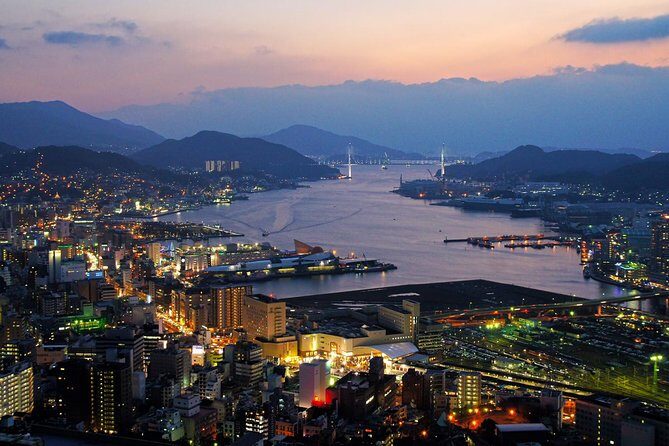
- From Glover Garden to Peace Park: a legible route built for on-foot discovery
- Audio + GPS map: short segments that line up with real landmarks
- Sakoku-era context at Dejima: foreign trade inside Japan’s isolation policy
- Peace Park near the hypocenter: a designed plea for world peace and hope
- Mix of free sights and paid entries: you’ll plan for museum/church/temple admissions
- Small max group size (15): even though it’s self-guided, it’s designed for a limited crowd
A Self-Guided Walk Through Nagasaki’s Peace and Memory Sites
This isn’t a casual “see the sights” audio tour. Nagasaki is a city where history sits close to the present, and the places you visit feel like they’re part of a single story: trade and contact, religious life, cultural memory, and finally the aftermath of the atomic bomb.
What makes the experience interesting is the way it connects very different stops without forcing you into a rigid itinerary. You can linger where your attention lands—at a viewpoint, in a quiet church area, or while reading the museum’s material. That matters here, because the tone shifts. Glover Garden isn’t tragedy; it’s early modern Nagasaki, with Thomas Glover’s influence. Dejima brings you into the logic of isolation. Then Peace Park shifts the mood again, moving you toward reflection.
One more practical note: this tour is designed for walking, and the route is best if you have at least a moderate fitness level. It’s not described as a demanding hike, but you should still expect strolling for a couple hours, plus time at stops.
You can also read our reviews of more guided tours in Nagasaki
Starting at Glover Garden: Thomas Glover’s Foreign Enterprise
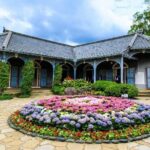
Your walk begins at Glover Garden, and the first stop sets a key tone: Nagasaki as a meeting point. The garden is named for Thomas Glover, a Scottish entrepreneur who arrived in Japan at 21 and never left. The story isn’t just a name on a gate. It frames how foreign business and local society connected in Nagasaki’s era of expansion.
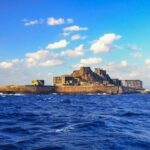
There’s also a specific bonus nugget in the description: Glover’s business reach included opening a mining island called Gunkanjima, better known as Battleship Island. Even if you’re not going there on this walk, that detail helps you understand why Nagasaki mattered so much for commerce and industry.
The tour description also notes he was awarded the Second Class Order of the Rising Sun. That’s the kind of detail I appreciate in an audio tour: it gives you a thread to follow while you look around, rather than leaving you with only general context.
Practical tip: since admission for this stop is listed as free, it’s a good place to start without adding extra costs early in your morning. You can take your time here to get oriented before you head into sites that may require separate entries.
Oura Catholic Church: A Quiet Landmark at the Bottom of the Garden

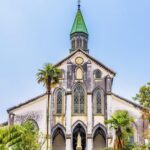
From Glover Garden, your audio guide leads you down to Catholic Oura Church. The description emphasizes that the church was built by French Jesuits and is thought to be the oldest in Japan.
That matters because it reframes the foreign presence beyond trade. Glover’s story is business and industry; Oura is faith and community. Put together, they make Nagasaki feel like a crossroads, not just a port.
One drawback is simple and worth planning for: the tour notes that admission for this stop is not included. So while the walk itself is free, you should assume you may pay an entry fee if there’s one required when you arrive. If your timing is tight, check on site whether you can access what you want in the time you have.
If you enjoy atmosphere—church bells, stonework, the feeling of an old neighborhood—this stop tends to pay off. Even if you’re not religious, the historical angle here is strong and specific.
Dejima: How Japan Kept Trading Without Letting It All In
Next comes Dejima, one of the most important places in Japan during Sakoku, the national isolation period. The audio story is clear about what Dejima was: an artificial island built in 1634 by local merchants.
The purpose was smart and a little paradoxical. Japan maintained isolation, but foreign traders still needed a place to conduct business. Dejima gave them that space—allowing contact and trade while keeping Japan’s wider society controlled.
This is a stop I’d treat like a “mind-shift.” If you only know Nagasaki through twentieth-century events, Dejima gives you a much longer arc: centuries of controlled exchange. And it helps explain why Nagasaki became the city it was—its role wasn’t accidental.
Practical tip: admission for this stop is listed as free, which makes it low-stress if you’re watching your budget. Also, since the tour keeps each stop around 15 minutes (based on the provided timing), you can cover Dejima without feeling like you’re skipping everything else.
Nagasaki Museum of History and Culture: Build Context Before Peace Park
The Nagasaki Museum of History and Culture is where your audio walk gains depth. The description says it showcases almost 50,000 items related to Nagasaki’s culture and heritage, and that it’s one of the most extensive and informative in Japan.
If you’re wondering how to make sense of Peace Park, this stop is a big help. Peace Park works best when you know what you’re reflecting on—what life in Nagasaki was like before the blast, what the city carried forward, and how different threads (trade, religion, local identity) connect to the aftermath.
That said, this stop is one of the likely “time sinks,” because a museum can stretch beyond 15 minutes once you’re inside and pulled by what you see. The tour gives a target timing, but museums are your choice: skim the highlights or settle into specific exhibits.
The tour also lists admission as not included here. So budget for it. If you’re trying to keep the walk closer to a tight 2-hour window, you might focus on key sections rather than going room-by-room.


Sofukuji Temple’s Ming-Dynasty Architecture: Chinese Roots, Local Preservation
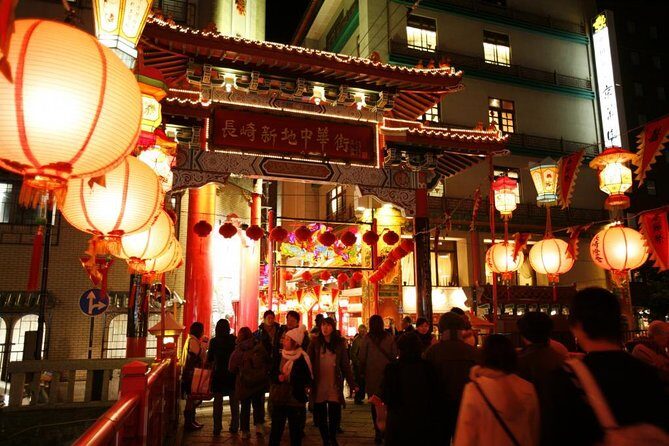
After the museum, your audio walk shifts again—to architecture and religious blend. Sofukuji Temple is described as a Chinese temple, but still considered one of the most well maintained examples of Ming Dynasty architecture, including Chinese temples found in China itself.
This stop is valuable because it shows Nagasaki’s connections didn’t only involve Europe or trade posts. Cultural influence traveled in many directions, and temples are often where you can read that history in stone and layout.
Admission is listed as not included for this stop, so plan for that. Another small consideration: since the tour segment here is timed at around 15 minutes, you’ll likely want to choose what you look at first—main hall details, structural features, and any exterior elements that make the Ming style recognizable.
If you like seeing how architectural details tell stories, this is one of the more satisfying stops on the route. The audio framing makes it easier to spot what you’re looking for instead of just walking past it.
Peace Park at the Hypocenter Area: The Emotional Center of the Route
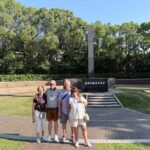
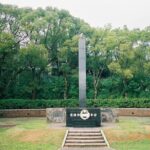
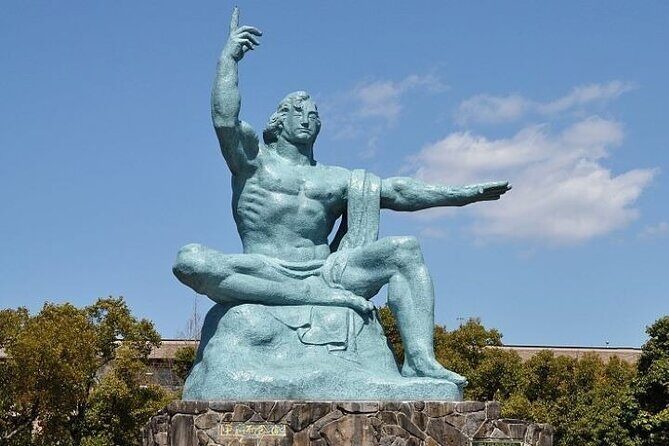
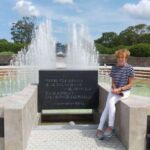
Finally, you end at Nagasaki Peace Park, built to the north of the hypocenter of the atomic bomb blast. The description also explains the park’s design purpose: a plea for world peace and the hope that there will never be another war.
This is the moment where the walk stops feeling like “a route” and starts feeling like a statement. Earlier stops—Glover Garden, Oura Church, Dejima—show how Nagasaki was connected to the world before and beyond conflict. Peace Park brings those connections into focus through the lens of loss and resilience.
Admission for this stop is listed as free, which is a nice finishing touch. You’re not forced into extra costs right at the end.
Practical tip: give yourself a little extra time here if you can. Even if the audio segment is short, Peace Park is the kind of place where you might want to stand, read, and absorb before you move on.
Time, Pace, and What 2 to 3 Hours Really Means
The tour is estimated at 2 to 3 hours, and the stop timing provided is roughly 15 minutes each at six locations. In real life, that usually works out to a comfortable pace if you’re okay with moving with purpose.
Here’s how I’d plan it for a smoother experience:
- If you want the route to fit in a half-day, treat the museum as the flexible stop.
- If you prefer slower reflection, plan extra time at Peace Park and let the earlier stops be quicker.
- If you’re budget-conscious, start at the free entries (Glover Garden, Dejima, Peace Park) so you’re not making payment decisions too early.
Also, the route ends at Peace Park (Nagasaki address provided), which makes it easy to continue sightseeing afterward—rather than feeling trapped at a single location.
Price and Value: Does $15.29 Make Sense?
At $15.29 per person, the price can look small or big depending on what you’re buying. You’re not paying for museum tickets or any single paid entry. You’re paying for the format: audio files plus a GPS map designed to guide you stop to stop.
That’s good value if:
- You want structure without a live guide.
- You can handle downloading and listening on your phone.
- You like learning in small doses while walking.
It may not be great value if:
- You’re expecting a guided narration in real time.
- You arrive without downloading and then lose time trying to get the audio running.
- You already know the history well and only want one or two sites.
One more value lens: several stops have free admission listed (Glover Garden, Dejima, Peace Park). That helps keep your total spending closer to the audio tour price, while you handle paid entries only where needed (Oura Church, Nagasaki Museum of History and Culture, Sofukuji Temple).
Headphones, GPS Map, and the One Tech Snag to Watch
This tour lives or dies by your phone setup. The audio device isn’t included, and the tour uses a downloadable experience with a mobile ticket. You’re instructed to download the audio file and have it ready before you start, and the tour downloading instructions are in the Before You Go section of your ticket.
That’s all normal. The problem is that audio-tour tech sometimes behaves differently on different phones.
One issue to take seriously: the download method may rely on links that don’t open as expected inside the app workflow, and a download can end up in your phone’s Files area instead of where you expected. If that happens, it can turn a smooth walk into a frustrating delay.
So here’s my practical checklist:
- Download the audio before you leave your hotel or at least before you start walking.
- Make sure you can open the audio files and start playback reliably.
- Test your GPS/map view so you’re not hunting for positions mid-route.
- Bring headphones that work with your phone right away (no charging surprises).
Do this once, and the rest of the walk becomes the calm, self-paced experience it’s meant to be.
Who This Walk Fits Best (and Who Might Want a Live Guide)
This audio walk is a strong match for you if you like:
- Walking on your own schedule
- A clear sequence of stops without checking your watch
- Learning in between real landmarks, not only inside rooms
- English narration and context
It may feel less ideal if you need hands-on guidance at every step. Since there’s no physical guide and you’re responsible for admissions where they apply, the tour assumes you can manage a bit of planning and basic phone tech.
The provided info also says service animals are allowed, and it’s near public transportation—both are helpful if you’re mixing this with other Nagasaki stops.
Should You Book This Nagasaki Audio Walk?
I think you should book it if you want an organized walking route through Nagasaki’s major themes—trade and contact, cultural influences, and the moral weight of Peace Park—without paying for a live guide. At $15.29, you’re buying convenience and context through audio and a GPS map, and the free entries along the way help the total cost stay reasonable.
Skip or reconsider if you know your phone downloads are unreliable, or if you don’t want to troubleshoot links and files. This experience can be great when the tech behaves, but it needs that early setup to go smoothly.
If you’re willing to do a short pre-check at home (download, test audio playback, confirm the map works), this is a powerful way to experience Nagasaki at your own pace—starting at Glover Garden and finishing with reflection at Nagasaki Peace Park.
FAQ
How long does the Nagasaki self-guided audio tour take?
It’s estimated at about 2 to 3 hours.
Is there a live guide with the tour?
No. It’s self-paced, with audio files and a GPS map. An audio device is not included.
Where do I start and end?
The start is Glover Garden at 8-1 Minamiyamatemachi, Nagasaki, 850-0931. The end is Peace Park Nagasaki at 9 Matsuyamamachi, Nagasaki, 852-8118. Since it’s self-guided, you choose your starting point and ending point.
Is it available in English?
Yes. This tour is only available in English.
Do I need to pay admission fees for the stops?
Admission fees are not included. Some stops list admission as free (like Glover Garden and Peace Park), while others (like Oura Church, the Nagasaki Museum of History and Culture, and Sofukuji Temple) are listed as not included.
Do I need headphones and a phone to use it?
The tour includes audio files and a GPS map, but an audio device is not included. That means you’ll need your own phone and headphones to listen.