REVIEW · NAGASAKI
Nagasaki Heritage Trail: Cathedrals, Bridges & Chinatown
Book on Viator →Operated by Opatrip.com Japan · Bookable on Viator
Nagasaki changes fast when you walk it. I like how this Nagasaki Heritage Trail strings together big landmarks that explain why the city looks and tastes the way it does, and I love the photo payoff at Megane Bridge. You also get a real sense of neighborhood life at Shinchi Chinatown, where the streets are made for wandering (and snacking).
I’m also a fan of the “small tour, big variety” pace—only about 3 hours, and you finish at Fukusaiji, so you’re not retracing your steps across the city. One possible drawback to plan around: the stops are outside views, and Ōura Cathedral entrance costs extra, so if you’re expecting full indoor time, budget for that.
If you go in with the right mindset—walk-focused, photo-ready, and comfortable using the city sidewalks—you’ll get a tight, meaningful route through Nagasaki’s mix of faiths, foreign influence, and 20th-century history.
In This Review
- Key things to know before you go
- Why this 3-hour Nagasaki heritage walk hits the sweet spot
- Ōura Cathedral: the city’s early international imprint
- Dutch Slope: cobblestones, European-style houses, and trade-era vibes
- Shinchi Chinatown: shopping streets and snack breaks with a story
- Megane Bridge: the spectacle reflection photo moment
- Fukusaiji: a memorial site that makes the whole route matter
- Price, pace, and logistics: is it worth $247.83?
- Getting the most out of each stop (without wasting time)
- Who this tour suits best
- Should you book the Nagasaki Heritage Trail?
- FAQ
- FAQ
- How long is the Nagasaki Heritage Trail tour?
- Where does the tour start and where does it end?
- Is public transportation included in the price?
- Are entrance fees included for the attractions?
- What is included in the tour price?
- Is this tour private?
- What is the cancellation policy?
Key things to know before you go
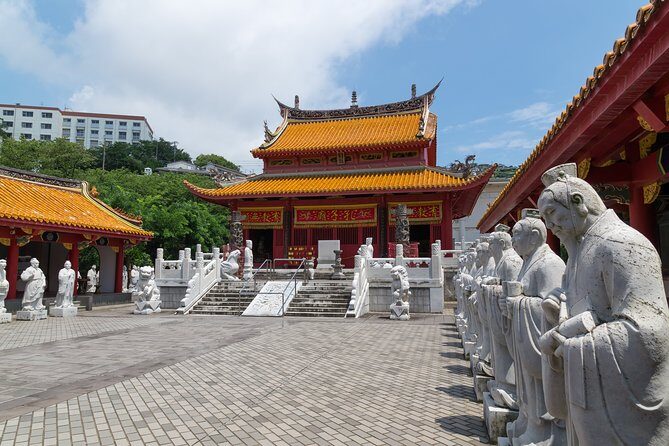
- A focused 3-hour loop that moves through five memorable sights without feeling like a marathon
- Outside viewing at every stop, with Ōura Cathedral offering an optional paid entry
- Chinatown time built in so you can slow down for shops and food rather than just pass through
- Megane Bridge is made for pictures, thanks to the “spectacles” effect in the water reflection
- Finish at Fukusaiji, which adds a reflective stop near Nagasaki’s modern memorial story
Why this 3-hour Nagasaki heritage walk hits the sweet spot
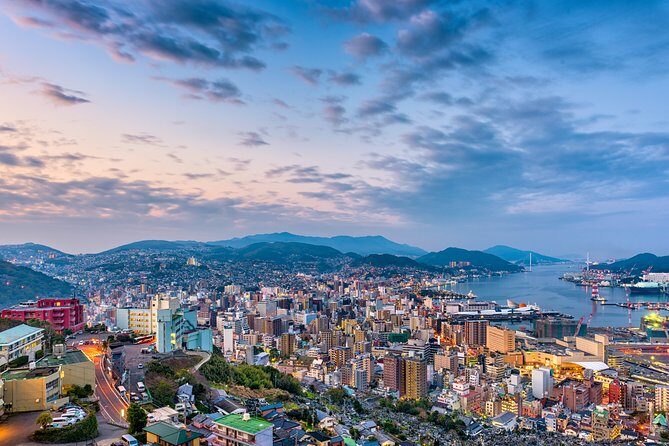
This tour works because it’s built like a story you can walk through. You start with a landmark that signals foreign contact in Nagasaki, then move through areas shaped by trade, commerce, and immigrant communities, and you end with a site that carries the memory of the atomic bombing. That arc matters. It turns what can feel like “just sightseeing” into something with emotional direction.
The timing is also practical. At around 3 hours, you can fit it on a day when your legs are ready but you don’t want to lose half the daylight. The route is a walking plan, and most people can participate, but keep in mind it’s still a city walk with sidewalks and stairs that can vary by exact location.
For me, the value comes down to how much you’re getting done per hour: five major stops, guided interpretation, and a smooth end location at Fukusaiji so you’re not ending where you started. You’ll love that kind of efficiency in a city like Nagasaki, where hopping between spots can eat time.
You can also read our reviews of more historical tours in Nagasaki

Ōura Cathedral: the city’s early international imprint
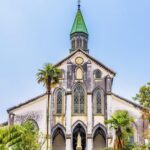
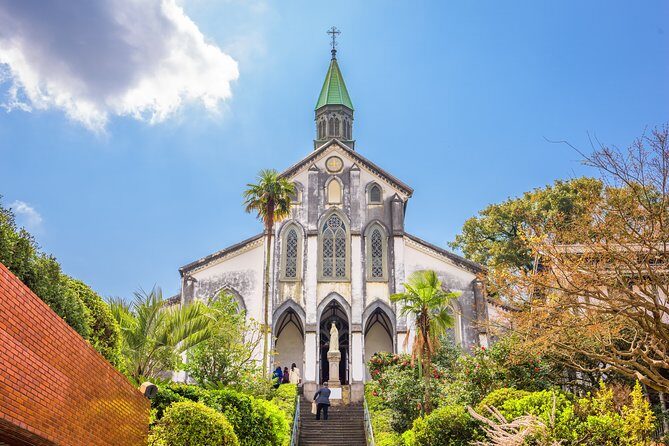
Your first stop is Ōura Cathedral, described as one of the oldest churches in Japan. Even if you only see it from outside (the tour notes outside viewing at all attractions), the building’s Gothic architecture is the point. It’s the kind of detail that helps you understand why Nagasaki earned a reputation for being open to outside influences earlier than many other places.
Here’s how I’d use this first segment: treat it like your “orientation moment.” Before you move into neighborhoods and streets, you want a big visual anchor. Ōura Cathedral gives you that anchor fast. The guide’s context helps you connect it to the city’s later layers—European-style streets, international trade history, and the way different communities have lived side by side here.
One practical note: Ōura Cathedral entrance is not included. If you’re the type who likes stepping inside historic buildings, you’ll likely want to budget the 7$ entrance fee. If you’re happy with exterior architecture and photos, you can keep costs down and still get a lot from this opening stop.
Dutch Slope: cobblestones, European-style houses, and trade-era vibes
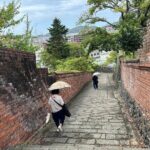
Next you head to the Dutch Slope, a small but memorable area known for its sloping cobblestone streets and European-style houses. This stop is at about 30 minutes, which is just enough time to take it slow without feeling rushed.
What I like here is that you’re not just staring at buildings—you’re imagining the life around them. Dutch Slope is essentially a built reminder of the era when Nagasaki traded and interacted with foreign merchants. When you look down a sloping street lined with older structures, you start to understand why Nagasaki’s cityscape feels different from many Japanese cities.
A drawback to consider: cobblestones and slopes can be tiring, especially if you’re sensitive to uneven walking. Comfortable shoes matter. Also, because the tour notes that accessibility can vary by time of day and crowd conditions, try to keep your schedule flexible if you’re going during peak times.
Dutch Slope is also a good “reset” between bigger emotional stops. After Ōura Cathedral, you get movement and atmosphere before reaching Chinatown.
Shinchi Chinatown: shopping streets and snack breaks with a story
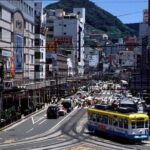
Then comes Shinchi Chinatown, one of Japan’s older Chinatown districts. You get about 40 minutes, and it’s timed for wandering—shops, restaurants, and festival-style colors that make it feel like a place you could spend hours in.
This is one of those stops where the guide interpretation pays off. Chinatown here isn’t presented as a random tourist zone. The point is that it’s part of Nagasaki’s longer pattern of international connections, including Chinese cultural presence alongside other influences.
What you’ll love most: the freedom to browse at your own speed. Even if you don’t plan a sit-down meal, you’ll likely want to try something small while you’re walking. Because the tour gives you time inside the neighborhood, you’re not forced to treat it like a quick photo sprint.
One thing to think about: Chinatown streets can get crowded depending on the time of day. The tour also mentions that what you can access may vary with crowd conditions. So if you’re someone who gets stressed in dense areas, I’d treat this as your calm, slow-wander moment rather than a fast-shopping mission.
Megane Bridge: the spectacle reflection photo moment
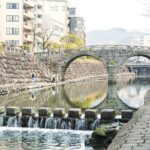
Your next landmark is Megane Bridge, also called Spectacles Bridge because the reflection in the water can look like eyeglasses. This is one of Nagasaki’s most beloved spots, and the tour gives you about 40 minutes here—enough time to find an angle you like and still soak in the river/bridge view.
Here’s how to make this stop worth it: don’t just take one photo and move on. The whole idea is the reflection effect, so you’ll want to pause, change your position slightly, and look for the best view. Even outside viewing gives you plenty: bridge shape, water line, and the classic “glasses” look when light and angle cooperate.
Practical tip: if you’re traveling during a time when the light doesn’t work for reflection shots, you can still get solid photos of the stone bridge and surrounding scenery. The tour’s generous time helps with that.
This stop is also a nice breathing space. After Chinatown, you get open water views and a slower, more scenic feel before the more solemn ending.


Fukusaiji: a memorial site that makes the whole route matter
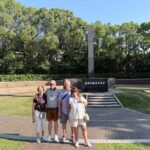
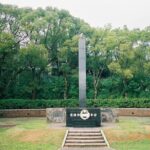
The tour ends at Fukusaiji, about 40 minutes at the finish line. This is a temple space featuring a giant tortoise and an obelisk-shaped pagoda, and it functions as a memorial to the victims of the atomic bombing. It combines Buddhist elements with that important 20th-century remembrance.
I like ending here because it changes how you read everything you saw before. The earlier stops are about how Nagasaki formed through contact, trade, and communities. Ending at Fukusaiji brings in the human cost and resilience that shaped modern Nagasaki.
Even if you’re not a museum-history person, you’ll probably find this stop lands emotionally. The giant tortoise and memorial structures are visually memorable, and the guide’s framing helps you connect it to the city’s broader experience.
Because the tour ends at Fukusaiji, plan your next steps thoughtfully. You’ll want to be ready to continue on foot or use nearby transit for your onward plan. If you schedule something else immediately after, try not to put it too far away—this is the kind of stop where you might want a few extra minutes just to process.
Price, pace, and logistics: is it worth $247.83?
At $247.83 per person, you’re paying for a guided, private group walking route across multiple major sites. That price is easiest to justify when you value interpretation and time efficiency. A route like this has five distinct stops spread across neighborhoods. Without a guide, you can still do it, but you’d likely spend more time figuring out what to look for and how everything connects.
A few details affect value:
- Professional local guide is included, and the stops are paired with explanation that makes the city’s layout make sense.
- Mobile ticket helps reduce friction at the start.
- Private group means it’s just your group, not a large bus-type crowd experience.
- Attractions are visited from the outside, which keeps the pace steady, but it also means you may want to pay extra if you care about interiors (Ōura Cathedral).
Also watch for the “time and feet” reality. You’re on a walking tour for about 3 hours, so you’ll want footwear that handles slopes and uneven surfaces. If you’re traveling with someone who has mobility needs, it’s smart to message ahead and make sure the guide knows what your group needs, since guide awareness can be a make-or-break factor.
If you’re price-sensitive, consider how many people are in your group—this company notes group discounts, which can change the math fast depending on who’s traveling with you.
Getting the most out of each stop (without wasting time)
Here’s how I’d set yourself up for an easy experience:
- Start with comfortable shoes. You’ll be walking through slopes and cobblestone areas.
- Bring a small water bottle. You’ll cover a lot of ground in three hours.
- Have your phone ready for the mobile ticket, and be ready to double-check the meeting details if anything seems off.
- When you reach each stop, take two minutes to orient your body. Then start photographing or browsing.
And one more practical point tied to real-world tour experiences: guides and meetups can sometimes change. If your schedule is tight or your group has specific needs, I’d recommend confirming the guide contact and any meeting instructions before you leave the hotel. This avoids the most common frustration: losing time trying to locate the right person.
Who this tour suits best
This experience fits best if you want:
- A guided walking route with a clear theme across Nagasaki’s neighborhoods
- Major landmarks in a short time window
- Time in Shinchi Chinatown that doesn’t feel like a rushed detour
- A finish at Fukusaiji that gives the day emotional weight
It’s less ideal if you’re hoping for long indoor museum-style time at multiple sites. Since the tour notes outside viewing at all attractions, your experience will be shaped by architecture, street scenes, and views, not lengthy interior visits.
Should you book the Nagasaki Heritage Trail?
I think this is a smart pick if you want a compact, meaningful overview of Nagasaki’s identity—international influence, Chinatown life, scenic landmark photography, and a memorial ending that brings perspective. The $247.83 price makes sense when you value guided interpretation and don’t want to spend your precious vacation hours working out route logic.
I’d hold off if you specifically want lots of indoor entry time, or if your group needs very detailed accessibility support and you haven’t confirmed the plan in advance. Also, because crowd conditions and access can vary, try to avoid setting rigid plans immediately after you finish at Fukusaiji.
FAQ
FAQ
How long is the Nagasaki Heritage Trail tour?
The tour lasts about 3 hours.
Where does the tour start and where does it end?
It starts at Ōura Cathedral (5-3 Minamiyamatemachi, Nagasaki) and ends at Fukusaiji (2-56 Chikugomachi, Nagasaki).
Is public transportation included in the price?
No. Public Transportation is listed as not included, with an approximate cost of $15 if applicable.
Are entrance fees included for the attractions?
No. Ōura Cathedral entrance is not included (listed as 7$). The tour also notes that all attractions are visited from the outside.
What is included in the tour price?
Included is professional local guide services.
Is this tour private?
Yes. It is a private tour/activity, and only your group participates.
What is the cancellation policy?
You can cancel for a full refund up to 24 hours before the experience’s start time, based on local time.