REVIEW · KYOTO
Kyoto: 1.5-Hour Guided Tour of Fushimi Inari Shrine
Book on GetYourGuide →Operated by DeepExperience, Inc. · Bookable on GetYourGuide
The torii gates feel like a hallway to another world. This 1.5-hour Fushimi Inari tour adds expert context to the walk, plus a hands-on stop at the Okusha Back Shrine and the Omokaruishi stone ritual. You’ll start at JR Inari Station and move at a pace that keeps the experience focused without turning into an all-day hike.
I especially like the way a guide turns the shrine from photos into meaning. You get explanations about what you’re seeing, including why the torii gates matter. I also like that the tour doesn’t stop at the main crowd spot. The detour to Okusha brings a quieter, more personal feel, and the stone-lifting ritual gives you something memorable to do beyond walking.
The main drawback is simple: 90 minutes can feel short, especially if you need a bathroom break. It’s a tight route, so it’s best if you’re comfortable moving continuously for the whole time.
In This Review
- Quick hits before you go
- Why Fushimi Inari hits harder with a guide
- Meeting at Inari Station: simple, central, and low-stress
- Fushimi Inari Taisha: what you’ll focus on first
- The torii gate walk: photography is easy, understanding takes one extra step
- Okusha Back Shrine: the quieter spiritual turn
- The Omokaruishi stone-lifting ritual: a simple test with real meaning
- Duration and pace: 90 minutes is efficient, not leisurely
- What you’re paying for with this $32 price tag
- Who this tour is best for
- Practical tips to get more out of your 90 minutes
- Should you book this Kyoto Fushimi Inari tour?
- FAQ
- How long is the Kyoto Fushimi Inari guided tour?
- What is the price per person?
- Where do I meet the guide?
- What areas of Fushimi Inari does the tour include?
- What is the Omokaruishi stone-lifting ritual?
- Is there an English-speaking guide?
- What group size options are available?
- Will I return to the same place after the tour?
- Can I cancel for a full refund?
- Is it reserve now and pay later?
Quick hits before you go
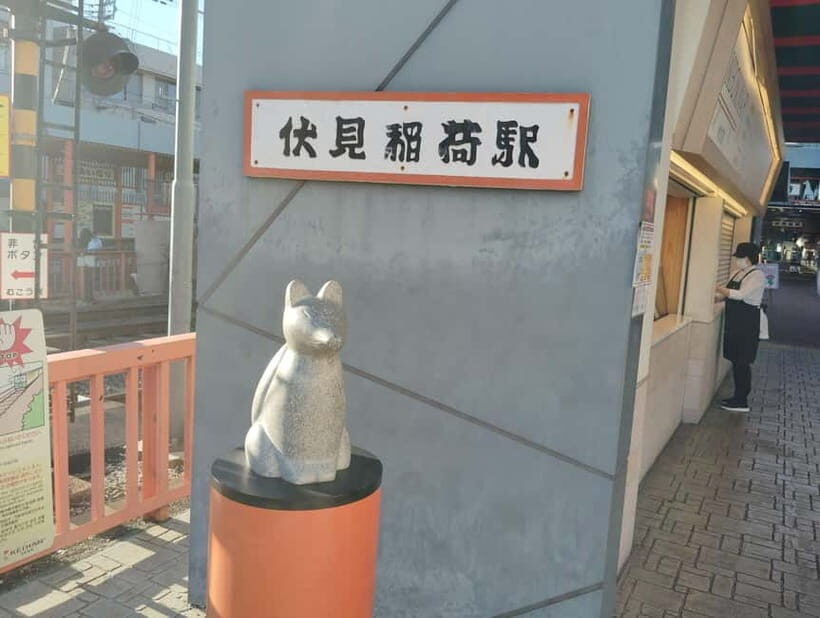
- Start at JR Inari Station: easy to find, and you end right back where you started.
- Main shrine + torii gate context: the guide helps you understand what you’re walking through.
- Okusha Back Shrine stop: this adds a quieter, more intimate spiritual moment.
- Omokaruishi stone-lifting ritual: you test your fortune with a simple, iconic tradition.
- English or Japanese live guide: you can choose based on your comfort level.
- Small groups or private options: you’re not stuck in a giant crowd situation.
Why Fushimi Inari hits harder with a guide
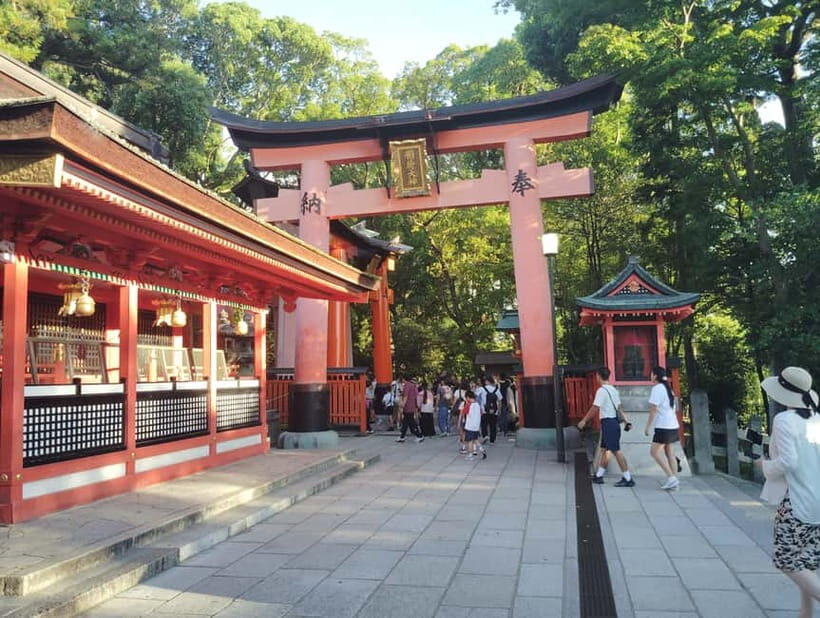
Fushimi Inari is one of Kyoto’s most photographed places, but it’s also one of the easiest to understand wrongly. Without context, you mainly see red gates and staircases. With a guide, those gates start to read like a story. You learn that Fushimi Inari is connected to rice and prosperity, and the route isn’t just scenic—it’s part of the shrine’s spiritual logic.
I like that the tour is built around meaning, not speed. You don’t just pass landmarks. You pause long enough to connect the dots: what the shrine is for, why the torii gates get placed the way they do, and what it means to move from the main area toward the back shrines.
That also explains why people often love the guide’s explanations in particular. In one account, the guide named Yoshi was praised for going beyond basic facts and tying history to Japanese cultural context, not just reciting dates. You feel that difference immediately: instead of collecting sights, you collect understanding.
You can also read our reviews of more guided tours in Kyoto

Meeting at Inari Station: simple, central, and low-stress
The meeting point is outside JR Inari Station, across from the main entrance, and your guide will be holding a bright yellow DeepExperience signboard. That matters more than it sounds. When tours don’t clearly anchor to a transit hub, you lose time—or you end up anxious right before you reach the shrine.
The good news: since you start at Inari Station and return there afterward, you’re not stuck figuring out how to get home from a random drop-off point. This is ideal if you’re doing Fushimi Inari as part of a half-day plan in Kyoto, especially if you still want time for other areas later.
Fushimi Inari Taisha: what you’ll focus on first
You begin at Fushimi Inari Taisha, the main shrine area. This is where the tour does its best job of setting the tone. You’ll get guided attention right away instead of spending your first minutes trying to figure out which buildings matter most.
A key theme you’ll hear about is the shrine’s link to prosperity and rice. That’s useful because it frames why so many people come here with intentions that aren’t just sightseeing. Even if your own motivation is purely curiosity, you’ll notice how worship works at Inari: you’re not just walking through an attraction. You’re entering a living religious site.
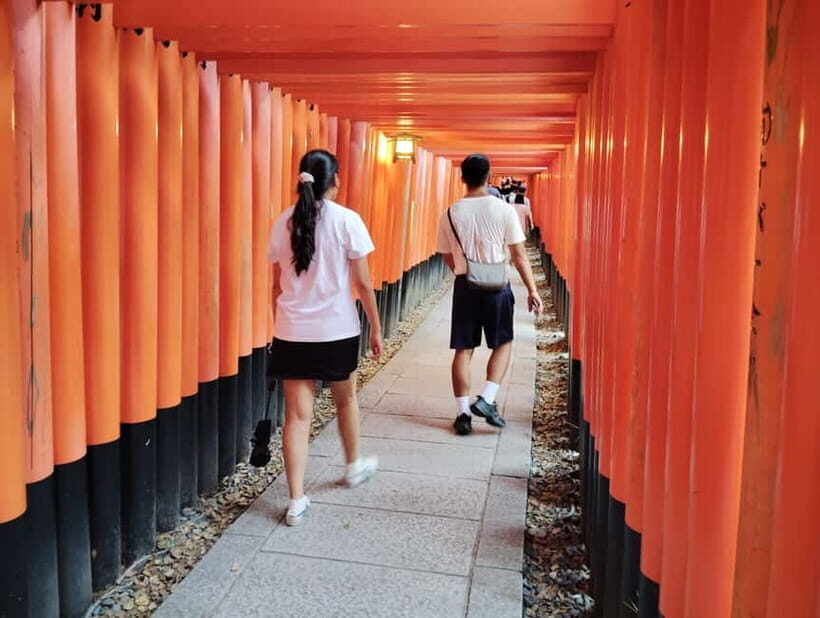
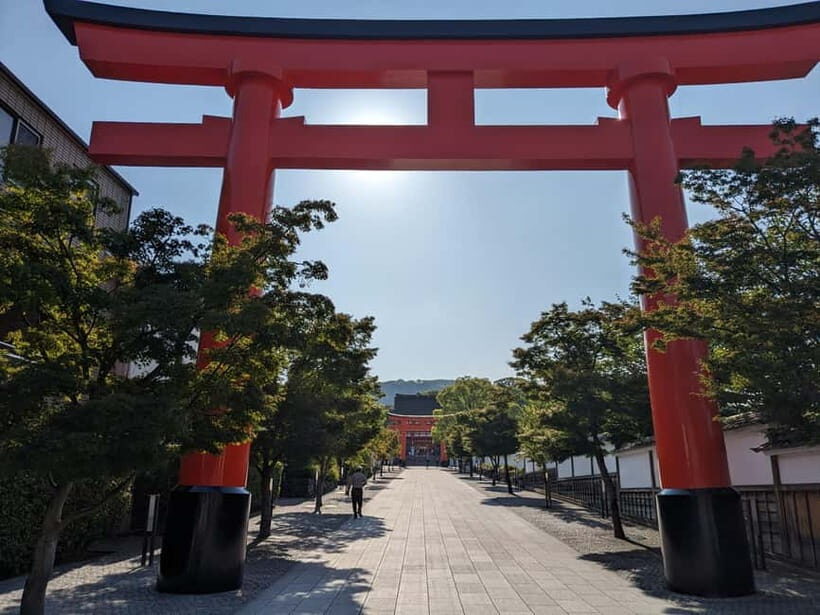
Then you’ll move through the iconic torii pathways. The guide’s role is to help you connect the gates to history and tradition, so you’re not only counting gates in your head for a photo. You learn to look at the structure more thoughtfully, including how the pathway functions as a spiritual route.
One practical note: the route is outdoors and active. If you’re visiting on a warmer day, plan water and wear shoes you trust. A guide helps with pacing, but you’re still walking a shrine approach.
The torii gate walk: photography is easy, understanding takes one extra step
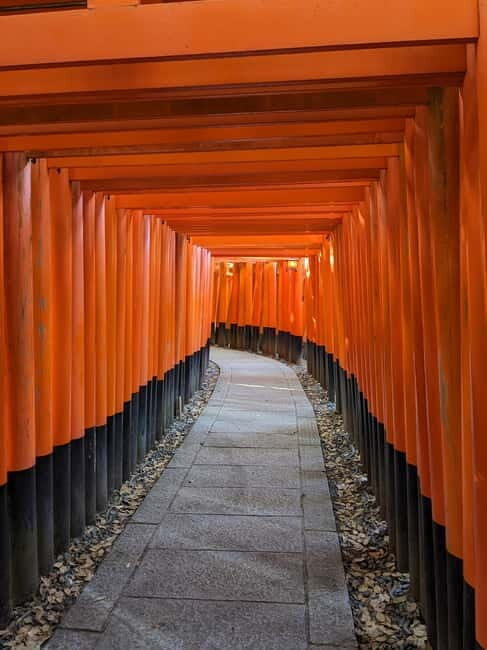
It’s hard not to take photos at Fushimi Inari, but the tour helps you avoid the trap of seeing only one kind of view. The torii gates create repeat patterns, and without guidance those patterns blur together fast. With the tour, the explanation points you toward details you might otherwise miss, such as how the shrine experience changes as you go deeper.
This is also where your guide’s personality shows up. In the stronger feedback I saw, Yoshi was credited with excellent explanations and great photo moments. That likely means he didn’t just tell stories—he also timed stops so you could capture the gates without blocking other visitors or rushing past your angles.
If you love photos, you’ll probably appreciate that the group keeps moving with purpose. If you hate photos, you’ll still benefit because the value is really in the interpretation: the walk becomes more than a red corridor.
Okusha Back Shrine: the quieter spiritual turn
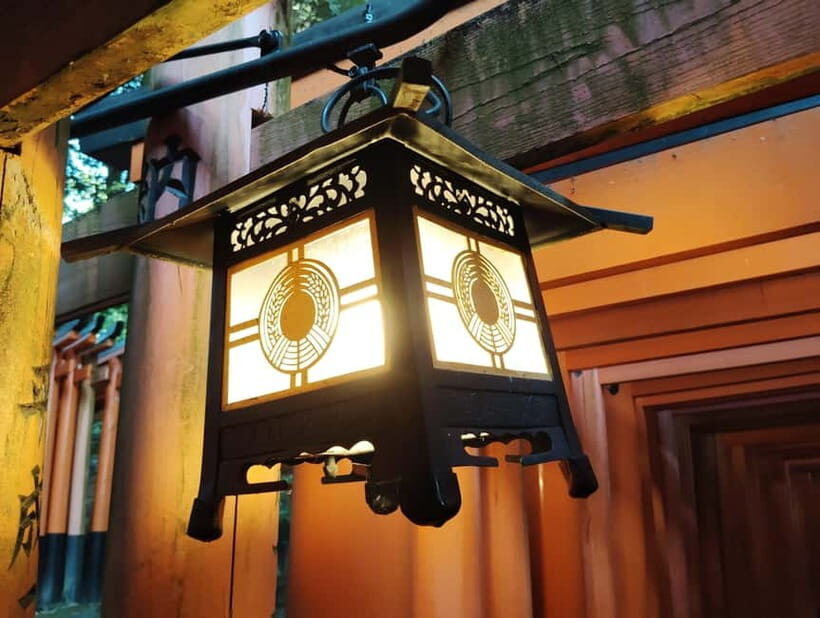
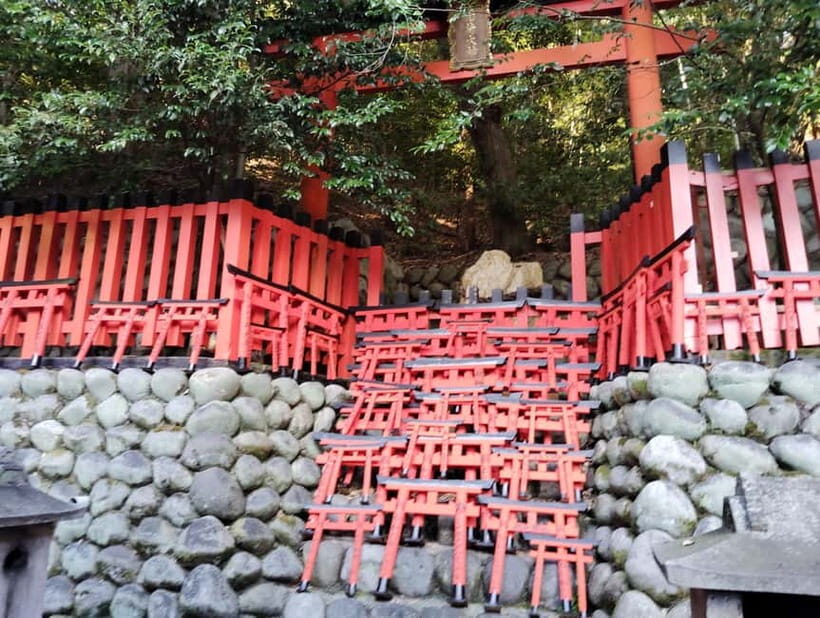
Most people know Fushimi Inari for its main circuit. The tour adds a second layer by visiting Okusha Back Shrine. This is where the experience feels more personal.
Why it matters: “back shrine” stops tend to have fewer people and less of the crush energy you can get near the busiest areas. You don’t just see another gate cluster—you slow down and get a different kind of spiritual atmosphere. That makes the tour feel like more than a shortcut through the most famous spots.
Okusha also helps you feel the purpose of Inari’s layout. It’s one thing to admire the scale of torii gates. It’s another to understand that the site has depth—a movement inward that matches the shrine’s spiritual focus.
If you’re traveling with someone who gets tired of crowds easily, this portion is a strong reason to book. The route is still manageable, but it adds that “I didn’t just do the main loop” satisfaction.


The Omokaruishi stone-lifting ritual: a simple test with real meaning
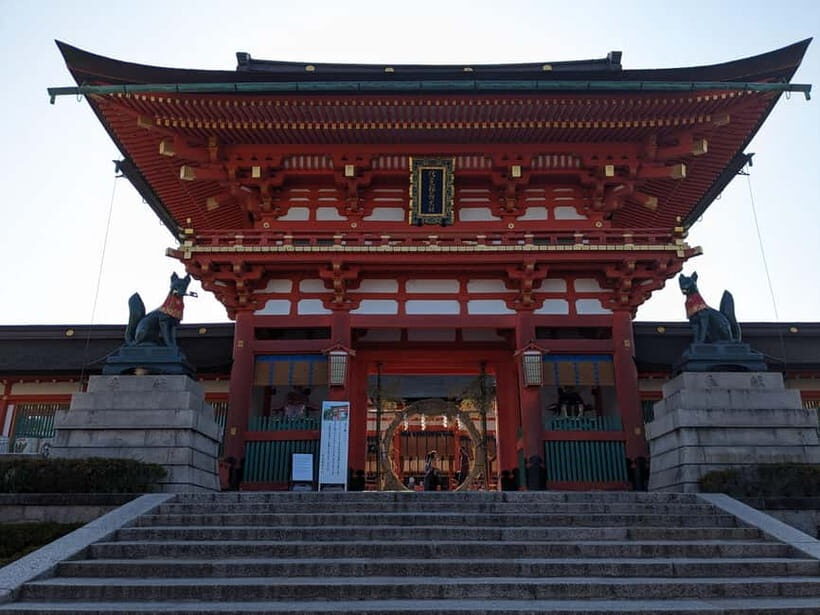
The highlight for many people is the Omokaruishi stone-lifting ritual. It’s memorable because it’s interactive. You’re not only watching—it’s something you try yourself.
In plain terms, you lift the stone as part of a local tradition meant to test your fortune and reveal something about your inner strength. Even if you treat it playfully, it still creates a moment of focus. You stop. You concentrate. You try. That makes the tour stick in your memory longer than a standard photo stop.
It’s also a good equalizer for group dynamics. Everyone can participate, and it’s not dependent on language skill in the same way a lecture is. A guide will help you understand what you’re doing and why it’s part of the shrine culture, but your hands do the work.
Duration and pace: 90 minutes is efficient, not leisurely
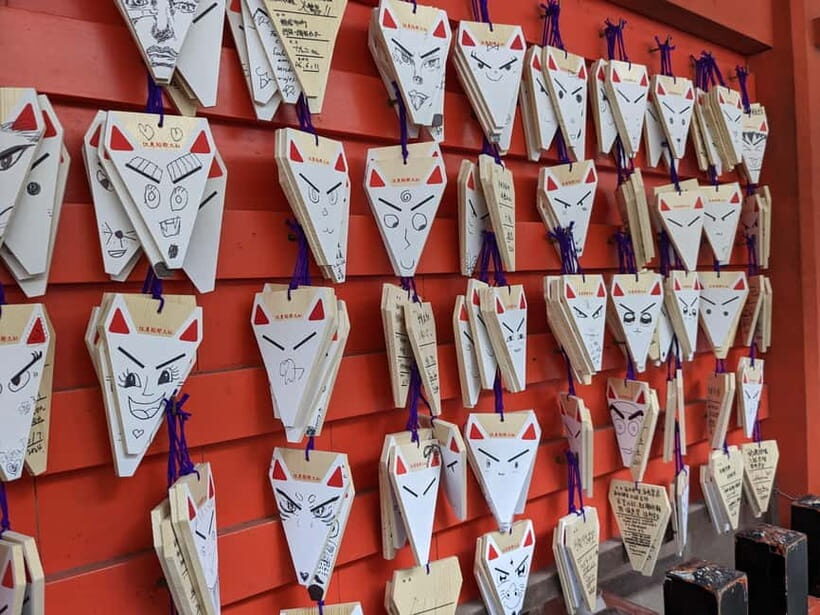
The tour runs about 90 minutes, and that timing shapes the whole experience. You’ll cover the main shrine area, walk the iconic torii route, reach Okusha, and fit in the Omokaruishi ritual. It’s a lot to do in a short window—which is why it can feel great when you want a focused outing.
The downside shows up in the reviews: the tour can feel short, and if you need a bathroom break, you may feel rushed. So I’d plan for a full start before you meet your guide. If you have a flexible schedule and you hate feeling time-boxed, consider pairing this tour with free time afterward so you can linger independently.
What you’re paying for with this $32 price tag
At $32 per person for a 90-minute guided experience, you’re paying for two things: a local expert guide and a route that includes meaningful stops you can otherwise miss.
Could you do Fushimi Inari on your own? Yes. People do. But here’s where value comes in:
- You get historical and cultural explanations connected to what you see, not just a list of buildings.
- You reach Okusha and try the Omokaruishi ritual with guidance, which reduces guesswork.
- You keep a steady pace that’s hard to self-manage when you’re navigating crowds and photo stops.
If you like learning while you walk, the price makes sense. If you only want the scenery and don’t care about context, you might feel it’s not necessary. That’s the trade-off.
Who this tour is best for
This works especially well if you fall into one of these groups:
- You’re short on time in Kyoto and want the Fushimi Inari experience in a single block.
- You enjoy Japanese culture stories tied to what you’re physically doing.
- You want more than the main loop, including Okusha and the stone-lifting ritual.
- You prefer small groups or private formats rather than being lost in a huge crowd.
It may feel less ideal if you need long breaks, hate structured timing, or want a slow, independent exploration where you can wander without any “next stop” pressure.
Practical tips to get more out of your 90 minutes
You’ll likely enjoy this more with a few mindset tweaks and small planning choices:
- Wear shoes you can walk comfortably in for a shrine approach.
- If you’re sensitive to crowds, use the fact that the tour includes Okusha to break up the busiest vibe.
- If you care about photos, watch for the moments your guide suggests for shots—stopping well timed helps you avoid blocking people.
- Bring a little patience for outdoor walking. The route is active, even though it’s short.
Also, if you want English, double-check you’re joining the English-speaking guide option at booking. You’ll get more from the story parts when you understand every detail.
Should you book this Kyoto Fushimi Inari tour?
I’d book it if you want a guided walk that adds meaning to the famous torii scenery. The mix of Fushimi Inari Taisha, the Okusha Back Shrine detour, and the Omokaruishi stone ritual gives the tour a clear structure—and that’s what turns “I saw it” into “I understood it.”
Skip booking if you’re the type who prefers wandering at your own pace for hours, or if 90 minutes feels too tight for your comfort. In that case, you might be happier spending more time exploring on your own first, then returning later when you’re ready for a ritual moment.
If you’re on the fence, think about what you want most: scenery-only time, or cultural guidance plus a hands-on spiritual tradition.
FAQ
How long is the Kyoto Fushimi Inari guided tour?
The tour lasts 90 minutes.
What is the price per person?
The price is $32 per person.
Where do I meet the guide?
Meet your guide outside JR Inari Station, across the main entrance, holding a bright yellow DeepExperience signboard.
What areas of Fushimi Inari does the tour include?
You’ll visit Fushimi Inari Taisha and also go to Okusha Back Shrine.
What is the Omokaruishi stone-lifting ritual?
The tour includes participating in the Omokaruishi stone-lifting ritual to test your fortune.
Is there an English-speaking guide?
Yes. The tour includes an English-speaking local expert guide, and live tour guide options also include Japanese.
What group size options are available?
Private or small groups are available.
Will I return to the same place after the tour?
Yes, you arrive back at Inari Station at the end.
Can I cancel for a full refund?
Free cancellation is available up to 24 hours in advance for a full refund.
Is it reserve now and pay later?
Yes. You can reserve now and pay later, with an option to pay nothing today.