REVIEW · TOKYO
One day mountain Fuji & Hakone tour with English hindi bilingual
Book on Viator →Operated by Friendly Tour · Bookable on Viator
Fuji and Hakone, packed and easy. This one-day plan is interesting because you get a guided circuit of the most photo-stopped spots around Mt. Fuji and Hakone, without the stress of transfers and timing. I especially like the combination of iconic views plus hands-on photo support, and the fact that the itinerary can be tailored to your group’s needs. One drawback to keep in mind: extra fees and weather can affect what you see, and at least one experience noted fog when visibility was poor.
This is a private tour for groups up to 6 people with pickup, an air-conditioned vehicle, and a mobile ticket. The guide is bilingual in English and Hindi, so you’re not stuck guessing at what’s important or where to stand for the best angles.
You’ll also do some light-to-moderate walking. The big one is Arakurayama Sengen Park, where you climb 398 steps for that famous pagoda-and-Fuji view. If stairs slow you down, wear grippy shoes and plan for a steady pace.
In This Review
- Key moments that make this day trip worth it
- Why This Fuji–Hakone Loop Works from Tokyo
- The Real Advantage: English–Hindi Guide Tips (Not Just Translation)
- Saiko Iyashi no Sato Nemba: Thatch-Roof Calm Before the Climb
- Arakurayama Sengen Park: The 398-Step Pagoda Moment
- Kitaguchi Hongu Fuji Sengen Jinja + Oshino Hakkai: Sacred Forest and Spring Ponds
- Lake Kawaguchiko: Boat Ride, Ropeway Views, and Big Fuji Framing
- Mt. Fuji 5th Station: The Highest View Ticket Cost
- Lake Ashinoko: The Pirate Cruise and the Floating Torii
- Owakudani Valley: Volcanic Views and Hakone Black Eggs
- Price and Value: What the $465 Per Group Really Buys
- Who This One-Day Fuji–Hakone Trip Suits Best
- Should You Book This Fuji and Hakone Day Trip?
- FAQ
- What’s the tour duration?
- How many people are in a private group?
- Is pickup included?
- What time does the tour start?
- Are cable car and boat tickets included?
- Is lunch included?
- Is Mt. Fuji 5th Station admission included?
- Does the tour use mobile tickets?
- How much is the tour and what’s included in that price?
- FAQ
- Is free cancellation available?
- Do they speak English and Hindi?
- Are there any suggested walking-intensive stops?
- Are shrine and village entries included?
- Is the tour suitable for most travelers?
- Is this only for our group?
Key moments that make this day trip worth it
- Bilingual English-Hindi guidance so you can actually understand what you’re seeing
- Photo-friendly stops aimed at classic Mt. Fuji angles, plus practical help with pictures
- Old villages, shrines, and lakes instead of just one viewpoint and back
- A mix of nature and culture across Kawaguchiko, Lake Ashinoko, and Owakudani
- Private transport that saves you the mental math of trains, buses, and connections
Why This Fuji–Hakone Loop Works from Tokyo
The best value in a one-day Fuji and Hakone tour is not the number of stops. It’s the order and the way the day is managed. Here, you’re moving through several distinct regions—Kawaguchiko for strong Fuji framing, Hakone for lake views and volcanic scenery—so you get a fuller sense of what people mean when they say this area is different.
A private vehicle matters on days like this. You avoid the stop-and-start feeling of public transport. You also avoid spending your energy figuring out where to switch. Instead, you get to relax, ride, and focus on being where you need to be before the light changes.
Timing is also the hidden factor. With a departure around 8:30am and an overall day around 10 hours, you’re positioned to catch morning visibility and reduce the chance you arrive too late for the most scenic moments.
A few more Tokyo tours and experiences worth a look



The Real Advantage: English–Hindi Guide Tips (Not Just Translation)
A bilingual guide is more than convenience. It changes what you can do with your time. When you understand what’s going on at a shrine, why a lake view is framed a certain way, or what to watch for near a scenic viewpoint, you spend less time wandering and more time getting the shot or the moment.
The guiding style here is also hands-on. One highlight from feedback is that Busal—named as a friendly guide—helped with photos and suggested a good lunch restaurant. That matters because lunch in Japan can be easy to enjoy and hard to pick without a local nudge. If you’re traveling with people who get picky about food or timing, having someone point you toward a reliable option can save the day.
One fair caution: one account flagged a terrible driver. That’s not about the sights. It’s about comfort and smoothness on the road. If you’re sensitive to driving style, it’s worth paying attention to how pickup and transport feel once you’re in the car.
Saiko Iyashi no Sato Nemba: Thatch-Roof Calm Before the Climb
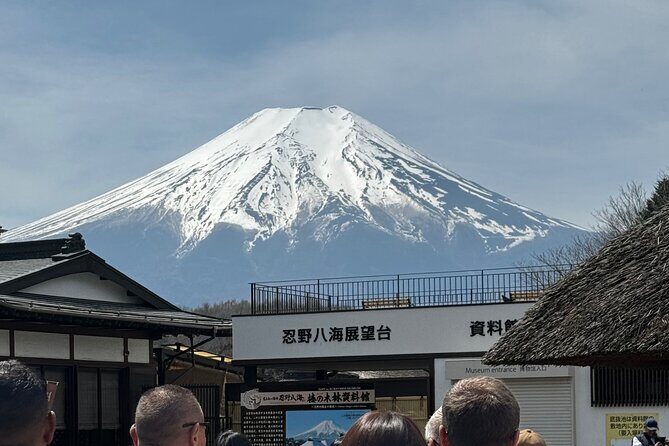
Your day starts at Saiko Iyashi no Sato Nemba, a traditional village with old thatched-roof houses. This stop is a palate cleanser. Before the staircases and viewpoints, you get a quieter, more old-school Japan feel.
It’s also practical. You’ll have about an hour, which is enough time to walk the paths, look into any exhibits or museums that are available, and take photos without feeling rushed. Just note that admission is not included here, so plan for that ticket cost.
What I like about this stop is the pacing. It’s early enough that you can enjoy it before crowds swell elsewhere. And the vibe is completely different from the later lake-and-volcano scenery, which helps your brain connect the dots: this trip isn’t only about Fuji; it’s also about how people lived around it.
Arakurayama Sengen Park: The 398-Step Pagoda Moment
This is the viewpoint stop people talk about. Arakurayama Sengen Park has a five-story red pagoda facing Mt. Fuji, built in 1963. The path to it is famous for a reason: you climb 398 steps.
Here’s the practical way to think about it. If you want the payoff, you have to earn the angle. The climb can feel like a lot, especially if the group is uneven in pace. But the good news is the reward is built for photography, and you’re there long enough (about an hour) to catch multiple compositions and let the light shift a bit.
Admission is free, so your main cost is your effort. My advice: go steady. Don’t sprint for the top. You’ll just arrive out of breath and struggle to enjoy the view.
And because weather can be fickle in this region, it’s smart to stay flexible. If visibility drops, you can still enjoy the pagoda scene even when Fuji is less dramatic.
Kitaguchi Hongu Fuji Sengen Jinja + Oshino Hakkai: Sacred Forest and Spring Ponds
Next comes a shrine stop and then the famous spring-pond village.
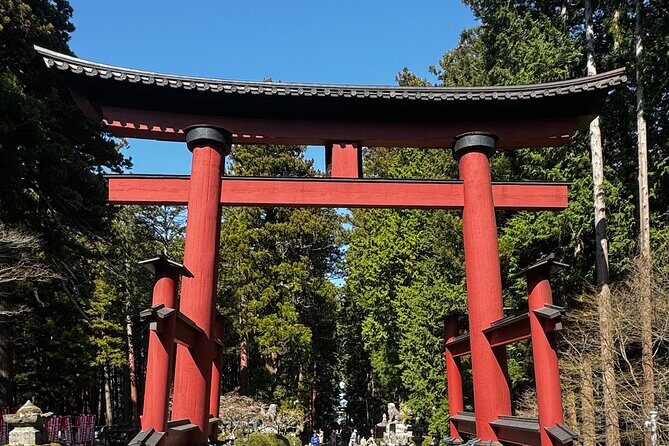
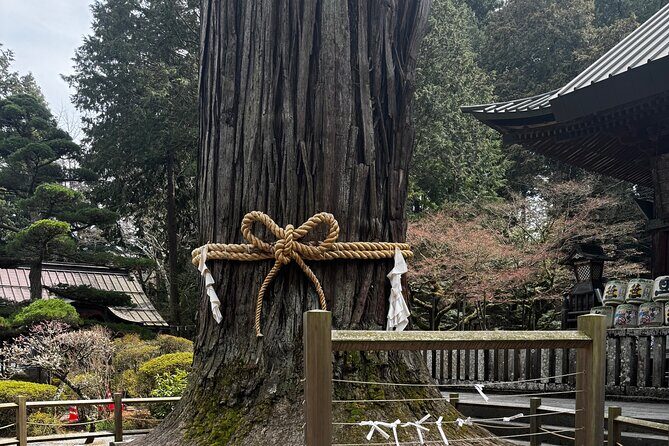
At Kitaguchi Hongu Fuji Sengen Jinja, you’re in a dense forest of cedar and pine. The shrine is described as one of the oldest in the Mount Fuji area, with origins around 100AD. A forested shrine visit changes the tone of the day. It feels cooler, quieter, and more grounded than the big scenic viewpoints.
You’ll get about an hour, and since it’s free entry, you can take your time. If your group likes explanations, this is one of the best places for it—because shrines are not only buildings. They’re systems of meaning, rituals, and geography.
Then you shift to Oshino Hakkai, with its eight spring-water ponds connected to the Mt. Fuji water cycle. It’s a traditional village feel with koi fish, souvenir shops, and local food stalls. Entry is free, and again you get roughly an hour.
Potential drawback: this area can be lively, so if your group wants quiet photos, you’ll need to choose your time and angles carefully. Also, since food stalls are around, it’s easy to overspend. If lunch isn’t included, decide in advance whether you want a snack here or save room for the next plan.






Lake Kawaguchiko: Boat Ride, Ropeway Views, and Big Fuji Framing
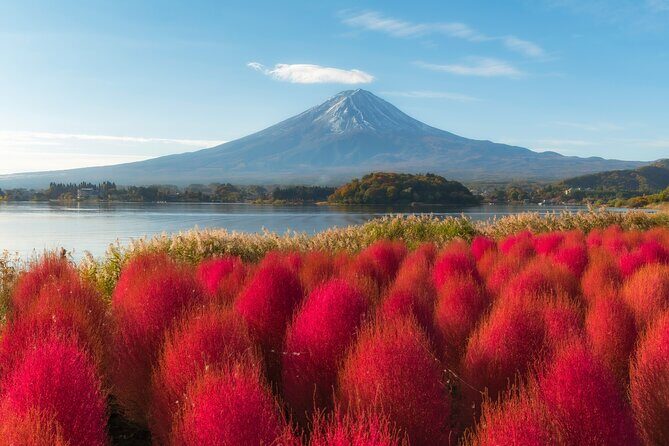
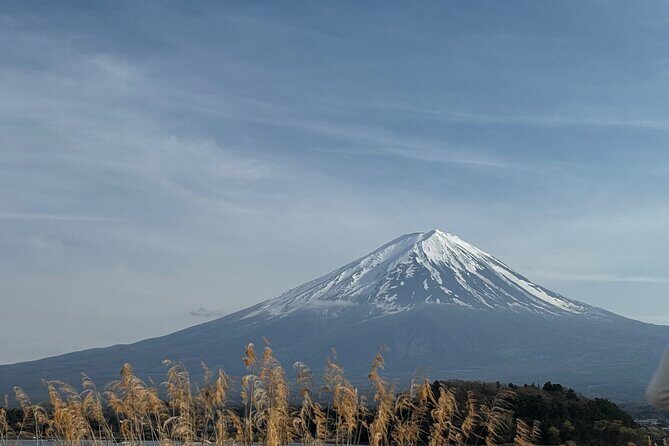
Lake Kawaguchiko is often the “wow” lake for Mt. Fuji because it’s one of the strongest places to frame the mountain over water. You’ll get about an hour here, with two optional-feeling experiences built in: a scenic boat ride (about 30 minutes) and a chance to use the Kachi Kachi ropeway for views of Fuji and the surrounding city.
Entry is free for this stop, but the boat and ropeway tickets are not included. So you’ll want to budget for these add-ons. The upside is you’re not stuck paying for experiences you don’t want—this is mostly about choosing how much mountain-and-lake panorama you want.
If you’re the type who likes one great photo over ten so-so ones, focus on the best window for visibility from the ropeway or the lake itself. If you’re traveling with family, the lake time is also easier pacing than stairs.
One more thing: lake weather can change quickly. Bring a light layer even if Tokyo felt warm that morning.
Mt. Fuji 5th Station: The Highest View Ticket Cost
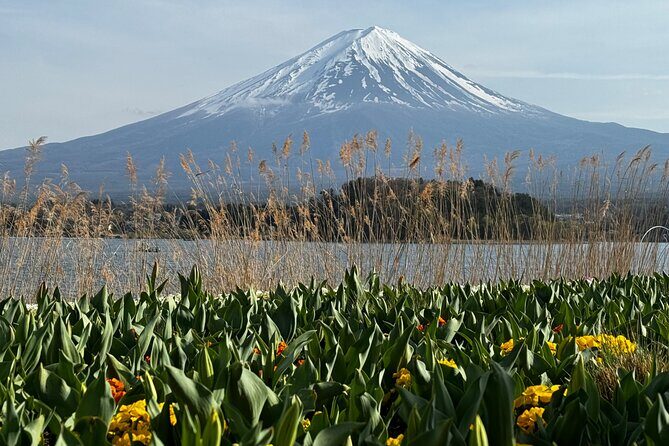
Then you go up to Mt. Fuji 5th Station, located around 2,300 meters. The promise here is clear: you can see views toward the mountain top and also toward Fujiyoshida city. You get about an hour.
This is one of the places where you’ll feel the fee difference. Admission is not included, and the Mount Fuji entrance fee is listed as ¥2,100. That cost is worth understanding: you’re paying for access at elevation, not for a museum or a themed attraction.
Drawback? Visibility. If conditions are hazy, the view may be less dramatic than you hoped. The good news is you’ll still have a reason to be there: the sense of scale at elevation is its own experience, even when Fuji is partially obscured.
Also, altitude can feel like “slower breathing” for some people. If your group includes kids, older adults, or anyone who gets winded easily, keep the pace gentle and don’t rush the lookout.
Lake Ashinoko: The Pirate Cruise and the Floating Torii
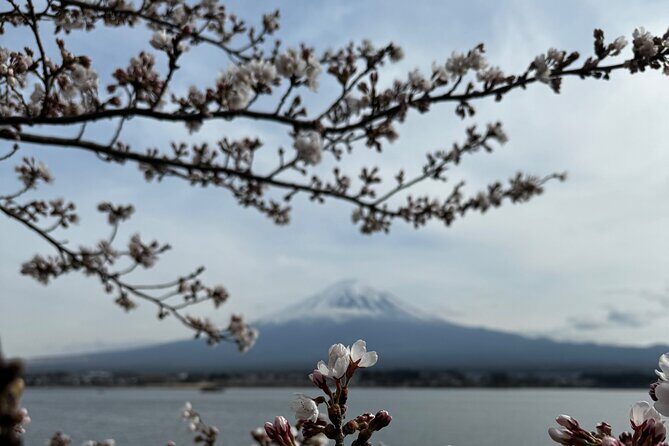
Lake Ashinoko is the calm contrast to the higher-elevation feeling of 5th Station. Here, you get a shorter stop—about 50 minutes—focused on a cruise described as a pirate cruise boat.
The star visual is the view of Mt. Fuji and the famous floating torii gate. Even if Fuji is faint that day, the lake itself is scenic and the cruise makes it easy to relax while still feeling like you did something “big.”
Admission for this portion isn’t included, so you’ll pay the boat ticket separately. That’s normal for cruises, but it’s part of the overall budget picture.
My practical advice: treat this as a rest stop, not a sprint. Sit, enjoy the movement, and use the time to reset your energy for Owakudani after this.
Owakudani Valley: Volcanic Views and Hakone Black Eggs
Owakudani Valley is where the landscape shifts to volcanic zone energy. You’ll reach it using the Hakone ropeway from Togendai station, then explore the area for about an hour.
This is a fun stop because it’s both visual and sensory. You’ll find souvenir shops, and the region is known for black eggs. Whether you eat one or just look at the options, it adds a playful local flavor to the geothermal scenery.
A useful thing to know is that your transport to the valley depends on the ropeway. The ride and the valley viewing conditions can change with weather, and one account specifically mentioned fog at the gondola top. So if visibility is poor, keep expectations flexible. The shops and the egg culture still give you plenty to do even when the views are muted.
Where this fits best: after Lake Ashinoko, when you still have enough energy to walk around and browse. You get time, but not too much time to get bored.
Price and Value: What the $465 Per Group Really Buys
At $465 per group (up to 6 people), the math can be very reasonable if you’re traveling as a small family or a group of friends. You’re paying for private transportation plus fees and taxes handled by the tour. You’re also getting a structured plan that reduces your coordination stress.
What’s not included is where your personal spending will likely land:
- Lunch
- Cable car and boat tickets
- The ¥2,100 Mount Fuji entrance fee
- Admission for Saiko Iyashi no Sato Nemba and Mt. Fuji 5th Station
So the true value depends on how many of those paid add-ons you’ll take. If you plan to do the boat and ropeway activities anyway, the tour price looks even smarter. If you’re trying to skip many paid elements, you might find yourself questioning the cost of a private driver compared with piecing together trains.
My take: if you want the day to run smoothly and you like not negotiating transit, it’s a strong deal. If you’re comfortable planning and already enjoy hunting for viewpoints on your own, you may be able to do it cheaper. But you’ll trade away the convenience and the guidance.
Who This One-Day Fuji–Hakone Trip Suits Best
This tour is built for people who want a classic Japan bucket-list loop without the logistics headache.
You’ll likely enjoy it if:
- You want a private group up to 6 experience
- You value clear guidance in English and Hindi
- You want multiple regions in one day: lakes, shrines, old village streets, and volcanic scenery
- You like structured timing (each stop is about 50 minutes to 1 hour)
It’s also a good option if someone in your group would rather not spend energy figuring out the route between Tokyo and the Fuji/Hakone area.
The main mismatch is for travelers who hate stairs and elevation. Arakurayama’s 398 steps and Mt. Fuji 5th Station altitude can be a lot for some bodies. If that’s you, choose footwear carefully and be honest about pacing.
Should You Book This Fuji and Hakone Day Trip?
Yes, with one practical condition: go in knowing that part of the experience is paying extra for certain views and rides, and that weather can change visibility.
If you want the day to feel organized—pickup, an air-conditioned vehicle, a bilingual guide, and a route that hits the big hitters—this is a solid choice. The best sign is the guide support, including photo help and restaurant suggestions (Busal is specifically mentioned as friendly). That’s the kind of detail that turns a scenic day into a comfortable day.
Book it if your top priority is a smooth, guided day across Mt. Fuji, Lake Kawaguchiko, Lake Ashinoko, and Owakudani.
Skip or reconsider if you have serious mobility limits for stairs or you’re trying to keep spending ultra-tight, since several key segments require additional tickets.
FAQ
What’s the tour duration?
It runs for about 10 hours.
How many people are in a private group?
The private tour is for groups of up to 6 people.
Is pickup included?
Pickup is offered.
What time does the tour start?
The start time is 8:30 am.
Are cable car and boat tickets included?
No. Tickets for the cable car/ropeway and the boat ride are not included.
Is lunch included?
No. Lunch is not included.
Is Mt. Fuji 5th Station admission included?
No. There’s an entrance fee for Mt. Fuji 5th Station listed as ¥2,100.
Does the tour use mobile tickets?
Yes, a mobile ticket is provided.
How much is the tour and what’s included in that price?
It costs $465 per group (up to 6) and includes air-conditioned vehicle transport, all fees and taxes, and private transportation.
FAQ
Is free cancellation available?
Yes. You can cancel up to 24 hours in advance for a full refund.
Do they speak English and Hindi?
Yes. The tour is English Hindi bilingual.
Are there any suggested walking-intensive stops?
Arakurayama Sengen Park includes a climb of 398 steps.
Are shrine and village entries included?
Some are free (like Arakurayama Sengen Park, Kitaguchi Hongu Fuji Sengen Jinja, and Oshino Hakkai), while Saiko Iyashi no Sato Nemba is not included.
Is the tour suitable for most travelers?
Yes. It says most travelers can participate.
Is this only for our group?
Yes. It’s a private tour/activity with only your group participating.