REVIEW · OSAKA
Osaka: Temari Embroidery Workshop
Book on GetYourGuide →Operated by EL PUENTE · Bookable on GetYourGuide
Stitching tiny patterns feels surprisingly personal. You learn temari embroidery, a traditional craft with over 1,000 years of history, and I like that you start by choosing your colors right away. You also get hands-on help from an English/Spanish instructor, so the technique feels doable, not mysterious.
One thing to consider: you only finish one side during the class. The other side is yours to complete later using a video link you receive.
In This Review
- Key things I’d circle before you go
- Temari Basics: What You’ll Make in This Osaka Workshop
- Where the Class Meets: C-Flat at SARASA HOTEL Shinsaibashi
- The 2-Hour Flow: From Temari History to Your Stitched Pattern
- Choosing Colors: How to Make It Look Like Your Design
- Learning the Stitches: What Guidance Feels Like in Practice
- Only One Side in Class: Using the Video Link Without Stress
- Price and Value: Why $38 Can Make Sense for a 2-Hour Craft
- Who This Workshop Suits Best (and Who Might Skip It)
- Should You Book This Osaka Temari Embroidery Workshop?
- FAQ
- How long is the Osaka Temari Embroidery Workshop?
- What will I make during the class?
- Can I choose the thread colors?
- Is both sides of the temari finished in the class?
- Will I get instructions to finish the other side?
- What languages is the instructor available in?
- Where do I meet for the workshop?
- What’s the cancellation and payment flexibility?
Key things I’d circle before you go
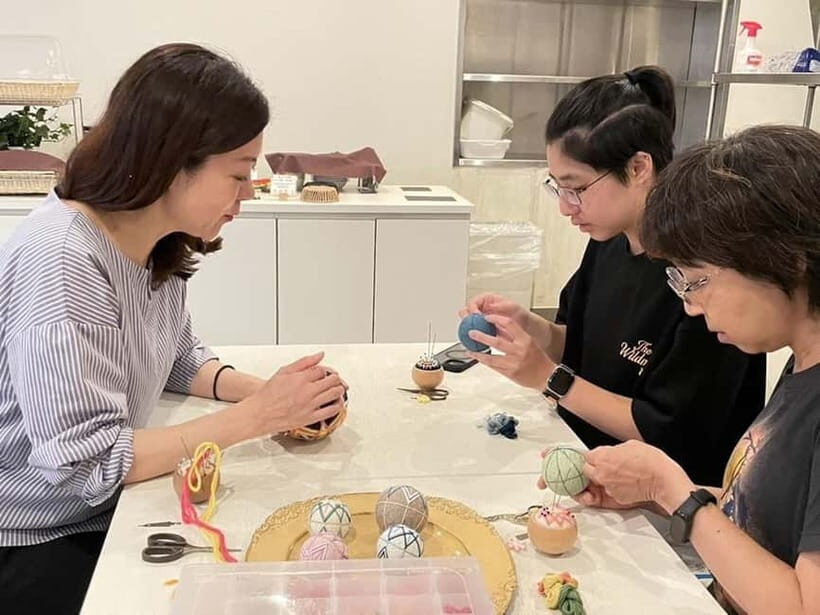
- You pick 4 embroidery thread colors to design your own look
- The host handles the temari base, so you focus on stitching
- Only one side is finished in class, with a video link for the other side
- Small group size (up to 10) helps you get real attention
- English and Spanish support, which makes a big difference when learning stitches
Temari Basics: What You’ll Make in This Osaka Workshop
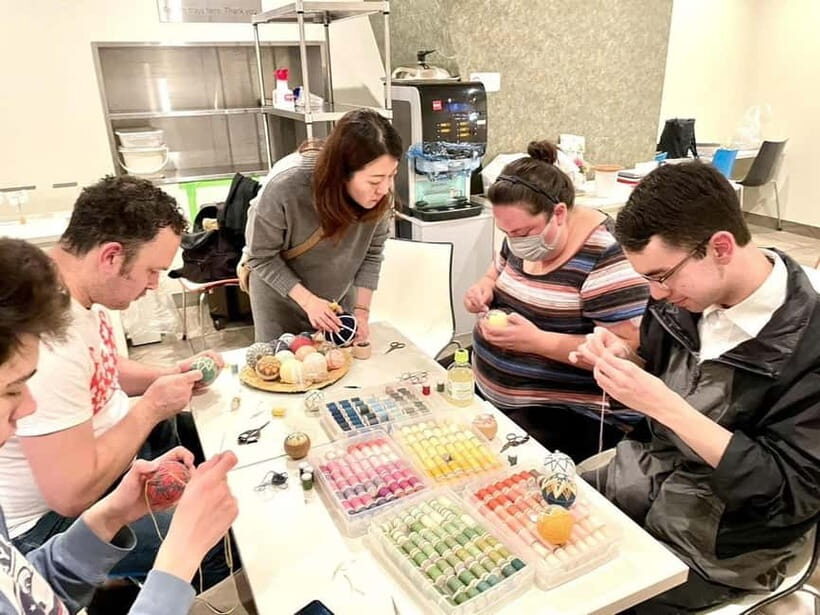
Temari are traditional Japanese hand-embroidered balls, made by wrapping and stitching thread patterns onto a base. In this 2-hour workshop, the goal is simple: you leave with a temari project that looks finished enough to feel satisfying, and clear instructions to finish it properly at home.
What makes temari worth your time is the mix of structure and personality. You follow a technique step-by-step, but the final pattern and color choices are yours. Even if you’re new to embroidery, the class is designed so you don’t need a craft background. You just need patience and a willingness to slow down for a couple hours.
A nice touch here is that the lesson starts with context. You’re not handed thread and told to guess. You’ll learn about the craft’s long history first, then you start building your own ball.
A few more Osaka tours and experiences worth a look


Where the Class Meets: C-Flat at SARASA HOTEL Shinsaibashi
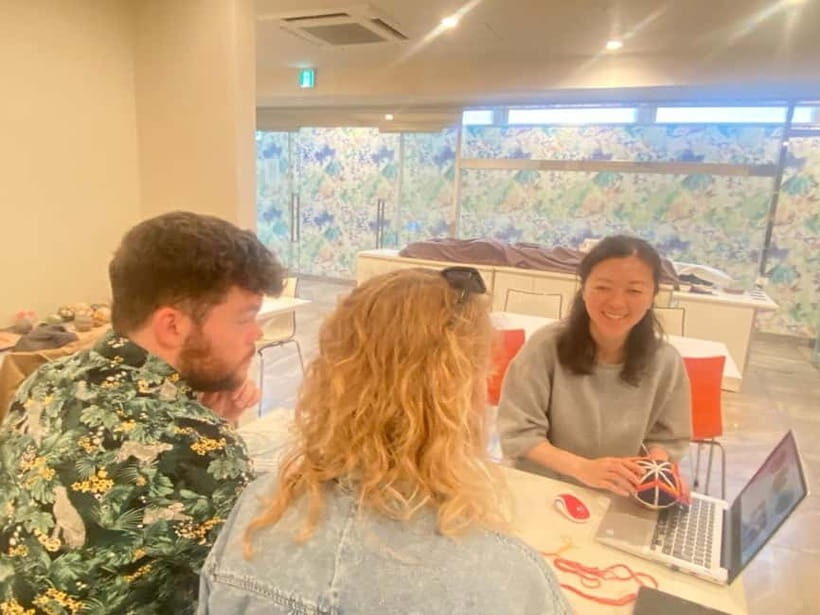
You’ll meet in a free space called C-Flat at SARASA HOTEL Shinsaibashi, on the 1F. That’s the kind of meeting point that helps you get oriented fast: it’s tied to a hotel address people recognize, and you’re not hunting through a maze of backstreets with no sign.
Since this is a short 2-hour session, arriving on time matters. Temari work is hands-on, and the instructor needs a moment to get everyone started with their base ball and thread colors.
The 2-Hour Flow: From Temari History to Your Stitched Pattern
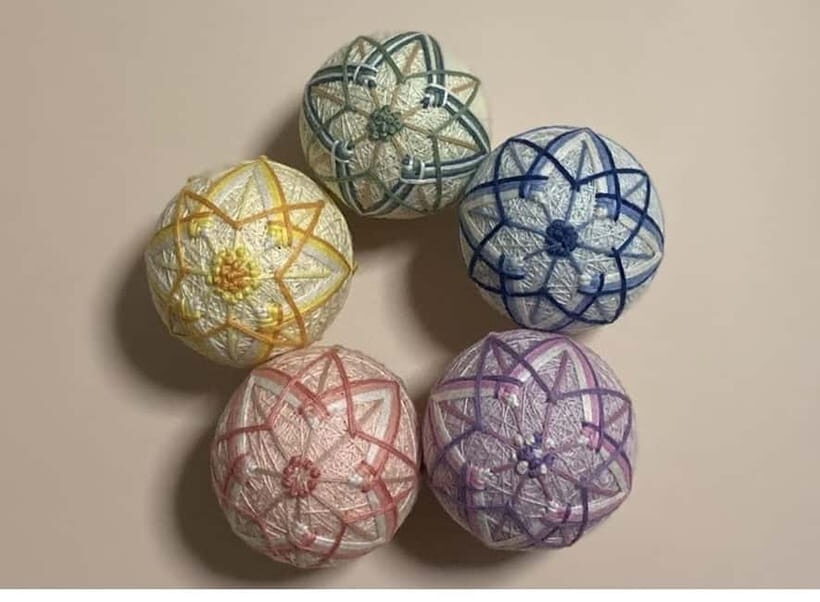
The workshop runs like a mini lesson plus a mini project. Here’s what you can expect, in plain terms.
First, you learn the background. You’ll get an introduction to temari as a traditional handcraft with a history spanning more than 1,000 years. This matters because it turns your ball from a random souvenir into something more meaningful. You understand what you’re practicing, even if you’re doing a guided version of the technique.
Next comes the practical part: choosing your materials. The host prepares the temari base ball for you, so you’re not stuck building the foundation. Then you choose from different base ball options, including color. If you have a preferred base color, you need to tell the host at least 3 days before the workshop.
Then you select your thread colors. The workshop gives you 4 colors of embroidery thread to use in your design, and you can choose which 4 you want. This is where your project starts to feel personal. A different set of colors can make the same stitching technique look completely different.
After that, the instructor shows you how to stitch. You follow along and stitch together with your host, working toward the pattern as a team exercise. The class is set up so you can understand the technique without needing to translate instructions on your own.
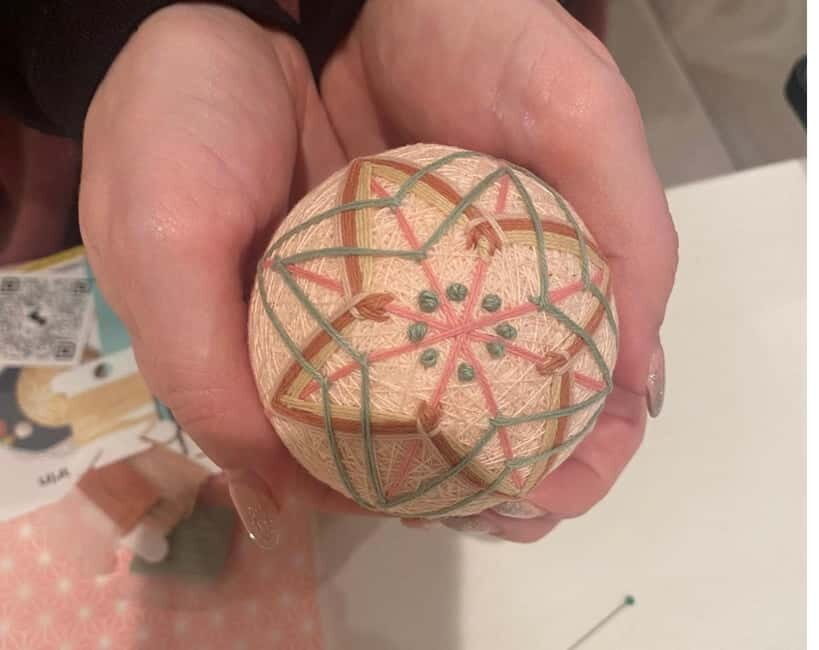
By the end, you’ll have one side finished in class. The other side is where the video link comes in.
Choosing Colors: How to Make It Look Like Your Design
Color is the easiest way to turn a craft class into a souvenir you genuinely like. Here, you’re choosing twice: your base ball color and your embroidery thread colors.
Thread choice is especially fun because you pick 4 colors. That gives you enough variety to create a pattern that feels intentional, not random. If you tend to wear the same color palette—black and white, earthy tones, bold primary colors—lean into that. The kit supports a clear plan, even though it’s still beginner-friendly.
For the base ball, you’ll want to plan ahead if there’s a specific color you care about. The workshop asks you to inform the host 3 days in advance if you want a preferred base color. So if you’re the type who thinks in advance, do it. If you don’t have a preference, no problem—you still get options at the workshop.
Tip: Decide your goal before you arrive. Are you making something that looks cute and colorful? Or something calmer and graphic? With temari, color direction is half the aesthetic.
Learning the Stitches: What Guidance Feels Like in Practice
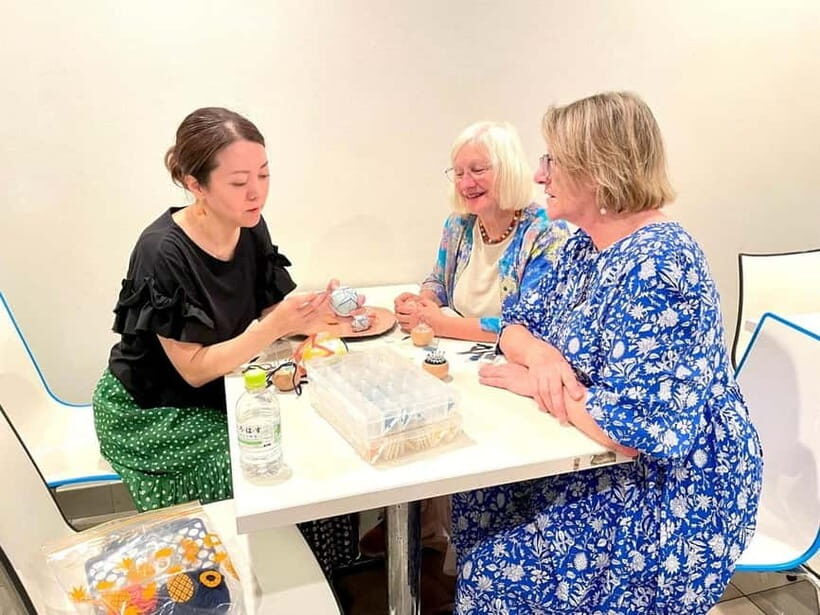
This is not one of those classes where you’re left with a manual and good luck. The workshop includes direct instruction from an English or Spanish instructor, and the format is small-group friendly.
You’re limited to 10 participants, which means the instructor can actually check your work. With stitching, small corrections matter. Where your needle enters, how consistent your tension is, and how you keep the pattern aligned are all things you learn by watching and trying.
The supplied feedback from past participants supports this: people noted the teacher’s clear English and the fact that she listens and adjusts to what learners need. One person even mentioned there was just one participant in the class, which can make the experience even more hands-on.
You might also appreciate that the host prepares the temari base, so the class energy goes into the embroidery itself. That’s a better use of your time than spending your 2 hours getting materials ready.






Only One Side in Class: Using the Video Link Without Stress
You’ll finish only one side during the workshop. That sounds like a catch until you think about how embroidery actually works. Two sides means twice the repetition, and that’s hard to fit into a 2-hour class unless the workshop is rushed.
Instead, you get a video link to finish the other side at home. In practice, this is a smart deal. You can pause, rewind, and take your time. At home, you can do it when you’re in the mood—no time pressure, no group waiting.
The other side can feel less intimidating because you already completed one side with the instructor’s guidance. You’re not starting from zero. You’re repeating a process with confidence.
Also, the workshop includes a needle setup for you to keep working. One participant specifically mentioned taking a needle home to continue stitching. If you like the idea of finishing your ball soon after your class, this matters.
Price and Value: Why $38 Can Make Sense for a 2-Hour Craft
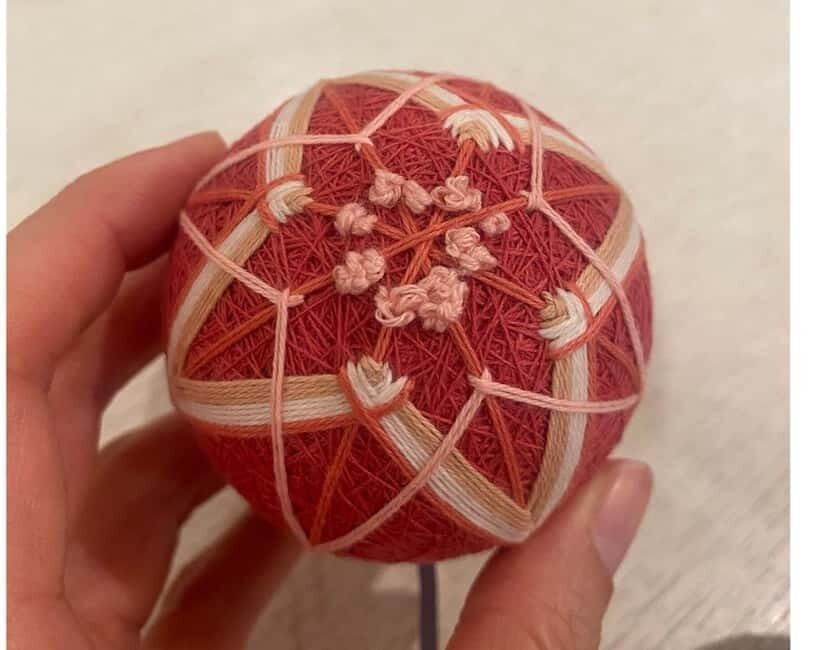
$38 for a 2-hour temari workshop is not just paying for entertainment. You’re paying for instruction, plus the materials that make the project possible.
Here’s what’s included:
- A temari base
- 4 embroidery thread colors
- Needles
- A video link to complete the second side
That combination is the real value. A basic craft class might include instruction but leave you to buy materials. This one gives you the base and thread colors you need, then gives you instructions to finish after you leave. Since you’re also in a small group, you’re getting more attention than you would in a larger, more crowded class setting.
Is it for everyone? If you hate sitting still, this might not be your thing. But if you want a souvenir you made yourself, not something mass-produced, $38 is a reasonable price for the time, guidance, and take-home project.
Who This Workshop Suits Best (and Who Might Skip It)
This temari class is a great fit if you want:
- A cultural activity that’s more than a photo stop
- A hands-on project you can actually complete
- Clear instruction in English or Spanish
- A small-group experience capped at 10 people
It’s also a solid choice if you enjoy crafts and want something portable. Your finished temari ball can become desk decor or a gift. It’s also a fun way to bring home a story: you learned a technique tied to a practice with over 1,000 years of history.
If you’re expecting a fully finished, two-sided masterpiece when you walk out the door, adjust your expectations. You’ll do one side during class, then finish the other at home.
Accessibility note: the workshop is wheelchair accessible, which is a meaningful advantage for people who need that.
Should You Book This Osaka Temari Embroidery Workshop?
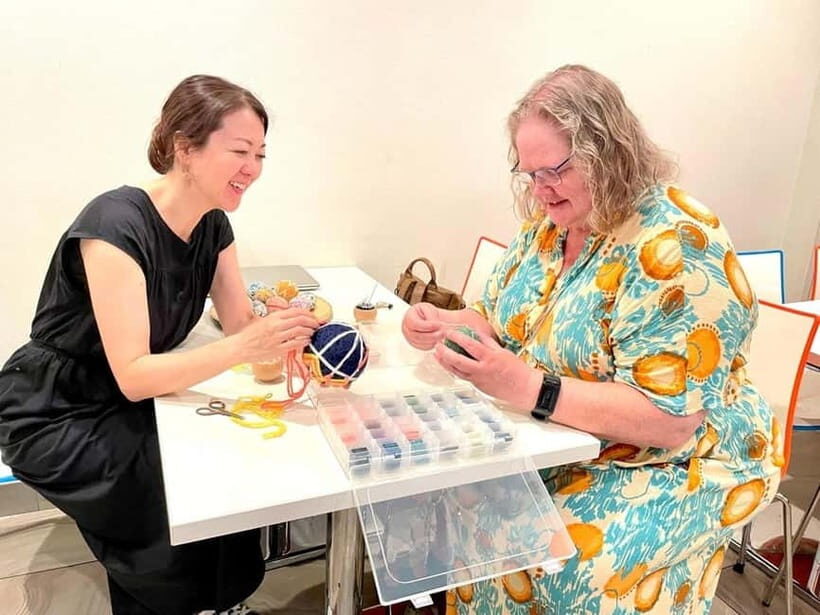
Book it if you want a calm, hands-on cultural activity with real instruction and materials included. You’ll leave with a temari project that feels personal because you choose colors, and you’ll have the video link to finish at your own pace.
Skip it if you’re short on time and need a completely finished craft to take home immediately, or if you know you won’t use the video to finish the second side.
If you’re curious about Japanese crafts and like the idea of learning stitches you can repeat, this is a good bet.
FAQ
How long is the Osaka Temari Embroidery Workshop?
The workshop lasts 2 hours.
What will I make during the class?
You’ll learn how to make temari, which are traditional Japanese hand-embroidered balls, and you’ll create one side of your temari during the workshop.
Can I choose the thread colors?
Yes. You can choose 4 colors of embroidery thread.
Is both sides of the temari finished in the class?
No. Only one side will be finished during the workshop.
Will I get instructions to finish the other side?
Yes. You’ll receive a video link to help you finish the other side at home.
What languages is the instructor available in?
The instructor speaks English and Spanish.
Where do I meet for the workshop?
Meet at Free space C-Flat (SARASA HOTEL Shinsaibashi 1F).
What’s the cancellation and payment flexibility?
You can cancel up to 24 hours in advance for a full refund, and you can reserve now and pay later.